
Christian Art | Prayer With Jesus | Psalms | Security Of God’s People | A Song Of Ascents | King David As A Boy | Audio KJV | Love Revealed By Jesus Christ | King James Audio Bible
Psalm 125 | King James Audio Bible
YouTube: Psalm 125 | KJV | King James Version | Audio Bible | Word Aloud
Psalm 125, one of the Psalms of Ascent, opens with a comparison of those who trust in the Lord to mount Zion. This comparison signifies stability and permanence. The psalmist uses the physical geography of Jerusalem and its surrounding mountains to illustrate the protection provided by the Lord to God’s people. This imagery serves as a metaphor for divine security and steadfastness.
The psalmist then addresses concerns of the righteous under the rule of the wicked. There is an assurance that the influence of the wicked will not be permanent over the land of the righteous. This part of the psalm serves as a reassurance that wickedness will not prevail and corrupt the actions of the righteous.
The closing verses of the psalm shift to a prayer and a moral distinction. The prayer is for the Lord to do good to those who are good and upright in their hearts. This request reflects a desire for divine recognition and reward of righteousness. Conversely, there is a declaration regarding those who turn to crooked ways.
The closing verses shift to prayer and a moral distinction. The prayer asks the Lord to favor those who are good and upright in heart. This plea reflects a desire for divine acknowledgment and reward for righteousness. In contrast, the psalmist remarks on those who turn to crooked ways. The Psalm states that such individuals will face consequences alongside the workers of iniquity.
Psalm 125 concludes with a statement of peace for Israel. This peace is presented as a consequence of the Lord’s righteous rule and protection. The psalm, thus, encapsulates a theme of divine protection and justice. It offers comfort and assurance to the faithful, affirming the Lord’s enduring safeguarding of those who remain upright.
The psalm reflects a deep understanding of the nature of God’s protection, likened to the immovable Mount Zion and the encircling mountains of Jerusalem. This comparison is powerful in its suggestion that those who trust in God are as secure and unshakable as these ancient, steadfast landmarks. The psalm reassures believers that despite temporary rule of the wicked, the righteous will ultimately remain under God’s protective care.
In the context of the Psalms of Ascent, Psalm 125 holds a significant place, as it was sung by pilgrims on their journey to Jerusalem. The Psalm captures the essence of a journey undertaken under the watchful care of the Divine, providing solace and reassurance to its reciters. As a testament to the enduring nature of God’s protection for those who trust in Him, Psalm 125 continues to offer a profound sense of security and peace for believers across generations.
Psalm 125 | King James Audio Bible
They that trust in the LORD shall be as mount Zion, which cannot be removed, but abideth for ever.
As the mountains are round about Jerusalem, so the LORD is round about his people from henceforth even for ever.
For the rod of the wicked shall not rest upon the lot of the righteous; lest the righteous put forth their hands unto iniquity.
Do good, O LORD, unto those that be good, and to them that are upright in their hearts.
As for such as turn aside unto their crooked ways, the LORD shall lead them forth with the workers of iniquity: but peace shall be upon Israel.

Psalm 125 | King James Audio Bible
- Divine Protection And Stability: The Psalm likens those who trust in God to Mount Zion, symbolizing unshakable stability and enduring protection. This imagery portrays the believers as steadfast and secure under divine care.
- God’s Encompassing Care: God’s protection is depicted as encompassing and vigilant, similar to the mountains around Jerusalem. This theme emphasizes continuous and unwavering divine guardianship.
- Temporary Nature Of Wickedness: The Psalm assures that the dominance of the wicked over the righteous is not permanent. It conveys a message of hope, emphasizing the eventual triumph of good over evil.
- Divine Retribution And Reward: The Psalm calls for divine justice, seeking good for the righteous and repercussions for the wicked. This reflects a belief in the moral order of the universe under God’s governance.
- Peace And Well-Being For Israel: The Psalm concludes with a wish for peace upon Israel, symbolizing the community’s harmony and prosperity under divine protection. This theme signifies the collective well-being of the faithful, assured by God’s care and justice.


Saint Peter Chrysologus contrasts the two Adams to show the transformation of human nature through Christ. The first man, Adam, is the origin of the human race in its mortality; the second, Christ, is the origin of its renewal and life. Both share the same humanity, but they differ absolutely in their source and purpose. Adam received life; Christ gives it. Adam was shaped from the earth; Christ took flesh from the Virgin, raising human nature into union with God [ … ]
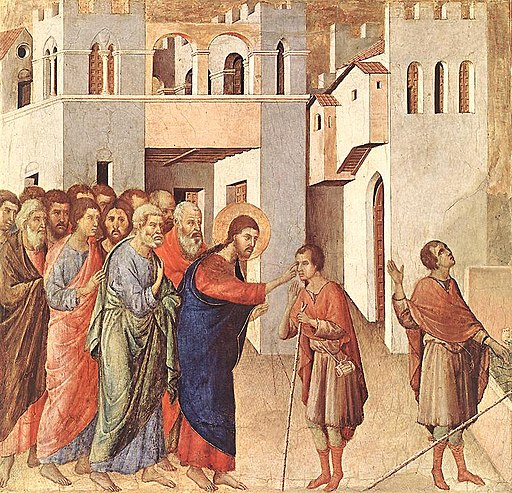
Mark has shown Jesus earlier (Mark 7: 32-33) using the sign of the laying on of hands as part of the miracle of healing. Normally when Jesus heals, the healing is instant. With the blind man at Bethsaida this is not the case. The healing is more gradual, passing through stages before being complete [ … ]

Christ the King of Peace – and yet in these verses Jesus tells us, confusingly, that he has come to bring not peace on earth but conflict. These are challenging verses. They demand we ask, what can this mean? The symbolism of fire encompasses a range of meanings. Fire is used in the Bible to signify God’s love for humanity. It is also a response of man to God: ‘My heart was hot within me, while I was musing the fire burned: then spake I with my tongue.’ (Psalm 39: 3) It is also the fire of Pentecost, when the tongues of fire descended to the apostles and they received their commission to preach the Gospel and establish the Church of Jesus Christ. Christ’s death on the cross must precede this commissioning [ … ]