

Christian Art | Prayer With Jesus | Psalms | Confession Of Israel’s Sins | King David As A Boy | Audio KJV | Love Revealed By Jesus Christ | King James Audio Bible
Psalm 106 | King James Audio Bible
YouTube: Psalm 106 | KJV | King James Version | Audio Bible | Word Aloud
The psalm begins with an invocation of praise for God’s enduring goodness and mercy. This introduction sets a tone for recounting of Israel’s history, a pattern of divine intervention and human failure. From the Exodus to their wanderings in the desert, and eventual settlement in the Promised Land, each episode in Psalm 106 highlights a cycle of sin, punishment, repentance, and redemption.
This cycle underscores a key message: humanity’s tendency to forget God’s deeds and stray from God’s commandments. The Israelites’ experiences serve as a mirror for the reader, reflecting our own potential for ingratitude and disobedience. At the same time, the psalm illustrates God’s readiness to forgive, emphasizing His mercy and faithfulness.
Unlike other psalms that might focus on individual lament or praise, Psalm 106 is a collective confession. It speaks for a community, acknowledging collective failures and seeking divine forgiveness. This aspect makes it particularly relevant for communal worship, where it can be used as a reminder of the importance of humility and the need for societal repentance.
In broader context of the Book of Psalms, Psalm 106, together with Psalm 105, forms a pair that contrasts God’s faithful acts (Psalm 105) with the people’s unfaithfulness (Psalm 106). This contrast is a powerful reminder of the enduring nature of God’s covenant, despite human inconsistency.
Themes in Psalm 106 have been interpreted variously over time, reflecting the theological nuances and cultural contexts of its interpreters. The psalm’s enduring relevance lies in its ability to speak across ages, reminding us of our fallibility and the ever-present possibility of redemption through divine grace.

Psalm 106 | King James Audio Bible
Praise ye the LORD. O give thanks unto the LORD; for he is good: for his mercy endureth for ever.
Who can utter the mighty acts of the LORD? who can shew forth all his praise?
Blessed are they that keep judgment, and he that doeth righteousness at all times.
Remember me, O LORD, with the favour that thou bearest unto thy people: O visit me with thy salvation;
That I may see the good of thy chosen, that I may rejoice in the gladness of thy nation, that I may glory with thine inheritance.
We have sinned with our fathers, we have committed iniquity, we have done wickedly.
Our fathers understood not thy wonders in Egypt; they remembered not the multitude of thy mercies; but provoked him at the sea, even at the Red sea.
Nevertheless he saved them for his name’s sake, that he might make his mighty power to be known.
He rebuked the Red sea also, and it was dried up: so he led them through the depths, as through the wilderness.
And he saved them from the hand of him that hated them, and redeemed them from the hand of the enemy.
And the waters covered their enemies: there was not one of them left.
Then believed they his words; they sang his praise.
They soon forgat his works; they waited not for his counsel:
But lusted exceedingly in the wilderness, and tempted God in the desert.
And he gave them their request; but sent leanness into their soul.
They envied Moses also in the camp, and Aaron the saint of the LORD.
The earth opened and swallowed up Dathan, and covered the company of Abiram.
And a fire was kindled in their company; the flame burned up the wicked.
They made a calf in Horeb, and worshipped the molten image.
Thus they changed their glory into the similitude of an ox that eateth grass.
They forgat God their saviour, which had done great things in Egypt;
Wondrous works in the land of Ham, and terrible things by the Red sea.
Therefore he said that he would destroy them, had not Moses his chosen stood before him in the breach, to turn away his wrath, lest he should destroy them.
Yea, they despised the pleasant land, they believed not his word:
But murmured in their tents, and hearkened not unto the voice of the LORD.
Therefore he lifted up his hand against them, to overthrow them in the wilderness:
To overthrow their seed also among the nations, and to scatter them in the lands.
They joined themselves also unto Baalpeor, and ate the sacrifices of the dead.
Thus they provoked him to anger with their inventions: and the plague brake in upon them.
Then stood up Phinehas, and executed judgment: and so the plague was stayed.
And that was counted unto him for righteousness unto all generations for evermore.
They angered him also at the waters of strife, so that it went ill with Moses for their sakes:
Because they provoked his spirit, so that he spake unadvisedly with his lips.
They did not destroy the nations, concerning whom the LORD commanded them:
But were mingled among the heathen, and learned their works.
And they served their idols: which were a snare unto them.
Yea, they sacrificed their sons and their daughters unto devils,
And shed innocent blood, even the blood of their sons and of their daughters, whom they sacrificed unto the idols of Canaan: and the land was polluted with blood.
Thus were they defiled with their own works, and went a whoring with their own inventions.
Therefore was the wrath of the LORD kindled against his people, insomuch that he abhorred his own inheritance.
And he gave them into the hand of the heathen; and they that hated them ruled over them.
Their enemies also oppressed them, and they were brought into subjection under their hand.
Many times did he deliver them; but they provoked him with their counsel, and were brought low for their iniquity.
Nevertheless he regarded their affliction, when he heard their cry:
And he remembered for them his covenant, and repented according to the multitude of his mercies.
He made them also to be pitied of all those that carried them captives.
Save us, O LORD our God, and gather us from among the heathen
Psalm 106 | King James Audio Bible
- Divine Mercy And Faithfulness: Psalm 106 opens with praise for God’s enduring goodness and mercy, emphasizing His unwavering faithfulness despite human failings.
- Human Sin And Forgetfulness: Psalm 106 recounts the repeated disobedience and forgetfulness of the Israelites, highlighting the human tendency to stray from God’s commandments and forget His blessings.
- God’s Deliverance And Salvation: The narrative includes various episodes of God delivering the Israelites from adversity, showcasing His role as a savior and protector.
- Cycle Of Rebellion And Redemption: Psalm 106 depicts a cycle where the Israelites rebel against God, face consequences, cry out for mercy, and are ultimately redeemed by God’s compassion.
- Call For Repentance And Acknowledgment Of Failings: There is a strong theme of communal confession and repentance, encouraging the acknowledgment of collective sins and failings.
- Reflection On History And Learning From The Past: Psalm 106 serves as a historical reflection, urging readers to learn from the past mistakes of the Israelites and to remain faithful to God.
- Gratitude And Praise To God: Despite the focus on human sin, the psalm circles back to expressing gratitude and praise for God’s unceasing mercy and love.



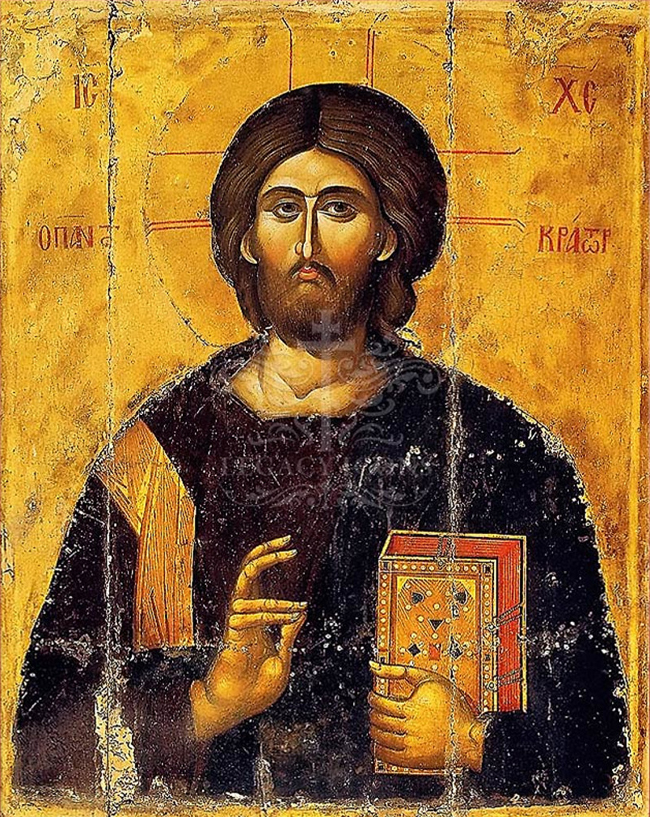
Christian Art | Life Of Jesus In The Gospels | King James Audio Bible KJV The Gospel Of Saint John 14: 1-7 | King James Audio Bible YouTube: Connection With The Life Of Jesus In The Gospels | King James Audio Bible The Gospels are not just a collection of stories or teachings, but a window into the life of Jesus. By reading and reflecting on the Gospels, we gain a deeper understanding of who Jesus was and what he came to do. As we read the Gospels, we see that Jesus was a man of great compassion and love. Jesus showed mercy to the outcasts and the marginalized, and he offered healing and hope to those who were in need. He also taught with authority, challenging the religious leaders of his day and offering a new way of living based on love and service. But the Gospels are not just a history lesson. They are also an invitation for us to enter into a relationship with Jesus. By reading and meditating on the Gospels, we can come to know Jesus more personally and deeply. We can learn from his example and seek to follow in his footsteps. So we may be encouraged to read the Gospels, perhaps starting with the Gospel of Mark or the Gospel of John, as we read paying attention to how Jesus interacted with others and how he responded to different situations. We may ask ourselves what you can learn from his words and actions, and how we can apply them to our own lives. And as we read, we can allow ourselves to be drawn into a closer relationship with Jesus. There truly is an historical Jesus. May the Gospels be a source of guidance, inspiration, and transformation for us all. How Much In The Gospels Is Historical, And How Much Is Myth, Legend, Trope, Figurative Thinking? It is difficult to say with certainty how much of the Gospels is historical in the modern sense of the word and how much is myth, legend, trope, or figurative thinking. The Gospels were written some years after the events they describe, and they were written from the perspective of the early Christian community. This means that the Gospels may contain a mix of historical facts and interpretation, as well as elements of myth, legend, and figurative thinking. That being said, scholars believe that the Gospels contain a good deal of historical information. For example, the Gospels describe specific places and events, such as the places where Jesus preached and the events of his trial and Crucifixion. These details suggest that the writers of the Gospels had access to historical information and intended to provide an accurate account of what happened. On the other hand, the Gospels also contain elements that are not seen by all as historical, howsoever this goes to the root of the faith, such as the miracles performed by Jesus and the accounts of his resurrection. Some see these as legends or myths that were added to the Gospels to help convey the message of the early Christian community. The question of how much of the Gospels is historical and how much is myth, legend, or figurative thinking is complex. What is important is that we approach the Gospels with an open mind and a willingness to engage with the stories and teachings they contain. We are in the Gospels in conversation with God – and with the many people who have had such faith and conversations – as with the historical Jesus. Why Do The Gospels Say Were People Afraid Of Jesus? There are several reasons why people may have been afraid of Jesus, according to the Gospels. One reason is that Jesus was a powerful and charismatic figure who challenged the religious and political authorities of his time. He spoke out against corruption and injustice, and he called on people to repent and turn to God. This type of behaviour was seen as threatening by those in positions of power, and they may have been afraid of losing their influence or authority. Another reason is that Jesus performed many miracles, such as healing the sick and casting out demons. These miracles were seen as evidence of his divine power, and they may have made people afraid of him. Some people may have been afraid of being healed or possessed by Jesus, while others may have been afraid of what would happen if they did not believe in him. Finally, some people may have been afraid of Jesus because of the prophecies and expectations of the coming of a messiah. The Jews of Jesus’ time were looking for a saviour who would deliver them from oppression and establish a kingdom of God on earth. When Jesus arrived on the scene, he may have been seen as a threat to the status quo, and some people may have been afraid of what he might do. Might The Fear Be Related To The Fear Of God – The Injunction To Fear God? Yes, it is possible that the fear of Jesus mentioned in the Gospels may be related to the fear of God. In the Old Testament, the fear of God is often used to describe a deep reverence and awe for God, as well as a sense of humility and obedience in the face of his greatness. This fear of God is seen as a positive and necessary quality for a faithful believer, and it is often linked to the idea of fearing God’s punishment or judgement. In the New Testament, the fear of God is also mentioned, but it is often portrayed in a more positive light. For example, in the Gospel of Luke, Jesus tells his followers not to be afraid of those who can only kill the body, but to fear God, who can destroy both body and soul (Luke 12:4-5). This suggests that the fear of God is not just about punishment, but about a deep respect for […]

In a time and in a land where different communities lived side by side yet non-communicatively, fearing, suspecting and disliking one another, and often bound by religious laws telling them not to interact, it is all the more extraordinary that Jesus tells his disciples to trust in life, in providence, in strangers’ hospitality, as they travel throughout the lands, as it would now be internationally, healing people and preaching the Gospel [ … ]

The word “epiphany” comes from the Greek word “epiphaneia,” which means “manifestation” or “appearance.” In the Christian tradition, the Epiphany is considered to be the day when the divinity of Jesus was revealed to the world through the visit of the Magi, also known as the three wise men or kings, who brought gifts to the newborn Jesus [ … ]