

Gospel Reading: John 15:11 (KJV)
‘These things have I spoken unto you, that my joy might remain in you, and that your joy might be full.’
Reflection On The Gospel
In this verse, Jesus speaks about joy, a deep and abiding joy that he desires for us. He assures us that his teachings and presence bring a joy that is complete and enduring. This joy is not dependent on external circumstances but is rooted in our relationship with Jesus. It is a joy that sustains us through all of life’s challenges and triumphs.
Prayer
Dear Jesus, You are the source of true joy. Fill my heart with your joy, a joy that is steadfast and unshakable. Help me to find joy in your presence and in the blessings you have given me. Teach me to see the beauty in everyday moments and to appreciate the gift of life. Let your joy be my strength, uplifting me in times of difficulty and celebrating with me in times of happiness. May your joy overflow in my life, touching those around me and bringing light to the world. Amen.
Personal Reflection
- What brings you joy in your daily life?
- Reflect on a moment when you felt profound joy.
- How can you share the joy of Jesus with others?

Meditation On Prayer And Gospel
The passage from John 15:11 reveals Jesus’ desire for us to experience fullness of joy. This joy is not superficial or fleeting; it is deep, abiding, and rooted in our relationship with him. Jesus’ teachings and presence offer a joy that remains with us, regardless of life’s circumstances.
Jesus’ joy is unique because it is not contingent on external factors. It is a joy that comes from within, anchored in our faith and trust in him. This joy transcends momentary happiness and provides a sense of peace and contentment even in challenging times. It is a joy that sustains us, giving us strength and resilience.
Reflecting on this verse, we are invited to consider the sources of our joy. Are we relying on temporary and external sources for our happiness, or are we drawing from the wellspring of joy that Jesus offers? This joy encourages us to look beyond our immediate circumstances and find delight in our relationship with Jesus and the promises he has made.
The joy that Jesus speaks of is also a communal joy. It is meant to be shared with others, creating a ripple effect of positivity and light. As followers of Jesus, we are called to embody this joy and spread it to those around us. This can be through acts of kindness, words of encouragement, and simply being present with others in their times of need.
Embracing Jesus’ joy requires a shift in perspective. It calls us to focus on the blessings and positives in our lives, even when faced with challenges. This does not mean ignoring difficulties but rather finding reasons to be grateful and joyful amidst them. It is about cultivating a mindset that seeks out joy and holds onto it.
In practical terms, living out this joy involves daily practices that connect us with Jesus. This includes prayer, meditation on Scripture, and participation in a faith community. These practices help us to stay rooted in our faith and continually renew our sense of joy. They remind us of the source of our joy and keep us grounded in our relationship with Jesus.
Sharing Jesus’ joy with others can transform our relationships and communities. It creates an atmosphere of hope and positivity, where people feel uplifted and valued. This joy can be a powerful testimony to the presence of Jesus in our lives, drawing others towards his love and grace.
As we strive to embody this joy, we draw strength from Jesus’ example and his teachings. We are reminded that true joy comes from knowing him and living in his love. This joy is a gift that sustains us and empowers us to live fully and generously.
Prayer
Lord Jesus, Your joy is my strength and my song. Fill my heart with your joy, a joy that transcends all circumstances. When I am faced with difficulties, help me to remember the joy that you offer. Let your joy be a source of hope and encouragement for me and for those around me. Guide my steps and my words so that I may spread your joy wherever I go. Thank you for the gift of your joy, which enriches my life and brings me closer to you. Amen.
Scripture: Psalm 16:11 (KJV)
‘Thou wilt shew me the path of life: in thy presence is fulness of joy; at thy right hand there are pleasures for evermore.’
Blessing
May the God of joy fill your heart with gladness and peace. May you experience the fullness of joy in Jesus, and may his joy guide and sustain you in all things. Amen.



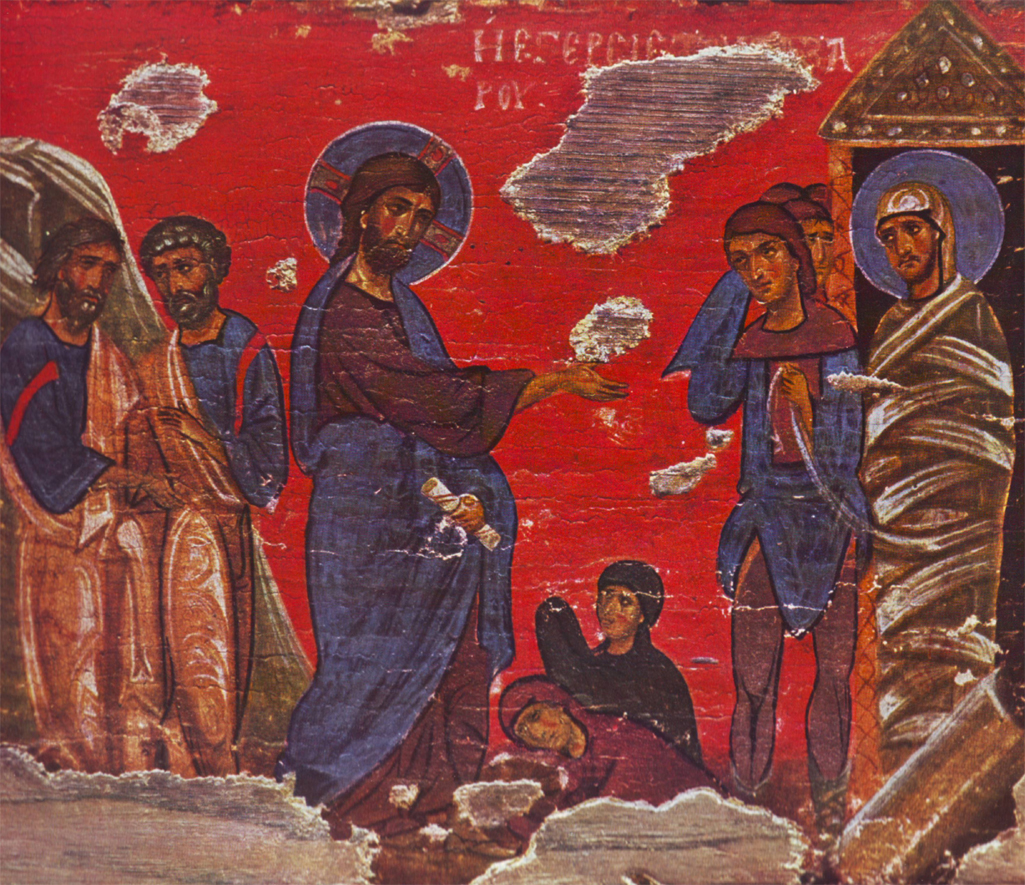
‘Death,’ says His Grace, ‘throws it all apart. For we are not as we should be. Faith requires our adjustment to God’s truth. God’s triumph in a very real sense requires in us the loss of our everything. Which, as with Mary at the other end of Jesus’s life, is God’s truth.’ The Gospel reading is of John 11: 1-45, which is a long passage, and His Grace’s homiletic theme commences in textual wilderness. Our brokenness – in this place – a family home. Our faith, our doubt, our death… The irruption – death, doubt, fear – within our precious scenes and our most intimate places. Our domesticity. His Grace speaks from the chair, as is a bishop’s prerogative, and says: ‘So much is obscure in the Gospels. We’re always reaching through them. We’re never there. Really, we never are. Our knowledge, our understanding, of the Gospels is never complete, and with each reading comes a new revelation. There are always new riches there. Just as there are between all of us, between myself and you. The Gospels are living texts. This is a part of the conversation we have with our own Christianity. It is a part of who we are in our relationship with Jesus. We are in this sense always on the brink. ‘So yes, there is plenty that doesn’t seem to make sense. As one of the order of bishops, we would be lying if we said that weren’t the case. They are not easy texts to encounter, if by that word we may signify something more than a superficial glancing off against, but rather a profound search for the word of God. The Gospels are written by people who had their own ideas, and often didn’t know what had really happened. Luke is quite explicit on this point. His is an investigation, from the explicitly claimed point of view of an historian, rather than that of a first-hand witness, who attempts, so he says, to set out an orderly account, out of the chaos, the sheer muddle, that has been handed down to him. It is possible to imagine Luke researching and composing his account after many years, when there has arisen a desire to know what exactly happened, and this implies a certain call to faith and certain demands of historicity, to historical exactitude. So in these different ways, the people of the first years of Christian faith are in the dark. There is also a decisive need to define the life of Jesus. And people didn’t get Jesus. The whole meaning of Christianity is only now beginning to take root throughout the composition. So much needs to be evangelized. The light shines almost in tentative fashion like that first star, which drew the wise men from the east to our Lord’s cradle. ‘John’s is widely held to be a very late Gospel. There are others who say that John’s Gospel might have been the first to acquire its true shape, because it most fully expresses Jesus, as we know him to be, as members of the Catholic Church. We don’t really know when any of this is being written, but we get a feel in John of a Gospel refined over many years, through a community. So there’s a lot going on there that I’d like you to think about. ‘What I would like to suggest to you is that, while within the Gospels we are often confronted with clues, guesswork, stories that have been handed down through so many people, and so in this sense we might find ourselves to be in the wilderness, this is the very desolate space itself to which we must give ourselves in order to experience Christ’s full redemption in our lives. I suggest it is for God’s glory that we do so. ‘As we become aware of ourselves, in this seminary, we find ourselves in a very secure, comfortable setting, and there are signs of Easter everywhere. Within the very fabric of these buildings, our Lord is risen; our Lord lives. But now this is our Lenten journey, where death enters, where death breaks us. We are to ride into Jerusalem in triumph, and then we are to be utterly broken, all hope gone, our hope extinguished. And really, I suggest to you, it is only by inhabiting this thought, as if we don’t know Easter is there, that our new life can follow, just when we have given up all hope, when every promise that Jesus made to us seems to have been cancelled. ‘And here now we have the story of Lazarus. I should like to suggest to you that we have a very powerful call now. In our very comfortable space, our domesticity, with all this comfort, where so very little might seem to happen each day, so it might seem to you, there is a disturbance within all of this comfort, and that is a disturbance within ourselves, and that is our call to Jesus. I think it is correct to say that our most comfortable places break in the light of Jesus from the inside, in order that we may take the necessary steps to be with Jesus. ‘Faith is not comfortable. I think that we can all receive the message of the rolling away of the rock from the tomb of Lazarus to say something of vital importance to ourselves concerning our openness to God’s love. The rock we roll away can come in all sorts of guises, but we know when we are blocked, and I firmly believe if we are truthful then we know where those blocks might be. ‘Next Sunday, which will be Palm Sunday, we process as it were to Jerusalem, to begin our Holy Week. Now as I speak to you we are on the brink. Even now, I suggest it might be very good for all of us to lay aside what we think we know, to fall apart a little, and so […]

Saint Winifred, also known as Saint Winefride, was born in the 7th century in Wales. She was the daughter of a chieftain named Tyfid ap Eiludd. From a young age, Winifred was devoted to her faith, choosing a life of piety and religious dedication. She was greatly influenced by her uncle, Saint Beuno, a renowned Welsh saint and abbot, who played a significant role in her spiritual education [ … ]
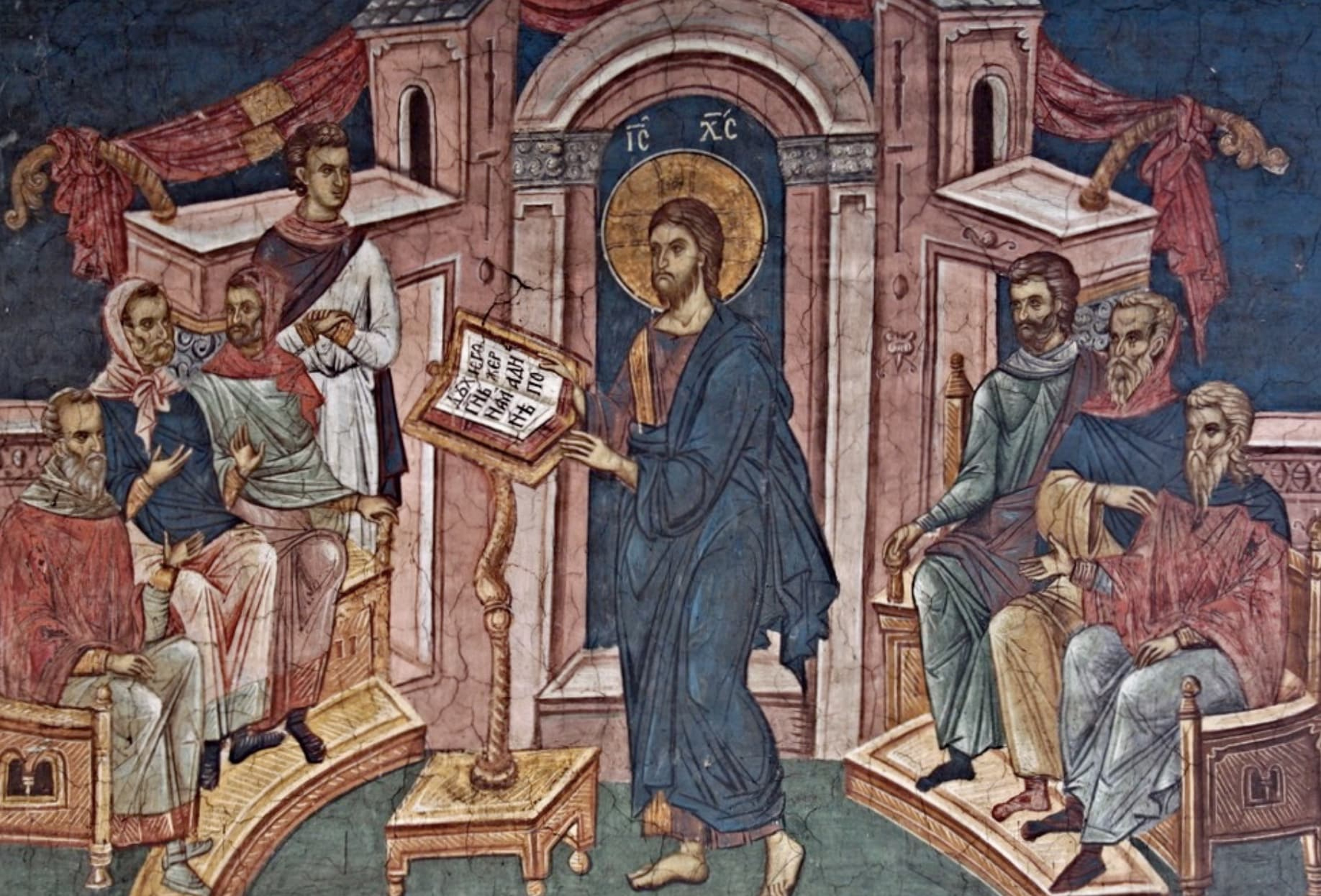
Capernaum was a small city on the crossroad of two important routes, one from Asia Minor, leading to Petra on the south of the Transjordan, the other from the region of the two rivers, the Tigris and Euphrates, descending toward Egypt. Jesus’ move to Capernaum helped his contact with the people, and so the spreading of the Good News [ … ]