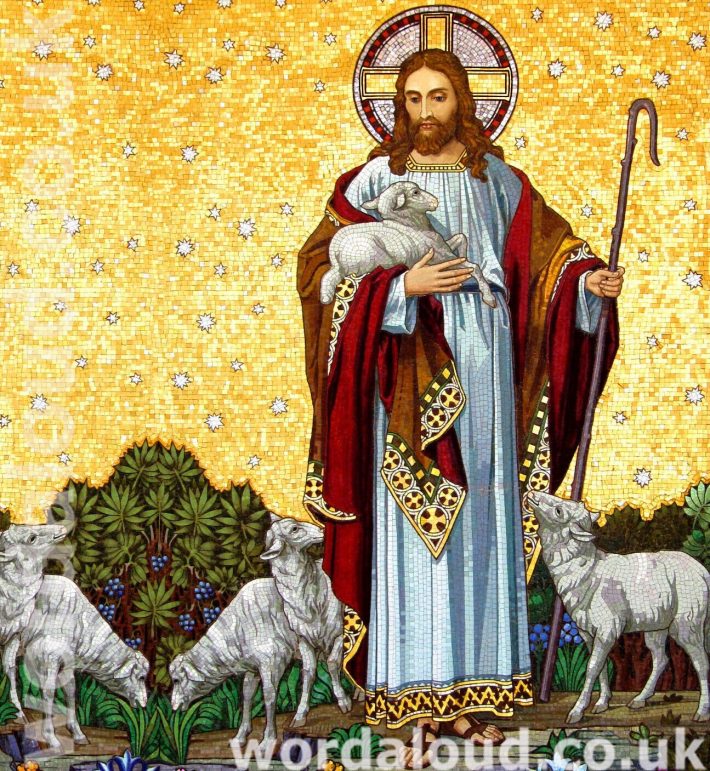
Christian Art | Jesus Christ The Good Shepherd
Office Of Readings | Advent December 24th | A Reading From A Sermon By Saint Augustine | Truth Has Arisen From The Earth And Justice Has Looked Down From Heaven
‘Truth has arisen from the earth and justice has looked down from heaven.’
Saint Augustine speaks directly to humanity and frames the Incarnation as God’s action for our sake. His repeated call to ‘awake’ stresses that what God has done in Christ concerns human life now, not only at the end of time. God becomes man so that humanity may be restored to life.
The reading sets out a sequence: without Christ’s birth, there is no release from sin; without his death, no return to life; without his coming, no rescue. Augustine is not speculating but explaining why the Incarnation was necessary for salvation. Christ enters time so that humanity, bound by time and death, may be freed.
The central image comes from the psalm: ‘Truth has arisen from the earth and justice has looked down from heaven.’ Augustine interprets this in Christological terms. ‘Truth’ is Christ himself, born of Mary. ‘Justice’ is God’s justifying action, which comes from above and is received by faith. Humanity does not generate justice; it is given.
This leads to Augustine’s insistence that salvation is grace. Justification does not arise from human effort or merit but from God’s gift. For this reason, any boasting must be in the Lord, not in oneself. Human pride has no place in redemption.
Augustine then links this gift of justice to peace. Peace on earth is possible because Christ unites what was divided. Through him, humanity is brought into right relationship with God and with one another. The angelic proclamation at Christ’s birth expresses this: glory belongs to God, and peace is given to those who receive his will.
The reading closes returning to the theme of grace. The Incarnation has no explanation in human deserving. God’s Son becomes the son of man so that human beings may become children of God. Augustine insists that the only answer to why this happened is grace.
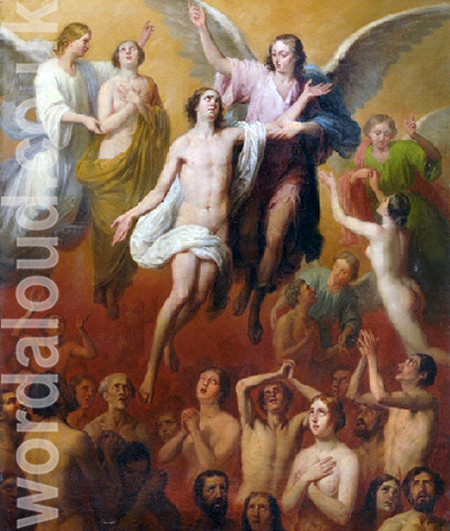
A Reading From A Sermon By Saint Augustine | Truth Has Arisen From The Earth And Justice Has Looked Down From Heaven
Awake, mankind! For your sake God has become man. Awake, you who sleep, rise up from the dead, and Christ will enlighten you. I tell you again: for your sake, God became man.
You would have suffered eternal death, had he not been born in time. Never would you have been freed from sinful flesh, had he not taken on himself the likeness of sinful flesh. You would have suffered everlasting unhappiness, had it not been for this mercy. You would never have returned to life, had he not shared your death. You would have been lost if he had not hastened to your aid. You would have perished, had he not come.
Let us then joyfully celebrate the coming of our salvation and redemption. Let us celebrate the festive day on which he who is the great and eternal day came from the great and endless day of eternity into our own short day of time.
He has become our justice, our sanctification, our redemption, so that, as it is written: Let him who glories glory in the Lord.
Truth, then, has arisen from the earth: Christ who said, I am the Truth, was born of the Virgin. And justice looked down from heaven: because believing in this new-born child, man is justified not by himself but by God.
Truth has arisen from the earth: because the Word was made flesh. And justice looked down from heaven: because every good gift and every perfect gift is from above.
Truth has arisen from the earth: flesh from Mary. And justice looked down from heaven: for man can receive nothing unless it has been given him from heaven.
Justified by faith, let us be at peace with God: for justice and peace have embraced one another. Through our Lord Jesus Christ: for Truth has arisen from the earth. Through whom we have access to that grace in which we stand, and our boast is in our hope of God’s glory. He does not say: ‘of our glory,’ but of God’s glory: for justice has not come out of us but has looked down from heaven. Therefore he who glories, let him glory, not in himself, but in the Lord.
For this reason, when our Lord was born of the Virgin, the message of the angelic voices was: Glory to God in the highest, and peace to men of good will.
For how could there be peace on earth unless Truth has arisen from the earth, that is, unless Christ were born of our flesh? And he is our peace who made the two into one: that we might be men of good will, sweetly linked by the bond of unity.
Let us then rejoice in this grace, so that our glorying may bear witness to our good conscience by which we glory, not in ourselves, but in the Lord. That is why Scripture says: He is my glory, the one who lifts up my head. For what greater grace could God have made to dawn on us than to make his only Son become the son of man, so that a son of man might in his turn become son of God?
Ask if this were merited; ask for its reason, for its justification, and see whether you will find any other answer but sheer grace.
Christian Prayer With Jesus
Lord God,
you sent your Son into our human life
so that we might be raised from death to life.
You have given us justice from heaven
and truth in our own flesh.
Teach us to receive what we cannot earn
and to glory only in what you have done.
Grant us peace through Christ,
who unites what was divided
and brings us back to you.
May we live by faith in your grace
and give glory to you alone.
Amen.
Glossary Of Christian Terms
Incarnation | The Christian belief that the Son of God became truly human in Jesus Christ.
Truth | In this sermon, a title for Christ himself, who said ‘I am the Truth’ and was born of the Virgin.
Justice (justification) | Being made right with God, not by human effort but by God’s gift, received through faith.
Grace | God’s free and undeserved gift of salvation and life.
Peace | Right relationship with God and unity among people, made possible through Christ.
Justified by faith | The teaching that a person is made right with God by trusting in what God has done, not by personal merit.




Sin is an action or thought that goes against the will of God. It is believed that all people are born with a predisposition to sin, and that everyone is capable of committing sin. Sin is often seen as a barrier between people and God, and it is thought to be the cause of many of the problems and difficulties that people experience in their lives. Some common examples of sin in Christianity include things like lying, stealing, murder, and adultery. Ultimately, sin is seen as a form of rebellion against God, and it is thought to be something that can only be forgiven through mercy [ … ]
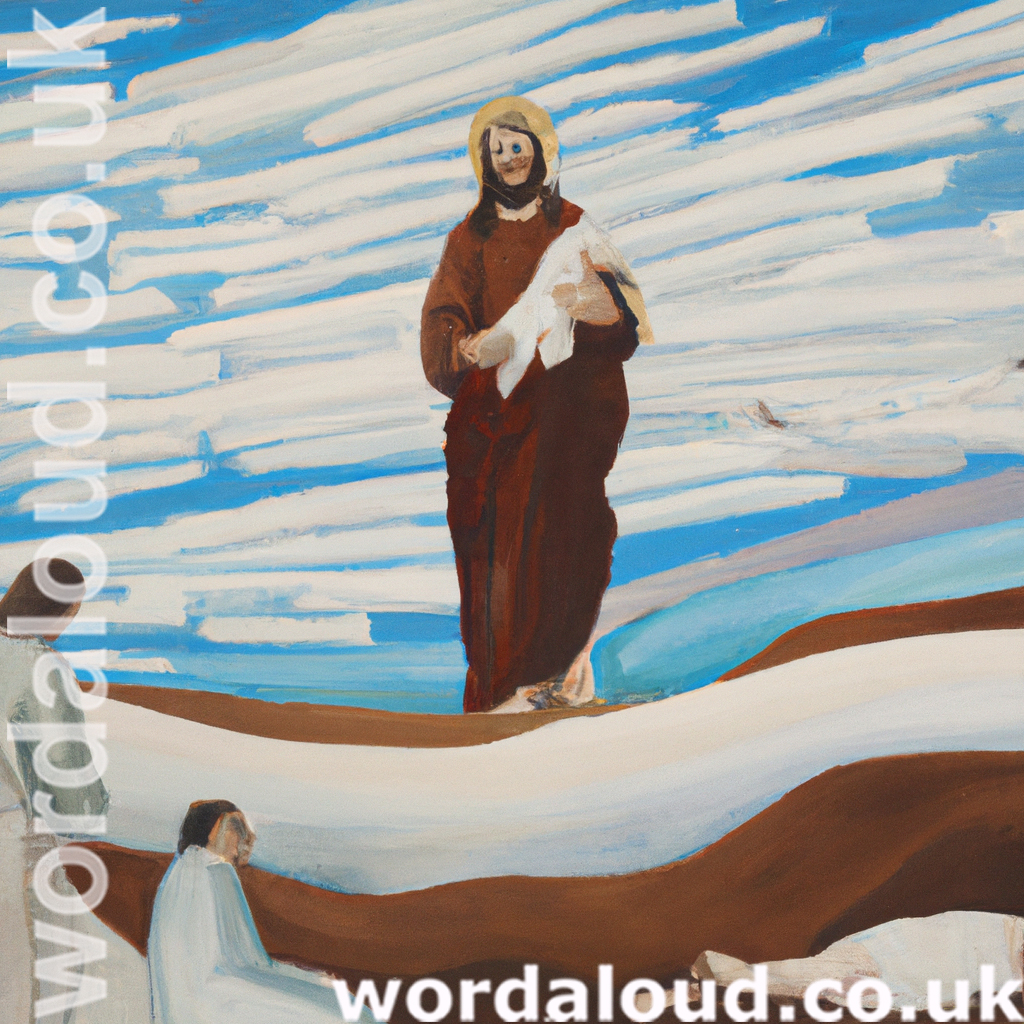
Christian Art | Parousia | Second Coming | Lamb Of God, You Take Away The Sins Of The World Luke 17: 26-37 (Audio Bible KJV, Spoken Word) Early Christian thought about the Parousia – the second coming – was largely influenced by the teachings of Jesus and the writings of Saint Paul. In the early Christian community, expectation of Christ’s return was strong, and many Christians believed that it would happen in their lifetime. This belief is evident in the New Testament, where the authors express a sense of urgency in their writings and encourage their readers to be prepared for Christ’s imminent return. As Christianity spread throughout the Roman Empire, the idea of the Parousia became more complex and nuanced. Theological debates arose around the nature of Christ’s return and the events that would precede it. Some theologians, such as Origen and Augustine, saw the Parousia as a spiritual event that was already happening in the Church. Others, such as the Montanists and the millenarians, believed in a literal, physical return of Christ and the establishment of a new, earthly Kingdom. In the Middle Ages, the Parousia was often associated with apocalypticism and the idea of a final, cataclysmic battle between good and evil – the last battle. The idea of the Antichrist, who would precede Christ’s return, became a popular theme in Christian literature, and the book of Revelation (Apocalypse – meaning to reveal, to uncover) was interpreted as a prophetic guide to the end of the world. Biblical Basis For The Parousia | The Second Coming The concept of the Parousia, or the Second Coming of Jesus Christ, is central to Christian eschatology and is supported by numerous biblical passages in both the Old and New Testaments. In the Old Testament, there are numerous passages that refer to the coming of a Messiah who will restore Israel and bring about the final judgment. For example, in Daniel 7:13-14, it is written: ‘I saw in the night visions, and, behold, one like the Son of man came with the clouds of heaven, and came to the Ancient of days, and they brought him near before him. And there was given him dominion, and glory, and a kingdom, that all people, nations, and languages, should serve him: his dominion is an everlasting dominion, which shall not pass away, and his kingdom that which shall not be destroyed.’ This passage describes a divine figure who comes in the clouds and is given dominion over all nations. In the New Testament, the Parousia is described in greater detail, particularly in the teachings of Jesus and the writings of Saint Paul. Jesus speaks of his return in many passages, including Matthew 24:30-31, where Jesus says: ‘And then shall appear the sign of the Son of man in heaven: and then shall all the tribes of the earth mourn, and they shall see the Son of man coming in the clouds of heaven with power and great glory. And he shall send his angels with a great sound of a trumpet, and they shall gather together his elect from the four winds, from one end of heaven to the other.’ Here, Jesus describes his return in power and glory, accompanied by angels who gather Jesus’ elect from all over the world. In Saint Paul’s letters, the Parousia is also described in detail. In 1 Thessalonians 4:16-17, Saint Paul writes: ‘For the Lord himself shall descend from heaven with a shout, with the voice of the archangel, and with the trump of God: and the dead in Christ shall rise first: Then we which are alive and remain shall be caught up together with them in the clouds, to meet the Lord in the air: and so shall we ever be with the Lord.’ This passage describes a resurrection of the dead and the gathering of believers to meet the Lord Jesus in the air. The language and imagery used to describe the Parousia are often dramatic and apocalyptic in nature. The Parousia is often described as a time of judgment, when the righteous will be separated from the wicked, and God’s justice will be fully revealed. The imagery of clouds, trumpets, and angels is used to depict the power and glory of Christ’s return. Theological Interpretations Of The Parousia | Jesus’ Second Coming The concept of the Parousia has been interpreted in a variety of ways throughout Christian history. Dispensationalism Dispensationalism is a theological framework that emerged in the 19th Century and has since become popular among some evangelical and fundamentalist Christians. Dispensationalists believe that history is divided into distinct periods or ‘dispensations’, each of which is marked by a particular mode of divine revelation and a specific plan of salvation. According to dispensationalist theology, the Parousia will be preceded by a period of tribulation, during which the Antichrist will establish a one-world government and the Jews will be restored to their homeland. The Parousia itself will involve a physical, visible return of Christ, who will establish a thousand-year reign on earth before the final judgment. Preterism Preterism is a theological interpretation of the Parousia that holds that many of the prophecies in the New Testament, particularly those in the book of Revelation, were fulfilled in the first century AD. According to this view, the Parousia occurred in a spiritual sense when Christ ascended to heaven and sent the Holy Spirit to empower the Church. Preterists argue that the tribulation and other end-time events predicted in the New Testament were fulfilled in the destruction of the Temple in Jerusalem in AD 70. Postmillennialism Postmillennialism is a theological view that holds that the Parousia will occur after a period of history in which the Church will gradually bring about the kingdom of God on earth. According to this view, the Church will spread the gospel throughout the world, and social, political, and economic conditions will gradually improve. Eventually, Christ will return to a world that has been largely transformed by the Gospel. Amillennialism […]
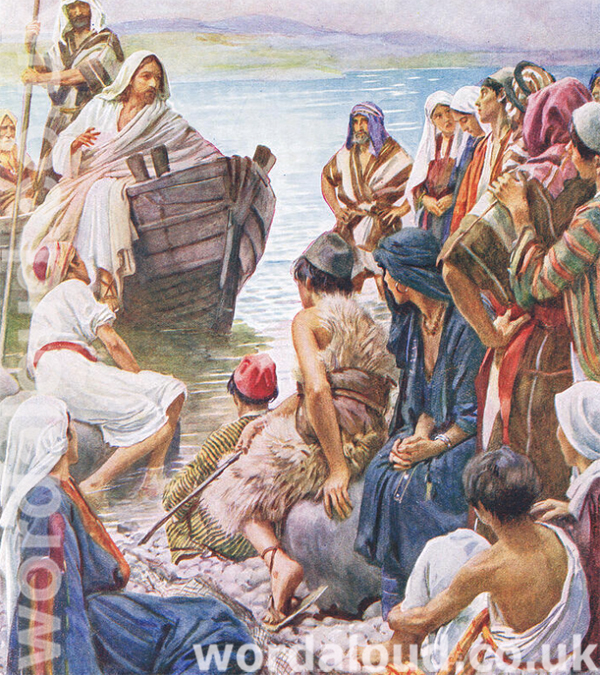
In his discourse, Saint Athanasius explores how divine Wisdom—identified with the eternal Word, the Son—imprints itself within creation. Saint Athanasius’s argument responds to Arian claims that the Son was a created being. For Athanasius, the phrase ‘The Lord created me in his works’ cannot mean that the eternal Wisdom itself was made; rather, it refers to the reflection or imprint of Wisdom in the created order [ … ]