

Christian Art | A Boy At Prayer | A Child With Jesus
Office Of Readings | Easter Tuesday | A Reading From The Addresses Of Saint Anastasius Of Antioch | Jesus Entered Into His Glory
‘Jesus Christ had to suffer and so enter his glory.’
Commentary On The Discourse By Saint Anastasius Of Antioch
‘It was necessary that Christ should suffer and so enter into his glory’
Saint Anastasius of Antioch offers a deeply theological meditation on one of the central mysteries of the Christian faith: that the immortal God truly suffered and died. Drawing on Scripture, the early Church’s understanding of the Incarnation, and Christ’s own words, Anastasius explains why this suffering was not only possible, but necessary. This paradox—that the impassible God underwent suffering—is not a contradiction but the heart of divine love revealed in Christ.
Paradox Of Divine Suffering
At first glance, the claim that God, who is ‘immortal and incapable of suffering’, could suffer seems impossible. Anastasius confronts this head-on. His key insight is rooted in a proper understanding of the Incarnation—that the eternal Word of God took on human nature without ceasing to be divine. In his divine nature, Christ remained impassible; in his human nature, he was able to suffer and die.
This is not mere philosophical speculation. It speaks directly to the credibility and the beauty of Christian belief. If Christ had not truly suffered, then his solidarity with human beings would be incomplete. But because the Son of God took on flesh, his suffering was real, and so was his compassion. Theologians would later call this the ‘communication of idioms’: we can say things like ‘God died on the cross’ not because divinity itself is mortal, but because the one who died is fully God and fully man in one person.
Fulfilment Of Prophecy And Divine Necessity
Anastasius emphasizes that Christ’s suffering was not a tragic accident, nor an unexpected twist in his mission. It was foretold ‘from the beginning’ in the Scriptures and declared openly by Christ himself. ‘We are going up to Jerusalem,’ Jesus tells his disciples, predicting with detail his betrayal, humiliation, and crucifixion.
This necessity—what the Church has often called the ‘divine must’—is not the result of constraint, but of love. God, who is all-powerful, was not forced to act this way. Rather, he chose this path as the most perfect expression of his mercy and justice. As Anastasius says, it was impossible for Christ not to suffer, not because God was bound by fate, but because love demanded it.
Glory Hidden In The Cross
The phrase ‘it was necessary that Christ should suffer and so enter into his glory’ comes from Jesus’ words to the disciples on the road to Emmaus (Luke 24:26). Anastasius draws this connection masterfully. The suffering of Christ is not a prelude to glory—it is the very means by which glory is revealed. This paradox stands at the heart of Easter: the cross is not the defeat of Christ, but the moment of his deepest victory.
Indeed, Anastasius refers to Jesus’ own prayer: ‘Father, glorify me with the glory I had with you before the world began.’ (John 17:5) Christ’s crucifixion is presented here as a moment of glorification, not because of the pain, but because through it the love and obedience of the Son are fully made manifest. This is echoed in Philippians 2:8–9: ‘He humbled himself, becoming obedient unto death, even death on a cross. Therefore God highly exalted him…’
The Spirit And The Cross
In the final part of the text, Anastasius links the gift of the Holy Spirit to Christ’s glorification. Drawing from John’s Gospel, he notes that ‘the Spirit had not yet been given, because Jesus had not yet been glorified’. This glorification, we learn, is not the resurrection alone but the entire Paschal Mystery—especially the cross. The descent of the Spirit at Pentecost is thus not a separate chapter from Easter, but its fruit.
Here, we are reminded that Christian life is always Trinitarian: the Father sends the Son; the Son suffers, dies, and is glorified; and from the glorified Son, the Spirit is poured out. The Church, born from the side of the crucified Jesus Christ and animated by the Spirit, becomes the vessel of this love to the world.
Christ The Author Of Life
Saint Anastasius calls Christ ‘the author of life’—a term used by Peter in Acts 3:15. But this author did not stay removed from the human story; he entered into it, took on its sorrows, and rewrote its ending. By passing through death, Jesus unlocked life for all. This is not only a theological truth but an existential comfort: we do not follow a distant God, but one who has shared our suffering and now leads us into glory.

A Reading From The Addresses Of Saint Anastasius Of Antioch
Christ, who has shown by his words and actions that he was truly God and Lord of the universe, said to his disciples as he was about to go up to Jerusalem: We are going up to Jerusalem now, and the Son of Man will be handed over to the Gentiles and the chief priests and scribes to be scourged and mocked and crucified.
These words bore out the predictions of the prophets, who had foretold the death he was to die in Jerusalem. From the beginning holy Scripture had foretold Christ’s death, the sufferings that would precede it, and what would happen to his body afterwards. Scripture also affirmed that these things were going to happen to the God who is immortal and incapable of suffering.
How could he have been God? We can learn this by reflecting on the true nature of the Incarnation and finding there the reason why we can believe truly and rightly in both his passion and his impassibility: both that he suffered and that it was not in his nature to suffer – the reason, in other words, why the Word of God, otherwise impassible, came to his passion. In fact, man could have been saved in no other way, as Christ alone knew, and those to whom he revealed it; for he knows all the secrets of the Father, even as the Spirit penetrates the depths of all mysteries.
It was necessary for Christ to suffer: it was impossible for his passion not to have happened. He said so himself when he called his companions dull and slow to believe because they failed to recognise that he had to suffer and so enter into his glory. Leaving behind him the glory that had been his with the Father before the world was made, he had gone forth to save his people. This salvation, however, could be achieved only by the suffering of the author of our life, as Paul taught when he said that the author of life himself was made perfect through suffering. Because of us he was deprived of his glory for a little while, the glory that was his as the Father’s only-begotten Son, but through the cross this glory is seen to have been restored to him in a certain way in the body that he had assumed. Explaining what water the Saviour referred to when he said: He that has faith in me shall have rivers of living water flowing from within him, John says in his gospel that he was speaking of the Holy Spirit which those who believed in him were to receive, for the Spirit had not yet been given because Jesus had not yet been glorified. The glorification he meant was his death upon the cross for which the Lord prayed to the Father before undergoing his passion, asking his Father to give him the glory that he had in his presence before the world began.



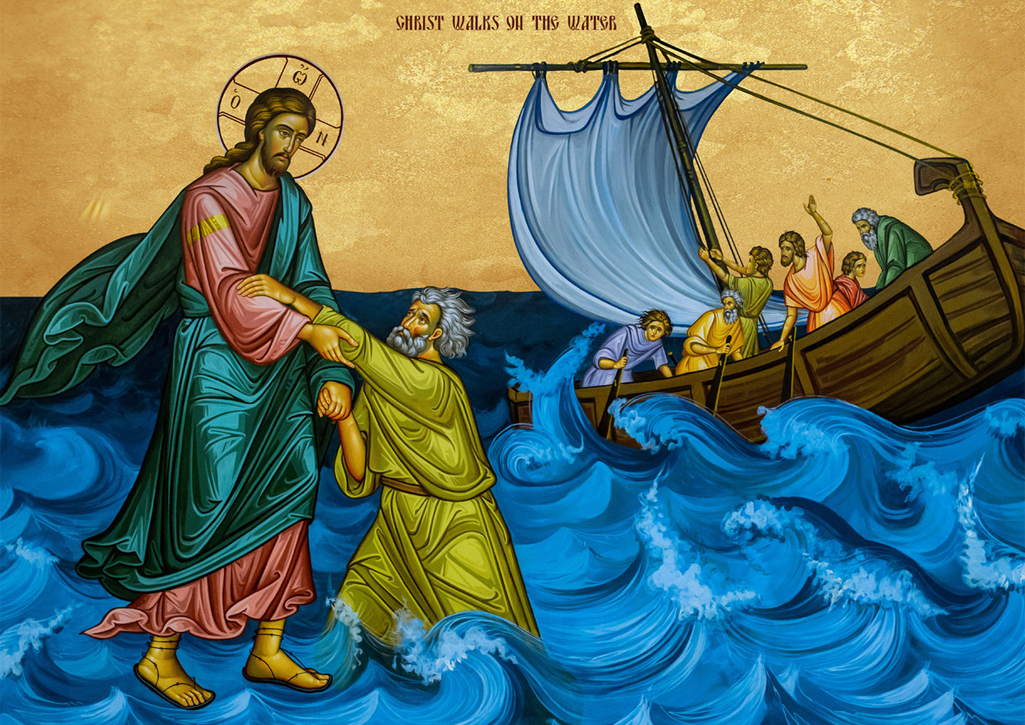
Jesus has fed the multitude, the multiplication of loaves and fish prefiguring the Eucharist, through which all share, in community, the body and blood of Christ, becoming one. Now Jesus sends his disciples ahead of him, to cross the Sea of Galilee to the pagan regions on the other side, where the evangelizing mission will continue. There is symbolism here, as the early Christians are called upon by Matthew’s Gospel to make transition from the old observances to the new Law of Jesus’ love. Jesus meanwhile takes time alone to pray [ … ]
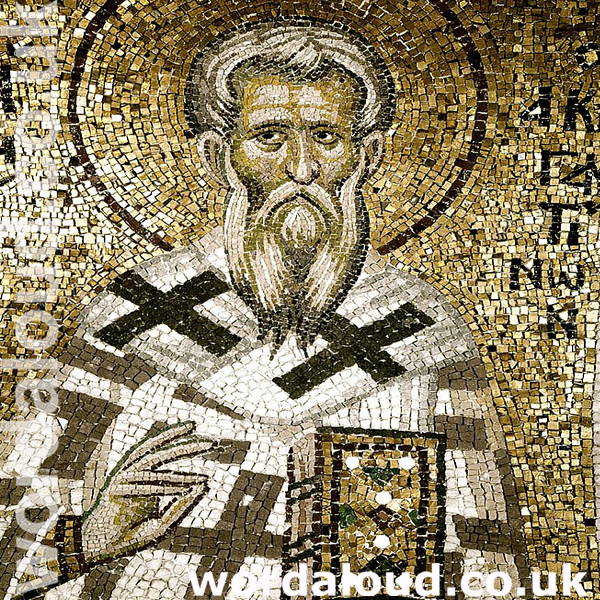
Come, eat your bread in gladness and drink your wine with a cheerful heart, for your works have been pleasing to God. If we would interpret this text in its obvious and ordinary sense, it would be correct to call it a righteous exhortation, in which Ecclesiastes counsels us to embrace a simple way of life and to be led by doctrines which involve a genuine faith in God. Then we may eat our bread in gladness and drink our wine with a cheerful heart. We will not fall into slanderous speech nor be involved in anything devious; rather we should think that which is right, and, insofar as we can, we should help the poor and destitute with mercy and generosity, truly dedicated to those pursuits and good deeds which please God [ … ]
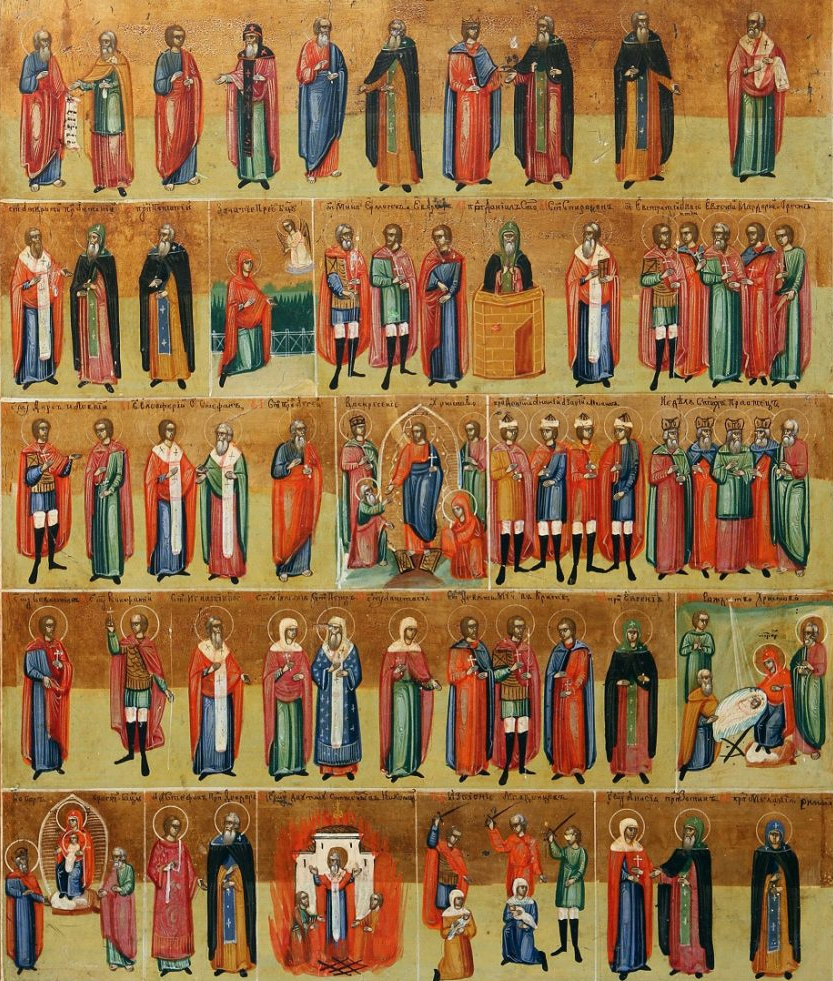
The seventy have been sent ahead of Jesus to prepare the way for Jesus; they have been sent to the towns and places – the ‘cities’ of the Gospels are for the most part small towns and villages – to which Jesus intended to travel. These disciples have been sent in a spirit of poverty, told by Jesus to trust in God, and so as a corollary in human hospitality. The disciples have borne the message that the kingdom of God is imminent. In humility as in poverty, they have been sent by Jesus as evangelists. In Bible verses, we witness the first missionaries, swelled with good news, return to Lord Jesus to share the joy of the initial, explosive success of their work of evangelizing [ … ]
