

Office Of Readings | Tuesday Of Holy Week | A Reading From The Book Of Saint Basil On The Holy Spirit | One Death For The World, One Resurrection From The Dead
‘There is one death for the world, and one resurrection from the dead.’
In this reading, Saint Basil the Great—a towering theological mind of the early Church—guides us into the heart of the Paschal Mystery. His meditation on Christ’s passion and our participation in it through baptism offers profound insight into the transformative meaning of Holy Week. Basil’s message is simple but immense: by one death and resurrection—Christ’s—the world was saved. And we, through baptism, are drawn into that saving mystery.
Divine Plan For Restoration
Saint Basil begins by locating Christ’s passion within a divine plan of healing. Humanity, he writes, was estranged from God ‘by disobedience’, and the coming of Christ in the flesh was God’s response to this estrangement—a plan to lift us up, to restore us ‘to friendship with himself’.
This echoes the foundational theme of salvation history: that God’s response to sin is not abandonment, but mercy. Like the father of the prodigal son, God does not wait passively for our return but actively sends the Son to seek us, heal us, and raise us from our fall. The Incarnation, then, is not simply God joining our condition—it is the launching of a rescue mission.
As Saint Paul puts it, ‘God proves his love for us in that while we still were sinners Christ died for us.’ (Romans 5:8) Saint Basil draws out the depth of this love, highlighting that Christ not only came but ‘suffered, died on the cross, was buried, and rose from the dead’, all so that we could follow him—not only in life, but through death and into new life.
Imitating Christ’s Death | A Radical Call
Basil insists that it is not enough merely to admire Christ—we must imitate him. And not only in his gentleness or humility, but in his death.
This may strike us as paradoxical, even frightening. How can we imitate death? Basil, drawing from the Apostle Paul (Philippians 3:10–11), points to baptism as the way. In baptism, we are ‘buried with Christ’, and thus we begin to participate in the death that leads to resurrection.
This reflects the early Church’s theology of baptism as death and rebirth. Paul writes: ‘Do you not know that all of us who have been baptized into Christ Jesus were baptized into his death? … So we too might walk in newness of life.’ (Romans 6:3–4) For Basil, this is not metaphor but mystery: baptism is not merely symbolic, but a true spiritual dying to the old self.
Baptism As Burial |The Turning Point Of The Soul
Basil develops a compelling image from the racecourse: the runner must pause and turn to reverse direction. This ‘turning point’ is the soul’s death to sin—the end of one life, the beginning of another.
Here, Basil aligns with the ancient Greek idea of metanoia—a complete turning of the mind and heart. Baptism is not just a ceremony; it marks a decisive rupture with the past. The person who goes under the water dies to sin, dies to selfishness, and emerges a new creation. As Saint Cyril of Jerusalem taught his catechumens, ‘You were led by the hand to the holy pool of divine baptism… and each of you was asked if he believed… then you descended into the water and rose again: this was the symbol of Christ’s three days in the tomb.’
For Basil, baptism is not only personal but cosmic—it is our share in the one death and resurrection that saved the world.
Descent Into Hell | A Spiritual Journey
Basil speaks of our own ‘descent into hell’ as part of baptism. This draws on early Christian belief that Christ descended into the realm of the dead (cf. 1 Peter 3:19), breaking the bonds of death and raising up the righteous.
Our own descent is symbolic: a journey into the grave of self, into the silence where sin is stripped away. Through the waters of baptism, we go down into death so we may rise in purity and light. Basil references the Pauline idea of a new circumcision—not of the body, but ‘the complete stripping away of the unregenerate nature’ (cf. Colossians 2:11–12). This inner purification is radical and complete.
Basil echoes Psalm 51: ‘You will wash me, and I shall be whiter than snow.’ This is no moral surface-cleaning, but a re-creation of the soul, a re-forging of the human heart in the likeness of Christ.
A Once-For-All Mystery
Saint Basil ends by emphasizing that baptism happens only once—because Christ’s death and resurrection happened only once. There is only one Paschal Mystery. To be baptized is to be eternally linked to that singular moment in history when sin was defeated, death was conquered, and life broke through the grave.
This idea is liturgically embodied in the Church’s celebration of Easter. During the Easter Vigil, catechumens are baptized and clothed in white, recalling both the burial shroud and the garment of resurrection. As Saint Paul says, ‘If we have died with him, we believe that we shall also live with him.’ (Romans 6:8)
In this way, the Church teaches that baptism is not only the beginning of Christian life but the very pattern of Christian living: a daily dying and rising. As Saint Gregory of Nyssa wrote, ‘This is the goal of our life: to be conformed to the death of Christ, to be crucified with him, to be buried with him, and to rise again with him to new life.’

A Reading From The Book Of Saint Basil On The Holy Spirit
When mankind was estranged from him by disobedience, God our Saviour made a plan for raising us from our fall and restoring us to friendship with himself. According to this plan Christ came in the flesh, he showed us the gospel way of life, he suffered, died on the cross, was buried and rose from the dead. He did this so that we could be saved by imitation of him, and recover our original status as sons of God by adoption.
To attain holiness, then, we must not only pattern our lives on Christ’s by being gentle, humble and patient, we must also imitate him in his death. Taking Christ for his model, Paul said that he wanted to become like him in his death in the hope that he too would be raised from death to life.
We imitate Christ’s death by being buried with him in baptism. If we ask what this kind of burial means and what benefit we may hope to derive from it, it means first of all making a complete break with our former way of life, and our Lord himself said that this cannot be done unless a man is born again. In other words, we have to begin a new life, and we cannot do so until our previous life has been brought to an end. When runners reach the turning point on a racecourse, they have to pause briefly before they can go back in the opposite direction. So also when we wish to reverse the direction of our lives there must be a pause, or a death, to mark the end of one life and the beginning of another.
Our descent into hell takes place when we imitate the burial of Christ by our baptism. The bodies of the baptized are in a sense buried in the water as a symbol of their renunciation of the sins of their unregenerate nature. As the Apostle says: The circumcision you have undergone is not an operation performed by human hands, but the complete stripping away of your unregenerate nature. This is the circumcision that Christ gave us, and it is accomplished by our burial with him in baptism. Baptism cleanses the soul from the pollution of worldly thoughts and inclinations: You will wash me, says the psalmist, and I shall be whiter than snow. We receive this saving baptism only once because there was only one death and one resurrection for the salvation of the world, and baptism is its symbol.



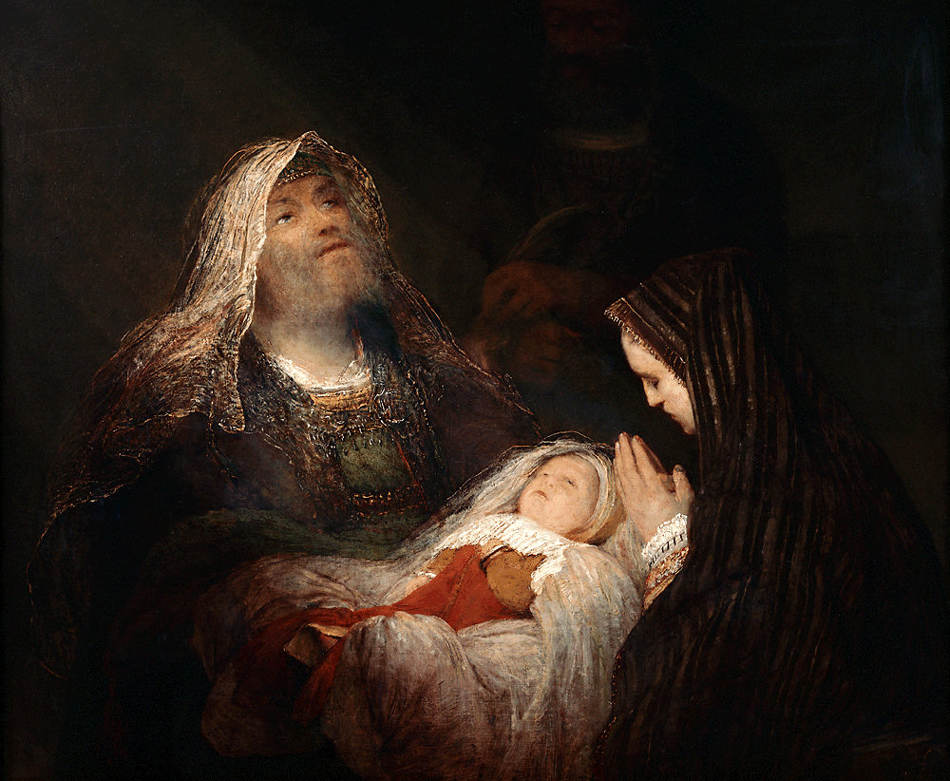
Let us bless ourselves as we seek refuge in the night’s sleep, our day’s labour done. Let us be be safe in Jesus. Let us pray. May our prayer come to God. It is perfectly done to accompany a reading of this psalm (91/90) with a recital of the nunc dimittis, and indeed fully to pray compline – the night prayer. Such prayer lends itself to peace and silence – a restful sleep [ … ]
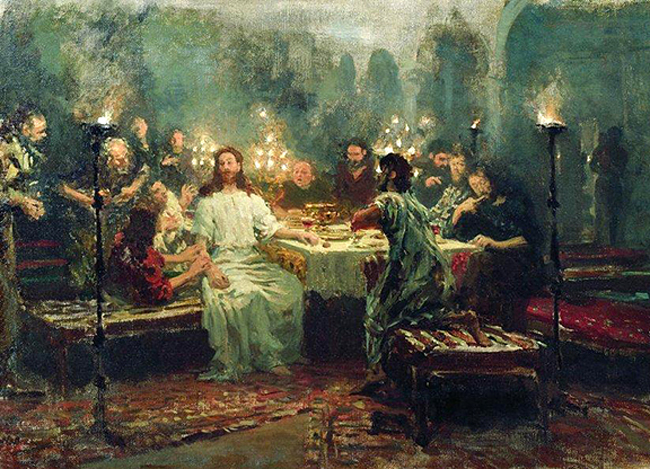
This is the third day of Holy Week. Through these verses of John’s Gospel, Jesus experiences great emotion, great sorrow, as he prepares for his betrayal and passion. He has given everything to Judas. He has washed his feet along with those of the other disciples. He shares an intimate and important meal with him. Judas has been one of the closest with Jesus for three years. Even now he shows compassion and does not name his betrayer to the other disciples. Instead he says: ‘One of you shall betray me.’ [ … ]

This reading from the Pastoral Constitution on the Church in the Modern World addresses the human concern with the subject of death. It approaches the subject not only as a biological event but as a spiritual and existential mystery that touches the deepest questions about meaning, identity, and destiny [ … ]
