
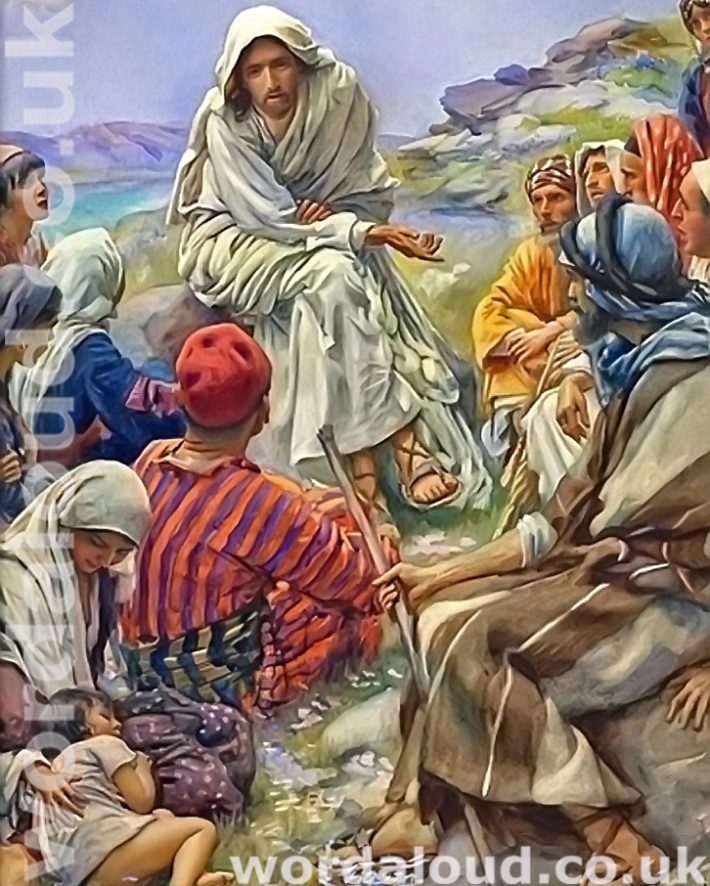
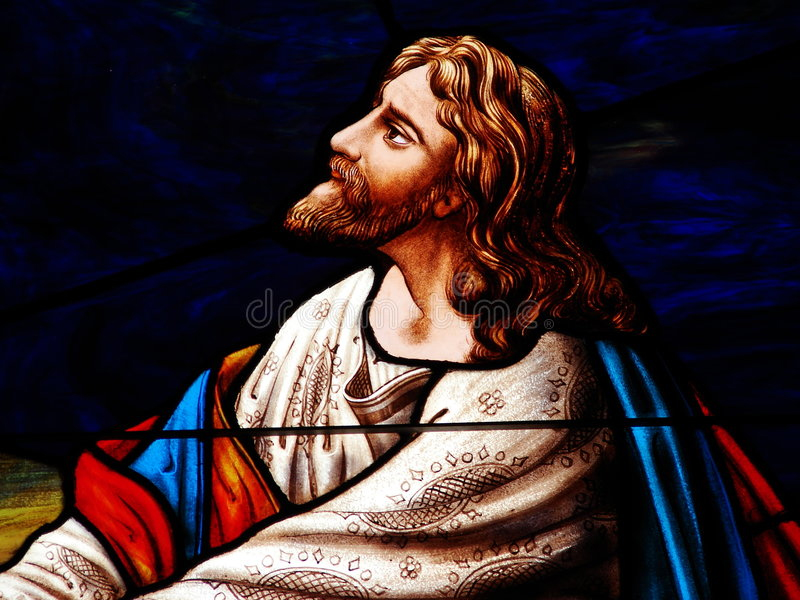
Christian Art | The Sermon On The Mount | Jesus Preaches The Beatitudes
Office Of Readings | Week 22, Thursday, Ordinary Time | The Beginning Of The Sermon Of Pope Saint Leo The Great On The Beatitudes | I Will Put My Law Within Them
‘I will put my law within them.’
Pope Saint Leo the Great situates the Sermon on the Mount within the wider pattern of salvation history. Christ’s ministry begins with acts of physical healing that attract crowds, but these serve as a preparation for his deeper teaching. The miracles are signs intended to draw attention to the doctrine that heals the soul. Thus, Leo highlights the shift from outward cures to inward remedies, presenting Christ as both healer of the body and physician of the heart.
The setting of the sermon is also given symbolic weight. By ascending a mountain, Christ evokes the figure of Moses who once received the law at Sinai. Yet Leo draws a deliberate contrast. Whereas the old covenant was given in thunder, lightning, and fear, the new covenant is communicated in tranquility and accessibility. This shift illustrates the transformation promised in Jeremiah 31:31–33: God’s law is no longer external but written within the heart, not on stone but in the inward being of believers.
Leo then turns to the Beatitudes as the clearest expression of this new law of grace. He begins with the first: ‘Blessed are the poor in spirit, for theirs is the kingdom of heaven.’ Poverty, understood in the sense of material deprivation alone, is not what Christ blesses. Instead, it is the poverty of spirit, which denotes humility and detachment, that marks those who belong to the kingdom. The teaching thus interiorises the law: rather than prescribing external obligations, it shapes inward dispositions.
Leo teaches continuity and transformation. The same God who spoke at Sinai now speaks through Christ, but the manner and purpose are renewed. Fear gives way to adoption, law to grace, outward observance to inward formation. In this way, the Sermon on the Mount embodies the fulfilment of prophecy and reveals the nature of the new covenant.
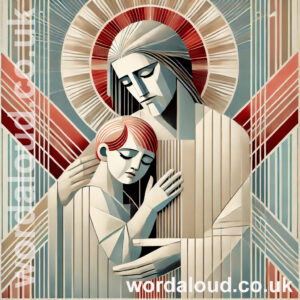
The Beginning Of The Sermon Of Pope Saint Leo The Great On The Beatitudes | I Will Put My Law Within Them
Dearly beloved, when our Lord Jesus Christ was preaching the Gospel of the kingdom and healing various illnesses throughout the whole of Galilee, the fame of his mighty works spread into all of Syria, and great crowds from all parts of Judaea flocked to the heavenly physician. Because human ignorance is slow to believe what it does not see, and equally slow to hope for what it does not know, those who were to be instructed in the divine teaching had first to be aroused by bodily benefits and visible miracles so that, once they had experienced his gracious power, they would no longer doubt the wholesome effect of his doctrine. In order, therefore, to transform outward healings into inward remedies, and to cure men’s souls now that he had healed their bodies, our Lord separated himself from the surrounding crowds, climbed to the solitude of a neighbouring mountain, and called the apostles to himself. From the height of this mystical site he then instructed them in the most lofty doctrines, suggesting both by the very nature of the place and by what he was doing that it was he who long ago had honoured Moses by speaking to him. At that time, his words showed a terrifying justice, but now they reveal a sacred compassion, in order to fulfil what was promised in the words of the prophet Jeremiah: Behold the days are coming, says the Lord, when I shall establish a new covenant with the house of Israel and with the house of Judah. After those days, says the Lord, I shall put my laws within them and write them on their hearts.
And so it was that he who had spoken to Moses spoke also to the apostles. Writing in the hearts of his disciples, the swift hand of the Word composed the ordinances of the new covenant. And this was not done as formerly, in the midst of dense clouds, amid terrifying sounds and lightning, so that the people were frightened away from approaching the mountain. Instead, there was a tranquil discourse which clearly reached the ears of all who stood nearby so that the harshness of the law might be softened by the gentleness of grace, and the spirit of adoption might dispel the terror of slavery.
Concerning the content of Christ’s teaching, his own sacred words bear witness; thus whoever longs to attain eternal blessedness can now recognise the steps that lead to that high happiness. Blessed, he says, are the poor in spirit, for theirs is the kingdom of heaven. It might have been unclear to which poor he was referring, if after the words Blessed are the poor, he had not added anything about the kind of poor he had in mind. For then the poverty that many suffer because of grave and harsh necessity might seem sufficient to merit the kingdom of heaven.
But when he says: Blessed are the poor in spirit, he shows that the kingdom of heaven is to be given to those who are distinguished by their humility of soul rather than by their lack of worldly goods.
Christian Prayer With Jesus Christ
Lord Jesus Christ, teacher and healer,
you revealed the new law of grace from the mountain,
writing it not on stone but within our hearts.
Grant us poverty of spirit,
that we may be freed from pride and possess your kingdom.
May your word shape our thoughts and actions,
so that, living as children of adoption,
we walk the path of the Beatitudes
and find our joy in you,
who live and reign with the Father and the Holy Spirit,
one God, for ever and ever. Amen.
Glossary Of Christian Terms
Sermon on the Mount – The collection of Jesus’ teachings in Matthew 5–7, including the Beatitudes.
Moses at Sinai – The giving of the law in Exodus 19–20, marked by thunder, lightning, and fear.
New Covenant – Promised in Jeremiah 31:31–33, fulfilled in Christ, written on the hearts of believers.
Law written on the heart – Interior transformation by grace, contrasting with the external inscription on stone tablets.
Adoption – Biblical term for becoming children of God through Christ (Romans 8:15).
Poor in spirit – A Beatitude (Matthew 5:3); denotes humility and detachment, not merely material poverty.
Beatitudes – The blessings proclaimed by Christ at the beginning of the Sermon on the Mount, describing the qualities of those who belong to the kingdom.



Saint Vincent of Lerins addresses one of the most enduring questions in Christian theology: how the faith can develop through time while remaining faithful to its original substance. Writing in the fifth century, at a time when the Church was clarifying its doctrine in the face of heresies, Vincent offers a nuanced account of continuity and growth. His central concern is to distinguish between true development and corruption of doctrine [ … ]
Psalm 69, attributed to King David, is a heartfelt and poignant expression of suffering and an earnest plea for deliverance. Unlike some of the more celebratory Psalms, this composition delves into the depths of despair and serves as a raw and unfiltered account of distress. The psalmist cries out for salvation in the face of adversity and persecution, making it a relatable and comforting text for those grappling with their own trials [ … ]
The Priestly Prayer of Jesus concludes the discourse of the Last Supper. Immediately afterwards, Jesus will be arrested, betrayed. Jesus prays to his Father in a very moving way. He offers to the Father the imminent sacrifice of himself, praying that his sacrifice may be acceptable to the Father, that his holy human nature may be glorified. Jesus’ prayer is spoken aloud, so that his disciples and we also may receive his last testament, as Jesus intercedes on our behalf with the Father [ … ]
