
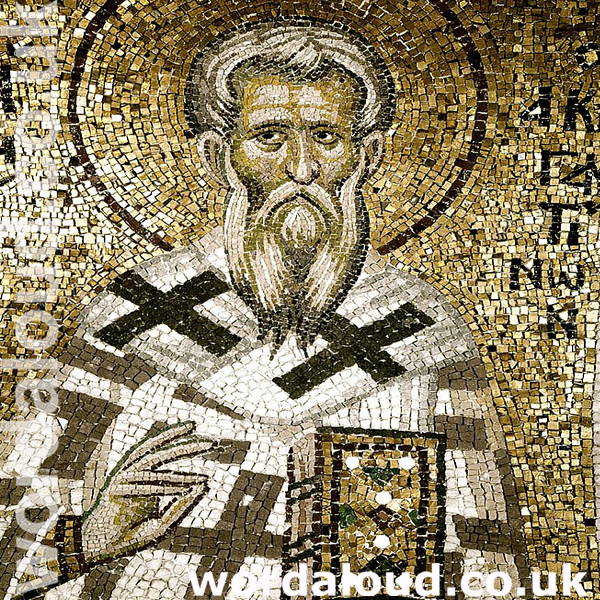
‘My spirit exults in the Lord.’
Saint Gregory of Agrigentum (c. 559–c. 630), also known as Saint Gregory Agrigentinus, was a Sicilian bishop renowned for his theological insight and pastoral leadership. Born near Agrigentum (modern-day Agrigento, Sicily), he embarked on a pilgrimage to the Holy Land at the age of eighteen. During this journey, he was ordained as a deacon by the Patriarch of Jerusalem. Later, while visiting Rome, he was consecrated as the Bishop of Agrigentum. His tenure as bishop was marked by a deep commitment to orthodox Christian teachings and the spiritual well-being of his community. Traditionally, he has been associated with a commentary on Ecclesiastes, though the authorship remains a subject of scholarly debate. Saint Gregory’s feast day is celebrated on November 23.
A Commentary On Ecclesiastes By Saint Gregory Of Agrigentum
Come, eat your bread in gladness and drink your wine with a cheerful heart, for your works have been pleasing to God. If we would interpret this text in its obvious and ordinary sense, it would be correct to call it a righteous exhortation, in which Ecclesiastes counsels us to embrace a simple way of life and to be led by doctrines which involve a genuine faith in God. Then we may eat our bread in gladness and drink our wine with a cheerful heart. We will not fall into slanderous speech nor be involved in anything devious; rather we should think that which is right, and, insofar as we can, we should help the poor and destitute with mercy and generosity, truly dedicated to those pursuits and good deeds which please God.
But a spiritual interpretation of the text leads us to a loftier meaning and teaches us to take this as the heavenly and mystical bread, which has come down from heaven, bringing life to the world, and to drink a spiritual wine with a cheerful heart, that wine which flowed from the side of the true vine at the moment of his saving passion. Of this the Gospel of our salvation says: When Jesus had taken bread and had blessed it, he said to his holy disciples and apostles, Take, eat; this is my body which is broken for you for the forgiveness of sins; and in like manner, he took the cup and said, All of you, drink of this: this is my blood of the new covenant, which will be shed for you and for many for the forgiveness of sins. For whoever eats of this bread and drinks this mystical wine enjoys true happiness and rejoices, exclaiming: You have put gladness into my heart.
Indeed, I think this is the bread and this is the wine that is referred to in the book of Proverbs by God’s subsistent Wisdom, Christ our Saviour, saying: Come, eat my bread and drink the wine I have mixed for you, hereby referring to our mystical sharing in the Word. For those worthy to receive this are ever clothed in the works of light, which shine like a bright light as the Lord says in the Gospel: Let your light shine before men, so that they may see your good works and glorify your Father who is in heaven. And, indeed, oil appears to flow continually over their heads, the oil that is the Spirit of truth, guarding and preserving them from all the harm of sin.




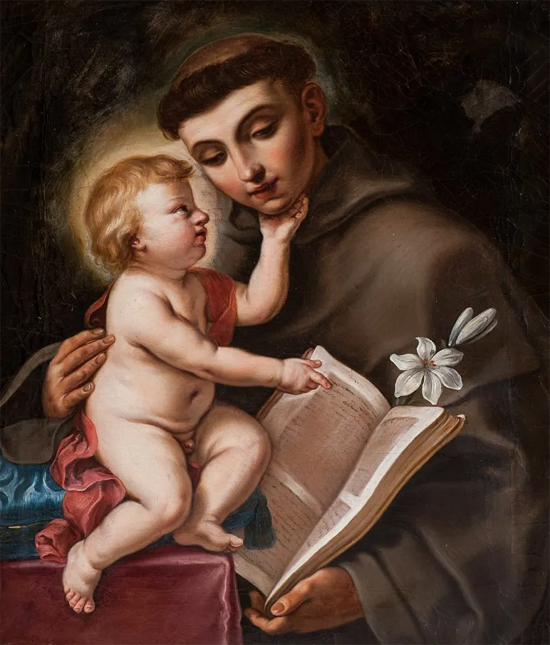
Help us to see ourselves as we truly are, Saint Anthony. Grant us the gift of self-awareness, that we may recognize our faults and weaknesses, and turn to God with contrite hearts. May we always remember that without God, we are nothing, and that all good things come from Him [ … ]

Jesus does not change his message in order to please people, even when that message proves unpalatable. He has not come to be all things to all men, but instead to tell us the truth. It is up to us, through faith, to hear and to understand and to accept Jesus’ teachings, and to know that our salvation is through him [ … ]

Saint Valentine is believed to have been a Christian priest in Rome during the reign of Emperor Claudius II, also known as Claudius Gothicus, in the third century. At that time, the Roman Empire was engaged in various military campaigns, and Claudius was having difficulty recruiting soldiers. Believing that unmarried men made better soldiers, he issued an edict prohibiting young men from marrying. The emperor thought that marriage would make men emotionally attached and therefore less willing to leave for war [ … ]
