

Christian Art | Prayer With Jesus | The Psalms
Psalm 9 | King James Audio Bible
YouTube: Psalm 9 | KJV | King James Audio Bible | Word Aloud
Psalm 9, a passionate song, is of praise and trust in God. It is a declaration of gratitude.
The psalmist declares his intention to praise God wholeheartedly. He is glad and joyful in knowledge and praise of God, expressing devotion.
The psalmist reflects on how his enemies have been defeated and have suffered setbacks because of God. He acknowledges God’s role as a fair judge and protector of justice.
The psalm then talks of how God has dealt with nations and evildoers, erasing their memory from history. The psalmist declares his belief that God’s power is everlasting and that God judges the world fairly.
In the midst of this, the psalmist sees God as a refuge for those who are oppressed and troubled.
The psalmist connects knowing God’s name with trusting in Him; he connects faith and refuge. A call goes out to everyone to sing praises to God and share His works with the world.
The psalmist observes that God remembers those who are treated unfairly and listens to their humble pleas for help. He asks God for mercy and help against those who hate him.
The psalmist credits God with saving him from death and promises to tell others about it. The psalm declares that God’s judgment shows His nature and that the wicked often fall because of their own actions.
The psalmist asks God to rise up and to remind people of their own limitations.


Psalm 9 | King James Audio Bible KJV
I will praise thee, O Lord, with my whole heart; I will show forth all thy marvellous works.
I will be glad and rejoice in thee: I will sing praise to thy name, O thou most High.
When mine enemies are turned back, they shall fall and perish at thy presence.
For thou hast maintained my right and my cause; thou satest in the throne judging right.
Thou hast rebuked the heathen, thou hast destroyed the wicked, thou hast put out their name for ever and ever.
O thou enemy, destructions are come to a perpetual end: and thou hast destroyed cities; their memorial is perished with them.
But the Lord shall endure for ever: he hath prepared his throne for judgment.
And he shall judge the world in righteousness, he shall minister judgment to the people in uprightness.
The Lord also will be a refuge for the oppressed, a refuge in times of trouble.
And they that know thy name will put their trust in thee: for thou, Lord, hast not forsaken them that seek thee.
Sing praises to the Lord, which dwelleth in Zion: declare among the people his doings.
When he maketh inquisition for blood, he remembereth them: he forgetteth not the cry of the humble.
Have mercy upon me, O Lord; consider my trouble which I suffer of them that hate me, thou that liftest me up from the gates of death:
That I may show forth all thy praise in the gates of the daughter of Zion: I will rejoice in thy salvation.
The heathen are sunk down in the pit that they made: in the net which they hid is their own foot taken.
The Lord is known by the judgment which he executeth: the wicked is snared in the work of his own hands. Higgaion.
The wicked shall be turned into hell, and all the nations that forget God.
For the needy shall not always be forgotten: the expectation of the poor shall not perish for ever.
Arise, O Lord; let not man prevail: let the heathen be judged in thy sight.
Put them in fear, O Lord: that the nations may know themselves to be but men.

Key Themes Of The Psalm For Reflection | Love Revealed By Jesus Christ
- Wholehearted Praise: The psalmist begins by declaring their intention to praise God wholeheartedly and acknowledge His marvelous works.
- Joy and Devotion: The psalmist expresses gladness and joy in God’s presence, demonstrating their deep devotion and connection.
- Victory Over Enemies: The psalmist reflects on the defeat of their enemies and acknowledges God’s role in their downfall.
- Divine Justice: The psalmist recognizes God as a just judge, upholding what is right and maintaining the cause of the oppressed.
- Overcoming Wickedness: The psalmist speaks of God’s actions in rebuking nations and putting an end to wickedness, erasing their memory.
- Eternal Nature of God: The psalmist emphasizes God’s enduring nature and His role as an eternal judge of righteousness.
- Divine Refuge: The psalmist finds comfort in God’s refuge, especially for those who are oppressed and troubled.
- Faith and Trust: The psalmist highlights the relationship between knowing God’s name and placing trust in Him.
- Sharing God’s Deeds: A call goes out to spread the knowledge of God’s works and praises among all people.
- God’s Attention to Injustice: The psalmist observes God’s concern for those treated unfairly and His response to their cries for help.
- Personal Petition for Mercy: The psalmist asks God for mercy and help against those who are enemies.
- Acknowledging Divine Deliverance: The psalmist credits God with saving them from death and promises to share their story.
- Downfall of the Wicked: The psalmist reflects on the traps that ensnare the wicked, symbolizing their own downfall.
- Divine Judgment Reveals Nature: The psalmist points out that God’s judgment reveals His nature and that the wicked often face consequences due to their own actions.
- Consequences for the Wicked: The psalmist asserts that the wicked will face consequences, while those in need won’t be forgotten.
- Recognition of Human Limitations: The psalmist ends by asking God to rise and remind people of their own limitations.
- Faith Amid Challenges: Psalm 9 is a song of faith and trust in God, celebrating His intervention, acknowledging His justice, and finding strength in times of adversity.




Saint Gregory begins by contrasting superficial knowledge of God with actual participation in God’s life. It is not enough to know about God; we must come to possess Him inwardly. Drawing on the doctrine of the imago Dei (image of God), Gregory teaches that the divine image implanted within us at creation has been tarnished by sin. Yet this image is not destroyed—it can be restored. The human heart, when purified, becomes like a polished mirror capable of reflecting divine light [ … ]
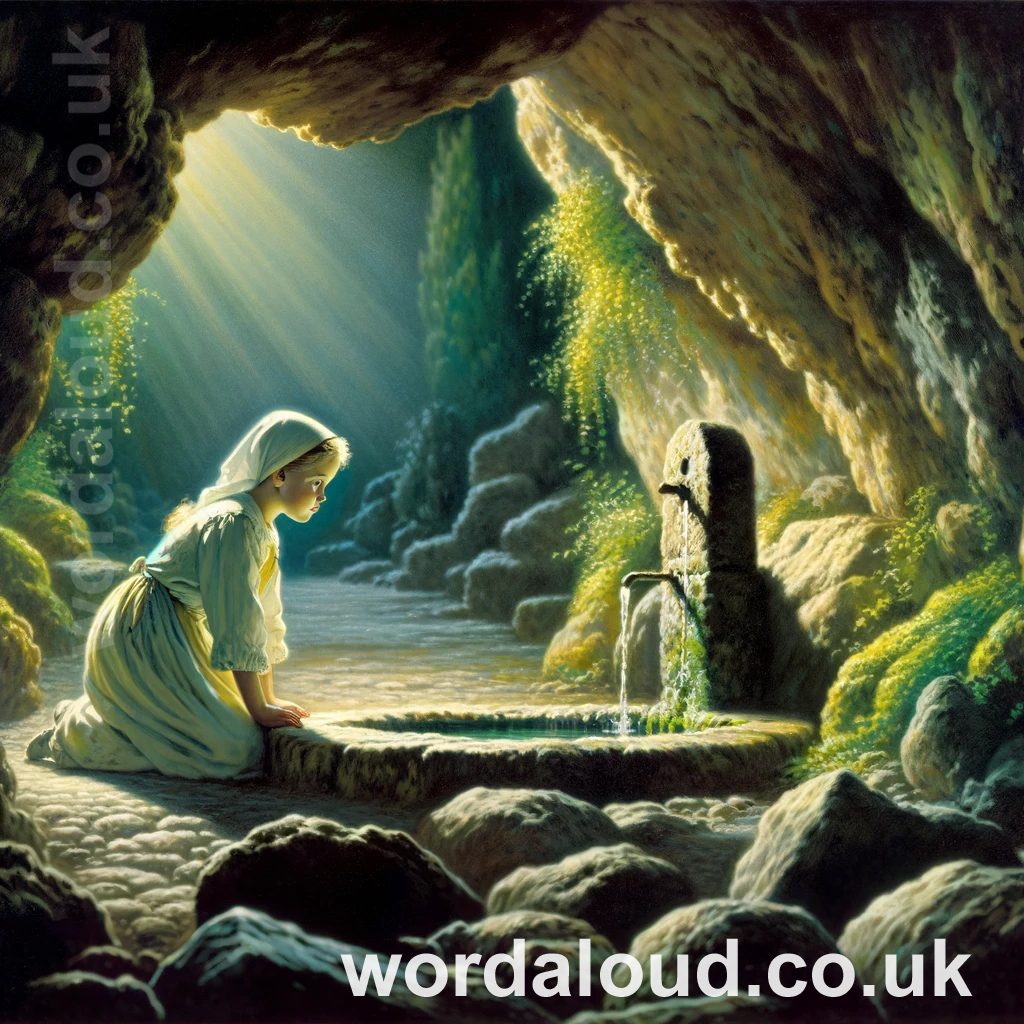
John 4:13-14 (KJV) ‘Jesus answered and said unto her, Whosoever drinketh of this water shall thirst again: But whosoever drinketh of the water that I shall give him shall never thirst; but the water that I shall give him shall be in him a well of water springing up into everlasting life.’ Introduction to the Life of Saint Bernadette Saint Bernadette Soubirous, a humble peasant girl from Lourdes, France, lived her life of faith, humility, and divine grace. Born on January 7, 1844, in the small town of Lourdes, Bernadette was the eldest of nine children in a poor and struggling family. Her father, François Soubirous, was a miller, and her mother, Louise, a laundress. The family lived in a former prison cell known as the Cachot, a damp and cramped space, according to their dire financial situation. Despite their poverty, the Soubirous family was deeply rooted in their Christian faith, a foundation that would profoundly shape Bernadette’s life and spiritual journey. Bernadette’s early years were marked by significant health challenges. She suffered from asthma and other respiratory ailments, which often left her weak and unable to attend school regularly. This lack of formal education meant that Bernadette struggled with reading and writing, and her understanding of Christian doctrine was limited. Nevertheless, she possessed a remarkable simplicity and purity of heart, qualities that would make her an ideal recipient of divine revelations. Bernadette’s life changed irrevocably on February 11, 1858, when she experienced the first of eighteen apparitions of the Blessed Virgin Mary at the grotto of Massabielle. On that cold winter day, Bernadette, her sister Toinette, and a friend were gathering firewood near the grotto when she heard a rustling sound and saw a beautiful lady dressed in white with a blue sash, holding a rosary. The lady, who later identified herself as the Immaculate Conception, appeared to Bernadette over the course of several months, delivering messages of penance, prayer, and the need for a chapel to be built at the site. Despite initial skepticism from her family and the local authorities, Bernadette remained steadfast in her account of the apparitions, enduring intense scrutiny and even ridicule. The apparitions drew enormous attention. Soon, people from all over France and beyond began to visit Lourdes, hoping to witness a miracle. One of the most significant messages conveyed by the Virgin Mary to Bernadette was the instruction to dig in the ground near the grotto, which led to the discovery of a spring. This spring, believed to have healing properties, became the focal point of the pilgrimage to Lourdes. Many miraculous healings have been attributed to the waters of Lourdes, reinforcing the belief in Bernadette’s visions and the sanctity of the site. As the apparitions concluded, Bernadette’s life took a different turn. In 1866, she joined the Sisters of Charity in Nevers, taking the name Sister Marie-Bernard. Her time in the convent was marked by continued poor health and humility, as she carried out menial tasks and lived a life of quiet service. Despite her physical suffering, Bernadette remained devout and accepted her hardships with grace, often repeating the phrase, “I am happier here in my little corner of the convent.” Her unwavering faith and dedication to her religious duties exemplified the depth of her spiritual commitment. Bernadette Soubirous passed away on April 16, 1879, at the age of 35, after a prolonged battle with tuberculosis. Her legacy, however, endured far beyond her earthly life. In 1933, she was canonized as a saint by Pope Pius XI, recognized for her humility, faith, and the miraculous events associated with her life. Today, millions of pilgrims flock to Lourdes each year, seeking spiritual renewal and physical healing at the site of her visions. Saint Bernadette’s life continues to inspire countless individuals around the world, reminding us of the power of faith, the virtue of humility, and the enduring presence of divine grace in our lives. To Visit Lourdes Visiting Lourdes, in the picturesque foothills of the Pyrenees in southwestern France, is an experience that transcends the physical journey, drawing pilgrims into a profound spiritual adventure. The small town, known for the Marian apparitions witnessed by Saint Bernadette Soubirous in 1858, has become one of the world’s most revered pilgrimage sites. As we approach the Sanctuary of Our Lady of Lourdes, the atmosphere is imbued with a palpable sense of reverence and anticipation. The grand basilicas, the tranquil Grotto of Massabielle and the gently flowing waters of the miraculous spring together create a sacred environment that invites reflection, prayer, and a deep connection with the divine. The focal point of any visit to Lourdes is the Grotto, where Bernadette experienced the apparitions of the Blessed Virgin Mary. Here, pilgrims can touch the rock face, light candles, and drink or bathe in the spring’s water, believed to possess healing properties. The profound silence and sense of sacredness at the Grotto allow visitors to contemplate their faith, seek solace and find spiritual renewal. The Rosary Basilica, with its mosaics, and the Basilica of the Immaculate Conception, perched above the Grotto, offer spaces for communal worship and personal meditation. The nightly candlelight processions, where pilgrims from around the globe unite in prayer and song, highlight the universal bond of faith and hope that Lourdes represents. Beyond its physical beauty and historical significance, visiting Lourdes offers a deeply personal and transformative experience. Pilgrims often arrive burdened with ailments, grief, or spiritual crises, seeking comfort and miracles. The stories of healing and faith that emerge from Lourdes are testimonies to the enduring power of belief and the intercession of the Blessed Virgin Mary. The communal aspect of the pilgrimage—sharing meals, prayers, and stories with fellow believers—fosters a sense of solidarity and mutual support. For many, the visit to Lourdes is a journey of healing, not only of the body but also of the soul, providing a renewed sense of purpose, peace, and spiritual clarity that lingers long after returning home. Prayer With Saint Bernadette Prayer for Intercession Dear […]

Jesus speaks of his crucifixion as he speaks of his being sent by his Father and of his being consubstantial with his Father. Jesus has made himself man, and this was necessary for our sakes. However, his being is most truly in heaven. He is divine. The entirety of Jesus’ being, as God the Son, is beyond our human comprehension. In order to be with Jesus, we must surrender our fears and our doubts and have faith in what has been promised to us. Jesus is from above – and he asks us to join him [ … ]