

Christian Art | Jesus And Saint Mark
Mark 12: 28-34 | KJV | King James Version | Audio Bible
Life Of Saint Mark
Saint Mark, also known as John Mark, holds a significant place in early Christian history as the author of the Gospel of Mark and a companion to both Saint Peter and Saint Paul. Born in Jerusalem, Mark grew up in a devout Jewish household. His mother, Mary, was an early Christian convert whose home served as a meeting place for the apostles and early believers (Acts 12:12).
Mark’s journey as a disciple of Christ began early. He joined Paul and Barnabas on their first missionary journey, but he left them in Pamphylia to return to Jerusalem (Acts 13:13). This decision initially caused tension between Paul and Barnabas, leading to their separation when Barnabas wanted to take Mark on a subsequent mission (Acts 15:37-39). However, Paul later recognized Mark’s value and sought his companionship, as evidenced by Paul’s request in his epistles: ‘Take Mark and bring him with thee: for he is profitable to me for the ministry’ (2 Timothy 4:11).
Saint Mark’s close relationship with Peter is well-documented. Peter refers to Mark as his ‘son,’ highlighting a spiritual mentorship and deep bond: ‘The church that is at Babylon, elected together with you, saluteth you; and so doth Marcus my son’ (1 Peter 5:13). According to Papias of Hierapolis, an early church bishop, Mark served as Peter’s interpreter and scribe, recording Peter’s accounts of Jesus’ life and ministry, which formed the basis of the Gospel of Mark.
Mark’s Gospel is the earliest and shortest of the four canonical Gospels. It is known for its straightforward, urgent narrative, focusing on the actions and miracles of Jesus, presenting Him as the suffering servant and Son of God. This Gospel provides vivid, concise accounts of Jesus’ ministry, emphasizing His deeds over His words.
Tradition holds that Mark later traveled to Alexandria, Egypt, where he founded the Church of Alexandria, one of the most significant early Christian communities. Eusebius of Caesarea, an early church historian, notes Mark’s evangelistic work in Alexandria and his role as its first bishop. Mark’s efforts greatly contributed to the spread of Christianity in the region.
Mark’s life ended in martyrdom. According to tradition, pagans in Alexandria, hostile to his teachings, seized him, tied him with ropes, and dragged him through the streets until he died. His martyrdom reflects his unwavering commitment to his faith and his dedication to spreading the Gospel.
The legacy of Saint Mark is profound. His Gospel continues to be a cornerstone of Christian teachings, providing a vivid account of Jesus’ life and ministry. His work as an evangelist and his contributions to the early Church in Alexandria highlight his pivotal role in the spread of Christianity.


The Gospel | Mark 12: 28-31 | KJV
And one of the scribes came, and having heard them reasoning together, and perceiving that he had answered them well, asked him, Which is the first commandment of all?
And Jesus answered him, The first of all the commandments is, Hear, O Israel; The Lord our God is one Lord:
And thou shalt love the Lord thy God with all thy heart, and with all thy soul, and with all thy mind, and with all thy strength: this is the first commandment.
And the second is like, namely this, Thou shalt love thy neighbour as thyself. There is none other commandment greater than these.
Personal Reflection And Meditation
Reflecting on the life of Saint Mark and his contributions to the early Church, we see a man who, despite initial setbacks, became a pillar of the Christian faith. His Gospel captures the essence of Jesus’ mission and His call to love God and neighbor wholeheartedly. Mark’s narrative encourages us to act with urgency and devotion, following Christ’s example.
Mark’s reconciliation with Paul serves as a powerful reminder of the importance of forgiveness and unity within the Christian community. His close relationship with Peter highlights the value of mentorship and guidance in spiritual growth. Mark’s life is a testament to the transformative power of faith and the profound impact of spreading the Gospel.
In our own lives, we can draw inspiration from Saint Mark’s perseverance and dedication. Despite challenges and moments of doubt, Mark remained steadfast in his mission, ultimately giving his life for his faith. His story encourages us to stay committed to our spiritual journey, seeking God’s guidance and strength in all that we do.
Prayer To Saint Mark
O Glorious Saint Mark, faithful disciple and evangelist of Christ, we turn to you in prayer, seeking your intercession and guidance. You witnessed the life and miracles of our Lord, capturing His teachings and actions with vivid clarity in your Gospel. Your words have inspired countless generations, leading them closer to the heart of Jesus.
Saint Mark, you faced many trials and challenges, yet your faith never wavered. You reconciled with those you had parted ways with, showing us the importance of forgiveness and unity. You founded the Church in Alexandria, spreading the Good News and nurturing the early Christian community with love and devotion.
Guide us, dear Saint Mark, as we strive to live out the commandments that Jesus taught us: to love God with all our heart, soul, mind, and strength, and to love our neighbors as ourselves. Help us to follow your example of perseverance and dedication, even in the face of adversity.
Intercede for us before the throne of God, that we may receive the grace and strength to overcome our own challenges. May your Gospel continue to enlighten our minds and hearts, leading us ever closer to the love and mercy of Christ.
Saint Mark, pray for us, that we may be faithful witnesses of the Gospel, spreading the light of Christ in our world. Amen.


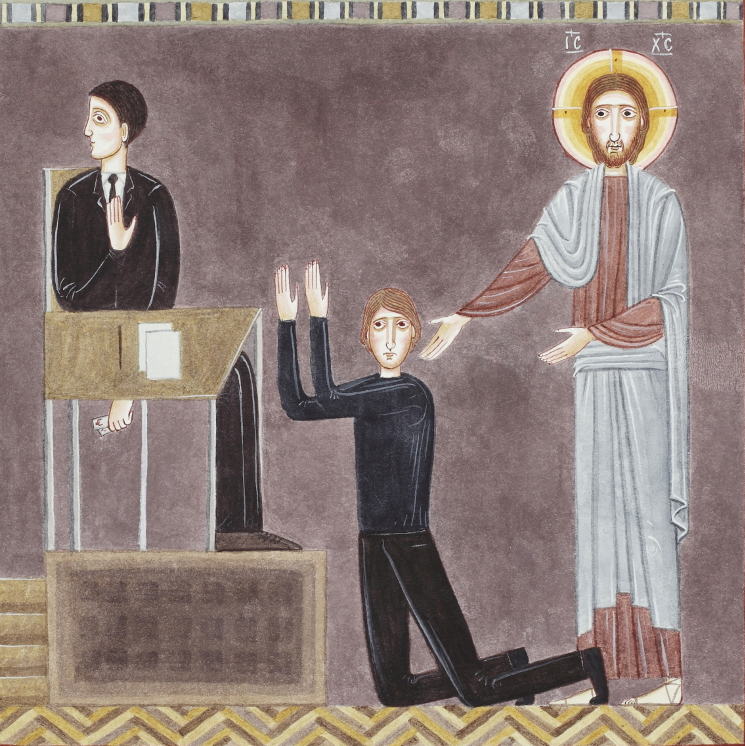
Jesus teaches his listeners the parable of the unjust judge in order to affirm for them the efficacy of prayer. If even this unrighteous judge will grant the widow’s request, he tells us, how much more will God vindicate his elect, and speedily. We are called upon by Jesus to live a life of prayer – to express and to strengthen our faith through prayer and to channel our ever enriched faith into further prayer. This is the way to orient our lives to God [ … ]

John 4:13-14 (KJV) ‘Jesus answered and said unto her, Whosoever drinketh of this water shall thirst again: But whosoever drinketh of the water that I shall give him shall never thirst; but the water that I shall give him shall be in him a well of water springing up into everlasting life.’ Introduction to the Life of Saint Bernadette Saint Bernadette Soubirous, a humble peasant girl from Lourdes, France, lived her life of faith, humility, and divine grace. Born on January 7, 1844, in the small town of Lourdes, Bernadette was the eldest of nine children in a poor and struggling family. Her father, François Soubirous, was a miller, and her mother, Louise, a laundress. The family lived in a former prison cell known as the Cachot, a damp and cramped space, according to their dire financial situation. Despite their poverty, the Soubirous family was deeply rooted in their Christian faith, a foundation that would profoundly shape Bernadette’s life and spiritual journey. Bernadette’s early years were marked by significant health challenges. She suffered from asthma and other respiratory ailments, which often left her weak and unable to attend school regularly. This lack of formal education meant that Bernadette struggled with reading and writing, and her understanding of Christian doctrine was limited. Nevertheless, she possessed a remarkable simplicity and purity of heart, qualities that would make her an ideal recipient of divine revelations. Bernadette’s life changed irrevocably on February 11, 1858, when she experienced the first of eighteen apparitions of the Blessed Virgin Mary at the grotto of Massabielle. On that cold winter day, Bernadette, her sister Toinette, and a friend were gathering firewood near the grotto when she heard a rustling sound and saw a beautiful lady dressed in white with a blue sash, holding a rosary. The lady, who later identified herself as the Immaculate Conception, appeared to Bernadette over the course of several months, delivering messages of penance, prayer, and the need for a chapel to be built at the site. Despite initial skepticism from her family and the local authorities, Bernadette remained steadfast in her account of the apparitions, enduring intense scrutiny and even ridicule. The apparitions drew enormous attention. Soon, people from all over France and beyond began to visit Lourdes, hoping to witness a miracle. One of the most significant messages conveyed by the Virgin Mary to Bernadette was the instruction to dig in the ground near the grotto, which led to the discovery of a spring. This spring, believed to have healing properties, became the focal point of the pilgrimage to Lourdes. Many miraculous healings have been attributed to the waters of Lourdes, reinforcing the belief in Bernadette’s visions and the sanctity of the site. As the apparitions concluded, Bernadette’s life took a different turn. In 1866, she joined the Sisters of Charity in Nevers, taking the name Sister Marie-Bernard. Her time in the convent was marked by continued poor health and humility, as she carried out menial tasks and lived a life of quiet service. Despite her physical suffering, Bernadette remained devout and accepted her hardships with grace, often repeating the phrase, “I am happier here in my little corner of the convent.” Her unwavering faith and dedication to her religious duties exemplified the depth of her spiritual commitment. Bernadette Soubirous passed away on April 16, 1879, at the age of 35, after a prolonged battle with tuberculosis. Her legacy, however, endured far beyond her earthly life. In 1933, she was canonized as a saint by Pope Pius XI, recognized for her humility, faith, and the miraculous events associated with her life. Today, millions of pilgrims flock to Lourdes each year, seeking spiritual renewal and physical healing at the site of her visions. Saint Bernadette’s life continues to inspire countless individuals around the world, reminding us of the power of faith, the virtue of humility, and the enduring presence of divine grace in our lives. To Visit Lourdes Visiting Lourdes, in the picturesque foothills of the Pyrenees in southwestern France, is an experience that transcends the physical journey, drawing pilgrims into a profound spiritual adventure. The small town, known for the Marian apparitions witnessed by Saint Bernadette Soubirous in 1858, has become one of the world’s most revered pilgrimage sites. As we approach the Sanctuary of Our Lady of Lourdes, the atmosphere is imbued with a palpable sense of reverence and anticipation. The grand basilicas, the tranquil Grotto of Massabielle and the gently flowing waters of the miraculous spring together create a sacred environment that invites reflection, prayer, and a deep connection with the divine. The focal point of any visit to Lourdes is the Grotto, where Bernadette experienced the apparitions of the Blessed Virgin Mary. Here, pilgrims can touch the rock face, light candles, and drink or bathe in the spring’s water, believed to possess healing properties. The profound silence and sense of sacredness at the Grotto allow visitors to contemplate their faith, seek solace and find spiritual renewal. The Rosary Basilica, with its mosaics, and the Basilica of the Immaculate Conception, perched above the Grotto, offer spaces for communal worship and personal meditation. The nightly candlelight processions, where pilgrims from around the globe unite in prayer and song, highlight the universal bond of faith and hope that Lourdes represents. Beyond its physical beauty and historical significance, visiting Lourdes offers a deeply personal and transformative experience. Pilgrims often arrive burdened with ailments, grief, or spiritual crises, seeking comfort and miracles. The stories of healing and faith that emerge from Lourdes are testimonies to the enduring power of belief and the intercession of the Blessed Virgin Mary. The communal aspect of the pilgrimage—sharing meals, prayers, and stories with fellow believers—fosters a sense of solidarity and mutual support. For many, the visit to Lourdes is a journey of healing, not only of the body but also of the soul, providing a renewed sense of purpose, peace, and spiritual clarity that lingers long after returning home. Prayer With Saint Bernadette Prayer for Intercession Dear […]
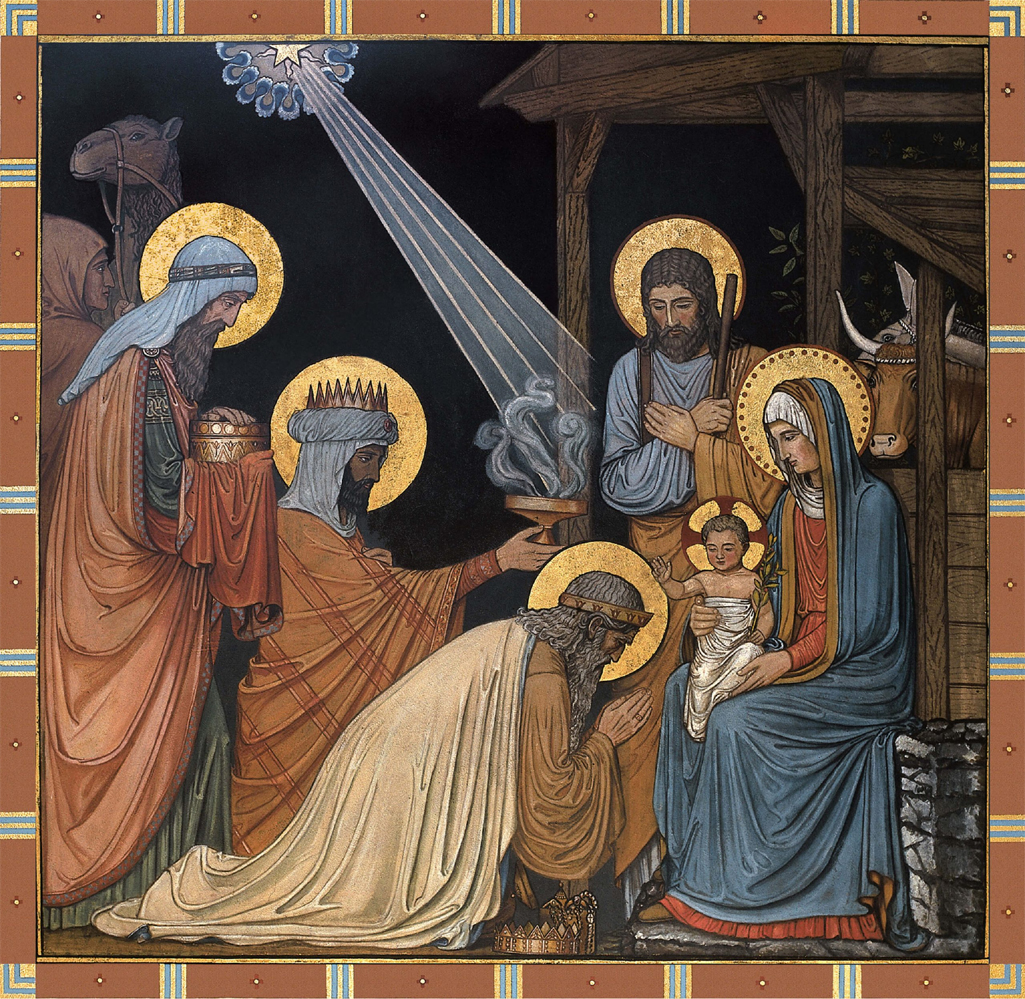
The Epiphany is an extraordinary event in the Bible, whereby we hear of the gift and revelation of Christ to all mankind. The three wise men have long studied the heavens; they have been looking for signs, for truths to guide them. They are of the east, of the orient, not of the Jewish people. They have seen the new star that is there to signify Christ and have come on pilgrimage to seek, to find and to worship Jesus [ … ]