
Christian Art | George Herbert | The Temple | The Church | Sunday
George Herbert | The Temple | The Church | Sunday
O day most calm, most bright,
The fruit of this, the next worlds bud,
Th’ indorsement of supreme delight,
Writ by a friend, and with his bloud;
The couch of time; cares balm and bay:
The week were dark, but for thy light:
Thy torch doth show the way.
The other dayes and thou
Make up one man; whose face thou art,
Knocking at heaven with thy brow:
The worky-daies are the back-part;
The burden of the week lies there,
Making the whole to stoup and bow,
Till thy release appeare.
Man had straight forward gone
To endlesse death: but thou dost pull
And turn us round to look on one,
Whom, if we were not very dull,
We could not choose but look on still;
Since there is no place so alone,
The which he doth not fill.
Sundaies the pillars are,
On which heav’ns palace arched lies:
The other dayes fill up the spare
And hollow room with vanities.
They are the fruitfull beds and borders
In Gods rich garden: that is bare,
Which parts their ranks and orders.
The Sundaies of mans life,
Thredded together on times string,
Make bracelets to adorn the wife
Of the eternall glorious King.
On Sunday heavens gate stands ope;
Blessings are plentifull and rife,
More plentifull then hope.
This day my Saviour rose,
And did inclose this light for his:
That, as each beast his manger knows,
Man might not of his fodder misse.
Christ hath took in this piece of ground,
And made a garden there for those
Who want herbs for their wound.
The rest of our Creation
Our great Redeemer did remove
With the same shake, which at his passion
Did th’ earth and all things with it move:
As Samson bore the doores away,
Christs hands, though nail’d, wrought our salvation,
And did unhinge that day.
The brightnesse of that day
We sullied by our foul offence:
Wherefore that robe we cast away,
Having a new at his expence,
Whose drops of bloud paid the full price,
That was requir’d to make us gay,
And fit for Paradise.
Thou art a day of mirth:
And where the week-dayes trail on ground,
Thy flight is higher, as thy birth.
O let me take thee at the bound,
Leaping with thee from sev’n to sev’n,
Till that we both, being toss’d from earth,
Flie hand in hand to heav’n!

George Herbert | The Temple | The Church | Sunday
Herbert’s poem celebrates Sunday as a day set apart, a divine gift imbued with rest, renewal, and redemption. Sunday is portrayed as both a temporal sanctuary and a spiritual gateway, lifting the believer from earthly toil to heavenly contemplation. The poem’s intricate structure mirrors its thematic duality: Sunday is simultaneously rooted in the physical rhythms of the week and oriented toward eternal life.
The opening stanzas highlight Sunday’s pivotal role within time. It is ‘the couch of time’, offering solace amid life’s burdens, and a ‘torch’ illuminating the path to divine truths. Herbert frames Sunday as the ‘face’ of the week, its crown and culmination, while the workdays bear the ‘burden’ of temporal concerns. This contrast elevates Sunday as a day when humanity stands ‘knocking at heaven with thy brow’, poised between the mundane and the divine.
Herbert’s metaphors deepen the theological resonance of the poem. Sunday is likened to ‘pillars’ that uphold heaven’s palace, emphasizing its foundational role in spiritual life. The ‘fruitful beds and borders’ of the other days are necessary yet incomplete without Sunday, which acts as the sacred ‘garden’ where Christ tends to human wounds. This imagery reflects the Sabbath’s redemptive character, as it transforms time into a vessel of grace.
The poem also explores Sunday’s cosmic significance through Christ’s resurrection. Herbert invokes the image of Samson unhinging doors to illustrate how Christ’s sacrifice redefined the Sabbath, making it a day of victory over sin and death. The ‘garden’ becomes a reclaimed Eden, a place where believers find healing and nourishment. By aligning Sunday with the redemptive arc of salvation history, Herbert elevates its spiritual importance beyond a mere day of rest.
The poet’s language conveys both awe and intimacy. Herbert acknowledges humanity’s guilt—’We sullied by our foul offence’—but emphasizes the transformative power of grace. Christ’s ‘drops of blood’ not only pay the price of redemption but also clothe believers in a ‘robe’ fit for Paradise. This interplay of sin and salvation encapsulates the central Christian narrative, with Sunday as its recurring testament.
The closing stanzas soar with eschatological hope. Sunday is a ‘day of mirth’, a time when earthly cares give way to joyful worship. Herbert envisions the believer leaping ‘from seven to seven’, transcending the cycle of time to join in eternal praise. This upward motion reflects the soul’s ascent toward God, where the Sabbath’s temporal blessings find their fulfillment in everlasting communion.
Herbert’s craftsmanship is as precise as his theology. The poem’s balanced structure and measured rhythm echo the harmony Sunday brings to life. Its progression—from rest to redemption, from time to eternity—mirrors the spiritual journey it describes. Herbert’s ability to weave profound theological insight into vivid, accessible imagery makes this poem a timeless meditation on the sacredness of the Sabbath.


Psalm 50 is a profound exploration of God’s authority, the meaning of true worship, and the imperative of righteous living. The psalm condemns empty rituals and hypocrisy while calling for genuine, heart-centred relationship with God. The psalm balances warnings of judgment with the promise of deliverance and salvation for those who seek God with sincerity and integrity [ … ]
In The City Of God, Saint Augustine defines the nature of true sacrifice and its relation to union with God. He distinguishes outward ritual from inward intention: a sacrifice is not simply an act performed, but a work directed to God as its final end. Its purpose is communion with the divine and the attainment of true happiness, which consists in clinging to God [ … ]
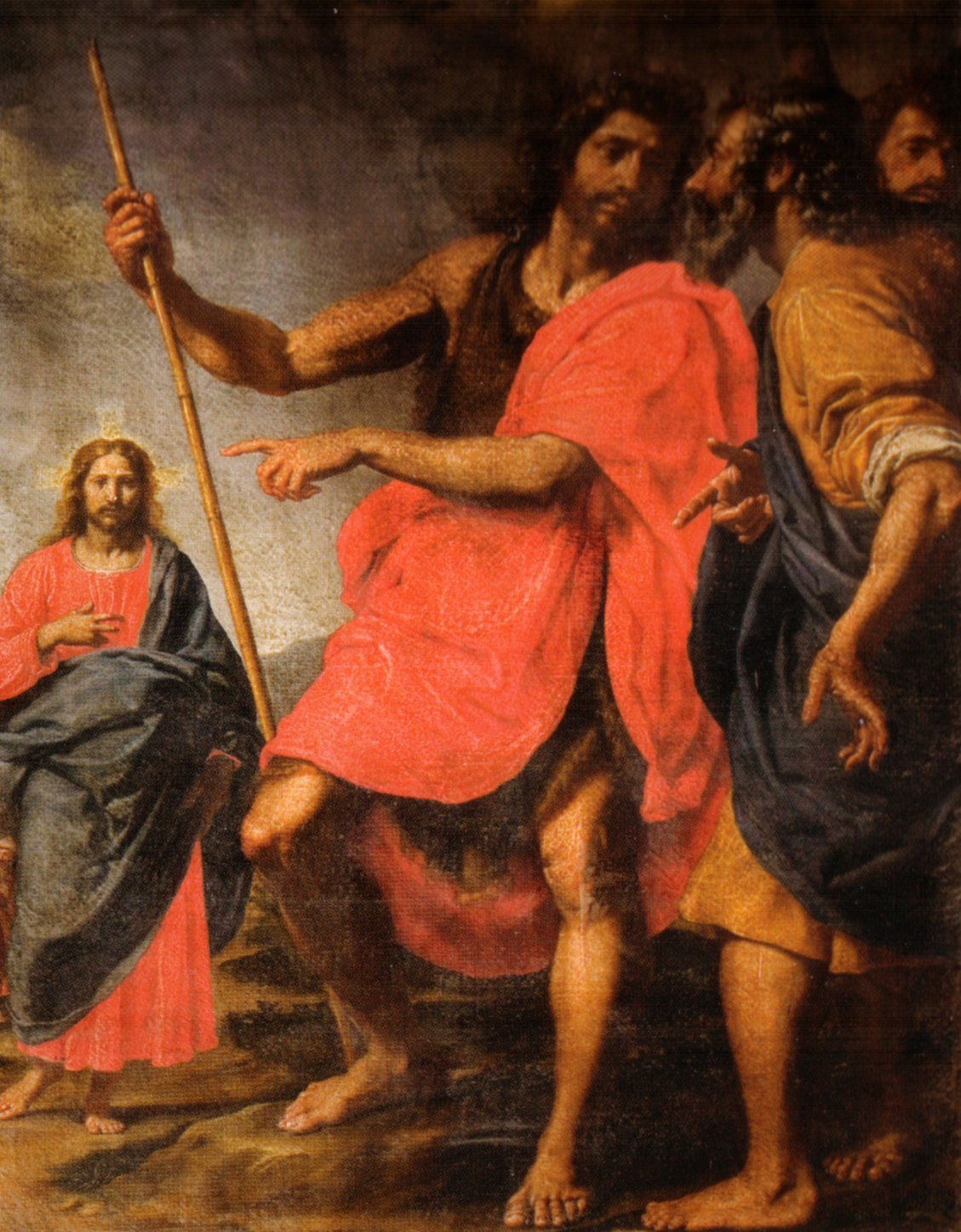
The first two disciples called by Jesus are disciples of John the Baptist. It is he who looks to Jesus and directs his disciples to look and so behold the Lamb of God. They are sent by John, through being told by him to recognize Jesus. John shows them the way to Jesus – as ‘the voice of one crying in the wilderness, Make straight the way of the Lord.’ [ … ]
