
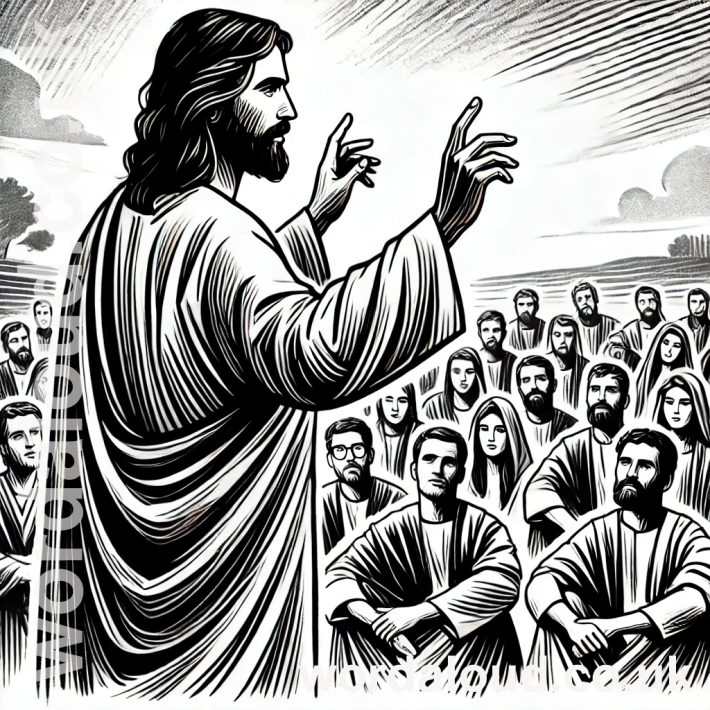
‘Jesus answered, My kingdom is not of this world: if my kingdom were of this world, then would my servants fight, that I should not be delivered to the Jews: but now is my kingdom not from hence.’
— John 18:36 (KJV)
Jesus In The Time Of The Caesars | A Kingdom Not Of This World
The world into which Jesus was born was not just one of imperial power—it was a world of cruelty, excess, and moral depravity beyond modern comprehension. The Caesars were not merely rulers; they were demigods in their own eyes, demanding worship, reveling in debauchery, and enforcing their will through brutality. Rome was a world where the strong crushed the weak, where spectacles of torture and death entertained the masses, and where mercy was seen as weakness.
Under Augustus, the empire flourished, but it was built on conquest, slavery, and ruthless suppression of dissent. The so-called Pax Romana—Rome’s peace—was the peace of domination, imposed through crucifixions, massacres, and the unrelenting machinery of empire.
By the time of Tiberius, under whom Jesus was crucified, Rome had become a moral abyss. Its ruling class indulged in every excess imaginable—gluttony, sadistic pleasures, and acts so depraved that even ancient historians hesitated to record them. The emperor himself, secluded on the island of Capri, surrounded himself with a court of cruelty, corruption, and indulgence. In Rome, human life was disposable—slaves were used and discarded, women were traded as commodities, and public executions were the most popular form of entertainment.
And yet, it was in this world—this world of power-worship, of unrestrained lust, of legalized sadism—that Jesus proclaimed a radically different kingdom.
Jesus did not come with an army, as the Caesars did. Jesus did not build monuments to glorify His name. Jesus did not crush enemies beneath His feet. Instead, Jesus walked among the poor. Jesus touched the unclean. Jesus forgave the sinners. Jesus proclaimed that the meek would inherit the earth, that the last would be first, and that the true King did not come to be served, but to serve.
When Jesus stood before the might of Rome—before Pilate, its governor, and the soldiers of the empire—Jesus did not resist. Jesus did not call down legions of angels. Instead, Jesus willingly walked to the cross, to the most humiliating and excruciating death the Romans had devised.
To Rome, Jesus was nothing. A failed revolutionary. A footnote in the power games of the empire.
And yet, two thousand years later, it is not the names of Tiberius or Caligula or Nero that command the hearts of billions. It is the name of Jesus, the crucified carpenter from Nazareth.
For a closer look at the Rome of Jesus’ time, the world of the emperors who thought themselves gods, listen to the latest episodes of The Rest Is History:
📜 Sex Secrets of the Caesars – A glimpse into the depraved private lives of Rome’s rulers, a stark contrast to the purity and humility of Jesus.
📜 Tiberius, Slaughter, and Scandal – The emperor who reigned over a world of unimaginable cruelty, even as Jesus proclaimed a kingdom ‘not of this world.’
🎧 Listen here: The Rest Is History
Rome was built on the sword, on domination, on terror. The kingdom of Jesus was built on love, humility, and sacrifice. The Caesars are long dead. Their empire has crumbled into dust.
Amen.




In this reading from the Longer Rules for Monks, Saint Basil the Great reflects on the origin of love for God and its place in the moral life. Basil’s starting point is significant: love of God is not presented as something imposed from outside or learned through instruction alone. Instead, Basil argues that the capacity to love God is already present within human nature [ … ]
Psalm 25 is a plea for divine guidance, forgiveness and protection. It is a deeply personal and introspective conversation between the psalmist and the Lord. In this psalm, we find themes of trust, humility, and the recognition of God’s merciful nature [ … ]

Pope Saint Gregory the Great’s reflection on Job situates the Christian life within a dual struggle: the battle against opposition from without and the struggle against weakness within. Drawing on the image of a soldier, he describes the saint as constantly engaged in warfare, not of worldly conquest but of endurance and teaching. Patience functions as a shield against external aggression, while doctrine becomes the weapon to counter the subtler dangers of persuasion and error [ … ]
