

Christian Art | Jesus Heals Leprosy
Matthew 8: 1-4 – Week 12 Ordinary Time, Friday (King James Audio Bible KJV, Spoken Word)
1 WHEN he was come down from the mountain, great multitudes followed him.
2 And, behold, there came a leper and worshipped him, saying, Lord, if thou wilt, thou canst make me clean.
3 And Jesus put forth his hand, and touched him, saying, I will; be thou clean. And immediately his leprosy was cleansed.
4 And Jesus saith unto him, See thou tell no man; but go thy way, shew thyself to the priest, and offer the gift that Moses commanded, for a testimony unto them.
We are reminded once more in this Gospel reading of the huge numbers of people who flock to Jesus. Jesus’ fame and popularity are extraordinary, while his mission proceeds at what we might think an incredibly fast pace. There is such need on the part of the people for salvation, no matter the extent of their consciousness as to how Jesus asks to save us all.
Leprosy in Jesus’ time was a name for a range of disfiguring skin conditions, including what we now call leprosy. The leper would be unclean, excluded from society and from religious life in Israel. His leprosy would be considered a sign of sin.
In reading the leper’s story in the Gospel, as he comes to Jesus to worship him, in humility and trust, begging to be make clean, we are reminded that we are all sinners who need God’s forgiveness and grace. We are reminded also of just how ugly our sins are before God, of their being an offence to His goodness.
Additionally, we are reassured, by these verses as by the whole of the Bible, that God’s mercy is always there for us – that God so desired our redemption that He sent His only Son into the world, to call all mankind to the Kingdom. All we need do is listen to Jesus, do what he tells us, ask to be washed clean of our iniquity, repent and follow the Lord.
Immediately, at Jesus’ word, the leprosy is healed. Jesus’ words have, consistently, this very direct power – they effect a new reality. Jesus now does not seek to separate the healed man’s new life from the Jewish community. Rather, Jesus asks the man to say nothing about what has happened but to go instead and show the Jewish priest that he is clean now. The man’s cure could then be registered by the Jewish priest, and he could be restored to the civic and religious life of Israel.
Jesus’ hour is not yet come when his saving resurrection should be proclaimed to everybody, and when the faith, the religion, of all should be transformed. There is much teaching, and much healing, to be done first, perhaps we may think to till the ground from which the world-saving message would in due time spring, to be made clear to everybody.
7 Beloved, let us love one another: for love is of God; and every one that loveth is born of God, and knoweth God.
8 He that loveth not knoweth not God; for God is love.
9 In this was manifested the love of God toward us, because that God sent his only begotten Son into the world, that we might live through him.
10 Herein is love, not that we loved God, but that he loved us, and sent his Son to be the propitiation for our sins.
11 Beloved, if God so loved us, we ought also to love one another. (1 John 4: 7-11)
King James Audio Bible | Miracle | Prayer | Healing | King James Version
Concluding Prayer
God of power and mercy,
who willed that Christ your Son should suffer for the salvation of the world,
grant that your people may strive to offer themselves to you as a living sacrifice,
and may be filled with the fulness of your love.
We make our prayer through our Lord.




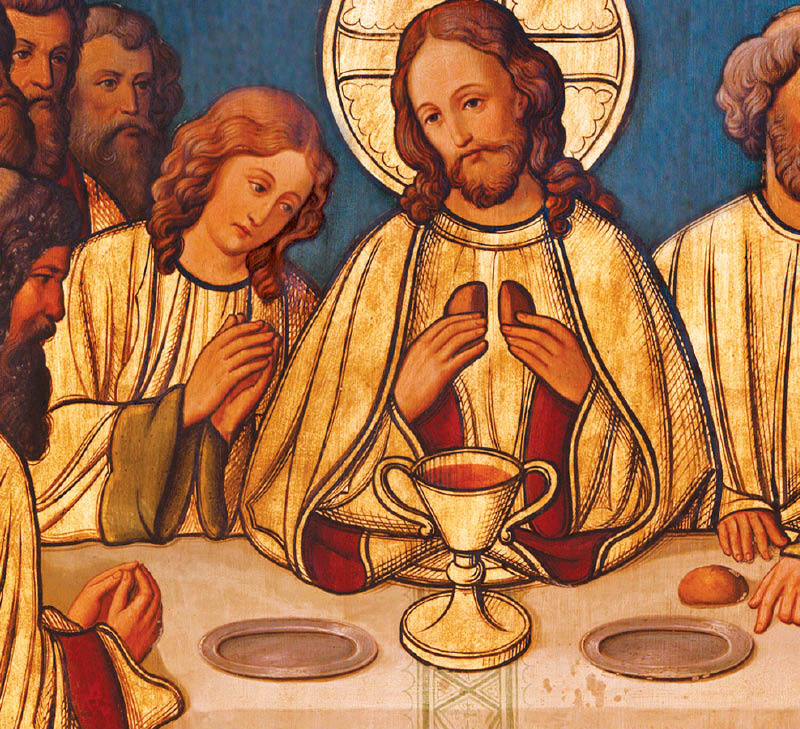
In the Bible, a miracle is an event that is not explicable by natural or scientific laws and is therefore attributed to a divine agency. Miracles are often seen as a sign of the intervention of God in the affairs of human beings. In the Old Testament, the most famous miracles are the Ten Plagues of Egypt, in which God punished the Pharaoh for refusing to release the Israelites from slavery, and the parting of the Red Sea, in which God allowed the Israelites to escape from the pursuing Egyptians by opening a path through the sea. In the New Testament, the miracles of Jesus are a central part of his ministry and are seen as evidence of his divinity. These include healings, such as the restoration of sight to the blind and the raising of the dead, and acts of nature, such as turning water into wine and walking on water. Is There A Theological Significance To Jesus’ Miracles? In the Christian tradition, the miracles performed by Jesus are seen as a manifestation of his divinity and as proof of his authority to teach and heal. Many of these miracles are described in the Gospels of the New Testament, which are the primary source of information about the life and teachings of Jesus. The purpose of the miracles, according to the Gospels, was to demonstrate Jesus’ power over natural forces and to show that he had the authority to forgive sins and offer salvation to those who believed in him. Why Did Jesus Ask To Keep His Miracles Secret? ‘Tell No One Of This.’ In the Gospels, there are a few instances where Jesus tells people not to tell others about what he has done for them. For example, in the Gospel of Matthew, after Jesus healed a man who was possessed by demons, he told the man, ‘See that you tell no one anything, but go, show yourself to the priest and offer the gift that Moses commanded, as a proof to them’ (Matthew 8:4). In this case, it seems that Jesus was concerned that the man’s testimony might not be believed or might be misunderstood, and so he asked him to keep the experience to himself for the time being. It is difficult to say for sure why Jesus might have asked someone to keep quiet about a miracle without knowing the specific context in which the request was made. However, some possible reasons that come to mind include: To avoid drawing unnecessary attention to himself. In the Gospels, Jesus often tries to avoid drawing too much attention to himself, especially from the authorities who are hostile to him. Asking someone to keep quiet about a miracle might be one way of avoiding unwanted attention and allowing Jesus to continue his ministry without interference. To allow the person who was healed to experience the transformation for themselves. In some cases, the person who was healed might have been skeptical or unsure of what had happened to them. Asking them to keep quiet about the miracle might have given them time to reflect on the experience and come to their own understanding of it without being influenced by others. To test the person’s faith. In some cases, Jesus might have asked someone to keep quiet about a miracle as a test of their faith. If they were truly grateful for what Jesus had done for them, they would be willing to follow his instructions and trust that he had a good reason for asking them to keep quiet. These are just a few possible reasons why Jesus might have asked someone to keep quiet about a miracle. It is important to remember that the Gospels are ancient texts and that we must be careful not to impose our own interpretations on them without considering the historical and cultural context in which they were written. To avoid creating conflict or division. In the Gospels, Jesus often encounters people who are skeptical or hostile to his teachings, and he sometimes tries to avoid confrontations with them. Asking someone to keep quiet about a miracle might be one way of avoiding a confrontation or a heated debate that could disrupt his ministry. To avoid being misunderstood or misrepresented. In some cases, the person who was healed might not have understood the full significance of what Jesus had done for them, and they might have tried to explain it in a way that distorted or misrepresented the truth. Asking them to keep quiet might have given Jesus time to explain things to them more fully and help them to understand the true meaning of the miracle. To avoid becoming a spectacle. In the Gospels, there are many instances where people are amazed by the miracles that Jesus performs, and they often try to make him into a kind of celebrity or showman. Asking someone to keep quiet about a miracle might have been one way of avoiding this kind of attention and keeping the focus on the message that Jesus was trying to convey. What Is The Significance Of Miracle Of The Wedding At Cana? In the Christian tradition, the wedding at Cana is significant because it is the first of the miracles performed by Jesus that is recorded in the Gospels of the New Testament. This event is described in the Gospel of John, where it is said that Jesus, along with his mother Mary and his disciples, attended a wedding in the town of Cana. At the wedding, the host ran out of wine, and Mary asked Jesus to help. In response, Jesus turned water into wine, which is seen as a miraculous act that demonstrated his power and authority. In the Gospel of John, after Mary asks Jesus to help with the wine at the wedding in Cana, he replies, “Woman, what does this have to do with me? My hour has not yet come” (John 2:4). This statement is often seen as indicating that Jesus was aware […]
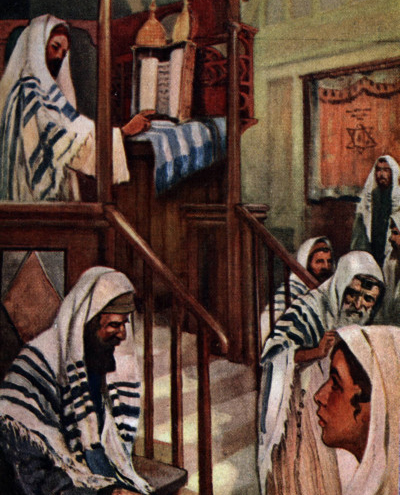
Christ has come to Nazareth, where he was brought up, and on the Sabbath day has entered the synagogue. He has been given the book of Isaiah to read. The passage he chooses is this (Isaiah 61) [ … ]
The sermon begins with a triumphant proclamation: ‘Christ is risen! He has burst open the gates of hell and let the dead go free.’ This dramatic image immediately places the Resurrection within the context of the Harrowing of Hell, a traditional doctrine in early Christianity that sees Christ descending into the realm of the dead to liberate the righteous. The Resurrection is not limited to the physical body of Jesus—it triggers a universal release and upward movement: the dead rise, the Church is renewed through baptism, and the doors of heaven are opened [ … ]