

Christian Art | Sermon On The Mount | Jesus
Office Of Readings | Week 12, Thursday, Ordinary Time | A Reading From The Homilies Of Saint Gregory Of Nyssa On The Beatitudes | God Is Like An Inaccessible Rock
‘God is like an inaccessible rock. Love revealed by Jesus.’
Biblical And Theological Background
Saint Gregory takes seriously the words of Matthew 5:8: ‘Blessed are the pure in heart, for they shall see God.’ The Greek term used in the Gospel, katharoi tē kardia, implies not just moral innocence but interior single-heartedness—an undivided orientation toward God. The promise to ‘see’ God (opsontai ton Theon) recalls not physical sight, but the spiritual perception granted to those transformed by grace.
Yet Gregory quickly points out the apparent contradiction. Saint John writes that ‘no one has seen God’ (John 1:18), and Saint Paul affirms that God ‘dwells in unapproachable light, whom no one has seen or can see’ (1 Timothy 6:16). Even Moses is told, ‘No one can see My face and live.’ (Exodus 33:20) Gregory is not content with simplistic answers. Instead, he invites the reader into the tension between the divine hiddenness and the soul’s longing for vision. Here, the paradox is not an obstacle but a path into contemplation.
Saint Gregory’s Mystical Vision
The core of Gregory’s teaching lies in his doctrine of epektasis—the soul’s eternal movement into God. For Gregory, to ‘see God’ is not a one-time visual experience but an ever-deepening participation in the divine life. Purity of heart becomes the condition that enables this spiritual ascent. The soul, made in God’s image, reflects the divine light like a clear jar filled with water drawn from a pure spring. The water and the vessel are not identical to the source, but they image it faithfully.
In this sense, Gregory synthesises both kataphatic (affirmative) and apophatic (negative) theology. God is truly known—but never fully grasped. The more we purify ourselves, the more capable we are of receiving the divine light. Yet the light always exceeds our capacity, drawing us onwards. It is this vision—forever partial, forever beckoning—that characterises the Christian journey.
Platonic And Patristic Heritage
Gregory’s thought bears the mark of Christian Platonism. Like Plato, he sees knowledge as ascent, and true vision as a matter of the soul’s purification. But where Plato speaks of the Form of the Good, Gregory speaks of the personal God revealed in Jesus Christ.
Gregory also builds on the foundations laid by earlier Fathers such as Origen and Basil the Great. From Origen, he inherits the idea of Scripture as a ladder to God, and from Basil, the insistence that the Christian life is a continual pursuit of holiness. But Gregory extends these insights, marrying them with a powerful poetic and mystical language.
Contemporary Resonance | Jesus Christ Today
The beatitude is not a relic of ancient mysticism; it is a summons to every Christian. In an age of distraction, superficiality, and moral ambiguity, the call to purity of heart is countercultural. Purity is not merely about chastity, but about integrity, simplicity, and focus. It is about aligning the whole self—thoughts, desires, will—with the love of God.
Modern spiritual writers echo Gregory’s insights. Thomas Merton speaks of the ‘false self’ that must be stripped away to encounter God in truth. Pope Benedict XVI, in his own reflections on the beatitudes, notes that ‘purity of heart enables man to see according to God—not simply external appearances, but inner reality.’

A Reading From The Homilies Of Saint Gregory Of Nyssa On The Beatitudes | God Is Like An Inaccessible Rock
The feelings that come to a man who stands on a high mountain peak and looks down onto some immense sea are the same feelings that come to me when I look out from the high mountain peak of the Lord’s words into the incomprehensible depths of his thoughts.
When you look at mountains that stand next to the sea, you will often find that they seem to have been cut in half, so that on the side nearest the sea there is a sheer drop and something dropped from the summit will fall straight into the depths. Someone who looks down from such a peak will become dizzy, and so too I become dizzy when I look down from the high peak of these words of the Lord: Blessed are the pure in heart, for they shall see God.
These words offer the sight of God to those whose hearts have been purified and purged. But look: St John says No-one has seen God. The Apostle Paul’s sublime mind goes further still: What no man has seen and no man can see. This is the slippery and crumbling rock that seems to give the mind no support in the heights. Even the teaching of Moses declared God to be a rock that was so inaccessible that our minds could not even approach it: No-one can see the Lord and live.
To see God is to have eternal life – and yet the pillars of our faith, John and Paul and Moses, say that God cannot be seen. Can you understand the dizziness of a soul that contemplates their words? If God is life, whoever does not see God does not see life. If the prophets and the Apostle, inspired by the Holy Spirit, attest that God cannot be seen, does this not wreck all the hopes of man?
It is the Lord who sustains our floundering hope, just as he sustained Peter when he was floundering in the water, and made the waters firm beneath his feet. If the hand of the Word stretches out to us as well, and sets us firm in a new understanding when these speculations have made us lose our balance, we shall be safe from fear, held safe in the guiding hand of the Word. Blessed, he says, are those who possess a pure heart, for they shall see God.
Prayer With Jesus
Lord God, You are the fountain of light and life, and the hope of all who long to see Your face. Grant us the grace of purity of heart, so that in our thoughts, desires, and actions, we may reflect Your beauty. Still the turmoil of our passions, clear the fog of sin from our hearts, and draw us ever closer to You, who are the light no darkness can overcome. Through Christ our Lord, Amen.
Glossary Of Christian Terms
- Beatitude: A pronouncement of blessing from Jesus, particularly those found in the Sermon on the Mount (Matthew 5).
- Epektasis: Gregory of Nyssa’s term for the soul’s infinite progress into God.
- Apophatic theology: The approach to God through negation, emphasising what God is not, due to His transcendence.
- Purity of heart: A biblical concept signifying integrity, undivided love, and readiness for divine communion.
- Kataphatic theology: The approach to God through positive affirmations about His attributes.
- Platonism: A philosophical tradition that influenced many early Christian thinkers, emphasising the soul’s ascent to the Good.
- Divine vision: The experience of God’s presence and beauty, understood not as physical sight but as spiritual perception.



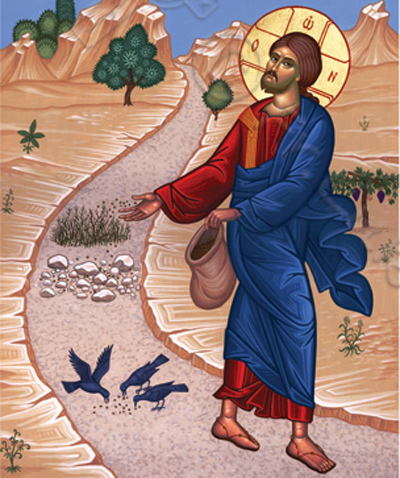
Jesus presents to his listeners an ideal of Christian purity, upon which we must act. There is a judgement, and there the sowings of the evil one will be burnt. It is that within us which is with God, with Jesus, which will shine for all eternity [ … ]
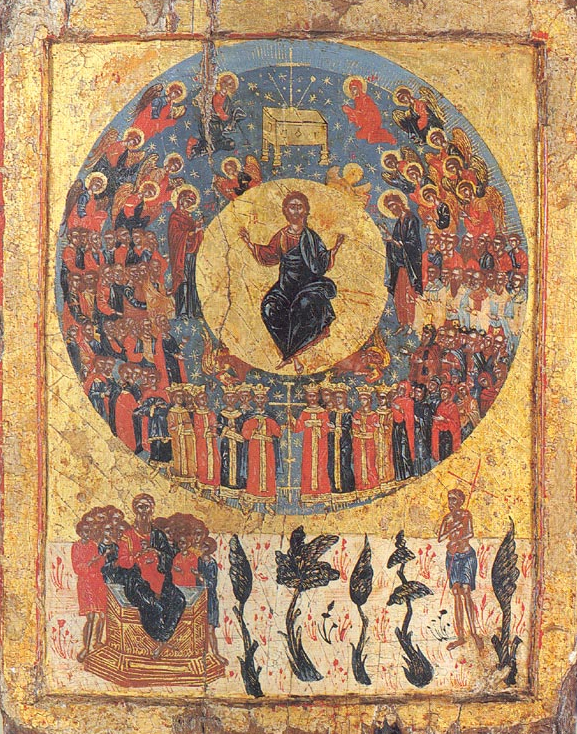
Most of the signs Christ describes to his listeners in the eschatological discourse had already been realized by the time Luke’s first audience would have heard his Gospel. There had been, and were, wars, persecutions, family conflict, and Jerusalem with the Temple had been destroyed. The Christians of Luke’s time listening to these Gospel verses, of today and since Tuesday, could then have been encouraged to know that they were very close to Christ’s full revelation, his apocalypse, and so have courage to bear persecutions and other great challenges of the early Church [ … ]

Psalm 32 is a contemplative poem expressing themes of forgiveness, repentance and blessings that arise from acknowledging one’s sins before the Lord. The psalm reflects on the power of confession and upon the joy found in the assurance of divine pardon [ … ]
