
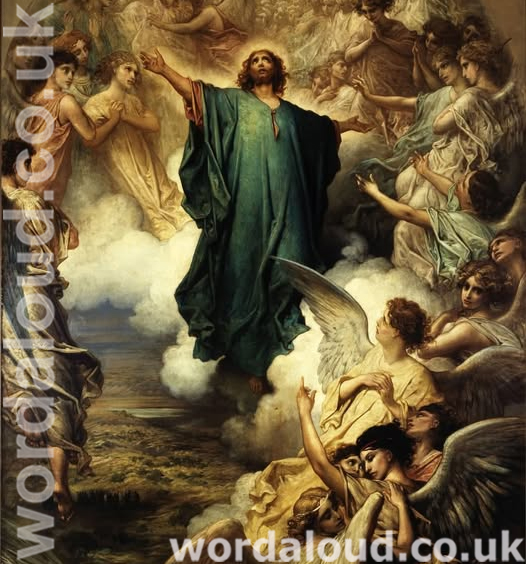
Christian Art | Jesus Christ | Our Saviour
Office Of Readings | Advent Tuesday Week 1 | A Reading From The Orations Of Saint Gregory Nazianzen | The Wonder Of The Incarnation
‘The wonder of the Incarnation.’
Saint Gregory Nazianzen, known in the Christian tradition as the Theologian, is one of the greatest voices of the early Church on the mystery of the Incarnation. Few writers speak with such reverence, precision, and lyrical force about the identity of Christ. This reading is a condensed expression of his lifelong insistence on one central truth: only the full, undiminished God could save us, and therefore the One who became human for us is truly God, truly man, united in one person.
Gregory begins by contemplating Christ’s eternal existence: the Son is ‘older than the ages’, ‘the image of the archetype’, ‘the word of the Father’. These phrases gather together the Church’s developing language about Christ’s divinity—language forged in Scripture, clarified in controversy, and eventually enshrined in the Nicene Creed. For Gregory, worship is rooted in wonder, and wonder begins with the vision of who God is from all eternity.
From this height, he turns abruptly to the mystery: the eternal Son comes to his own image, taking human nature for the sake of our nature. Gregory is defending a key insight: Christ assumes everything that is human so that he may heal everything that is human. What is not taken up by Christ cannot be saved. Therefore Christ assumes a true body, a true human mind, a true human soul—everything but sin, which is not part of our created nature but a wound in it.
Gregory dwells on the Virgin Mary, ‘prepared in soul and body by the Spirit’, not merely as an ornament of the story but as the one whose cooperation, purity, and faith become the means of the world’s salvation. Through her, Christ takes flesh; through her, virginity receives new honor; through her, human nature becomes the very dwelling place of God.
What follows is vintage Gregory: a soaring series of paradoxes. ‘He who makes rich is made poor… He who is full is made empty.’ Gregory wants the reader to feel the shock of divine condescension. The Incarnation is not a change in God but a freely chosen descent of love—an embrace of our poverty so that we might be raised into divine wealth. The humility of Christ is therefore not strategic but salvific; he empties himself in order to pour his life into us.
Gregory then moves to Christ’s saving work. Like a shepherd pursuing the lost sheep, Christ seeks out humanity on the ‘mountains and hills’ of false worship. The wood of the cross becomes the strength on which he carries us home. In salvation, Christ both identifies with us (by taking our flesh and dying our death) and transforms us (by purifying, raising, and glorifying us). The whole pattern of Christian life is laid out here: we die with him, rise with him, and are glorified with him—not metaphorically, but really, through grace.
Gregory situates the Incarnation in the unfolding story of salvation: John the Baptist prepares the way, like a lamp before the dawn, a voice before the Word. Christ’s revelation is gradual—first a light breaking into darkness, and finally the fullness of divine glory revealed in his Passion, Resurrection, and Ascension.
In this reading, the Incarnation is not simply an event of history; it is the great turning point of the universe. Humanity is healed by being united to God. God is glorified by rescuing his creation. And salvation is shown to be nothing less than participation in the life of the One who took our nature so that we might share his.
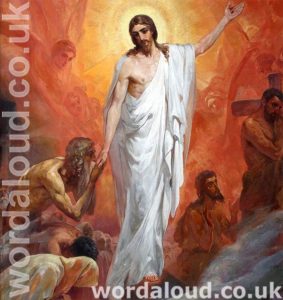
A Reading From The Orations Of Saint Gregory Nazianzen | The Wonder Of The Incarnation
The very Son of God, older than the ages, the invisible, the incomprehensible, the incorporeal, the beginning of beginning, the light of light, the fountain of life and immortality, the image of the archetype, the immovable seal, the perfect likeness, the definition and word of the Father: he it is who comes to his own image and takes our nature for the good of our nature, and unites himself to an intelligent soul for the good of my soul, to purify like by like. He takes to himself all that is human, except for sin. He was conceived by the Virgin Mary, who had been first prepared in soul and body by the Spirit; his coming to birth had to be treated with honour, virginity had to receive new honour. He comes forth as God, in the human nature he has taken, one being, made of two contrary elements, flesh and spirit. Spirit gave divinity, flesh received it.
He who makes rich is made poor; he takes on the poverty of my flesh, that I may gain the riches of his divinity. He who is full is made empty; he is emptied for a brief space of his glory, that I may share in his fullness. What is this wealth of goodness? What is this mystery that surrounds me? I received the likeness of God, but failed to keep it. He takes on my flesh, to bring salvation to the image, immortality to the flesh. He enters into a second union with us, a union far more wonderful than the first.
Holiness had to be brought to man by the humanity assumed by one who was God, so that God might overcome the tyrant by force and so deliver us and lead us back to himself through the mediation of his Son. The Son arranged this for the honour of the Father, to whom the Son is clearly obedient in all things.
The Good Shepherd, who lays down his life for the sheep, came in search of the straying sheep to the mountains and hills on which you used to offer sacrifice. When he found it, he took it on the shoulders that bore the wood of the cross, and led it back to the life of heaven.
Christ, the light of all lights, follows John, the lamp that goes before him. The Word of God follows the voice in the wilderness; the bridegroom follows the bridegroom’s friend, who prepares a worthy people for the Lord by cleansing them by water in preparation for the Spirit.
We needed God to take our flesh and die, that we might live. We have died with him, that we may be purified. We have risen again with him, because we have died with him. We have been glorified with him, because we have risen again with him.
Christian Prayer With Jesus
Lord Jesus Christ,
Eternal Son of the Father,
Light from light and true God from true God,
in your mercy you took on our frail flesh
to heal what sin had wounded
and to restore in us the image lost by disobedience.
In the humility of your birth
and the poverty you embraced,
teach us the riches of your love.
In the weakness you willingly assumed,
grant us the strength of your divine life.
Make our hearts a dwelling place
prepared for your presence,
pure in faith and steadfast in hope.
May we who have died with you in baptism
rise with you in holiness,
and may the glory you share with the Father
become our eternal inheritance.
You live and reign forever and ever.
Amen.
Glossary Of Christian Terms
Gregory Nazianzen – Fourth-century bishop and theologian, one of the three Cappadocian Fathers, renowned for his profound teaching on the Trinity and the Incarnation. Named the Theologian by the Church.
Incarnation – The central Christian mystery that the eternal Son of God took on human nature—body, mind, and soul—in the womb of the Virgin Mary, becoming Jesus Christ, fully God and fully man.
Image of God – The dignity and spiritual capacity given to human beings by God at creation. Sin wounded but did not erase this image; Christ restores and elevates it.
Virginity given new honor – Gregory’s affirmation that Mary’s virginal conception indicates a new and unique work of God, elevating both Mary and the value of consecrated virginity.
Kenosis (Emptying) – A theological term describing Christ’s self-emptying in the Incarnation (Philippians 2:7). It does not mean a loss of divinity, but the voluntary acceptance of human limitation and suffering.
Good Shepherd – A title Christ gives himself (John 10), emphasizing his personal care, sacrificial love, and pursuit of the lost.
John the Baptist – The prophet who prepares the way for Christ. Gregory refers to him as the ‘lamp’ preceding the ‘light’, and the ‘voice’ before the ‘Word’.
Union of natures – The doctrine that in Christ, the divine nature and human nature are united in one person without confusion, change, division, or separation.
Glorification – The final state of believers in which they share in the divine life through Christ’s Resurrection and heavenly glory.




William of Saint-Thierry reflects on salvation not as something we achieve, but as something we receive. From the beginning, he insists that God’s dominion is not oppressive power but saving love. To belong to God is already to be rescued, because serving God means being held within God’s care [ … ]
Born Jorge Mario Bergoglio in Buenos Aires (1936), Pope Francis embraced a life of service through the Jesuits, becoming Archbishop and then Pope in 2013. Choosing the name Francis, he called the Church to humility and solidarity with the poor. He bowed before the people asking for their prayers, carrying the Cross of Peter in simplicity [ … ]
The poem meditates on a relationship with God, this explored through themes of transcendence, vulnerability, and search for spiritual guidance. Herbert begins with an expression of gratitude, addressing this divine presence as ‘sweetest of sweets’. This epithet evokes an almost sensual intimacy, suggesting a deeply personal connection with God, who offers relief and solace. God’s intervention is characterized as rescuing Herbert from bodily and mental distress and transporting him to a ‘house of pleasure’ and ‘dainty lodging’. These phrases conjure images of refuge and spiritual elevation, positioning God as nurturer and healer who offers sanctuary from life’s tribulations [ … ]
