

Christian Art | Beheading John The Baptist
Office Of Readings | Advent Sunday Week 3 | A Reading From A Sermon By Saint Augustine | John The Baptist Is The Voice, And Jesus Christ Is The Word
‘John is the voice, and Christ is the Word.’
Saint Augustine uses a simple but profound image to explain the relationship between John the Baptist and Christ: John is the voice, Christ is the Word. The image allows Augustine to show both the greatness of John’s mission and its necessary limitation. John’s role is essential, but it is temporary; Christ’s is eternal.
A voice exists to carry a word. Without a word, a voice is only sound and has no meaning. Augustine points out that understanding does not come from the noise itself but from the meaning that the noise conveys. Once the word has reached the heart, the voice is no longer needed. In this way, the voice serves the word and then passes away.
Augustine applies this image directly to John the Baptist. John’s preaching prepared hearts, but he himself was not the content of the message. His baptism and ministry were necessary for a time, but they were never meant to endure. Once Christ had come, John’s work was complete. This is why John can say, with truth and humility, ‘He must increase, and I must decrease.’
Augustine then draws attention to John’s humility. John was widely thought to be the Christ, and Augustine observes how easily John could have accepted that honour. Instead, he rejected it clearly and firmly. He named himself truthfully: not the Christ, not Elijah, but the voice. In doing so, John teaches that true greatness lies in pointing away from oneself and toward Christ.
Augustine also explains what it means to ‘prepare the way of the Lord’. It is not merely an external action but an inner one. To prepare the way is to pray rightly and to cultivate humility. Christ does not force his way into the heart; he comes where the way has been made ready. Pride blocks the path, while humility opens it.
Finally, Augustine warns against the danger that John himself avoided: pride. John knew he was a lamp, not the light itself. His concern was not to shine independently, but to serve the true light without being extinguished by self-importance. The passage ends by inviting believers to imitate John’s humility, allowing the Word to dwell within them while their own voices fade into faithful service.
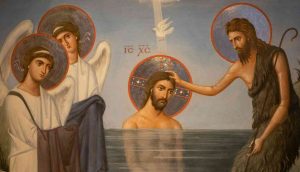
A Reading From A Sermon By Saint Augustine | John Is The Voice, And Christ Is The Word
John is the voice, but the Lord is the Word who was in the beginning. John is the voice that lasts for a time; from the beginning Christ is the Word who lives forever.
Take away the word, the meaning, and what is the voice? Where there is no understanding, there is only a meaningless sound. The voice without the word strikes the ear but does not build up the heart.
However, let us observe what happens when we first seek to build up our hearts. When I think about what I am going to say, the word or message is already in my heart. When I want to speak to you, I look for a way to share with your heart what is already in mine.
In my search for a way to let this message reach you, so that the word already in my heart may find place also in yours, I use my voice to speak to you. The sound of my voice brings the meaning of the word to you and then passes away. The word which the sound has brought to you is now in your heart, and yet it is still also in mine.
When the word has been conveyed to you, does not the sound seem to say: The word ought to grow, and I should diminish? The sound of the voice has made itself heard in the service of the word, and has gone away, as though it were saying: My joy is complete. Let us hold on to the word; we must not lose the word conceived inwardly in our hearts.
Do you need proof that the voice passes away but the divine Word remains? Where is John’s baptism today? It served its purpose, and it went away. Now it is Christ’s baptism that we celebrate. It is in Christ that we all believe; we hope for salvation in him. This is the message the voice cried out.
Because it is hard to distinguish word from voice, even John himself was thought to be the Christ. The voice was thought to be the word. But the voice acknowledged what it was, anxious not to give offence to the word. I am not the Christ, he said, nor Elijah, nor the prophet. And the question came: Who are you, then? He replied: I am the voice of one crying in the wilderness: Prepare the way for the Lord. The voice of one crying in the wilderness is the voice of one breaking the silence. Prepare the way for the Lord, he says, as though he were saying: ‘I speak out in order to lead him into your hearts, but he does not choose to come where I lead him unless you prepare the way for him.’
What does prepare the way mean, if not ‘pray well’? What does prepare the way mean, if not ‘be humble in your thoughts’? We should take our lesson from John the Baptist. He is thought to be the Christ; he declares he is not what they think. He does not take advantage of their mistake to further his own glory.
If he had said, ‘I am the Christ,’ you can imagine how readily he would have been believed, since they believed he was the Christ even before he spoke. But he did not say it; he acknowledged what he was. He pointed out clearly who he was; he humbled himself.
He saw where his salvation lay. He understood that he was a lamp, and his fear was that it might be blown out by the wind of pride.
Christian Prayer With Jesus
Lord Jesus Christ,
eternal Word of the Father,
teach us to prepare your way within our hearts.
Free us from pride,
make us humble and attentive,
so that your word may grow within us
and bear fruit in our lives.
May we, like John, rejoice
to serve your coming and not ourselves.
Amen.
Glossary Of Christian Terms
Saint Augustine – Bishop of Hippo and one of the Church’s greatest theologians and preachers.
The Word – Christ, the eternal Son of God, through whom all things were made.
The voice – John the Baptist, whose mission was to proclaim and prepare for Christ.
John the Baptist – The forerunner of Christ, sent to prepare the people for the Lord’s coming.
Prepare the way of the Lord – To ready the heart through repentance, prayer, and humility.
Humility – The virtue of truthfully recognising one’s place before God.
Lamp – An image used for John, indicating a light that serves the true Light, Christ.




Christian Art | George Herbert | The Temple | The Church | The Sinner George Herbert | The Temple | The Church | The Sinner Lord, how I am all ague, when I seek What I have treasur’d in my memorie! Since, if my soul make even with the week, Each seventh note by right is due to thee. I finde there quarries of pil’d vanities, But shreds of holinesse, that dare not venture To shew their face, since crosse to thy decrees. There the circumference earth is, heav’n the centre. In so much dregs the quintessence is small: The spirit and good extract of my heart Comes to about the many hundredth part. Yet Lord restore thine image, heare my call: And though my hard heart scarce to thee can grone, Remember that thou once didst write in stone. George Herbert | The Temple | The Church | The Sinner The poet reflects on his spiritual state, describing a struggle with weakness, sin, and the desire for divine alignment. The poem opens with the poet addressing God, expressing discomfort, likened to an ‘ague’ (fever or chill), when he searches his memory for spiritual treasures. This ‘ague’ suggests both a physical and spiritual unease, revealing the tension the poet feels in self-examination. The second line conveys a sense of regret as the poet searches for ‘treasur’d’ holiness in his memory. He recognizes that, although he might strive to keep his soul ‘even with the week’, dedicating every seventh day to God, he falls short. This phrase reflects the expectation to honour the Sabbath, but the poet’s efforts are met with disappointment in their perceived spiritual emptiness. The poet goes on to examine his inner self, describing ‘quarries of pil’d vanities’ that dominate his mind. Here, ‘quarries’ implies an overwhelming quantity of earthly or superficial concerns, while ‘vanities’ suggests that these concerns are meaningless in the context of divine expectation. In contrast, he finds only ‘shreds of holinesse’, fragmented attempts at righteousness, which he hesitates to bring forward as these elements are ‘crosse to thy decrees’, or in opposition to God’s laws. This imagery underscores the poet’s internal conflict and recognition of shortcomings. Further, the poet contrasts earth and heaven, saying that ‘the circumference earth is, heav’n the centre.’ This phrase symbolizes the poet’s focus on worldly concerns (the circumference) that orbit around a neglected spiritual core (the heavenly center). The poet reflects that his life is filled with ‘dregs’, the lesser, unrefined aspects of his being, while ‘quintessence’, or the purest part of himself, is scarce. This ‘quintessence’ is described as the ‘spirit and good extract’ of the poet’s heart, amounting to a ‘many hundredth part’ — a small fraction of life’s essence. The poet realizes that, despite attempts to cultivate holiness, his internal state largely lacks spiritual substance. The final lines shift to a plea for restoration. The poet calls on God to ‘restore thine image’, asking for renewal and transformation. This restoration request implies a yearning to reflect God’s nature more fully, as humanity is believed to be made in God’s image. The poet acknowledges that his heart ‘scarce… can grone’ to God, reflecting the difficulty he feels in truly connecting with or petitioning the divine. The poem ends with reference to the biblical account of the Ten Commandments, when God ‘didst write in stone’. This allusion serves as both a reminder of God’s past willingness to communicate directly and a plea for a similar intervention to etch divine law into the poet’s heart. The poem examines themes of introspection, human fallibility, and a longing for divine transformation. The poet’s self-examination reveals struggle to balance earthly concerns with spiritual commitments, culminating in a plea for God’s direct action to restore spiritual integrity.

Saint Aelred of Rievaulx presents the highest expression of Christian love: the love of one’s enemies. His reflection is deeply rooted in the Gospel, particularly in Christ’s own example on the cross, where Jesus prays, “Father, forgive them, for they do not know what they are doing.” For Aelred, this moment encapsulates the essence of divine love—self-giving, patient, and without retaliation [ … ]

Psalm 139 meditates on the nature of God and God’s relationship with humanity. The psalm combines awe for God’s transcendent knowledge and presence with a deep sense of personal connection and care. This psalm resonates with themes of God’s unfathomable knowledge, unwavering presence, and the sacredness of human life, making it a significant piece for contemplation and spiritual reflection [ … ]
