

Christian Art | Reflections On The Love Of Jesus Christ | Crucifixion
Luke 22: 39-46 | King James Audio Bible
Reflections On The Love Of Jesus Christ | Jesus Prays In Agony In The Garden Of Gethsemane
‘And being in an agony he prayed more earnestly: and his sweat was as it were great drops of blood falling down to the ground.’ – Luke 22:44, KJV
As I reflect upon the love of Jesus Christ, my heart is drawn to the Garden of Gethsemane, where Jesus prayed on the night before he was crucified. The Gospel of Matthew tells us that Jesus went to the garden with his disciples, and then left eight of them behind to pray while he took Peter, James, and John with Hhm further into the garden.
There, Jesus began to feel the weight of what was to come. Jesus told His disciples: ‘My soul is exceeding sorrowful, even unto death.’ (Matthew 26:38, KJV) Jesus fell on his face and prayed: ‘O my Father, if it be possible, let this cup pass from me: nevertheless not as I will, but as thou wilt.’ (Matthew 26:39, KJV)
As I contemplate these words, I am struck by the depth of Jesus’ love for us. Jesus knew what was coming – the betrayal, the arrest, the mockery, the beating, and ultimately the crucifixion – and he was filled with sorrow and dread. Yet even in his anguish, Jesus submitted to the Father’s will. He did not ask to be spared the suffering, but only that the cup might pass from him ‘if it be possible’.
What is this cup? Many commentators have suggested that it is a reference to the cup of God’s wrath that Jesus would drink on the cross, bearing the penalty for our sins. Others have suggested that it is a symbol of the suffering that Jesus would endure, both physically and emotionally. Whatever it may be, we can be sure that it was something so terrible that even Jesus, the Son of God, recoiled from it.
And yet, Jesus submitted to it. Jesus said: ‘Not my will, but thine, be done.’ (Luke 22:42, KJV) Jesus did not try to escape or to fight back. Jesus went willingly to his death, because he loved us so much that he was willing to bear our sins and suffer the punishment we deserved.
As I reflect upon the agony of Jesus in the Garden of Gethsemane, I am filled with gratitude and awe. How great is the love of our Saviour, that he would endure such agony and willingly lay down his life for us! May we never take his sacrifice for granted, but always remember the price that was paid for our redemption. And may we, like Jesus, submit ourselves to the will of the Father, trusting in Jesus’ love and his plan for our lives.


Reflections On The Love Of Jesus Christ | Jesus Is Scourged At The Pillar
‘Then Pilate therefore took Jesus, and scourged him.’ – John 19:1, KJV
As I reflect upon the love of Jesus Christ, my thoughts turn to the scourging at the pillar. This brutal punishment was inflicted upon Jesus before his crucifixion, as part of the Roman custom of flogging prisoners before execution.
The Gospel of Matthew tells us that Jesus was brought to Pilate, the Roman governor, and was then scourged by the soldiers. They stripped Jesus, tied him to a pillar or post, and whipped im with a whip that had sharp pieces of bone or metal embedded in the cords. The blows would have torn into Jesus’ flesh, causing excruciating pain and leaving Jesus covered in blood.
As I contemplate this scene, I am struck by the depth of Jesus’ love for us. Jesus endured this punishment willingly, knowing that it was part of the price he would pay for our redemption. Jesus did not fight back or resist, but submitted himself to the soldiers and allowed them to scourge him.
Why did Jesus endure this suffering? The answer lies in Jesus’ love for us. The Bible tells us that ‘by his stripes we are healed’ (Isaiah 53:5, KJV). In other words, Jesus’ wounds were not just a physical punishment, but a spiritual healing. Jesus took upon himself the punishment that we deserved, so that we might be forgiven and reconciled to God.
As I meditate upon the scourging at the pillar, I am reminded of the words of the apostle Peter: ‘Who his own self bare our sins in his own body on the tree, that we, being dead to sins, should live unto righteousness: by whose stripes ye were healed.’ (1 Peter 2:24, KJV) Jesus’ wounds were not just a result of Roman brutality, but a means of our salvation.
May we never forget the love that Jesus demonstrated for us on the day of his scourging. May we never take for granted the price that was paid for our redemption. And may we, like the apostle Paul, ‘glory in the cross of our Lord Jesus Christ, by whom the world is crucified unto me, and I unto the world’ (Galatians 6:14, KJV).

Reflections On The Love Of Jesus Christ | Jesus Is Crowned With Thorns
As I reflect upon the love of Jesus Christ, my thoughts turn to the moment when Jesus was crowned with thorns. This brutal act of humiliation and cruelty was inflicted upon Jesus by the Roman soldiers, who sought to mock Jesus and degrade him further before his crucifixion.
The Gospel of Matthew tells us that the soldiers ‘plaited a crown of thorns, and put it upon his head, and a reed in his right hand: and they bowed the knee before him, and mocked him, saying, Hail, King of the Jews!’ (Matthew 27:29, KJV). They then spat on Jesus and struck him with the reed, further adding to his pain and humiliation.
As I contemplate this scene, I am struck by the depth of Jesus’ love for us. Jesus endured this mockery and abuse willingly, knowing that it was part of the price He would pay for our redemption. Jesus did not fight back or resist, but submitted himself to the soldiers and allowed them to crown him with thorns.
Why did Jesus endure this suffering? The answer lies in Jesus’ love for us. The Bible tells us that Jesus is the King of kings and Lord of lords (Revelation 19:16), but he did not come to reign in earthly power and glory. Instead, Jesus came to serve and to give his life as a ransom for many (Mark 10:45). By allowing himself to be crowned with thorns, Jesus demonstrated his willingness to endure the worst that humanity could inflict upon him, in order to save us from our sins.
As I meditate upon Jesus’ crown of thorns, I am reminded of the words of the prophet Isaiah: ‘He was despised and rejected of men; a man of sorrows, and acquainted with grief: and we hid as it were our faces from him; he was despised, and we esteemed him not.’ (Isaiah 53:3, KJV) Jesus suffered rejection, humiliation, and pain, all for the sake of our salvation.
May we never forget the love that Jesus demonstrated for us on the day of his crowning with thorns. May we never take for granted the price that was paid for our redemption. And may we, like the apostle Paul, ‘know him, and the power of his resurrection, and the fellowship of his sufferings, being made conformable unto his death’ (Philippians 3:10, KJV).
Reflections On The Love Of Jesus Christ | Jesus Carries The Cross
‘And he bearing his cross went forth into a place called the place of a skull, which is called in the Hebrew Golgotha.’ – John 19:17, KJV
As I reflect upon the love of Jesus Christ, my thoughts turn to the moment when Jesus carried the cross. This was one of the most iconic moments in Jesus’ passion, as he bore the weight of the wooden cross upon which he would be crucified.
The Gospel of John tells us that Jesus ‘bearing his cross went forth into a place called the place of a skull, which is called in the Hebrew Golgotha’ (John 19:17, KJV). Jesus would have been exhausted from the beatings, the scourging, and the lack of food and water. And yet, he did not falter or give up. Jesus continued to carry the cross, even as the crowds jeered and mocked him.
As I contemplate this scene, I am struck by the depth of Jesus’ love for us. Jesus endured this physical and emotional pain willingly, knowing that it was part of the price he would pay for our redemption. Jesus did not resist or fight back, but submitted himself to the will of the Father and bore the cross.
Why did Jesus endure this suffering? The answer lies in Jesus’ love for us. The Bible tells us that ‘Christ also hath once suffered for sins, the just for the unjust, that he might bring us to God’ (1 Peter 3:18, KJV). Jesus bore the weight of the cross so that we might be forgiven and reconciled to God. He carried our sins and our shame, so that we might be set free.
As I meditate upon Jesus’ carrying of the cross, I am reminded of the words of the psalmist: ‘The Lord is my strength and my shield; my heart trusted in him, and I am helped: therefore my heart greatly rejoiceth; and with my song will I praise him’ (Psalm 28:7, KJV). Jesus is our strength and our shield, and He carried the cross so that we might have hope and joy.
May we never forget the love that Jesus demonstrated for us on the day of his carrying of the cross. May we never take for granted the price that was paid for our redemption. And may we, like the apostle Paul, ‘forgetting those things which are behind, and reaching forth unto those things which are before, press toward the mark for the prize of the high calling of God in Christ Jesus’ (Philippians 3:13-14, KJV).

Reflections On The Love Of Jesus Christ | Jesus Is Crucified
‘And they crucified him, and parted his garments, casting lots: that it might be fulfilled which was spoken by the prophet, They parted my garments among them, and upon my vesture did they cast lots.’ – Matthew 27:35, KJV
As I reflect upon the love of Jesus Christ, my thoughts turn to the moment when Jesus was crucified. This was the ultimate act of love, as Jesus willingly gave his life for us so that we might be saved.
The Gospel of Matthew tells us that Jesus was ‘crucified, dead, and buried’ (Matthew 27:35-60, KJV). He was nailed to the cross, and left to suffer in agony for hours. Jesus was mocked and reviled by the crowds, who hurled insults at him.
As I contemplate this scene, I am struck by the depth of Jesus’ love for us. Jesus endured this excruciating pain willingly, knowing that it was part of the price he would pay for our redemption. Jesus did not resist or fight back, but submitted Himself to the will of the Father and died on the cross.
Why did Jesus endure this suffering? The answer lies in Jesus’ love for us. The Bible tells us that ‘God commendeth his love toward us, in that, while we were yet sinners, Christ died for us’ (Romans 5:8, KJV). Jesus died on the cross so that we might be forgiven and reconciled to God. Jesus paid the penalty for our sins, so that we might have eternal life.
As I meditate upon Jesus’ crucifixion, I am reminded of the words of the prophet Isaiah: ‘Surely he hath borne our griefs, and carried our sorrows: yet we did esteem him stricken, smitten of God, and afflicted. But he was wounded for our transgressions, he was bruised for our iniquities: the chastisement of our peace was upon him; and with his stripes we are healed.’ (Isaiah 53:4-5, KJV) Jesus bore our sins and our sorrows, so that we might have healing and peace.
May we never forget the love that Jesus demonstrated for us on the day of his crucifixion. May we never take for granted the price that was paid for our redemption. And may we, like the apostle Paul, ‘glory in the cross of our Lord Jesus Christ, by whom the world is crucified unto me, and I unto the world’ (Galatians 6:14, KJV).




Saint Polycarp continues his reflection on the Christian life and the duties of the Church’s ministers. His words are both pastoral and deeply practical. He insists that presbyters — that is, priests or elders — must mirror the compassion and mercy of Christ himself. They are to care for the sick, the poor, widows, and orphans, the most vulnerable members of the community. Polycarp’s vision of ministry is not one of authority alone but of service, modelled on the Good Shepherd who lays down his life for the sheep [ … ]
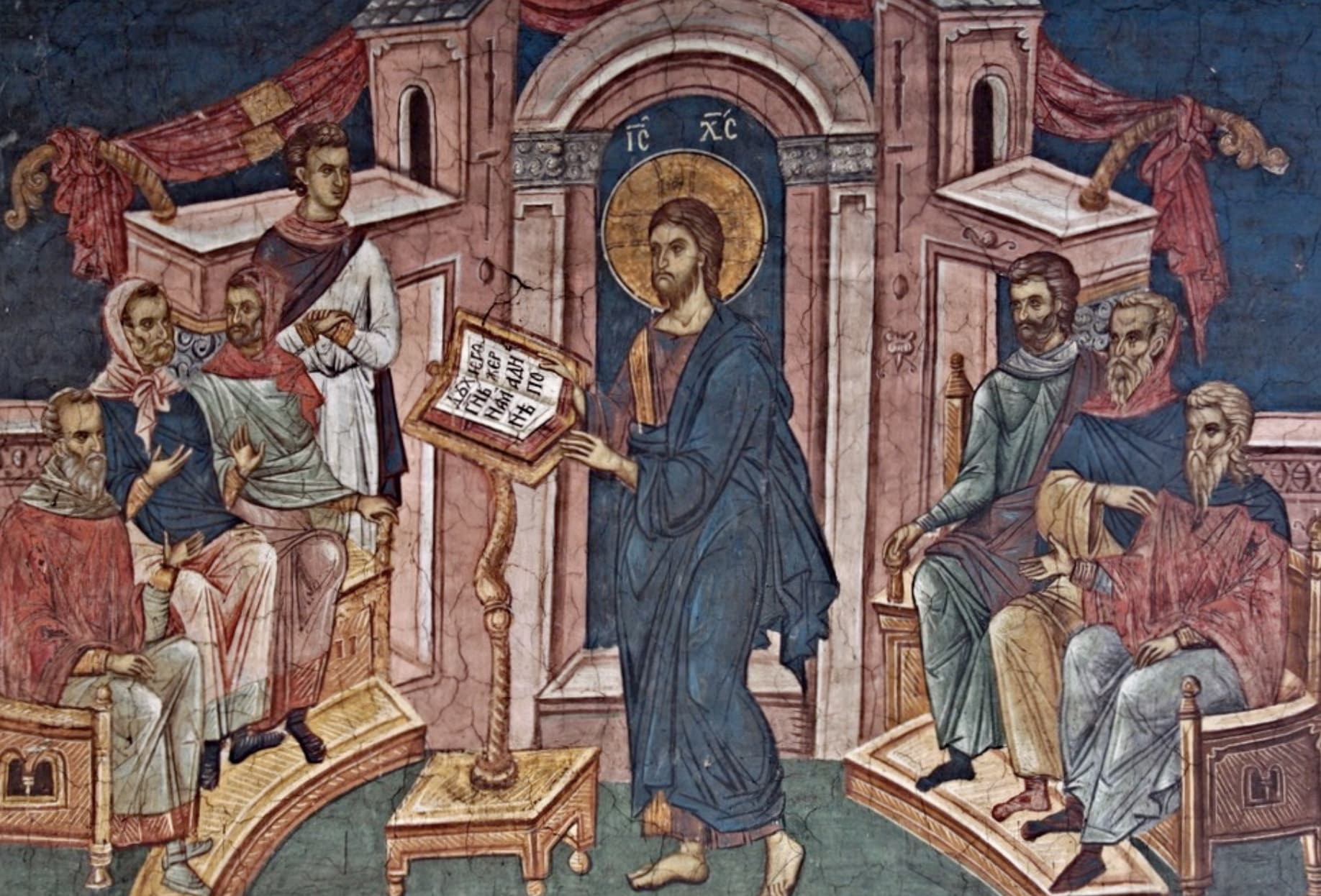
The image of children in these Bible verses is curious. We could read the lines as suggesting childishness, with one group of children expecting to amuse another and reacting peevishly when those others do not move according to the music they play. We could more broadly read these verses as suggesting a disconnect between various children, a failure of communication, recognition, response, which is emblematic of Christ and his followers and those who reject him …

The Jewish authorities have begun to take note of Jesus. While Jesus has attracted the people, now ‘the Jews’, a term which in John’s Gospel is often used to refer to the Jewish authorities, are beginning to murmur against him. Jesus’ relationship with the Jews is to become increasingly tense [ … ]
