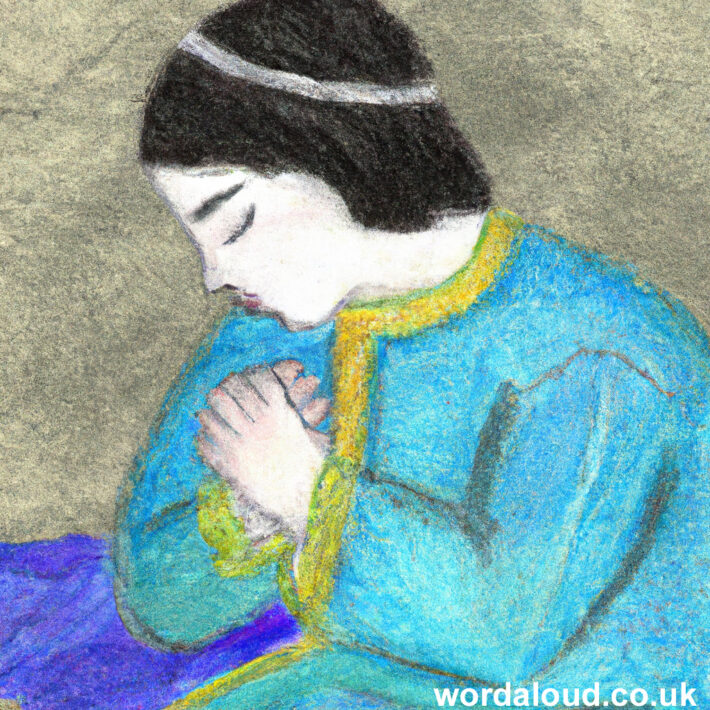
Christian Art | Prayer With Jesus | Psalms | Glory And Strength Of Zion | King David As A Boy
Psalm 48 | King James Audio Bible
YouTube: Psalm 48 | Word Aloud | King James Version | Audio Bible
Psalm 48 is a tribute to the city of God – Mount Zion. This psalm extols the greatness of the Lord and splendour of the holy city, portraying Zion as a place of refuge and rejoicing. The psalm underscores the enduring nature of God’s protection and guidance.
A Song of Praise for Mount Zion: Psalm 48 begins with an exultant declaration of God’s greatness and the praise due to Him in the city of God, which is identified as Mount Zion. This ancient city, perched majestically on the northern slopes, is celebrated as ‘the joy of the whole earth’ and ‘the city of the great King’.
A Place of Refuge: The psalm acknowledges God’s presence in the city’s palaces, where God serves as a refuge for His people. The psalm underscores the idea that even in the midst of grandeur, God is a source of solace and security.
The Astonishment of Kings: The psalm narrates the awe-struck response of kings who had assembled against the city of God but were confounded and swiftly retreated. Their fear and hasty departure are compared to the distress of a woman in labour.
God’s Divine Intervention: The psalm credits God with breaking the ships of Tarshish, symbolizing God’s power to overcome formidable adversaries, even those arriving by sea. God’s divine intervention is seen as a testament to His strength and might.
The Eternal City: Psalm 48 asserts the eternal nature of God’s establishment in the city of Jerusalem, assuring that it will endure forever.
Contemplation in the Temple: Within the temple, people meditate on God’s lovingkindness, pondering God’s name and righteousness, which extend to the ends of the earth.
Rejoice and Spread the Word: The psalm encourages the inhabitants of Mount Zion to rejoice and for the daughters of Judah to be glad in light of God’s righteous judgments. It calls on them to explore the city’s towers, observe its defenses, and share its magnificence with future generations.
God as Our Guide: Psalm 48 emphasizes that God is not only the Lord of the city but the eternal guide of His people. He is their God forever and ever, and He promises to lead them even unto death.
Psalm 48 | King James Audio Bible KJV | Love Revealed By Jesus Christ
Great is the Lord, and greatly to be praised in the city of our God, in the mountain of his holiness.
Beautiful for situation, the joy of the whole earth, is mount Zion, on the sides of the north, the city of the great King.
God is known in her palaces for a refuge.
For, lo, the kings were assembled, they passed by together.
They saw it, and so they marvelled; they were troubled, and hasted away.
Fear took hold upon them there, and pain, as of a woman in travail.
Thou breakest the ships of Tarshish with an east wind.
As we have heard, so have we seen in the city of the Lord of hosts, in the city of our God: God will establish it forever. Selah.
We have thought of thy lovingkindness, O God, in the midst of thy temple.
According to thy name, O God, so is thy praise unto the ends of the earth: thy right hand is full of righteousness.
Let mount Zion rejoice, let the daughters of Judah be glad because of thy judgments.
Walk about Zion, and go round about her: tell the towers thereof.
Mark ye well her bulwarks, consider her palaces; that ye may tell it to the generation following.
For this God is our God for ever and ever: he will be our guide even unto death.
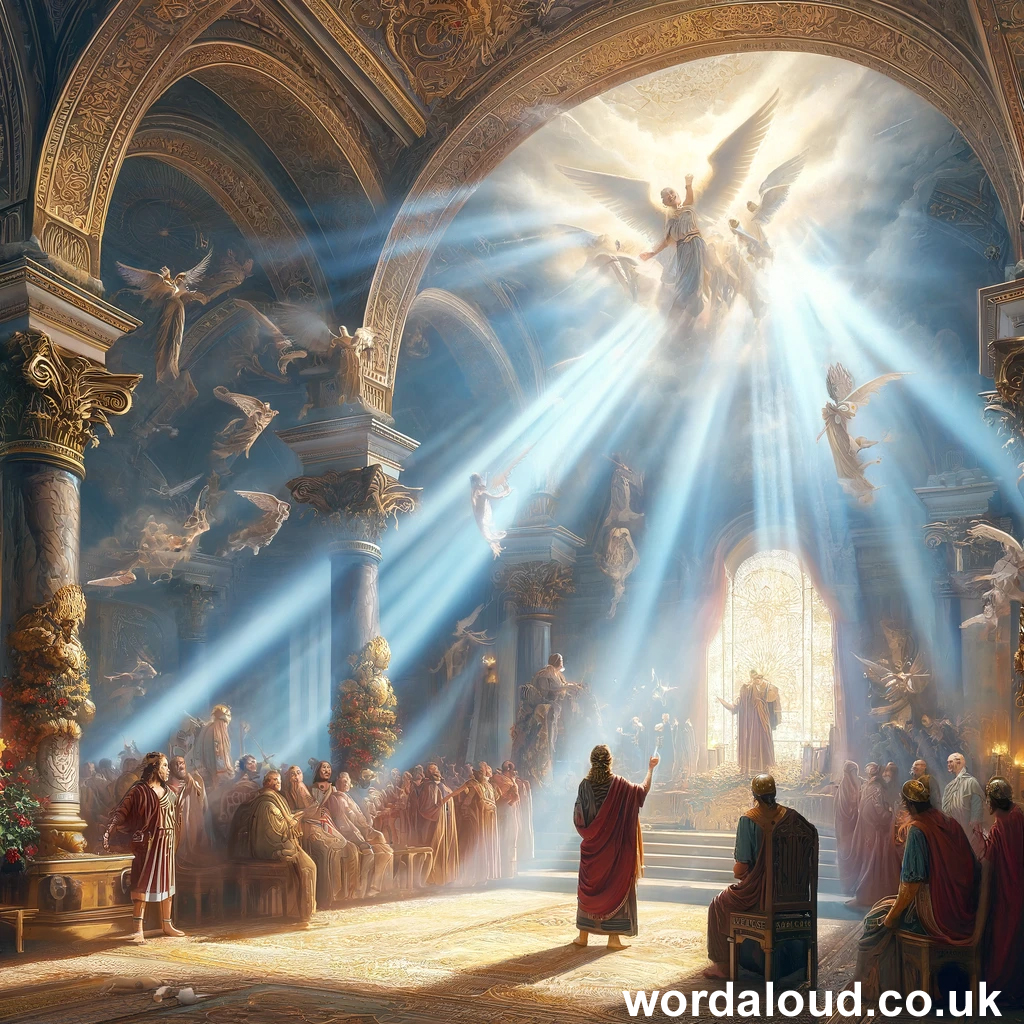
Key Themes Of The Psalm For Reflection | Love Revealed By Jesus Christ
- Exaltation of Mount Zion: Psalm 48 exalts Mount Zion, portraying it as a place of great joy and beauty, known as the city of the great King.
- Celebration of God’s Greatness: The psalm is a hymn of praise to God, emphasizing His greatness and His presence as a refuge in the city’s palaces.
- Astonishment of Adversaries: The psalm narrates the astonishment and fear of kings who gathered against the city but were swiftly defeated and retreated.
- Divine Intervention: God’s divine intervention is showcased, symbolized by the breaking of the ships of Tarshish, highlighting His power over formidable foes.
- The Eternal City: Psalm 48 affirms the eternal establishment of God in the city of Jerusalem, emphasizing its enduring nature.
- Meditation on God’s Attributes: Within the temple, the people meditate on God’s lovingkindness, righteousness, and the extent of His influence over the entire earth.
- Rejoicing and Reflection: The psalm encourages rejoicing and reflection on God’s righteous judgments, urging people to explore the city’s towers and share its magnificence with future generations.
- God as Everlasting Guide: It emphasizes that God is not only the ruler of the city but the eternal guide of His people, promising to lead them through all circumstances, even unto death.




The miracle of the calming of the storm made a powerful impression on Jesus’ disciples. It is recounted by all three synoptic Gospels. In each Gospel, Jesus warns his disciples of the troubles to come. Jesus tells his disciples that to be Christians is going to be difficult, hard work, at times fatal [ … ]
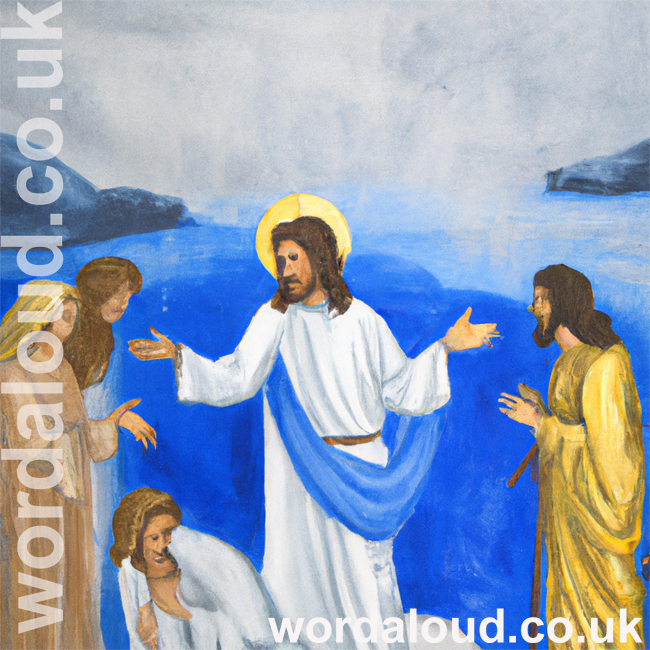
Jesus does not change his message in order to please people, even when that message proves unpalatable. He has not come to be all things to all men, but instead to tell us the truth. It is up to us, through faith, to hear and to understand and to accept Jesus’ teachings, and to know that our salvation is through him [ … ]
Christian Art | Parousia | Second Coming | Lamb Of God, You Take Away The Sins Of The World Luke 17: 26-37 (Audio Bible KJV, Spoken Word) Early Christian thought about the Parousia – the second coming – was largely influenced by the teachings of Jesus and the writings of Saint Paul. In the early Christian community, expectation of Christ’s return was strong, and many Christians believed that it would happen in their lifetime. This belief is evident in the New Testament, where the authors express a sense of urgency in their writings and encourage their readers to be prepared for Christ’s imminent return. As Christianity spread throughout the Roman Empire, the idea of the Parousia became more complex and nuanced. Theological debates arose around the nature of Christ’s return and the events that would precede it. Some theologians, such as Origen and Augustine, saw the Parousia as a spiritual event that was already happening in the Church. Others, such as the Montanists and the millenarians, believed in a literal, physical return of Christ and the establishment of a new, earthly Kingdom. In the Middle Ages, the Parousia was often associated with apocalypticism and the idea of a final, cataclysmic battle between good and evil – the last battle. The idea of the Antichrist, who would precede Christ’s return, became a popular theme in Christian literature, and the book of Revelation (Apocalypse – meaning to reveal, to uncover) was interpreted as a prophetic guide to the end of the world. Biblical Basis For The Parousia | The Second Coming The concept of the Parousia, or the Second Coming of Jesus Christ, is central to Christian eschatology and is supported by numerous biblical passages in both the Old and New Testaments. In the Old Testament, there are numerous passages that refer to the coming of a Messiah who will restore Israel and bring about the final judgment. For example, in Daniel 7:13-14, it is written: ‘I saw in the night visions, and, behold, one like the Son of man came with the clouds of heaven, and came to the Ancient of days, and they brought him near before him. And there was given him dominion, and glory, and a kingdom, that all people, nations, and languages, should serve him: his dominion is an everlasting dominion, which shall not pass away, and his kingdom that which shall not be destroyed.’ This passage describes a divine figure who comes in the clouds and is given dominion over all nations. In the New Testament, the Parousia is described in greater detail, particularly in the teachings of Jesus and the writings of Saint Paul. Jesus speaks of his return in many passages, including Matthew 24:30-31, where Jesus says: ‘And then shall appear the sign of the Son of man in heaven: and then shall all the tribes of the earth mourn, and they shall see the Son of man coming in the clouds of heaven with power and great glory. And he shall send his angels with a great sound of a trumpet, and they shall gather together his elect from the four winds, from one end of heaven to the other.’ Here, Jesus describes his return in power and glory, accompanied by angels who gather Jesus’ elect from all over the world. In Saint Paul’s letters, the Parousia is also described in detail. In 1 Thessalonians 4:16-17, Saint Paul writes: ‘For the Lord himself shall descend from heaven with a shout, with the voice of the archangel, and with the trump of God: and the dead in Christ shall rise first: Then we which are alive and remain shall be caught up together with them in the clouds, to meet the Lord in the air: and so shall we ever be with the Lord.’ This passage describes a resurrection of the dead and the gathering of believers to meet the Lord Jesus in the air. The language and imagery used to describe the Parousia are often dramatic and apocalyptic in nature. The Parousia is often described as a time of judgment, when the righteous will be separated from the wicked, and God’s justice will be fully revealed. The imagery of clouds, trumpets, and angels is used to depict the power and glory of Christ’s return. Theological Interpretations Of The Parousia | Jesus’ Second Coming The concept of the Parousia has been interpreted in a variety of ways throughout Christian history. Dispensationalism Dispensationalism is a theological framework that emerged in the 19th Century and has since become popular among some evangelical and fundamentalist Christians. Dispensationalists believe that history is divided into distinct periods or ‘dispensations’, each of which is marked by a particular mode of divine revelation and a specific plan of salvation. According to dispensationalist theology, the Parousia will be preceded by a period of tribulation, during which the Antichrist will establish a one-world government and the Jews will be restored to their homeland. The Parousia itself will involve a physical, visible return of Christ, who will establish a thousand-year reign on earth before the final judgment. Preterism Preterism is a theological interpretation of the Parousia that holds that many of the prophecies in the New Testament, particularly those in the book of Revelation, were fulfilled in the first century AD. According to this view, the Parousia occurred in a spiritual sense when Christ ascended to heaven and sent the Holy Spirit to empower the Church. Preterists argue that the tribulation and other end-time events predicted in the New Testament were fulfilled in the destruction of the Temple in Jerusalem in AD 70. Postmillennialism Postmillennialism is a theological view that holds that the Parousia will occur after a period of history in which the Church will gradually bring about the kingdom of God on earth. According to this view, the Church will spread the gospel throughout the world, and social, political, and economic conditions will gradually improve. Eventually, Christ will return to a world that has been largely transformed by the Gospel. Amillennialism […]