Christian Art | George Herbert | The Temple | The Church | Employment (2)
George Herbert | The Temple | The Church | Employment (2)
He that is weary, let him sit.
My soul would stirre
And trade in courtesies and wit,
Quitting the furre
To cold complexions needing it.
Man is not starre, but a quick coal
Of mortall fire:
Who blows it not, nor doth control
A faint desire,
Let his own ashes choke his soul.
When th’ elements did for place contest
With him, whose will
Ordain’d the highest to be best;
The earth sat still,
And by the others is opprest.
Life is a businesse, not good cheer;
Ever in warres.
The sunne still shineth there or here,
Whereas the starres
Watch an advantage to appeare.
Oh that I were an Orenge-tree,
That busie plant!
Then should I ever laden be,
And never want
Some fruit for him that dressed me.
But we are still too young or old;
The man is gone,
Before we do our wares unfold:
So we freeze on,
Untill the grave increase our cold

George Herbert | The Temple | The Church | Avarice
The poem explores the transitory nature of human life and its obligations within the framework of divine order. The poem contrasts rest and action, reflecting on a tension between weariness and demands of purposeful living. The opening line of the poem establishes a choice: to rest or to engage. The speaker’s – Herbert’s soul rejects passivity and expresses a desire to act, reflecting a concern with spiritual stagnation.
Herbert describes man as a ‘quick coal / Of mortall fire’, emphasizing human fragility and dependence on external effort for vitality. The coal, unlike the eternal star, requires tending and will extinguish if neglected. This image suggests that the soul’s vibrancy depends on deliberate cultivation.
Reference to the elements contesting for place situates man in a hierarchy of creation. Earth, though motionless, bears the weight of others. This depiction underscores man’s connection to physicality and the tension between worldly concerns and higher purposes.
The poem positions life as work rather than leisure. The sun, constant and unchanging, symbolizes grace, while stars, less steady, represent fleeting opportunities. This contrast highlights ever-present availability of divine guidance, which is often overlooked in favour of temporary pursuits.
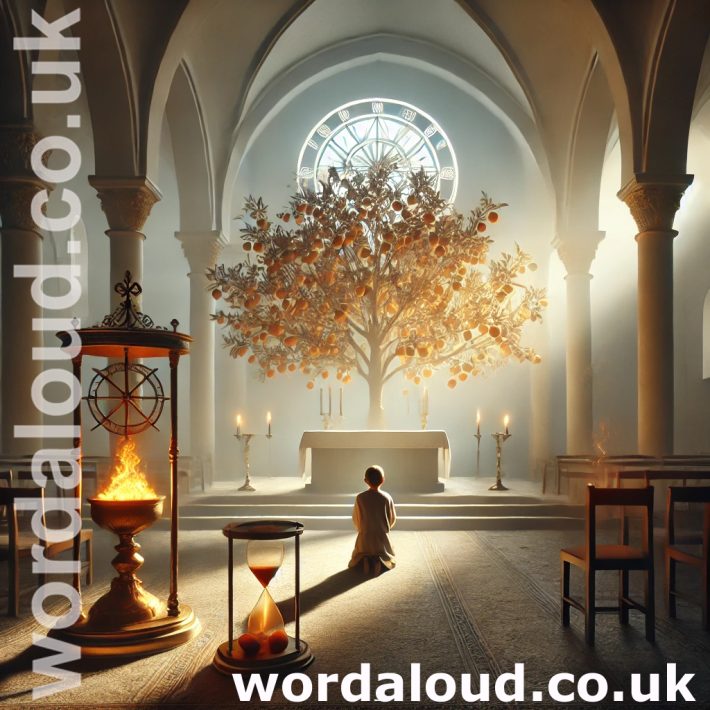
The orange tree is metaphor for productivity and alignment with purpose. Its consistent fruitfulness contrasts with human inconsistency and delays caused by youth and age. The tree’s image conveys a longing for constancy and readiness in service.
Closing lines of the poem reflect on mortality. The grave’s ‘cold’ reinforces the idea of missed opportunities and consequences of spiritual inertia. The poem urges active engagement with life’s purpose, emphasizing importance of living in accordance with divine intention before time runs out.



Some few of the Pharisees now show solidarity with Jesus, warning him that Herod Antipas means to kill him. Herod has previously expressed a wish to meet Jesus (Luke 9: 9), about whom he was perplexed, wondering if John the Baptist had risen again. We do not know whether the Pharisees simply want to get Jesus to go away or if there is danger [ … ]
This reading from the Constitution on the Sacred Liturgy of the Second Vatican Council sets out a comprehensive understanding of the liturgy as the privileged place of Christ’s presence and action in the Church. Rather than treating worship as one activity among others, the text presents the liturgy as central to the Church’s life and mission [ … ]

In this verse, Jesus speaks about welcoming the stranger. Jesus teaches us that caring for those in need, including refugees, is an expression of our love for God. This passage calls us to open our hearts and homes to those who are seeking refuge and safety, reflecting God’s compassion and mercy [ … ]