

Christian Art | George Herbert | The Temple | The Church | Sighs and Grones
George Herbert | The Temple | The Church | Sighs and Grones
O do not use me
After my sinnes! look not on my desert,
But on thy glorie! then thou wilt reform
And not refuse me: for thou onely art
The mightie God, but I a sillie worm;
O do not bruise me!
O do not urge me!
For what account can thy ill steward make?
I have abus’d thy stock, destroy’d thy woods,
Suckt all thy magazens: my head did ake,
Till it found out how to consume thy goods:
O do not scourge me!
O do not blinde me!
I have deserv’d that an Egyptian night
Should thicken all my powers; because my lust
Hath still sow’d fig-leaves to exclude thy light:
But I am frailtie, and already dust;
O do not grinde me!
O do not fill me
With the turn’d viall of thy bitter wrath!
For thou hast other vessels full of bloud,
A part wherof my Saviour empti’d hath,
Ev’n unto death: since he di’d for my good,
O do not kill me!
But O reprieve me!
For thou hast life and death at thy command;
Thou art both Judge and Saviour, feast and rod,
Cordiall and Corrosive: put not thy hand
Into the bitter box; but O my God,
My God, relieve me!

George Herbert | The Temple | The Church | Sighs and Grones
The poem offers Herbert’s desperate plea for divine mercy, structured as a series of direct appeals to God. The repeated cries of ‘O do not’ introduce a layered exploration of sin, justice, and grace, where Herbert acknowledges personal failure while seeking deliverance.
The first stanza establishes Herbert’s profound self-abasement. He acknowledges his unworthiness before God, calling himself a ‘silly worm’ in contrast to God’s might. The image of a ‘worm’ emphasizes human frailty and insignificance. Yet, Herbert asks God not to deal with him according to his sins but instead according to divine glory, implying that God’s justice and mercy are inseparable from divinity.
In the second stanza, Herbert shifts to the metaphor of stewardship. He confesses having mismanaged the gifts entrusted to him – ‘abused thy stock, destroyed thy woods’ – suggesting spiritual neglect or moral wastefulness. The phrase ‘my head did ache’ underscores Herbert’s guilt, implying both emotional torment and a realization of wrongdoing. Despite this failure, the plea is for correction rather than destruction — a call for divine discipline over total condemnation.
The third stanza introduces the metaphor of blindness, drawing from biblical imagery of spiritual darkness. The ‘Egyptian night’ recalls the plague of darkness from Exodus, a divine punishment for rebellion against God. Herbert equates his sinful state with a similar darkness, where moral corruption has obscured divine light. The phrase ‘fig leaves to exclude thy light’ echoes the Fall in Genesis, where Adam and Eve used fig leaves to hide their shame. Herbert admits his vulnerability, describing himself as ‘frailty’ and ‘dust’, emphasizing human mortality and dependence on divine mercy.
The fourth stanza introduces the imagery of divine wrath as a ‘turned vial’ filled with bitterness, a reference to the biblical concept of God’s judgment being poured out from a cup or vial (Revelation 16). Herbert appeals to the atoning sacrifice of Christ, who ‘emptied’ a vessel of suffering on humanity’s behalf. By referencing Christ’s bloodshed ‘even unto death’, Herbert makes a theological argument for mercy grounded in the completed work of redemption, highlighting substitutionary atonement as the basis for his plea.
The final stanza presents a tension between God’s dual roles as ‘Judge and Saviour, feast and rod, cordial and corrosive’. These paired contrasts reflect the complexity of divine justice and mercy. Herbert does not ask for a denial of divine authority but pleads for its merciful application. The ‘bitter box’ image suggests a container of severe punishment, but the closing repetition of ‘my God, relieve me!’ resolves the poem with a direct, heartfelt cry for deliverance.
Through the poem, Herbert’s tone remains reverent yet urgent, emphasizing dependence on divine mercy rather than entitlement to grace. The repetitive structure heightens this emotional intensity, while consistent use of biblical references underscores the theological grounding of the plea. Herbert highlights a paradox of divine justice—both severe and compassionate—while emphasizing hope of grace through Christ’s sacrifice. The poem explores the profound human need for forgiveness in the face of divine holiness.


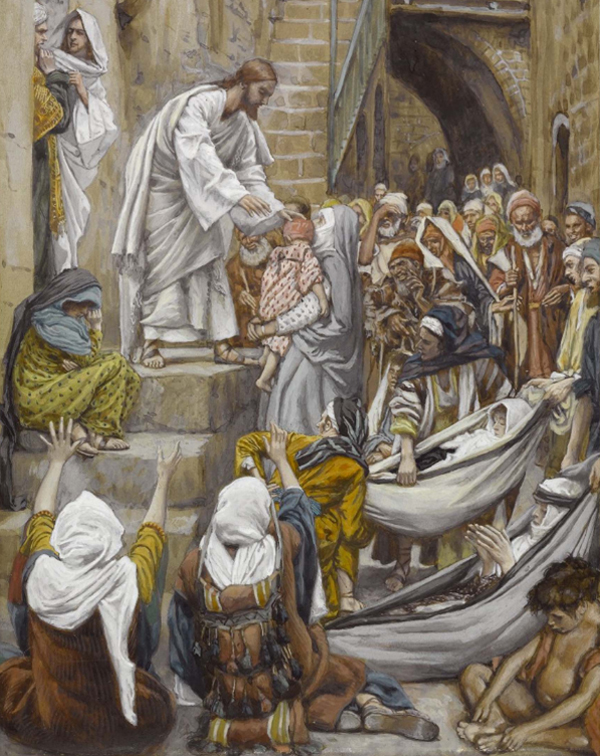
Christ continues his work of healing and exorcism. He passes from the synagogue, a Jewish meeting place for prayer and for reading of the Scriptures, to enter into the home of Simon and Andrew. The Bible tells us that Jesus spends much of his time preaching in synagogues. Later, during his Passion, Jesus will tell Pilate that he has always taught openly in synagogues. There is indeed a great openness to Jesus’ teaching. Many are called, here in a space which would be at the spiritual heart of local Jewish communities. Similarly, we are called as followers of Christ to spread the good news. Our openness with our love of Christ reflects Christ’s openness to the people of Galilee and to us [ … ]
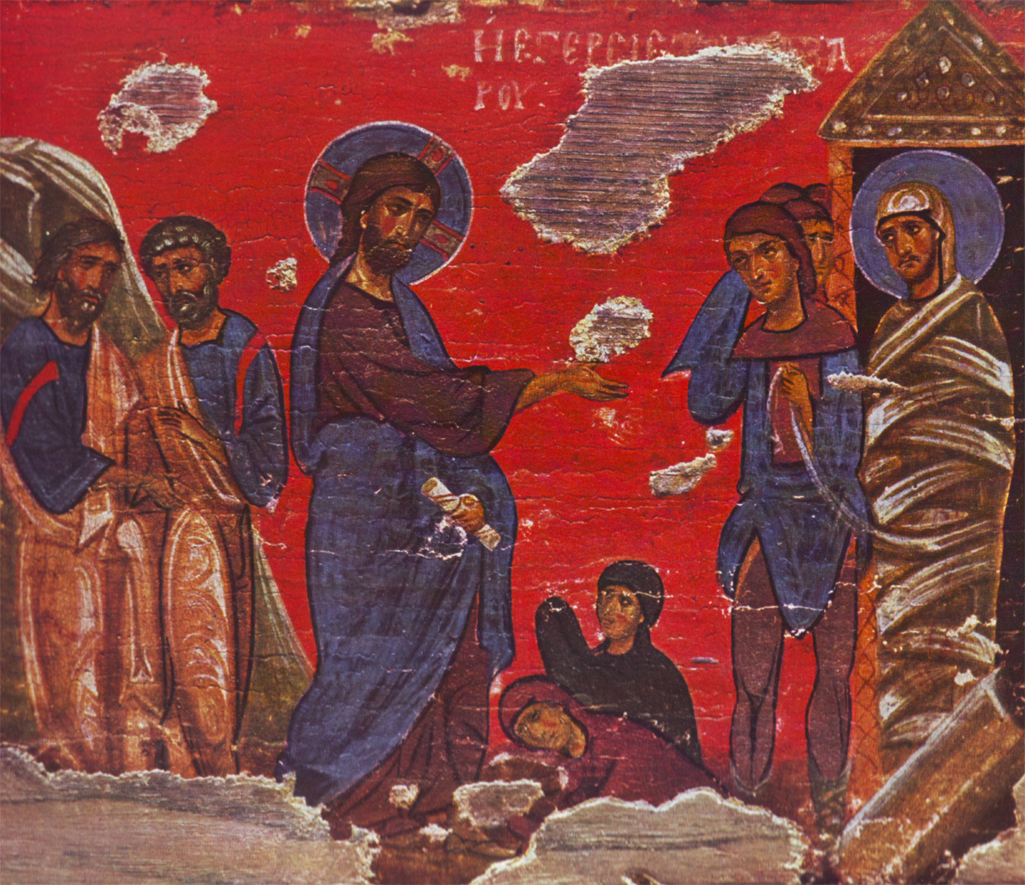
‘Death,’ says His Grace, ‘throws it all apart. For we are not as we should be. Faith requires our adjustment to God’s truth. God’s triumph in a very real sense requires in us the loss of our everything. Which, as with Mary at the other end of Jesus’s life, is God’s truth.’ The Gospel reading is of John 11: 1-45, which is a long passage, and His Grace’s homiletic theme commences in textual wilderness. Our brokenness – in this place – a family home. Our faith, our doubt, our death… The irruption – death, doubt, fear – within our precious scenes and our most intimate places. Our domesticity. His Grace speaks from the chair, as is a bishop’s prerogative, and says: ‘So much is obscure in the Gospels. We’re always reaching through them. We’re never there. Really, we never are. Our knowledge, our understanding, of the Gospels is never complete, and with each reading comes a new revelation. There are always new riches there. Just as there are between all of us, between myself and you. The Gospels are living texts. This is a part of the conversation we have with our own Christianity. It is a part of who we are in our relationship with Jesus. We are in this sense always on the brink. ‘So yes, there is plenty that doesn’t seem to make sense. As one of the order of bishops, we would be lying if we said that weren’t the case. They are not easy texts to encounter, if by that word we may signify something more than a superficial glancing off against, but rather a profound search for the word of God. The Gospels are written by people who had their own ideas, and often didn’t know what had really happened. Luke is quite explicit on this point. His is an investigation, from the explicitly claimed point of view of an historian, rather than that of a first-hand witness, who attempts, so he says, to set out an orderly account, out of the chaos, the sheer muddle, that has been handed down to him. It is possible to imagine Luke researching and composing his account after many years, when there has arisen a desire to know what exactly happened, and this implies a certain call to faith and certain demands of historicity, to historical exactitude. So in these different ways, the people of the first years of Christian faith are in the dark. There is also a decisive need to define the life of Jesus. And people didn’t get Jesus. The whole meaning of Christianity is only now beginning to take root throughout the composition. So much needs to be evangelized. The light shines almost in tentative fashion like that first star, which drew the wise men from the east to our Lord’s cradle. ‘John’s is widely held to be a very late Gospel. There are others who say that John’s Gospel might have been the first to acquire its true shape, because it most fully expresses Jesus, as we know him to be, as members of the Catholic Church. We don’t really know when any of this is being written, but we get a feel in John of a Gospel refined over many years, through a community. So there’s a lot going on there that I’d like you to think about. ‘What I would like to suggest to you is that, while within the Gospels we are often confronted with clues, guesswork, stories that have been handed down through so many people, and so in this sense we might find ourselves to be in the wilderness, this is the very desolate space itself to which we must give ourselves in order to experience Christ’s full redemption in our lives. I suggest it is for God’s glory that we do so. ‘As we become aware of ourselves, in this seminary, we find ourselves in a very secure, comfortable setting, and there are signs of Easter everywhere. Within the very fabric of these buildings, our Lord is risen; our Lord lives. But now this is our Lenten journey, where death enters, where death breaks us. We are to ride into Jerusalem in triumph, and then we are to be utterly broken, all hope gone, our hope extinguished. And really, I suggest to you, it is only by inhabiting this thought, as if we don’t know Easter is there, that our new life can follow, just when we have given up all hope, when every promise that Jesus made to us seems to have been cancelled. ‘And here now we have the story of Lazarus. I should like to suggest to you that we have a very powerful call now. In our very comfortable space, our domesticity, with all this comfort, where so very little might seem to happen each day, so it might seem to you, there is a disturbance within all of this comfort, and that is a disturbance within ourselves, and that is our call to Jesus. I think it is correct to say that our most comfortable places break in the light of Jesus from the inside, in order that we may take the necessary steps to be with Jesus. ‘Faith is not comfortable. I think that we can all receive the message of the rolling away of the rock from the tomb of Lazarus to say something of vital importance to ourselves concerning our openness to God’s love. The rock we roll away can come in all sorts of guises, but we know when we are blocked, and I firmly believe if we are truthful then we know where those blocks might be. ‘Next Sunday, which will be Palm Sunday, we process as it were to Jerusalem, to begin our Holy Week. Now as I speak to you we are on the brink. Even now, I suggest it might be very good for all of us to lay aside what we think we know, to fall apart a little, and so […]

In the early Church, the days after Easter were not merely about looking back to the resurrection of Christ — they were about awakening the newly baptized to the mystery that they had just entered. The Jerusalem Catecheses, a series of teachings attributed to St. Cyril of Jerusalem or a contemporary bishop in the 4th century, offer us a glimpse into that world. Today’s passage reflects on what happens after baptism — the anointing with chrism — and why it matters so deeply [ … ]
