
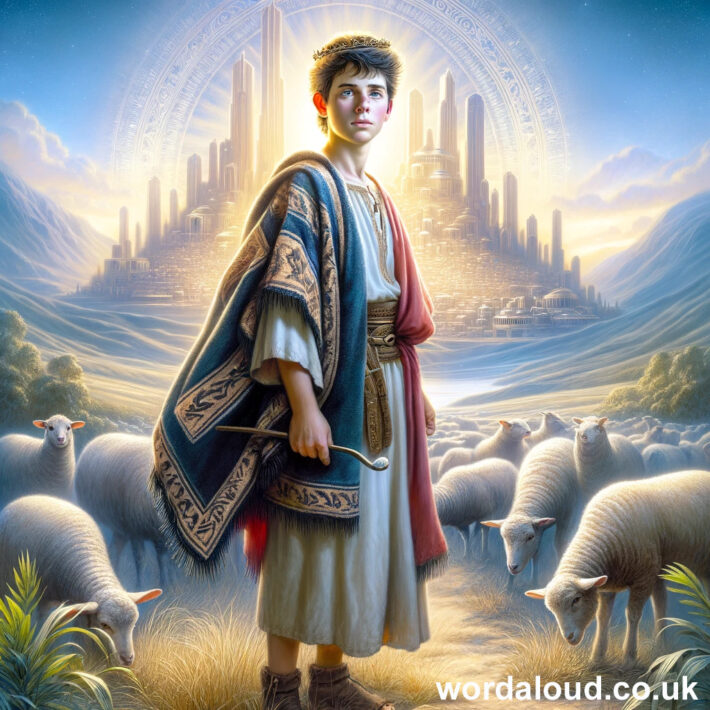
Christian Art | Prayer With Jesus | Psalms | Assurance Of God’s Protection | A Song Of Ascents | King David As A Boy | Audio KJV | Love Revealed By Jesus Christ | King James Audio Bible
Psalm 121 | King James Audio Bible
YouTube: Psalm 121 | KJV | King James Version | Audio Bible | Word Aloud
Psalm 121 is of the series of Psalms known as the ‘Songs of Ascents’ (Psalms 120-134). Traditionally, these psalms were sung by pilgrims ascending to Jerusalem for religious festivals. Psalm 121, in particular, has been a source of comfort, revered for its focus on God’s protection and providence.
The opening line, ‘I will lift up mine eyes unto the hills, from whence cometh my help,’ draws the reader into a context of seeking help or relief. The psalmist’s gaze is directed upwards to the hills, a gesture that suggests both a literal looking up to the mountains surrounding Jerusalem and a metaphorical lifting of the soul towards divine help.
The following verse, ‘My help cometh from the LORD, which made heaven and earth,’ establishes the source of this help. By recognizing God as the creator of heaven and earth, the psalmist attributes to God both supreme power and a personal interest in human affairs. This acknowledgment of God as the ultimate source of help is cornerstone of faith, encapsulating a deep trust in the divine.
In verses 3 and 4, the psalmist writes, ‘He will not suffer thy foot to be moved: he that keepeth thee will not slumber. Behold, he that keepeth Israel shall neither slumber nor sleep.’ These verses offer security, emphasizing God’s constant vigilance and care. Imagery of God who does not sleep is powerful, suggesting unwavering, round-the-clock protection. This contrasts with human frailties; we sleep, we falter, but the psalmist assures us that God’s protective gaze is eternal, unrelenting.
The fifth and sixth verses, ‘The LORD is thy keeper: the LORD is thy shade upon thy right hand. The sun shall not smite thee by day, nor the moon by night,’ further develop this theme of protection. The metaphor of the Lord as a shade is rich in meaning, particularly in the Middle Eastern context where the sun’s heat can be oppressive. This shade is not just a relief from physical discomfort but a metaphor for protection from life’s harsh realities. Reference to the moon not smiting by night speaks to fears and dangers that were often associated with the night; it is a promise of protection from seen and unseen dangers.
In the final two verses, ‘The LORD shall preserve thee from all evil: he shall preserve thy soul. The LORD shall preserve thy going out and thy coming in from this time forth, and even for evermore,’ the psalm reaches its climax. The repetition of ‘preserve’ underscores a comprehensive safeguarding of the believer’s life. The promise extends beyond physical well-being to preservation of the soul, indicating spiritual protection. The scope of this preservation is all-encompassing – encompassing all aspects of life, at all times, and for eternity.


Psalm 121 | King James Audio Bible
I will lift up mine eyes unto the hills, from whence cometh my help.
My help cometh from the LORD, which made heaven and earth.
He will not suffer thy foot to be moved: he that keepeth thee will not slumber.
Behold, he that keepeth Israel shall neither slumber nor sleep.
The LORD is thy keeper: the LORD is thy shade upon thy right hand.
The sun shall not smite thee by day, nor the moon by night.
The LORD shall preserve thee from all evil: he shall preserve thy soul.
The LORD shall preserve thy going out and thy coming in from this time forth, and even for evermore.

Psalm 121 | King James Audio Bible
- Divine Protection: A primary theme of the psalm is the assurance of God’s constant and unwavering protection, emphasized throughout the verses.
- God As The Ultimate Helper: The psalmist declares that help comes from the Lord, the Creator of heaven and earth, highlighting God’s omnipotence and willingness to aid.
- Unceasing Vigilance Of God: The imagery of God as one who neither slumbers nor sleeps conveys God’s perpetual guardianship over His people.
- Protection From All Harm: The promise that the sun and moon will not harm and that God will keep the believer from all evil underscores comprehensive safeguarding, both physical and spiritual.
- Continual Preservation: The repetition of God’s preservation in all aspects of life – ‘thy going out and thy coming in’ – symbolizes God’s constant care in every situation and time.
- Eternal Assurance: The psalm extends the promise of God’s protection into eternity, suggesting an everlasting commitment to safeguard His followers.
- Trust In God’s Care: The psalm reflects a deep trust in God’s providential care, encouraging believers to rely on Him in all circumstances.
- Comfort And Reassurance: The psalm offers comfort and reassurance, serving as a reminder of God’s presence and protection in the face of life’s challenges and uncertainties.
- Spiritual Journey: The psalm reflects the spiritual journey of the believer, affirming faith in God’s guidance through life’s metaphorical and physical journeys.
Connections | Psalm 121 KJV Commentary
Zondervan Academic – Commentary on Psalm 121 Enduring Word Bible Commentary Psalm 121 Study Guide for Psalm 121 by David Guzik – Blue Letter Bible Matthew Henry Commentary on Psalm 121 – Bible Study Tools Working Preacher Commentary on Psalm 121 Sermon Writer Commentary on Psalm 121 The Pulpit Commentaries – Psalms 121 C. H. Spurgeon’s Treasury of David – Psalm 121


We might imagine our gazing upon a breath-taking sunrise or a star-filled night sky. The opening lines of this psalm capture that moment, reminding us that the heavens declare the glory of God. The celestial display becomes a testament to divine craftsmanship, whispering its wisdom to all who observe it [ … ]
Psalm 28 is a heartfelt cry to the Lord God. The psalm is a plea for divine intervention, and a declaration of unwavering trust in God’s strength and protection. The psalm resonates with themes of supplication, of contrast between the righteous and the wicked, and acknowledgment of God as the ultimate source of strength and salvation [ … ]
In these Gospel verses, Jesus goes to the Mount of Olives with his disciples, and at a particular place, Jesus separates himself to pray. Jesus urges his disciples to pray against temptation. In his prayer, Jesus expresses his desire for the cup of suffering to be removed but ultimately submits to God’s will. An angel appears from heaven to strengthen Jesus, and Jesus prays with such intensity that his sweat becomes like drops of blood falling to the ground [ … read more and listen … ]