

Christian Art | Prayer With Jesus | Psalms | Prayer For Deliverance From Enemies | King David As A Boy | Audio KJV | Love Revealed By Jesus Christ | King James Audio Bible
Psalm 70 | King James Audio Bible
YouTube: Psalm 70 | KJV | King James Version | Audio Bible | Word Aloud
Verse 1: ‘Make haste, O God, to deliver me; make haste to help me, O Lord.’ In this opening verse, the psalmist urgently calls upon God, imploring Him to come quickly to his aid and deliverance. The tone is one of immediate need and a deep reliance on divine assistance.
Verse 2: ‘Let them be ashamed and confounded that seek after my soul: let them be turned backward, and put to confusion, that desire my hurt.’ The psalmist petitions God for justice against those who seek to harm him. The psalm invokes a sense of shame and confusion upon the psalmist’s adversaries, expressing a desire for divine retribution.
Verse 3: ‘Let them be turned back for a reward of their shame that say, Aha, aha.’ This verse continues the plea for the adversaries to face the consequences of their actions, specifically those who have taunted and celebrated the psalmist’s distress. The desire is for their shame to be repaid in kind.
Verse 4: ‘Let all those that seek thee rejoice and be glad in thee: and let such as love thy salvation say continually, Let God be magnified.’ In contrast to the previous verses, this verse shifts the focus to a call for joy and gladness among those who seek God and love His salvation. The psalmist encourages others to continually magnify God, highlighting the contrasting themes of despair and celebration present in the psalm.
Verse 5: ‘But I am poor and needy: make haste unto me, O God: thou art my help and my deliverer; O Lord, make no tarrying.’ The psalm concludes with a reminder of the psalmist’s own state of neediness and his continued reliance on God as help and deliverer. The final plea is for God to act without delay, emphasizing the urgency of the situation and the psalmist’s unwavering trust in divine assistance.

Psalm 70 | King James Audio Bible KJV | Love Revealed By Jesus Christ
Make haste, O God, to deliver me; make haste to help me, O Lord.
Let them be ashamed and confounded that seek after my soul: let them be turned backward, and put to confusion, that desire my hurt.
Let them be turned back for a reward of their shame that say, Aha, aha.
Let all those that seek thee rejoice and be glad in thee: and let such as love thy salvation say continually,
Let God be magnified.
But I am poor and needy: make haste unto me, O God: thou art my help and my deliverer; O Lord, make no tarrying.


Key Themes Of The Psalm For Reflection | Love Revealed By Jesus Christ
- Urgent Prayer For Help: The psalm begins with an urgent plea for God’s swift intervention and deliverance from distress.
- Desire For Justice: The psalmist seeks divine justice against those who seek to harm him, asking that his adversaries be put to shame and confusion.
- Repetition Of The Plea For Shame: The psalmist reiterates the desire for enemies to be ‘turned back’ and face the consequences of their actions, especially those who taunt and celebrate the psalmist’s suffering.
- Call To Rejoice: In a shift of tone, the psalm encourages those who seek God to rejoice and be glad in Him, emphasizing the magnification of God.
- Acknowledgment Of Neediness: The psalmist acknowledges his own state of poverty and neediness, continuing to rely on God as help and deliverer.
- Emphasis On God’s Speedy Response: The psalm concludes with an urgent request for God to act promptly, underlining the psalmist’s unwavering trust in divine assistance.



The purification rituals of the Jews were originally laid down, in Exodus, for the priests to perform before they offered sacrifices to God. These rules were then later extended to all Jews, to be performed before every meal. This was as there developed a greater and greater call for all Jews to be a priestly people, particularly in the light of national set-backs, which were ascribed to infidelities to God [ … ]

Jesus’ critique of the scribes and the Pharisees continues in today’s Gospel verses. The accusation is constant: they are hypocrites. The imagery in part remains constant: these hypocrites put on outward shows of purity, and yet their hearts are corrupt and their behaviour is corrupt. This imagery now develops. Woe unto you! For you are as painted tombs, all white and purportedly pure and true on the outside, while within the dead flesh rots […]
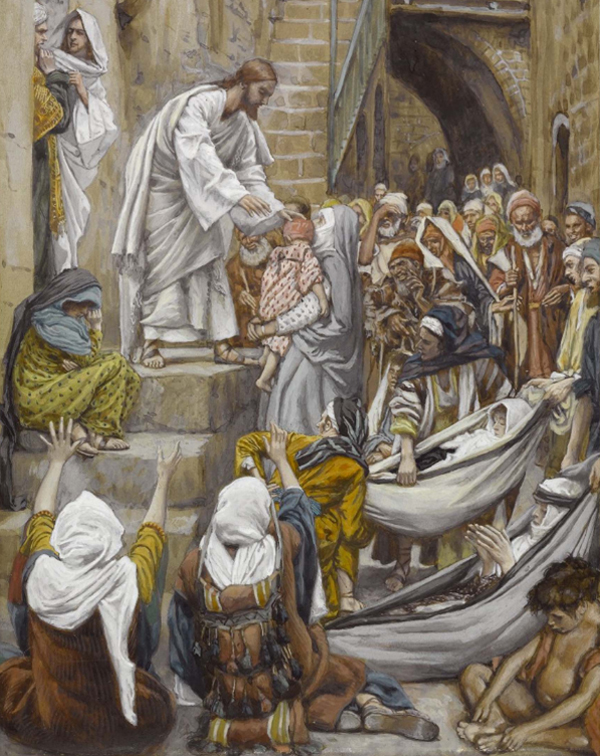
Christ continues his work of healing and exorcism. He passes from the synagogue, a Jewish meeting place for prayer and for reading of the Scriptures, to enter into the home of Simon and Andrew. The Bible tells us that Jesus spends much of his time preaching in synagogues. Later, during his Passion, Jesus will tell Pilate that he has always taught openly in synagogues. There is indeed a great openness to Jesus’ teaching. Many are called, here in a space which would be at the spiritual heart of local Jewish communities. Similarly, we are called as followers of Christ to spread the good news. Our openness with our love of Christ reflects Christ’s openness to the people of Galilee and to us [ … ]
