
Christian Art | Jesus Christ | Risen Lord | New Jerusalem | City Of God
Office Of Readings | Week 19, Sunday, Ordinary Time | A Reading From The Dialogue Of Saint Catherine Of Siena On Divine Providence | Bonds Of Love
‘The bonds of love.’
This passage from Catherine of Siena’s Dialogue on Divine Providence is cast as a prayer, but it also unfolds as a theological reflection. Catherine speaks to God in direct, personal language, yet her words move from personal confession to intercession for the whole Church. She frames her petition in terms of the ‘mystical body’ — a phrase drawn from Paul’s letters, meaning the Church as a living organism bound together in Christ.
Her argument is layered. She first appeals to God’s greater glory: to forgive the many is a greater manifestation of divine mercy than to forgive one sinner alone. She then shifts from self-interest to solidarity — her own salvation, she says, would be incomplete if the Church remained in ‘death’, a metaphor for sin.
Catherine roots her plea in the narrative of creation and redemption. Humanity’s dignity, she recalls, comes from being made in the image and likeness of God, a status forfeited by sin. Yet she insists that God’s response to this loss was driven not by compulsion but by love. The sending of the ‘only-begotten Son’ is described in strikingly concrete terms: Christ ‘went down’ from divine heights into the ‘clay’ of human life, taking on both the nature and the injustice of humanity.
One of the passage’s most distinctive images is the ‘veiling’ of God’s divinity in the humanity of Christ — the ‘cloud’ of flesh drawn from Adam. This is Catherine’s way of holding together two aspects of Christian teaching: that Christ is truly God and truly man, and that this union was motivated by love.
Her final plea is a bold universalism of prayer. She does not restrict mercy to the righteous or the penitent, but asks that God ‘freely extend’ it to ‘all your lowly creatures’. For Catherine, this request is not separate from the Incarnation; it is its natural consequence. If God has already stooped so low in love, then mercy for all is not merely possible but fitting to God’s character.

A Reading From The Dialogue Of Saint Catherine Of Siena On Divine Providence | Bonds Of Love
My sweet Lord, look with mercy upon your people and especially upon the mystical body of your Church. Greater glory is given to your name for pardoning a multitude of your creatures than if I alone were pardoned for my great sins against your majesty. It would be no consolation for me to enjoy your life if your holy people stood in death. For I see that sin darkens the life of your bride the Church – my sin and the sins of others.
It is a special grace I ask for, this pardon for the creatures you have made in your image and likeness. When you created man, you were moved by love to make him in your own image. Surely only love could so dignify your creatures. But I know very well that man lost the dignity you gave him; he deserved to lose it, since he had committed sin.
Moved by love and wishing to reconcile the human race to yourself, you gave us your only-begotten Son. He became our mediator and our justice by taking on all our injustice and sin out of obedience to your will, eternal Father, just as you willed that he take on our human nature. What an immeasurably profound love! Your Son went down from the heights of his divinity to the depths of our humanity. Can anyone’s heart remain closed and hardened after this?
We image your divinity, but you image our humanity in that union of the two which you have worked in a man. You have veiled the Godhead in a cloud, in the clay of our humanity. Only your love could so dignify the flesh of Adam. And so by reason of this immeasurable love I beg, with all the strength of my soul, that you freely extend your mercy to all your lowly creatures.
Christian Prayer With Jesus Christ
Eternal Father,
You formed us in your image and likeness,
and when we turned from you,
you gave us your Son to share our nature and bear our sin.
Draw your Church into the unity of his body,
that none may remain in the shadow of death.
Clothe us again in the dignity you willed for us at creation,
and soften our hearts to recognise your love
veiled in the humanity of Christ.
Through him who lives and reigns with you,
in the unity of the Holy Spirit,
one God, now and forever.
Amen.
Glossary Of Christian Terms
Mystical body – A term used for the Church, understood as a living body whose members are united to Christ as the head.
Majesty – A title or description for God’s supreme dignity and sovereignty.
Mediator – One who stands between two parties to reconcile them; in Christian theology, Christ reconciles humanity to God.
Justice – In this context, the righteous standing before God that Christ makes possible for humanity.
Only-begotten Son – A biblical phrase referring to the unique and eternal relationship of Jesus to the Father.
Divinity – The divine nature or Godhead.
Clay of our humanity – A reference to the biblical account of Adam being formed from the dust of the ground, symbolising human mortality and weakness.
Incarnation – The Christian belief that the eternal Son of God took human nature in the person of Jesus Christ.



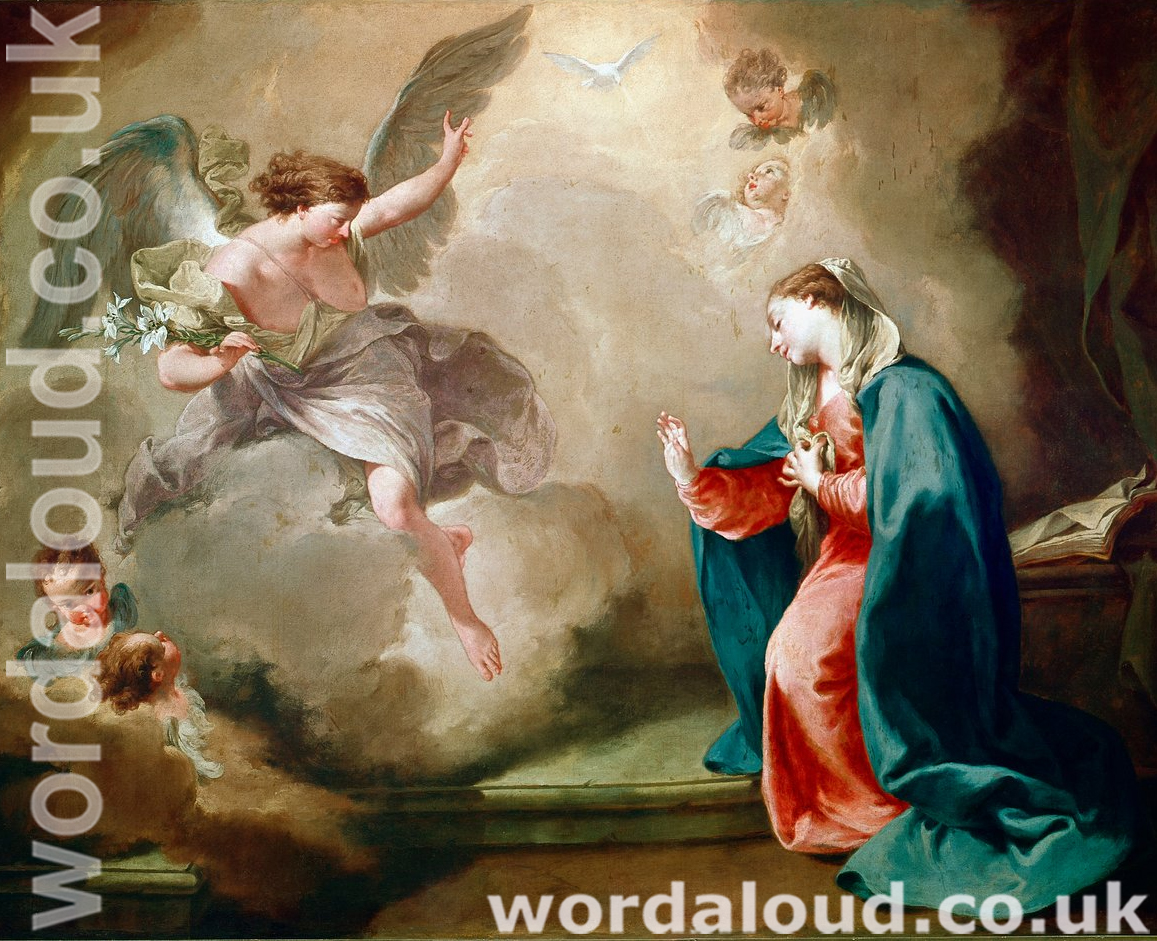
In this reading, Bernard of Clairvaux reflects on the moment of the annunciation, focusing on Mary’s reply to the angel Gabriel. The reading does not retell the biblical narrative in a descriptive way but pauses at the moment before Mary speaks, treating her response as a decisive point in salvation history [ … ]
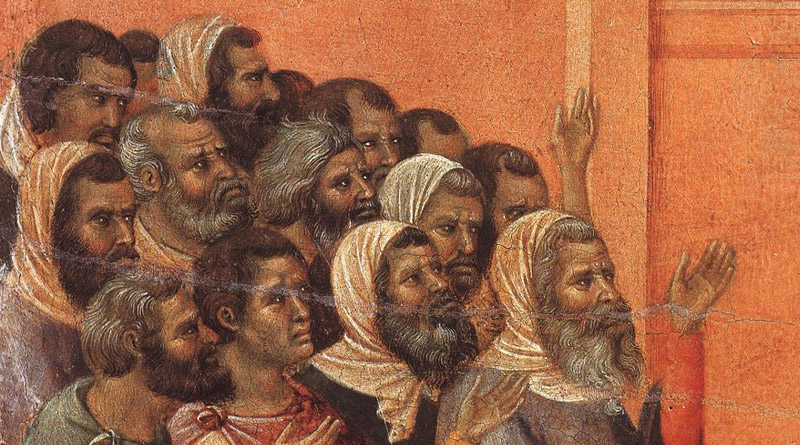
The Gospel verses reflect a time when Christianity has split from Judaism, and also a time after the destruction of Jerusalem. In depictions of Jesus’ rebuke of the Pharisees, we discover an astonishing claim to transcendence on the part of the burgeoning Christian communities. There is too ambivalence: the Law remains intact in every detail, and yet it is overhauled. The truth of Christ so far surpasses the Pharisaic understanding of the Law, that it may be considered a New Law even as at the same time it is a fulfilment of the Old. We discover through these Gospel verses an astonishing claim on the part of the Christian writers, which is that they are the true recipients of God’s revelation to Moses, and that it is the Pharisees who have got it wrong [ … ]
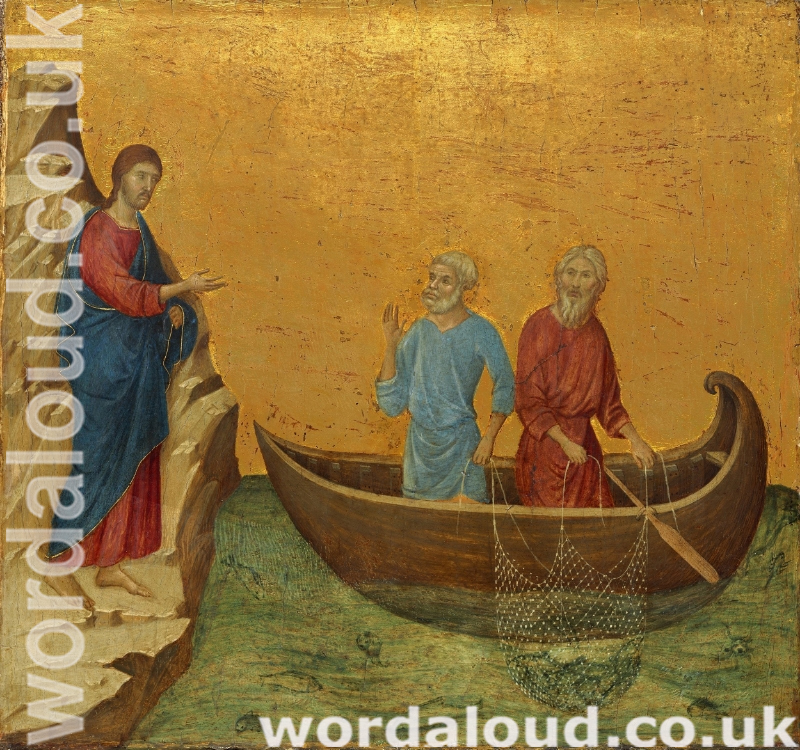
Today, Jesus has decided to walk to Galilee. There is a wonderful sense of lively movement as Jesus moves from place to place during his ministry, as one rounding up the sheep of Israel. Jesus finds Philip and he gives Philip his vocation, saying to him: Follow me. Through Jesus’ lifetime, we read in the Bible of great crowds flocking to Jesus, and of great processional events, as well as the constant travelling with Jesus of his closest companions. There is movement, direction, purposiveness, through which the disciples grow closer and closer to Jesus, their living faith always developing as Jesus fits them to become shepherds of men [ … ]