

Christian Art | Love Revealed By Jesus Christ | Feeding Of The Multitude | Miracles Of Jesus
Office Of Readings | Advent December 19th | A Reading From The Treatise Of Saint Iranaeus Against The Heresies | The Operation Of The Redeeming Incarnation
‘The operation of the redeeming Incarnation.’
This reading sets out a central theme in the theology of Saint Irenaeus: the relationship between God and humanity as one of action and reception. God acts; human beings receive. God’s glory is shown not apart from humanity, but in humanity restored and brought to fulfilment.
Irenaeus explains that God is known by how he deals with human weakness. Humanity, having fallen into disobedience and lost immortality, is not abandoned. Instead, God responds with mercy. Paul’s statement that all are held under unbelief is understood as preparing the way for universal mercy, not condemnation.
The reading then describes the proper human response: right belief in God as creator, perseverance in love, obedience, and gratitude. These are not presented as achievements that earn salvation, but as the manner of life that allows God’s work to bear fruit. Growth in glory is gradual and is directed towards likeness to Christ.
The Incarnation is central. Christ takes on human nature, described as ‘sinful flesh’, not to share in sin, but to judge and overcome it from within human life itself. By becoming human, Christ opens the way for humanity to share in God’s life. The movement is mutual: God comes to dwell with humanity so that humanity may receive God.
The reading insists that salvation does not arise from human capacity. Human weakness is emphasised through quotations from Paul and Isaiah. Salvation is God’s work from beginning to end. Emmanuel, ‘God with us’, is given as the sign that deliverance comes from God himself, not from human effort.
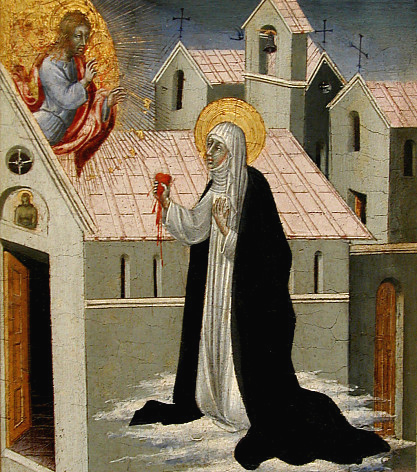
A Reading From The Treatise Of Saint Iranaeus Against The Heresies | The Operation Of The Redeeming Incarnation
God is man’s glory. Man is the vessel which receives God’s action and all his wisdom and power.
Just as a doctor is judged in his care for the sick, so God is revealed in his conduct with men. That is Paul’s reason for saying: God has made the whole world prisoner of unbelief that he may have mercy on all. He was speaking of man, who was disobedient to God, and cast off from immortality, and then found mercy, receiving through the Son of God the adoption he brings.
If man, without being puffed up or boastful, has a right belief regarding created things and their divine Creator, who, having given them being, holds them all in his power, and if man perseveres in God’s love, and in obedience and gratitude to him, he will receive greater glory from him. It will be a glory which will grow ever brighter until he takes on the likeness of the one who died for him.
He it was who took on the likeness of sinful flesh, to condemn sin and rid the flesh of sin, as now condemned. He wanted to invite man to take on his likeness, appointing man an imitator of God, establishing man in a way of life in obedience to the Father that would lead to the vision of God, and endowing man with power to receive the Father. He is the Word of God who dwelt with man and became the Son of Man to open the way for man to receive God, for God to dwell with man, according to the will of the Father.
For this reason the Lord himself gave as the sign of our salvation, the one who was born of the Virgin, Emmanuel. It was the Lord himself who saved them, for of themselves they had no power to be saved. For this reason Paul speaks of the weakness of man, and says: I know that no good dwells in my flesh, meaning that the blessing of our salvation comes not from us but from God. Again, he says: I am a wretched man; who will free me from this body doomed to die? Then he speaks of a liberator, thanks to Jesus Christ our Lord.
Isaiah says the same: Hands that are feeble, grow strong! Knees that are weak, take courage! Hearts that are faint, grow strong! Fear not; see, our God is judgement and he will repay. He himself will come and save us. He means that we could not be saved of ourselves but only with God’s help.
Christian Prayer With Jesus Christ
God our Father,
you have acted for our salvation
when we could not save ourselves.
Grant us humility to receive your work
and faith to live in obedience and gratitude,
through Jesus Christ our Lord.
Amen.
Glossary Of Christian Terms
Incarnation – The taking of human nature by the Son of God in Jesus Christ.
Redemption – God’s act of freeing humanity from sin and death through Christ.
Obedience – A life shaped by trust in God and readiness to follow his will.
Emmanuel – A name meaning ‘God with us’, expressing God’s saving presence.
Adoption – Being made children of God through Christ.
Likeness of God – Humanity restored to live in communion with God, shaped by Christ.



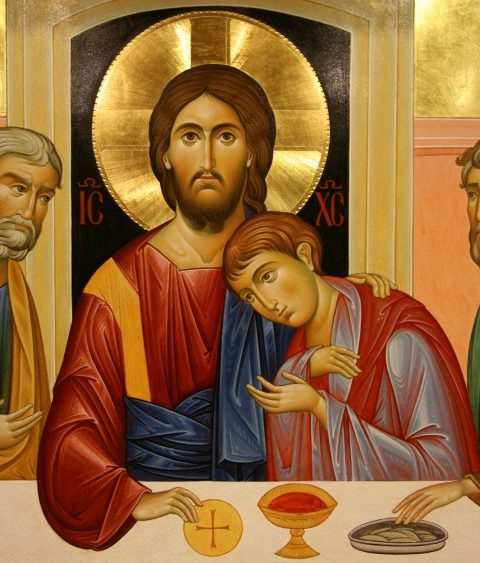
Peter has been instructed by Jesus as to his mission in life, and his destiny. Now he turns to see John approaching, ‘the disciple whom Jesus loved’, who leant on Jesus at the Last Supper, and Peter asks Jesus about what will happen to him in his life. John is the one Apostle who not martyred. According to St Irenaeus, he lived into the reign of Trajan (AD 89-117), and rumours had circulated that John was not to die [ … ]

Today’s Gospel verses again speak of the conflict between Jesus and the scribes and Pharisees, and again we sense the verses reflecting the breaking away of Christianity from Judaism, and the tensions in the aftermath of the fall of Jerusalem. Jesus’ rebuke of the scribes and Pharisees, the lawyers, is stinging. Jesus associates them with the history of murder of the righteous through Scripture, from the first murder of Abel to the murder of Zechariah, a prophet who died by stoning in Jerusalem around the year 800 BC because he accused the Jewish people of being unfaithful to God’s law (cf. 2 Chronicles 24: 20-22) [ … ]

Gospel Reading: Matthew 25:35-36 (KJV) ‘For I was an hungred, and ye gave me no meat: I was thirsty, and ye gave me no drink: I was a stranger, and ye took me not in: Naked, and ye clothed me not: I was sick, and ye visited me not: I was in prison, and ye came unto me not.’ Reflection on the Gospel In these verses, Jesus speaks about compassion and how our actions towards others reflect our love for Jesus. Jesus teaches us that by caring for those in need, we are also caring for Jesus. This passage challenges us to look beyond ourselves and extend kindness and mercy to those around us. Prayer Heavenly Father, I come to you asking for a heart filled with compassion. Help me to see others through your eyes, to feel their pain, and to be moved to action. Teach me to love and care for those who are suffering, just as Jesus did. Let my actions reflect your love and bring comfort to those in need. Thank you for your endless compassion and grace. In Jesus’ name, I pray. Amen. Personal Reflection I think about a time when I was in need and someone showed me compassion. How did it make me feel? Now, I consider a time when I had the opportunity to help someone else. How did my actions impact them? Compassion is more than just feeling sympathy for others; it is about taking action to alleviate their suffering. By practicing compassion, I bring God’s love into the world. Meditation On The Prayer And Gospel Compassion begins with recognizing the humanity in others and responding with love and kindness. Jesus’ words in Matthew 25:35-36 remind me that my treatment of others is a reflection of my relationship with Jesus. This is not only a call to action but an invitation to embody God’s love in my daily life. As I meditate on this prayer, I remember the story of the Good Samaritan. Despite being a stranger, the Samaritan showed great compassion to a wounded traveler, demonstrating the kind of love Jesus calls me to show. This story illustrates that true compassion knows no boundaries and is driven by love. I think about those in my community who are in need. I visualize their faces and hold them in my thoughts. I imagine Jesus standing with me, encouraging me to extend compassion and kindness. I feel the warmth of Jesus’ love as I commit to making a difference in their lives. Compassion is not just about grand gestures but also about small acts of kindness that can transform someone’s day. It involves listening, understanding, and being present for others. As I practice compassion, I become a vessel of God’s grace, reflecting Jesus’ love to those around me. Prayer Lord Jesus, thank you for your example of compassion. Help me to follow your footsteps and show love to those in need. Grant me the strength and courage to act with kindness and mercy. Fill my heart with empathy and understanding, and let your love be evident in all that I do. Amen. Scripture Reading: Colossians 3:12 (KJV) ‘Put on therefore, as the elect of God, holy and beloved, bowels of mercies, kindness, humbleness of mind, meekness, longsuffering;’ Blessing May the compassion of God fill my heart and guide my actions. May His grace empower me to show love and kindness to those in need. Go forth in His love, extending mercy and compassion to all you meet. Amen.