

Christian Art | Lord Jesus | Advent | Our Prayers At The Foot Of The Cross
Office Of Readings | Advent Sunday Week 1 | A Reading From The Catecheses Of Saint Cyril Of Jerusalem | The Twofold Coming Of Jesus Christ
‘The twofold coming of Jesus Christ.’
Saint Cyril presents the Christian confession not as a remembrance of a single event but as the acknowledgement of two distinct comings of Christ. The first has already taken place in humility; the second is to come in manifest glory. This double perspective shapes both Christian faith and Christian waiting.
Saint Cyril begins by drawing attention to the pattern that runs through the whole mystery of Christ. Christ’s life is marked by a twofold movement: a birth from the Father before all ages, and a birth from the Virgin in time; a hidden presence that works silently, and a future arrival that will be visible to all. Cyril uses simple contrasts to establish this pattern. The swaddling clothes and the manger are set over against the light and majesty of the Lord’s return. The cross, accepted in silence, stands in contrast to the future day when Christ will address those who condemned him. These contrasts do not diminish the first coming but place it within an unfolding purpose.
Cyril then turns to the Church’s attitude. Believers look back to the first coming with gratitude and look ahead to the second with expectation. The acclamation, Blessed is he who comes in the name of the Lord, belongs to both comings: first in the humility of Christ’s earthly life, and again when he appears in glory. In this way, the worship of the Church spans the entire scope of salvation, linking past and future in present adoration.
The second coming is described not as a repetition of the first but as its fulfilment. Christ will not return to be judged; he will return as judge. Cyril recalls the silence of Christ during his passion and sets it beside the moment when Christ will bring to light the deeds done against him. The first coming approached humanity with persuasion and patience; the second will reveal Christ’s kingship in a way that cannot be avoided or ignored.
To anchor his teaching, Cyril gathers testimony from the prophets and apostles. Malachi speaks of the Lord coming suddenly to his temple, and also of a coming that purifies as fire cleanses metal or herb cleanses cloth. Cyril notes that Paul likewise distinguishes the grace that has already appeared in Christ and the glory yet to come. The creed, which the catechumens are learning, preserves this twofold confession: Christ has ascended and will return in glory to judge.
Cyril concludes by pointing to the end towards which time moves. Christ will come at the completion of this age, and the created world will be renewed. The promise of a second coming implies not only judgement but transformation. The world, which began in God’s goodness, will reach its fulfilment when the Lord returns.

A Reading From The Catecheses Of Saint Cyril Of Jerusalem | The Twofold Coming Of Jesus Christ
We do not preach only one coming of Christ, but a second as well, much more glorious than the first. The first coming was marked by patience; the second will bring the crown of a divine kingdom.
In general, whatever relates to our Lord Jesus Christ has two aspects. There is a birth from God before the ages, and a birth from a virgin at the fullness of time. There is a hidden coming, like that of rain on fleece, and a coming before all eyes, still in the future.
At the first coming he was wrapped in swaddling clothes in a manger. At his second coming he will be clothed in light as in a garment. In the first coming he endured the cross, despising the shame; in the second coming he will be in glory, escorted by an army of angels.
We look then beyond the first coming and await the second. At the first coming we said: Blessed is he who comes in the name of the Lord. At the second we shall say it again; we shall go out with the angels to meet the Lord and cry out in adoration: Blessed is he who comes in the name of the Lord.
The Saviour will not come to be judged again, but to judge those by whom he was judged. At his own judgement he was silent; then he will address those who committed the outrages against him when they crucified him and will remind them: You did these things, and I was silent.
His first coming was to fulfil his plan of love, to teach men by gentle persuasion. This time, whether men like it or not, they will be subjects of his kingdom by necessity.
Malachi the prophet speaks of the two comings. And the Lord whom you seek will come suddenly to his temple: that is one coming.
Again he says of another coming: Look, the Lord almighty will come, and who will endure the day of his entry, or who will stand in his sight? Because he comes like a refiner’s fire, a fuller’s herb, and he will sit refining and cleansing.
These two comings are also referred to by Paul in writing to Titus: The grace of God the Saviour has appeared to all men, instructing us to put aside impiety and worldly desires and live temperately, uprightly, and religiously in this present age, waiting for the joyful hope, the appearance of the glory of our great God and Saviour, Jesus Christ. Notice how he speaks of a first coming for which he gives thanks, and a second, the one we still await.
That is why the faith we profess has been handed on to you in these words: He ascended into heaven, and is seated at the right hand of the Father, and he will come again in glory to judge the living and the dead, and his kingdom will have no end.
Our Lord Jesus Christ will therefore come from heaven. He will come at the end of the world, in glory, at the last day. For there will be an end to this world, and the created world will be made new.
Christian Prayer With Jesus
Lord Jesus Christ,
you came in humility to share our life,
and you will come again in glory to bring all things to fulfilment.
Grant that as we remember your first coming
we may also live in readiness for your return.
Teach us to set aside what leads us away from you
and to live with clarity, patience, and hope.
Strengthen our desire for your kingdom
and guide us to walk faithfully until the day we see you face to face.
You live and reign for ever and ever.
Amen.
Glossary Of Christian Terms
Twofold coming – The Christian confession that Christ has already come once in humility and will come again in glory at the end of time.
Hidden coming – Christ’s quiet and unobserved working, often associated with his first coming or his action in the soul.
Glorious coming – Christ’s future arrival, visible to all, when he will judge and renew creation.
Gentle persuasion – Cyril’s term for the way Christ taught and saved in his first coming, appealing to human freedom.
Refiner’s fire / fuller’s herb – Images from Malachi describing God’s purifying action: fire that removes impurity from metal and substance used in cleansing cloth.
The appearance of glory – Paul’s phrase in Titus for the second coming of Christ.
Last day – The completion of the present age, when Christ returns and the world is renewed.




Tomàs is in trouble. If truth is love and love is truth, then the Church is wrong. A time in seminary…
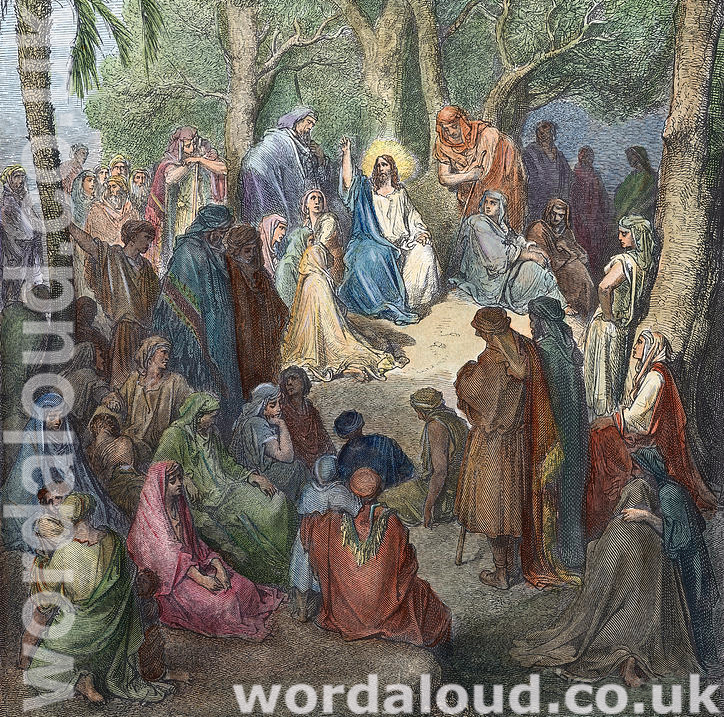
Pope Saint Leo the Great moves from Christ’s blessing on the meek to those beatitudes pronounced on those who ‘hunger and thirst for righteousness’ (Matthew 5:6), the merciful (v.7), and the pure of heart (v.8). His reflection reveals the interconnectedness of these dispositions, which together form a path of Christian wisdom [ … ]
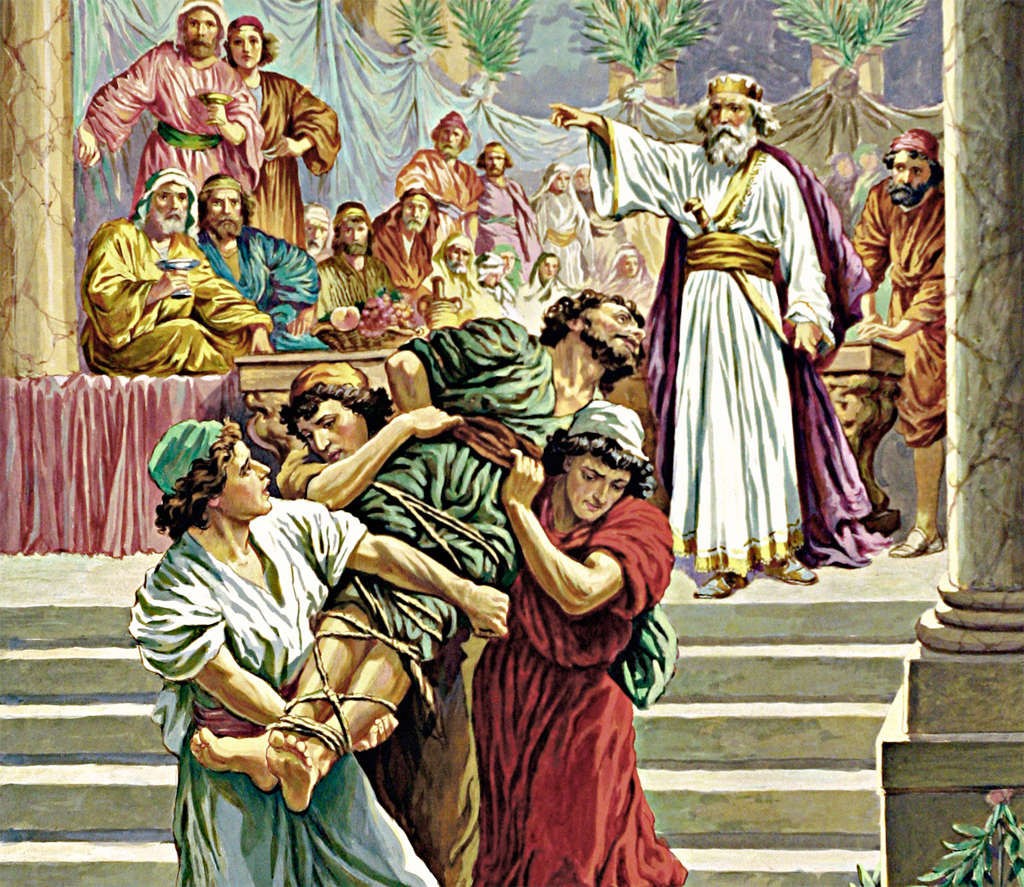
In the parable of the marriage feast, Jesus continues to attack the scribes and the Pharisees, the Jewish authorities, who have found themselves threatened by Jesus and who reject him. It is a bold and dangerous message to those who have established power in the Jewish community. Jesus could hardly be telling them more clearly that they have got it wrong, that they were called, by God, long, long ago, and yet they have rejected God’s invitation, that, for all their trappings of piety, they are not with God; they have rejected Him [ … ]
