Loading...
Divine Office | Office Of Readings

Office Of Readings | Advent Tuesday Week 3 | A Reading From The Imitation Of Christ | Of Humble Submission, Of The Good, Peaceable Man

What is Easter? | Jesus | Resurrection | Crucifixion | God | Audio Bible | KJV

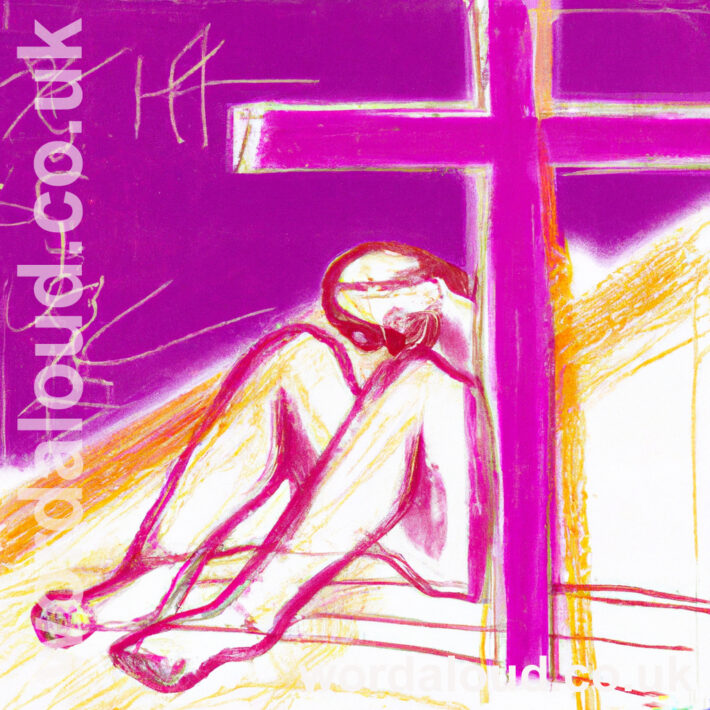
Christian Art | At The Foot Of The Cross | Imitation Of Jesus Christ | Advent Purple

Office Of Readings | Advent Tuesday Week 3 | A Reading From The Imitation Of Christ | Of Humble Submission, Of The Good, Peaceable Man

‘On humility and peace.

This reading concerns the interior discipline required for humility and peace. It begins by redirecting attention away from other people and towards God. The question is not who supports us or opposes us, but whether our actions are aligned with God. A clear conscience before God is presented as the primary form of security.

The reading stresses patience under difficulty. Silent endurance is not described as weakness, but as a way of entrusting judgement and outcome to God. The timing and manner of deliverance are said to belong to God, not to human control.

Humility is closely linked with an honest awareness of weakness. Allowing others to see our limitations, and accepting criticism without agitation, is presented as beneficial for spiritual growth. Humility reduces conflict because it removes the need to assert oneself or to retaliate.

Peace is described as an interior condition that affects how a person interprets others. A peaceful person does not readily suspect bad intentions and is less disturbed by the behaviour of others. By contrast, inner unrest leads to suspicion, excessive speech, and misplaced concern with the faults of others.

The reading repeatedly calls for self-attention rather than comparison. The instruction is to examine one’s own conduct before judging that of others. Humility is expressed in patience with others and restraint in judgement. Peace grows where self-justification gives way to self-knowledge.

Jesus Christ | King Of Kings

A Reading From The Imitation Of Christ | Of Humble Submission, Of The Good, Peaceable Man

Do not worry about who is and is not on your side: simply make sure that God is with you in all you do.

Have a clear conscience, and God will defend you. For if God chooses to help you, no malice can do you harm.

If you know how to suffer in silence, without doubt you will receive the help of the Lord. He knows when and how he will free you, so resign yourself into his care. It is for God to give help and give freedom from trouble.

For the sake of humility it is often good for others to know our weaknesses and tax us with them.

When a man holds himself humbly because of his weakness, it is easy for him to please others and calm those who are angry with him.

God protects and frees the humble, loves and consoles them. He leans down to the humble, he bestows great grace on them, he lifts them from their lowliness into glory.

God calls the humble gently to him, and to them he reveals his secrets.

If a humble man is humiliated, he is happy enough and at peace, because his support is God and not the world.

Do not count yourself as having made progress until you feel yourself inferior to everyone.

A peaceable man is of more use than a learned man.

If you are a slave to your feelings, you will see good actions as bad, and you will easily believe the worst; a good and peaceful man will see good in everything.

Whoever is truly at peace is not plagued by suspicion. Whoever is discontented and disturbed will be blown about by gusts of suspicion: he cannot rest and will not let others rest either.

He often says what he should not say, and fails to do what it would be best to do.

He knows what other people ought to do, but not what he should be doing himself.

Worry about your own behaviour first; you can worry about other people later.

You are good at making excuses for your own behaviour and showing it in the best light, but you do not want to accept the excuses of others. It would be fairer for you to accuse yourself and excuse your brother.

If you want other people to put up with you, put up with them first.

Christian Prayer With Jesus

Lord God,
teach us to seek your presence
rather than human approval.
Give us patience in difficulty,
truthfulness about ourselves,
and restraint in judging others.
Grant us humility of heart
and the peace that comes from trusting you.
Amen.

Glossary Of Christian Terms

The Imitation of Christ – A late medieval devotional work traditionally attributed to Thomas à Kempis, focused on interior spiritual life.
Humility – A truthful awareness of one’s condition before God, without self-exaltation.
Peace – Interior steadiness that is not dependent on circumstances or approval.
Clear conscience – Awareness of acting in accordance with God’s will.
Patience – Endurance without resentment or haste.
Self-examination – Attention to one’s own conduct rather than the faults of others.

Meditations On The Love Of Jesus Christ | Word Aloud | Prayer And Reflection
  • Audio Bible | Easter | Jesus Appears To His Disciples | Oliver Peers

    The disciples who encountered Jesus on their way to Emmaus have returned in haste to tell the disciples in Jerusalem what they have heard and seen. Jerusalem has long been a city special to God. It is the Holy City. The Church of Christ is described, in the New Testament, as the Jerusalem above, the heavenly Jerusalem, and the new Jerusalem [ … ]

  • Angels In The Bible | Abraham And Sarah | King James Audio Bible | Love Revealed By Jesus Christ

    Psalm 117 is a bridge between the particular experiences of the Israelite community and universal aspects of God’s grace. By inviting all nations to participate in praise, the psalm anticipates the expansion of God’s covenantal blessings beyond confines of a single people or nation, pointing toward a more inclusive understanding of God’s kingdom [ … ]

  • Jesus Christ Crucified | Stabat Mater

    Christian Art | Our Lord Jesus On The Cross | God The Father | God The Son Office Of Readings | Advent December 23rd | A Reading From The Treatise Of Saint Hippolytus Against The Heresy Of Noetus | The Hidden Sacrament Is Revealed ‘The hidden sacrament is revealed.’ In this reading, Saint Hippolytus writes against the Noetic heresy, which denied the real distinction between the Father and the Son by treating them as the same person acting under different names. The purpose of Saint Hippolytus is to defend the Church’s confession of one God who is not solitary, but who exists with his Word and Spirit. Hippolytus begins by setting a principle: knowledge of God comes from the Holy Scriptures, not from speculation or private reasoning. Faith is not shaped by human preference but by what God has chosen to reveal. The Father determines how He is believed, the Son how He is glorified, and the Spirit how He is received. This establishes Scripture as the rule of faith and guards against theological invention. Hippolytus then affirms that God existed alone before creation, with nothing co-eternal alongside Him. At the same time, God was not without reason, wisdom, or power. Hippolytus insists that plurality within God does not compromise divine unity. God contains within himself Word, wisdom, and counsel. Creation begins when God wills and manifests His Word. The Word is not created from nothing but proceeds from God and acts as the agent of creation. The Word is first invisible to the created world, though known to God. When God chooses, He makes the Word visible, described as ‘Light of Light’. This language safeguards both distinction and unity: the Word comes from God and reveals God, without being separate from Him. The manifestation of the Word is ordered towards salvation, so that the world may see and be saved. Hippolytus identifies this Word clearly with the Son of God. Through him all things were made, and he alone comes forth from the Father. The Law and the prophets belong to the same saving plan. God speaks through them by the Holy Spirit, so that they proclaim not their own ideas but the Father’s will. Revelation is therefore coherent: creation, prophecy, and incarnation belong to one divine purpose. Hippolytus appeals to the Gospel of John to show continuity between prophecy and fulfilment. The Word spoken of by the prophets is the Word made flesh. Though the world was made through him, it failed to recognise him. This failure does not negate God’s plan but reveals the depth of the mystery now disclosed. A Reading From The Treatise Of Saint Hippolytus Against The Heresy Of Noetus | The Hidden Sacrament Is Revealed There is, brethren, one God, the knowledge of whom we gain from the Holy Scriptures and from no other source. Whatever things the Holy Scriptures declare, at these let us look; and whatever they teach, let us learn it; and as the Father wills our belief to be, let us believe; and as he wills the Son to be glorified, let us glorify him; and as he wills the Holy Spirit to be bestowed, let us receive him. Not according to our own will, nor according to our own mind, nor yet storming by force the things which are given by God, but even as he has chosen to teach them by the Holy Scriptures, so let us discern them. God, subsisting alone, and having nothing coeval with himself, chose to create the world. And conceiving the world in mind, and willing and uttering the Word, he made it; and at once it appeared, formed it in the way he desired. For us it is sufficient simply to know that nothing was coeval with God. Outside him there was nothing; but he, while existing alone, yet existed in plurality. For he did not lack reason, or wisdom, or power, or counsel. All things were in him, and he was the All. At a time and in a manner chosen by him he made his Word manifest, and through his Word he made all things. He bears this Word in himself, as yet invisible to the created world. He makes him visible, uttering the voice first, and begetting him as Light of Light. He presents him to the world as its Lord; and whereas the Word was visible formerly to God alone, and invisible to the world which is made, God makes the Word visible in order that the world might see him and be able to be saved. This is the mind which came forth into the world and was manifested as the Son of God. All things came into being through him, and he alone comes from the Father. He gave us the Law and the prophets; and in giving them, he made them speak by the Holy Ghost, in order that, receiving the inspiration of the Father’s power, they might declare the Father’s counsel and will. Thus, then, was the Word made manifest, even as the blessed John says. For he sums up the things that were said by the prophets, and shows that this is the Word, by whom all things were made. In the beginning was the Word, and the Word was with God, and the Word was God. All things were made by him, and without him nothing was made. And later, The world was made by him, and the world did not know him; he came to his own, and his own did not receive him. Christian Prayer With Jesus Lord God,You are one, and from You come the Word and the Spirit.You have chosen to make Yourself known, not by human effort,but by what You have revealed in the scriptures. You spoke Your Word, and all things were made.You made that Word visible, so that the world might see and be saved.Grant that we may receive what You give,believe what You teach,and worship You as You have shown Yourself to be. Keep us […]

Search Google Here | A Holy Land Jerusalem Pilgrimage? | A Safari? | An Escape..