

Christian Art | Christian Faith | Jesus | Baptism
Office Of Readings | Week 19, Saturday, Ordinary Time | A Reading From The Sermon Of Saint Pacian On Baptism | Oh My God, Oh My Jesus | You Take Away Sin
‘Oh my God, your take away sin.’
Saint Pacian continues his reflection on baptism by contrasting two forms of human existence: that of the earthly Adam and that of the heavenly Christ. Humanity inherits from Adam mortality and corruption, but through Christ, the ‘second man’ who came from heaven, believers are promised life that death cannot extinguish. Pacian echoes the words of Jesus in John 11:25: ‘Whoever believes in me, even if he die, shall live.’ Death, therefore, becomes not an end but a sleep from which the faithful are awakened in Christ.
To illustrate this confidence, Pacian turns to the patriarchs. Abraham, Isaac and Jacob, he reminds his hearers, are not lost in death but live with God, since God is ‘not of the dead but of the living’ (Luke 20:38). The apostle Paul himself longed for death, seeing it not as destruction but as gain, for it meant union with Christ (Philippians 1:21–23). Pacian sets this faith against the futility of placing hope in earthly life, which he describes as common even to beasts and birds. What is distinctively human, and what Christ grants uniquely through his Spirit, is eternal life—life that depends upon moral renewal and freedom from sin.
For Pacian, sin and death are inseparable. ‘The wages of sin is death,’ he recalls with Paul (Romans 6:23), whereas righteousness leads to life. Yet it is Christ alone who has destroyed the power of sin and death. Pacian cites Colossians 2:13–15, portraying Christ’s passion as the public triumph in which he bore our sins, nailed them to the cross, and stripped the hostile powers of their dominion. In this victory, Christ is the liberator who breaks chains, fulfilling the psalms: ‘The Lord frees those in shackles… You have destroyed my chains.’ (Psalm 146[145]:7; 116[115]:16)
Baptism, in Pacian’s vision, is the sacramental participation in this liberation. Through the waters, the believer is washed, forgiven, and incorporated into the immortal kingdom once for all. The language of finality is striking: ‘once’ recurs as a refrain, underlining both the sufficiency and the unrepeatable character of baptism. Having been cleansed, Christians are summoned to preserve their purity, to live as children who are spotless, awaiting the day of the Lord.
Pacian’s words affirm that eternal life is already given through Christ’s triumph, but they also remind the baptized that this gift must be safeguarded in daily living. Baptism is not the end of the Christian journey but its beginning, calling for perseverance, vigilance, and fidelity to the life of grace.

A Reading From The Sermon Of Saint Pacian On Baptism | Oh My God, Oh My Jesus | You Take Away Sin
As we have borne the image of the earthly man, so we shall bear the image of him who is from heaven; since the first man who came from the earth, is earthly, but the second man who came from heaven, is heavenly. And so, dearly beloved, we shall not die any more. Even if we fall asleep in this body, we shall live in Christ, as he said: Whoever believes in me, even if he die, shall live.
As the Lord is our witness, we are certain that Abraham, Isaac, Jacob and all saints of God are alive. For concerning them the Lord says: They are all alive. For God is a God of the living, not of the dead. And the Apostle says of himself: For me, to live is Christ and to die is gain. I would rather die and be with Christ. And again: But while we are still in this body we are away from God, for we are guided by faith, and not by appearance. This is what we believe, dearest brothers. For the rest: If we place our hope in this world, we are the most miserable of men. Life in this world, whether it be that of beasts, wild animals or birds, as you yourself see, is either similar to ours or more tedious. What is peculiar to man, and what Christ gives through his Spirit, is eternal life, but only if we sin no more. Thus death is acquired by sin but avoided by right living; life is lost through sin and preserved through good living. The wages of sin is death; the gift of God is eternal life through Jesus Christ our Lord.
It is Christ who redeemed us, as the Apostle says: Forgiving us all our sins and destroying what was recorded against us by disobedience, he bore our burden in public view, fixed it to the cross, stripped his own flesh, exposed the powers of this world and freely conquered them in himself. He released our shackles and destroyed our chains, as David had said: The Lord lifts up what has been torn down; the Lord frees those in shackles; the Lord gives light to the blind. And again: You have destroyed my chains; I will offer sacrifice to you with praise. And so when we come to the sign of the Lord in the sacrament of baptism we are freed of these chains and liberated by the blood of Christ and by his name.
Therefore, beloved, we are washed clean but once; we are freed only once; we are received into the immortal kingdom once and for all. Once and for all are they happy whose sins are forgiven and whose stains are blotted out. Hold fast to what you have received; preserve it joyfully; sin no more. Keep yourselves as children cleansed by that sacrament and made spotless for the day of the Lord.
Christian Prayer With Jesus Christ
Lord Jesus Christ, you broke the chains of sin and death upon the cross and set us free in the waters of baptism. Keep us faithful to the gift we have received, so that, washed clean once for all, we may walk in newness of life and remain spotless until the day of your coming. You live and reign with the Father and the Holy Spirit, God, forever and ever. Amen.
Glossary Of Christian Terms
Adam – In biblical thought, the first human, whose disobedience brought sin and death into the world (Genesis 3; Romans 5:12–19). In Christian theology, Adam represents humanity under sin.
Christ as the ‘second man’ – A title for Jesus, emphasising that where the first man, Adam, brought death, Christ brings eternal life (1 Corinthians 15:45–49).
‘Whoever believes in me…’ – A saying of Jesus (John 11:25), spoken at the tomb of Lazarus, proclaiming him as the source of resurrection and life.
God of the living – Phrase from Luke 20:38, stressing that the patriarchs (Abraham, Isaac, Jacob) live with God beyond death.
The wages of sin – Expression from Romans 6:23: sin earns death, whereas God’s gift is eternal life through Christ.
Colossians 2:13–15 – Passage describing Christ’s cross as the place where he forgives sins, defeats hostile powers, and triumphs over them publicly.
Baptism – The sacrament by which Christians are washed from sin, reborn by the Spirit, and incorporated into Christ and his Church. For Pacian, baptism is unrepeatable and definitive.
Chains/shackles – Biblical images of captivity to sin or oppression, often used in the psalms (e.g. Psalm 146[145]:7). In baptism, Christ breaks these chains and grants freedom.
Once for all – Pacian emphasises that baptism is received only once, echoing Hebrews 9:26–28, where Christ’s sacrifice is also described as ‘once for all.’


The homily, continued, turns from moral exhortation to ecclesial reflection. Its central concern is the integrity of Christian witness and the reality of the Church as the living body of Christ. The homilist moves between ethical warning and theological insight, showing that the credibility of the faith depends on the coherence between confession and conduct [ … ]
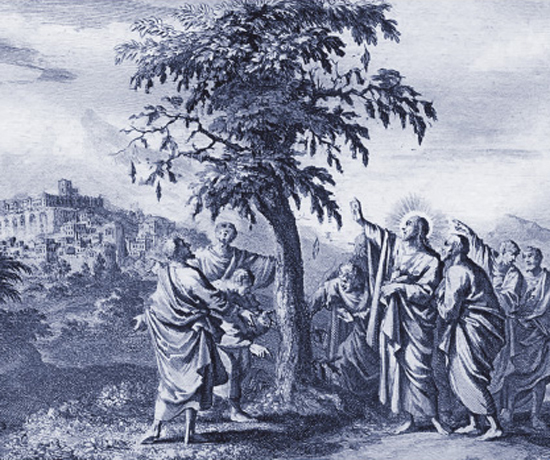
Just as Jesus’ listeners know how to interpret signs in nature, the trees beginning to bud and shoot new leaves as they come to life in spring, so Jesus tells them that, when they see and experience the upheavals described by Jesus in our Gospel verses of the past few days, they will know that the Kingdom of God is near [ … ]
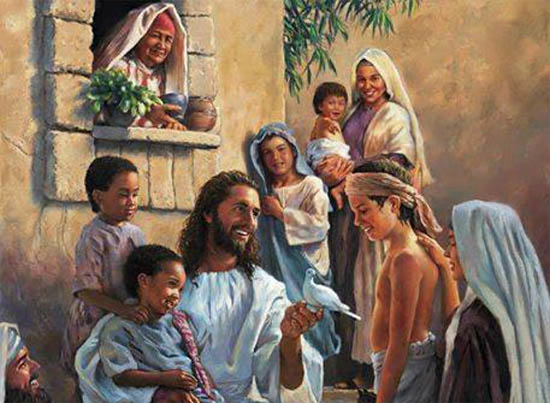
We learn in Mark’s Gospel that Jesus’ friends are concerned about Jesus, thinking that he is beside himself, and intending to restrain him (Mark 3: 21). Shortly afterwards, in Mark’s Gospel, Mary and others of Jesus’ family make the journey recounted in today’s Gospel verses to try to see Jesus [ … ]