
Christian Art | Boy At Prayer | Jesus And A Child
Office Of Readings | Friday, Lent Week 4 | A Reading From The Easter Letters Of Saint Athanasius
‘The Easter mystery makes those who are separated in the body spiritually close.’
A Reading From The Easter Letters Of Saint Athanasius
This reading is drawn from one of the Festal Letters of Saint Athanasius of Alexandria (c. 296–373). Each year, the bishop of Alexandria would issue a letter announcing the date of Easter and offering reflections on its theological and spiritual meaning. These letters were deeply pastoral in tone and also rich in doctrinal teaching, reinforcing central truths of Christian faith.
This particular letter invites believers into the heart of the Paschal mystery, not as an isolated historical remembrance, but as a living, ever-present reality—one that unites believers across space and time in a single act of worship, renewal, and communion with Christ.
From Festival To Festival | Life As Liturgical Pilgrimage
‘How fine a thing it is to move from festival to festival, from prayer to prayer, from holy day to holy day.’
Athanasius begins with a vision of Christian life as a pilgrimage of sacred time, punctuated by festivals that orient the soul toward God. In his theology, time is not empty or secular, but charged with divine meaning. Every feast becomes a step on a greater journey into the mystery of Christ, especially toward the celebration of Pascha (Easter), the ‘feast of feasts’.
This pattern reflects the liturgical year as a school of holiness: each season—Advent, Lent, Easter—trains the heart, shaping desire and deepening love for Christ. The passage from ‘festival to festival’ suggests spiritual growth through the rhythm of worship, where the Paschal feast stands as the high point.
Ever-Present Mystery Of The Pascha
‘The grace of the feast is not restricted to one occasion. Its rays of glory never set.’
For Athanasius, Easter is not merely a date to be observed, but an eternal light that continually illumines the Church. This reflects the early Church’s understanding of the Paschal mystery as the source and summit of Christian life. The resurrection is not confined to the past; it radiates through all time, renewing souls who turn toward Christ.
In this vision, the Eucharist becomes central: the faithful feed on Christ, ‘as on the food of life’, and are constantly refreshed. This language echoes the Gospel of John, where Jesus calls himself the bread of life and living water. Athanasius, drawing from Johannine tradition, sees the Eucharist as Christ’s enduring presence—his invitation to every soul who thirsts.
Easter As Invitation And Transformation
‘If anyone thirsts, let him come to me and drink.’
Quoting Christ’s words from John 7:37, Athanasius underscores that the Paschal celebration is not exclusive to a few, but a divine invitation to all. The thirst is spiritual—desire for truth, meaning, and communion with God—and Christ satisfies it by giving himself.
But the transformation goes further. The Paschal feast is not simply nourishment—it is illumination. Those who meditate on the Scriptures, who turn away from ‘the counsel of the wicked’, become like the blessed man of Psalm 1. They are planted beside flowing waters, sustained by grace.
This union of Scripture and Sacrament, contemplation and communion, lies at the heart of Athanasius’ spirituality. He sees the believer as someone formed in the rhythm of Word and Table, purified by fasting, enlightened by Scripture, and vivified by Christ’s body and blood.
Easter As Annual Renewal Of Unity And Salvation
‘The God who first established this feast for us allows us to celebrate it each year.’
Athanasius interprets Easter not only as a remembrance of Christ’s death and resurrection, but as a gift from the Father. Just as God gave his Son, so he gives the feast—and through it, a share in salvation.
More importantly, the feast gathers the Church into a single body. Athanasius, himself a pastor during times of persecution, exile, and doctrinal conflict, sees the Paschal celebration as a sign of unity: ‘He gathers to this feast those who are far apart, and brings together in unity of faith those who may be physically separated.’
Here the bishop speaks to a dispersed Church. Christians may be divided by geography or circumstance, but in their shared participation in the one Paschal mystery—through prayer, Eucharist, and faith—they are bound together. This is a profound statement about the nature of the Church as catholic: not merely a local assembly, but the one body of Christ spread across the world and throughout time.
The Eternal Now Of Pascha
In Lent, we prepare not merely to celebrate a historical event, but to enter again into the power of Easter. We are invited not just to recall, but to receive—to drink, to feed, to rise.
As Athanasius would insist elsewhere in his writings, ‘God became man so that man might become god’—a bold summary of salvation. And Pascha, for Athanasius, is the liturgical moment where this truth is most clearly seen, most powerfully experienced, and most joyfully proclaimed.
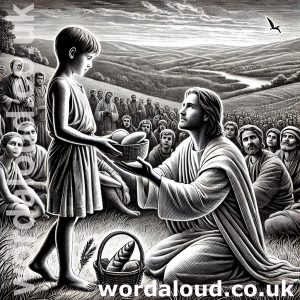
A Reading From The Easter Letters Of Saint Athanasius
Brethren, how fine a thing it is to move from festival to festival, from prayer to prayer, from holy day to holy day. The time is now at hand when we enter on a new beginning: the proclamation of the blessed Passover, in which the Lord was sacrificed. We feed as on the food of life, we constantly refresh our souls with his precious blood, as from a fountain. Yet we are always thirsting, burning to be satisfied. But he himself is present for those who thirst and in his goodness invites them to the feast day. Our Saviour repeats his words: If anyone thirsts, let him come to me and drink.
He quenched the thirst not only of those who came to him then. Whenever anyone seeks him he is freely admitted to the presence of the Saviour. The grace of the feast is not restricted to one occasion. Its rays of glory never set. It is always at hand to enlighten the mind of those who desire it. Its power is always there for those whose minds have been enlightened and who meditate day and night on the holy Scriptures, like the one who is called blessed in the holy psalm: Blessed is the man who has not followed the counsel of the wicked, or stood where sinners stand, or sat in the seat of the scornful, but whose delight is in the law of the Lord, and who meditates on his law day and night.
Moreover, my friends, the God who first established this feast for us allows us to celebrate it each year. He who gave up his Son to death for our salvation, from the same motive gives us this feast, which is commemorated every year. This feast guides us through the trials that meet us in this world. God now gives us the joy of salvation that shines out from this feast, as he brings us together to form one assembly, uniting us all in spirit in every place, allowing us to pray together and to offer common thanksgiving, as is our duty on the feast. Such is the wonder of his love: he gathers to this feast those who are far apart, and brings together in unity of faith those who may be physically separated from each other.



Dear Jesus, In times of trouble and distress, I come to you, seeking comfort and peace. You understand the depths of my heart and the challenges I face. I bring my burdens to you, as they feel heavy and overwhelming. I trust that you will provide the rest and strength I need during these difficult moments [ … ]

When we are persecuted, it means that we are facing challenges or being treated unfairly because we are trying to live the way God wants us to. We might feel left out, made fun of, or even hurt because of it. But Jesus reminds us that in the end, we have a special place in the kingdom of heaven [ … ]
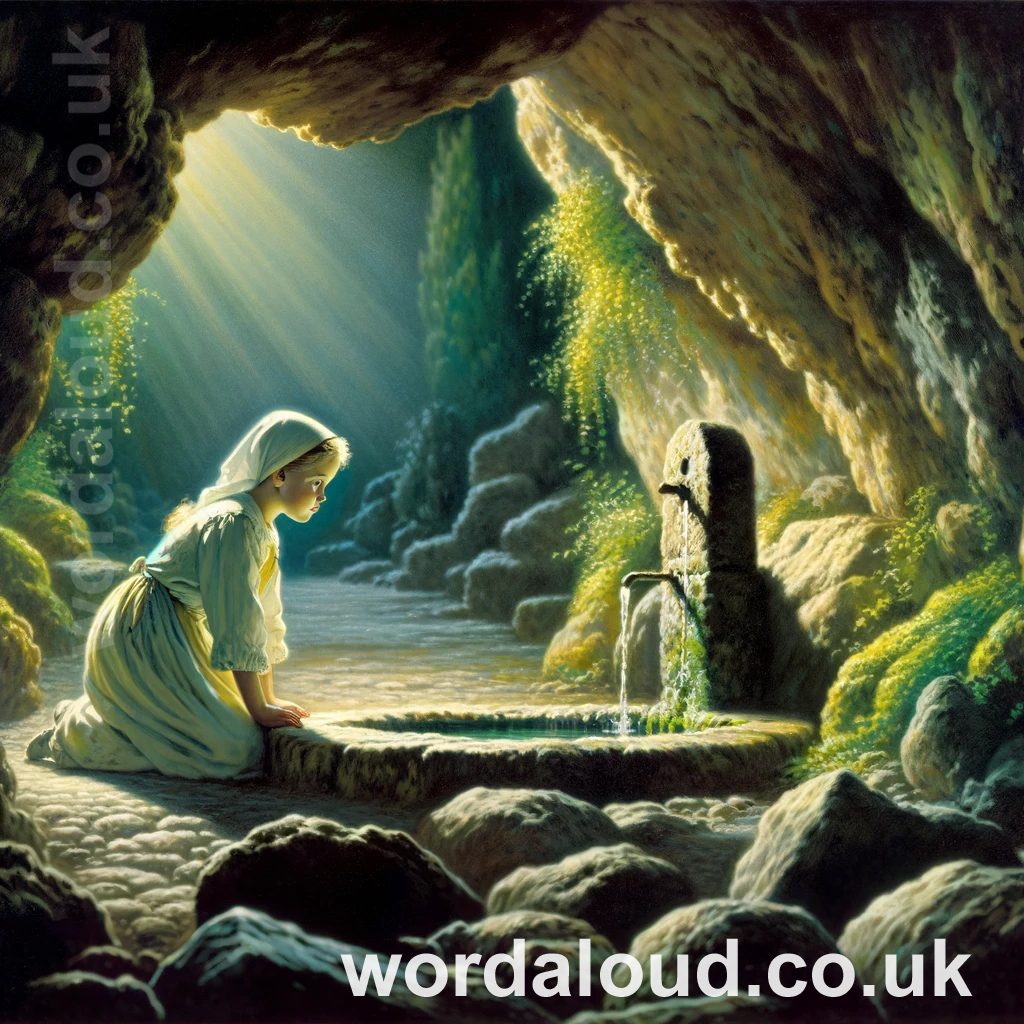
John 4:13-14 (KJV) ‘Jesus answered and said unto her, Whosoever drinketh of this water shall thirst again: But whosoever drinketh of the water that I shall give him shall never thirst; but the water that I shall give him shall be in him a well of water springing up into everlasting life.’ Introduction to the Life of Saint Bernadette Saint Bernadette Soubirous, a humble peasant girl from Lourdes, France, lived her life of faith, humility, and divine grace. Born on January 7, 1844, in the small town of Lourdes, Bernadette was the eldest of nine children in a poor and struggling family. Her father, François Soubirous, was a miller, and her mother, Louise, a laundress. The family lived in a former prison cell known as the Cachot, a damp and cramped space, according to their dire financial situation. Despite their poverty, the Soubirous family was deeply rooted in their Christian faith, a foundation that would profoundly shape Bernadette’s life and spiritual journey. Bernadette’s early years were marked by significant health challenges. She suffered from asthma and other respiratory ailments, which often left her weak and unable to attend school regularly. This lack of formal education meant that Bernadette struggled with reading and writing, and her understanding of Christian doctrine was limited. Nevertheless, she possessed a remarkable simplicity and purity of heart, qualities that would make her an ideal recipient of divine revelations. Bernadette’s life changed irrevocably on February 11, 1858, when she experienced the first of eighteen apparitions of the Blessed Virgin Mary at the grotto of Massabielle. On that cold winter day, Bernadette, her sister Toinette, and a friend were gathering firewood near the grotto when she heard a rustling sound and saw a beautiful lady dressed in white with a blue sash, holding a rosary. The lady, who later identified herself as the Immaculate Conception, appeared to Bernadette over the course of several months, delivering messages of penance, prayer, and the need for a chapel to be built at the site. Despite initial skepticism from her family and the local authorities, Bernadette remained steadfast in her account of the apparitions, enduring intense scrutiny and even ridicule. The apparitions drew enormous attention. Soon, people from all over France and beyond began to visit Lourdes, hoping to witness a miracle. One of the most significant messages conveyed by the Virgin Mary to Bernadette was the instruction to dig in the ground near the grotto, which led to the discovery of a spring. This spring, believed to have healing properties, became the focal point of the pilgrimage to Lourdes. Many miraculous healings have been attributed to the waters of Lourdes, reinforcing the belief in Bernadette’s visions and the sanctity of the site. As the apparitions concluded, Bernadette’s life took a different turn. In 1866, she joined the Sisters of Charity in Nevers, taking the name Sister Marie-Bernard. Her time in the convent was marked by continued poor health and humility, as she carried out menial tasks and lived a life of quiet service. Despite her physical suffering, Bernadette remained devout and accepted her hardships with grace, often repeating the phrase, “I am happier here in my little corner of the convent.” Her unwavering faith and dedication to her religious duties exemplified the depth of her spiritual commitment. Bernadette Soubirous passed away on April 16, 1879, at the age of 35, after a prolonged battle with tuberculosis. Her legacy, however, endured far beyond her earthly life. In 1933, she was canonized as a saint by Pope Pius XI, recognized for her humility, faith, and the miraculous events associated with her life. Today, millions of pilgrims flock to Lourdes each year, seeking spiritual renewal and physical healing at the site of her visions. Saint Bernadette’s life continues to inspire countless individuals around the world, reminding us of the power of faith, the virtue of humility, and the enduring presence of divine grace in our lives. To Visit Lourdes Visiting Lourdes, in the picturesque foothills of the Pyrenees in southwestern France, is an experience that transcends the physical journey, drawing pilgrims into a profound spiritual adventure. The small town, known for the Marian apparitions witnessed by Saint Bernadette Soubirous in 1858, has become one of the world’s most revered pilgrimage sites. As we approach the Sanctuary of Our Lady of Lourdes, the atmosphere is imbued with a palpable sense of reverence and anticipation. The grand basilicas, the tranquil Grotto of Massabielle and the gently flowing waters of the miraculous spring together create a sacred environment that invites reflection, prayer, and a deep connection with the divine. The focal point of any visit to Lourdes is the Grotto, where Bernadette experienced the apparitions of the Blessed Virgin Mary. Here, pilgrims can touch the rock face, light candles, and drink or bathe in the spring’s water, believed to possess healing properties. The profound silence and sense of sacredness at the Grotto allow visitors to contemplate their faith, seek solace and find spiritual renewal. The Rosary Basilica, with its mosaics, and the Basilica of the Immaculate Conception, perched above the Grotto, offer spaces for communal worship and personal meditation. The nightly candlelight processions, where pilgrims from around the globe unite in prayer and song, highlight the universal bond of faith and hope that Lourdes represents. Beyond its physical beauty and historical significance, visiting Lourdes offers a deeply personal and transformative experience. Pilgrims often arrive burdened with ailments, grief, or spiritual crises, seeking comfort and miracles. The stories of healing and faith that emerge from Lourdes are testimonies to the enduring power of belief and the intercession of the Blessed Virgin Mary. The communal aspect of the pilgrimage—sharing meals, prayers, and stories with fellow believers—fosters a sense of solidarity and mutual support. For many, the visit to Lourdes is a journey of healing, not only of the body but also of the soul, providing a renewed sense of purpose, peace, and spiritual clarity that lingers long after returning home. Prayer With Saint Bernadette Prayer for Intercession Dear […]