

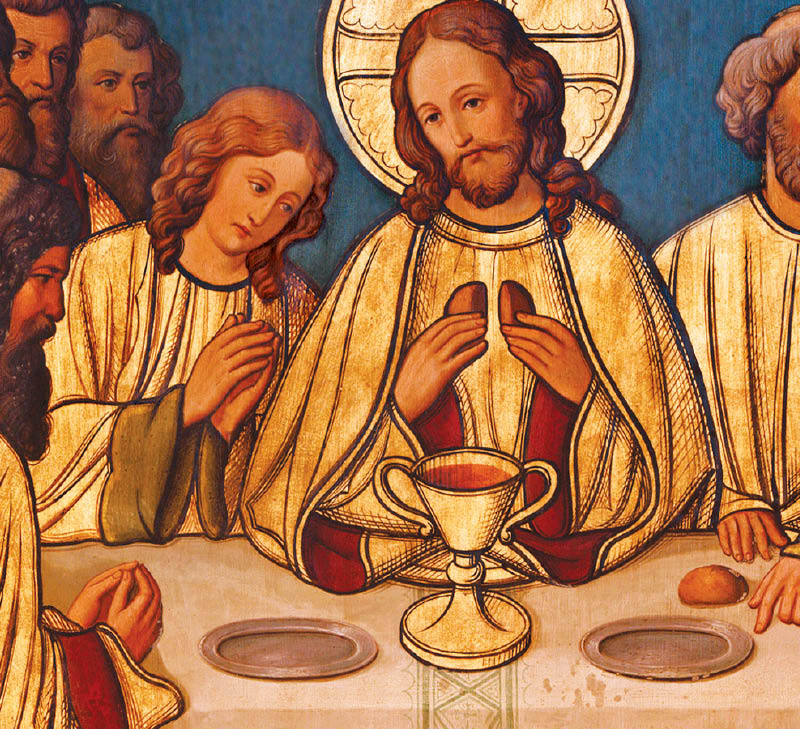
Christian Art | The Last Supper | Institution Of The Eucharist | Taste And See That The Lord Is Good
Office Of Readings | Week 21, Wednesday, Ordinary Time | A Reading From The Instructions Of Saint Columban | Taste And See The Goodness Of The Lord
‘Let him who thirsts come to me and drink.’
Saint Columban (c. 543–615) was an Irish monk and missionary whose work helped to shape early medieval monasticism in continental Europe. His writings, including sermons and monastic rules, reveal a spirituality that is both ascetic and deeply scriptural. The passage we have today develops a theme central to his teaching: the inexhaustible desire for Christ as the fountain of life and bread of life.
Columban begins by addressing the image of thirst. He urges his hearers not to extinguish their thirst but to let it grow deeper. This paradox reflects the Christian belief that the more the soul drinks from Christ, the more it longs for him. He cites Jeremiah 2:13, where the Lord rebukes his people for forsaking ‘the fountain of living water’ and connects this with the New Testament image of Christ as both fountain and bread (John 6; John 7:37–39). Columban’s interpretation shows the unity of these biblical images: Christ nourishes and refreshes, but never in such a way that desire is finally exhausted.
This unending thirst is not a defect but a sign of the infinity of God. Human desire is stretched out by the encounter with Christ, and this process never ends. This same theme is found in other patristic writers, such as Gregory of Nyssa, who described the soul’s eternal journey into God as a continual ‘stretching forward’ (epektasis). For Columban, thirst is itself a form of love: ‘he drinks who loves him fully and really desires him.’ To thirst for Christ is to be set on fire with the love of wisdom, and this desire becomes the very energy of the Christian life.
Columban then links the fountain with the bread of life. Both are images of Christ, both feed and sustain, both are received above all in the Eucharist. Here the theology of the sacrament is present though not stated directly: in receiving Christ, Christians are fed and refreshed, but the gift is inexhaustible. Unlike earthly food and drink, which satisfy and then are consumed, Christ as bread and fountain remains eternal. This resonates with the patristic tradition that stressed the Eucharist as both nourishment and promise of eternal life (cf. Augustine, Confessions VII, and Cyril of Jerusalem’s Eucharistic catecheses).
Columban also draws attention to the biblical call to ‘taste and see’ (Psalm 34[33]:8). For him, tasting the Lord is not a one-time act but the beginning of a desire that deepens without end. Hunger and thirst, far from being removed, are transfigured into the unending longing that is part of eternal life. The more one drinks, the more one thirsts; the more one eats, the more one hungers. This teaching not only reflects a theology of the Eucharist but also offers a way of describing the spiritual life more broadly: prayer, meditation on Scripture, and monastic discipline all function to intensify rather than diminish desire for God.
Columban frames this teaching with practical exhortation. He urges Christians always to ‘long for, seek and love the Word of God on high, the fountain of wisdom’. The appeal is universal: the thirsty are all called to drink, and the hungry to eat. What unites them is desire. The believer who tastes Christ never possesses him fully but is drawn ever deeper into communion.

A Reading From The Instructions Of Saint Columban | Taste And See The Goodness Of The Lord
My dear brethren, listen to my words. You are going to hear something that must be said. You quench your soul’s thirst with drafts of the divine fountain. I now wish to speak of this. Revive yourself, but do not extinguish your thirst. Drink, I say, but do not entirely quench your thirst, for the fountain of life, the fountain of love calls us to him and says: Whoever thirsts, let him come to me and drink.
Understand well what you drink. Jeremiah would tell us; the fountain of life would himself tell us; For they abandoned me, the fountain of living water, says the Lord. The Lord himself, our God Jesus Christ, is the fountain of life, and accordingly he invites us to himself as to a fountain, that we may drink. Whoever loves him, drinks him; he drinks who is filled with the Word of God, he drinks who loves him fully and really desires him. He drinks who is on fire with the love of wisdom.
Consider the source of the fountain; bread comes down to us from the same place, since the same one is the bread and the fountain, the only-begotten Son, our God, Christ the Lord, for whom we should always hunger. We may even eat him out of love for him, and devour him out of desire, longing for him eagerly. Let us drink from him, as from a fountain, with an abundance of love. May we drink him with the fullness of desire, and may we take pleasure in his sweetness and savor.
For the Lord is sweet and agreeable; rightly then let us eat and drink of him yet remain ever hungry and thirsty, since he is our food and drink, but can never be wholly eaten and consumed. Though he may be eaten, he is never consumed; one can drink of him and he is not diminished because our bread 8is eternal and our fountain is sweet and everlasting. Hence the prophet says: You who thirst, go to the fountain. He is the fountain for those who are thirsty but are never fully satisfied. Therefore he calls to himself the hungry whom he raised to a blessed condition elsewhere. They were never satisfied in drinking; the more they drank, the greater their thirst.
It is right, brothers, that we must always long for, seek and love the Word of God on high, the fountain of wisdom. According to the Apostle’s words all the hidden treasures of wisdom and knowledge are in him, and he calls the thirsty to drink.
If you thirst, drink of the fountain of life; if you are hungry, eat the bread of life. Blessed are they who hunger for this bread and thirst for this fountain, for in so doing they will desire ever more to eat and drink. For what they eat and drink is exceedingly sweet and their thirst and appetite for more is never satisfied. Though it is ever tasted it is ever more desired. Hence the prophet-king says: Taste and see how sweet, how agreeable is the Lord.
Christian Prayer With Jesus Christ
Lord Jesus Christ, fountain of life and bread of heaven,
draw us to yourself with unending desire.
Let our hunger for your Word and our thirst for your Spirit never be quenched,
but lead us ever deeper into your wisdom and your love.
May we find in you our nourishment and refreshment,
until the day when we see you face to face,
who live and reign with the Father and the Holy Spirit,
one God, for ever and ever.
Amen.
Glossary Of Christian Terms
Fountain of living water – A biblical image (Jeremiah 2:13; John 7:37–39) for God as the source of life, truth, and refreshment. In Christian interpretation, Christ is identified as this fountain.
Bread of life – A title for Christ drawn from John 6:35, where Jesus declares himself to be the true bread that gives eternal life. Closely associated with the Eucharist.
Wisdom – More than intellectual knowledge; in biblical thought, wisdom is the gift of God that enables right living, and in Christian tradition it is identified with Christ as the eternal Word (cf. 1 Corinthians 1:24).
Eucharist – The sacrament of Christ’s body and blood, in which the faithful receive Christ under the signs of bread and wine. Underlies Columban’s imagery of eating and drinking Christ.
Taste and see – From Psalm 34[33]:8, an invitation to experience the goodness of the Lord. Early Christian writers often used it to describe the experience of the Eucharist.
Saint Columban (c. 543–615) – An Irish monk and missionary active in Gaul (modern France), Switzerland, and Italy. Known for his ascetic rule, missionary preaching, and writings on spiritual life.



In the Bible, a miracle is an event that is not explicable by natural or scientific laws and is therefore attributed to a divine agency. Miracles are often seen as a sign of the intervention of God in the affairs of human beings. In the Old Testament, the most famous miracles are the Ten Plagues of Egypt, in which God punished the Pharaoh for refusing to release the Israelites from slavery, and the parting of the Red Sea, in which God allowed the Israelites to escape from the pursuing Egyptians by opening a path through the sea. In the New Testament, the miracles of Jesus are a central part of his ministry and are seen as evidence of his divinity. These include healings, such as the restoration of sight to the blind and the raising of the dead, and acts of nature, such as turning water into wine and walking on water. Is There A Theological Significance To Jesus’ Miracles? In the Christian tradition, the miracles performed by Jesus are seen as a manifestation of his divinity and as proof of his authority to teach and heal. Many of these miracles are described in the Gospels of the New Testament, which are the primary source of information about the life and teachings of Jesus. The purpose of the miracles, according to the Gospels, was to demonstrate Jesus’ power over natural forces and to show that he had the authority to forgive sins and offer salvation to those who believed in him. Why Did Jesus Ask To Keep His Miracles Secret? ‘Tell No One Of This.’ In the Gospels, there are a few instances where Jesus tells people not to tell others about what he has done for them. For example, in the Gospel of Matthew, after Jesus healed a man who was possessed by demons, he told the man, ‘See that you tell no one anything, but go, show yourself to the priest and offer the gift that Moses commanded, as a proof to them’ (Matthew 8:4). In this case, it seems that Jesus was concerned that the man’s testimony might not be believed or might be misunderstood, and so he asked him to keep the experience to himself for the time being. It is difficult to say for sure why Jesus might have asked someone to keep quiet about a miracle without knowing the specific context in which the request was made. However, some possible reasons that come to mind include: To avoid drawing unnecessary attention to himself. In the Gospels, Jesus often tries to avoid drawing too much attention to himself, especially from the authorities who are hostile to him. Asking someone to keep quiet about a miracle might be one way of avoiding unwanted attention and allowing Jesus to continue his ministry without interference. To allow the person who was healed to experience the transformation for themselves. In some cases, the person who was healed might have been skeptical or unsure of what had happened to them. Asking them to keep quiet about the miracle might have given them time to reflect on the experience and come to their own understanding of it without being influenced by others. To test the person’s faith. In some cases, Jesus might have asked someone to keep quiet about a miracle as a test of their faith. If they were truly grateful for what Jesus had done for them, they would be willing to follow his instructions and trust that he had a good reason for asking them to keep quiet. These are just a few possible reasons why Jesus might have asked someone to keep quiet about a miracle. It is important to remember that the Gospels are ancient texts and that we must be careful not to impose our own interpretations on them without considering the historical and cultural context in which they were written. To avoid creating conflict or division. In the Gospels, Jesus often encounters people who are skeptical or hostile to his teachings, and he sometimes tries to avoid confrontations with them. Asking someone to keep quiet about a miracle might be one way of avoiding a confrontation or a heated debate that could disrupt his ministry. To avoid being misunderstood or misrepresented. In some cases, the person who was healed might not have understood the full significance of what Jesus had done for them, and they might have tried to explain it in a way that distorted or misrepresented the truth. Asking them to keep quiet might have given Jesus time to explain things to them more fully and help them to understand the true meaning of the miracle. To avoid becoming a spectacle. In the Gospels, there are many instances where people are amazed by the miracles that Jesus performs, and they often try to make him into a kind of celebrity or showman. Asking someone to keep quiet about a miracle might have been one way of avoiding this kind of attention and keeping the focus on the message that Jesus was trying to convey. What Is The Significance Of Miracle Of The Wedding At Cana? In the Christian tradition, the wedding at Cana is significant because it is the first of the miracles performed by Jesus that is recorded in the Gospels of the New Testament. This event is described in the Gospel of John, where it is said that Jesus, along with his mother Mary and his disciples, attended a wedding in the town of Cana. At the wedding, the host ran out of wine, and Mary asked Jesus to help. In response, Jesus turned water into wine, which is seen as a miraculous act that demonstrated his power and authority. In the Gospel of John, after Mary asks Jesus to help with the wine at the wedding in Cana, he replies, “Woman, what does this have to do with me? My hour has not yet come” (John 2:4). This statement is often seen as indicating that Jesus was aware […]

The parables constitute the heart of Jesus’ teaching. In our time, the stories remain to us strikingly vivid and fresh, touching us with an immediate sense of Jesus’ humanity. Indeed, such is their personal character that we have in the parables a sense of being with Jesus.= [ … ]
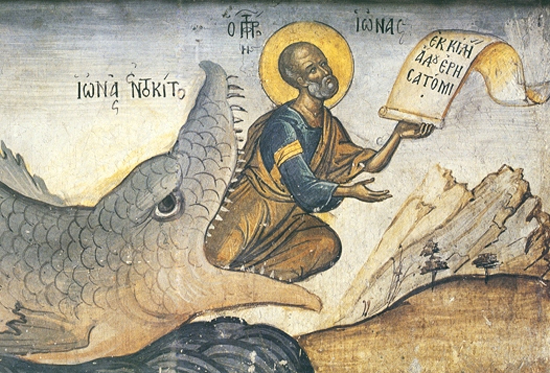
The crowds gather to see and to hear Jesus. Among them, as Matthew relates in his Gospel (Matthew 12: 38-42), are the scribes and Pharisees, who ask for a sign from Jesus to prove his divinity. Jesus refuses to confirm his preaching with dramatic signs. It is his teaching Jesus wishes the people to hear. Through seeking to taunt Jesus, and through their unbelief, the scribes and the Pharisees express the hardness of their hearts. Christ is present to them and they refuse to see. Christ is speaking to them and they refuse to hear. Through the Gospel, we have witnessed Christ’s miracles. And we are called to hear his word. ‘An evil and adulterous generation seeketh after a sign.’ [ … ]