

Christian Art | Jesus Christ The Good Shepherd
Office Of Readings | Week 24, Saturday, Ordinary Time | From The Sermon Of Saint Augustine On The Shepherds | Offer The Bondage Of Consolation
‘Offer the bondage of consolation.’
Saint Augustine develops his teaching on pastoral responsibility by focusing on how shepherds should address the realities of suffering and temptation in the Christian life. He begins with the principle from Hebrews 12:6: “God chastises every son whom he acknowledges.” This verse provides both warning and reassurance: chastisement is not a sign of rejection but of belonging, since even Christ, though sinless, endured suffering in the flesh. By sharing in discipline, the faithful are confirmed as adopted children of God and coheirs with Christ.
For Augustine, pastoral negligence appears in two forms: deceiving the weak with false promises of exemption from suffering, or overwhelming them with fear when they hear of trials to come. Both errors leave believers unprepared: the first through complacency, the second through despair. The pastor’s task is therefore to strike a balance, preparing the faithful realistically for temptation while also offering the “bandage of consolation.”
This involves a double teaching. On the one hand, the shepherd must recall Christ’s example of endurance and the inevitability of trials in the Christian life. On the other, he must strengthen the fearful by quoting Paul’s assurance in 1 Corinthians 10:13: “God is faithful; he will not allow you to be tempted beyond your strength.” Augustine weaves together these two strands—warning and promise, rebuke and encouragement—presenting them as complementary aspects of God’s fatherly discipline.
The sermon also highlights different responses to hearing about suffering. Some, stirred by zeal, seek martyrdom, desiring to “drain the cup” of Christ’s passion. Others, when trials come, falter and grow disheartened. Augustine insists that both responses require pastoral care: the zealous must not despise ordinary endurance, and the fearful must be reassured that God measures trials to human capacity.
The shepherd, therefore, is called to imitate the divine healer, binding wounds with both truth and mercy. Augustine echoes the language of Hosea 6:1—“He has struck, but he will heal us”—in reminding his audience that God both chastises and consoles. In this way, pastors are to ensure that discipline leads not to despair but to perseverance, and that the flock, whatever their temperament, are sustained in the hope of Christ.

From The Sermon Of Saint Augustine On The Shepherds | Offer The Bondage Of Consolation
Scripture says: God chastises every son whom he acknowledges. But the bad shepherd says: “Perhaps I will be exempt.” If he is exempt from the suffering of his chastisements, then he is not numbered among God’s sons. You will say: “Does God indeed punish every son?” Yes, every one, just as he chastised his only Son. His only Son, born of the substance of the Father, equal to the Father in the form of God, the Word through whom all things were made, he could not be chastised. For this reason he was clothed with flesh so that he might know chastisement. God punishes his only Son who is without sin; does he then leave unpunished an adopted son who is with sin?” The Apostle says that we have been called to adoption. We have been adopted as sons, that we might be coheirs with the only Son, and also that we might be his inheritance: Ask of me and I will give you the nations as your inheritance. Christ gave us the example by his own sufferings.
But clearly one who is weak must neither be deceived with false hope nor broken by fear. Otherwise he may fail when temptations come. Say to him: Prepare your soul for temptation. Perhaps he is starting to falter, to tremble with fear, perhaps he is unwilling to approach. You have another passage of Scripture for him: God is faithful. He does not allow you to be tempted beyond your strength. Make that promise while preaching about the sufferings to come, and you will strengthen the man who is weak. When someone is held back because of excessive fear, promise him God’s mercy. It is not that temptations will be lacking, but that God will not permit anyone to be tempted beyond what he can bear. In this manner you will be binding up the broken one.
When they hear of the trials that are coming, some men arm themselves more and, so to speak, are eager to drain the cup. The ordinary medicine of the faithful seems to them but a small thing; for their part they seek the glorious death of the martyrs. Others hear of the temptations to come, and when they do arrive, as arrive they must, they become broken and lame. Yet it is right that such things befall the Christian, and no one esteems them except the one who desires to be a true Christian.
Offer the bandage of consolation, bind up what has been broken. Say this: “Do not be afraid. God in whom you have believed does not abandon you in temptations. God is faithful. He does not allow you to be tempted beyond your strength. It is not I who say this, but the Apostle, and he says further: Are you willing to accept his trial, the trial of Christ who speaks in me? When you hear this you are hearing it from Christ himself, you are hearing it from the shepherd who gives pasture to Israel. For of him it was said: You will give us tears to drink in measure. The Apostle says: He does not allow you to be tempted beyond your strength. This is also what the prophet intends by adding the words: in measure. God rebukes but also encourages, he brings fear and he brings consolation, he strikes and he heals. Do not reject him.”
Christian Prayer With Jesus Christ
Faithful God,
you discipline those you love
and do not abandon those you call your children.
Give us courage in trial,
steadfastness in weakness,
and comfort in fear.
Strengthen your Church with the example of Christ,
who suffered for us,
and with the promise of your Spirit,
who sustains us in every testing.
Bind our wounds with your mercy,
and keep us in the hope of eternal life,
through Jesus Christ our Lord.
Amen.
Glossary Of Christian Terms
Hebrews 12:6 – “The Lord disciplines the one he loves, and chastises every son whom he acknowledges.” A central scriptural foundation for Augustine’s reflections on divine chastisement.
Adoption – In Pauline theology, believers are adopted as children of God through Christ (Romans 8:15–17), becoming coheirs with him.
1 Corinthians 10:13 – Paul’s assurance that God does not allow believers to be tempted beyond their strength, frequently cited by Augustine as a source of encouragement.
Chastisement – The discipline or correction by which God strengthens and purifies believers.
Martyrdom – The act of bearing witness to Christ even unto death. Some Christians actively sought it, while others feared the trials it entailed. Augustine acknowledges both responses.
Bandage of consolation – Augustine’s metaphor for the pastor’s task of offering reassurance alongside warning, echoing the biblical imagery of God binding up the wounded (Ezekiel 34:16).



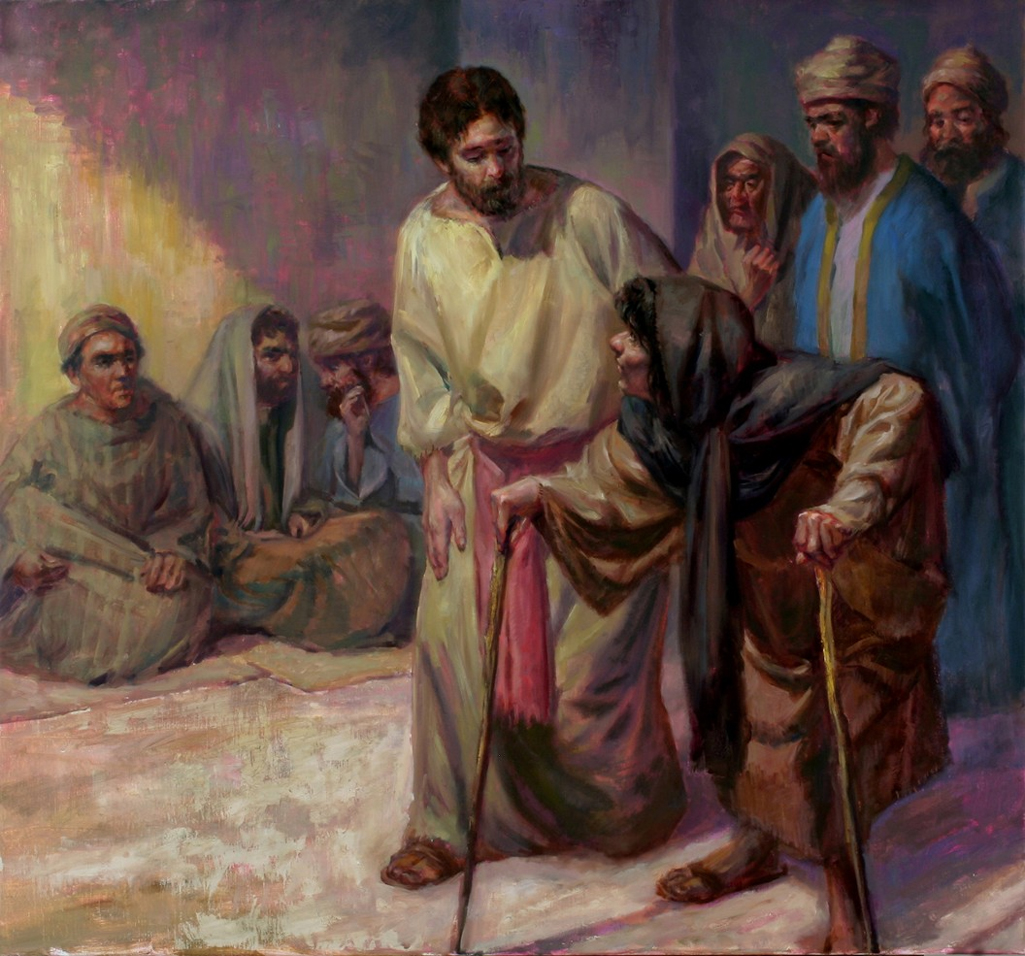
It was customary to go to the synagogue on the Sabbath, to read and study Scripture and praise God, and our Lord Jesus is observant, assuming a teaching role in the synagogue. It is in this context that the crippled woman becomes a type of Christ’s teaching. She has been an abject figure, bowed down for eighteen years. She does not come to the synagogue asking to be healed; she seems quite passive [ … ]
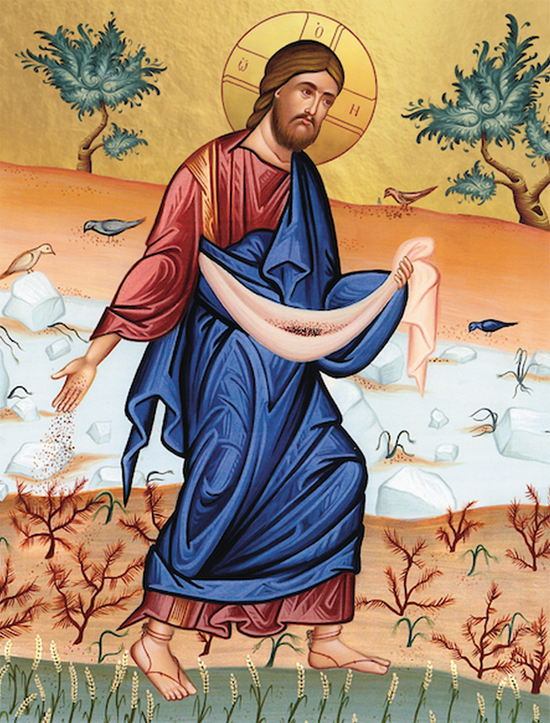
With Chapter 13 of Matthew’s Gospel begins the Discourse of the Parables, which concerns the Christian mystery of the Kingdom Of God present in life now. The parables draw us to Jesus, whose divinity is the central fact of the parables. Christ is the veiled truth of each parable. As we uncover the meaning of each of the parables we discover Jesus [ … ]

The Gospel Of Saint John, Chapter 11 | Jesus Wept | Death And Resurrection Of Lazarus | KJV The account of Lazarus’s death and resurrection in John 11:1-45 is profound and moving. Central to the story is the shortest verse in the Bible: ‘Jesus wept’ (John 11:35). At first glance, ‘Jesus wept’ appears to be a simple statement of human emotion. It shows Jesus expressing sorrow and empathy, sharing in the grief of Lazarus’s sisters, Mary and Martha, and the mourning community. The moment reveals profound humanity of Jesus. Despite Jesus’ divine knowledge that he would raise Lazarus from the dead, Jesus yet experiences fully human emotions. Jesus is not distant or detached but is intimately connected with the suffering of those he loves. The verse also underscores the reality of death’s impact, even for the Son of God. Although Jesus knows that death is not the final word and that he has power over it, Jesus still mourns. This weeping is not only for Lazarus but for the brokenness of the world that death represents. It reflects sorrow that God feels over the pain and suffering that humanity endures as a result of sin and death. The verse ‘Jesus wept’ highlights compassion of Jesus. Jesus’ tears are an expression of his deep love for Lazarus and Lazarus’ family. In the act of weeping, Jesus demonstrates that God’s response to human suffering is not indifference or cold logic, but rather profound empathy and compassion. The God of the universe is not immune to our pain but enters into it with us. Theologically, this moment is also significant because it foreshadows the passion of Christ. Just as Jesus wept over Lazarus, Jesus would later weep in Gethsemane over the soon-to-be agony of the Cross. Jesus’ tears in John 11 anticipate the suffering he will endure to conquer death once and for all. In weeping for Lazarus, Jesus reveals such depth of his commitment to overcome death and bring life. See also: Daily Bible Verses | Jesus Weeps Over Jerusalem | That Jesus Wept Means He Prayed For The Loss And The Futility | King James Audio Bible KJV
