

Christian Art | Jesus Christ The Risen Lord | Transfiguration
Office Of Readings | Week 24, Thursday, Ordinary Time | From The Sermon Of Saint Augustine On The Shepherds | Be A Model For The Faithful
‘Be an example for the faithful.’
Saint Augustine turns to the destructive power of bad example. Having already examined how negligent shepherds fail to feed or protect their flock, he now shows that their own behaviour can actively corrupt those they lead. Pastors are not only teachers by their words but also models by their lives. When their conduct contradicts the Gospel, they undermine the faith of the strong and damage the weak.
Augustine highlights the scarcity of ‘sound sheep’—those firmly nourished by truth. These, by God’s mercy, can endure even under poor leadership. Yet a pastor’s visible sin endangers them, for believers often look to their leaders as living embodiments of God’s law. When a pastor lives contrary to the Gospel, a strong Christian may reason: ‘If my shepherd lives like this, why should I not do the same?’ In this way the shepherd’s sin becomes a stumbling block, a form of spiritual murder.
Augustine underscores the seriousness of this by comparing it with Jesus’ teaching in the Sermon on the Mount. Just as lust in the heart is counted as adultery, so a pastor who leads astray by example is guilty of killing the sheep, even if the sheep remain alive in Christ. Sin resides not only in outward action but in the intention and influence of the heart.
The challenge is twofold: for pastors, to recognise that their authority requires integrity of life as well as teaching; for the faithful, to discern between the truth of Christ—always valid—and the failings of those who bear responsibility in the Church. Augustine advises the faithful to follow Christ’s words even when leaders fall short: ‘Do what they say but not what they do.’ Yet this does not absolve shepherds, who remain accountable before God for the harm their conduct inflicts.

From The Sermon Of Saint Augustine On The Shepherds | Be A Model For The Faithful
After the Lord had shown what wicked shepherds esteem, he also spoke about what they neglect. The defects of the sheep are widespread. There are very few healthy and sound sheep, few that are solidly sustained by the food of truth, and few that enjoy the good pasture God gives them. But the wicked shepherds do not spare such sheep. It is not enough that they neglect those that are ill and weak, those that go stray and are lost. They even try, so far as it is in their power, to kill the strong and healthy. Yet such sheep live; yes, by God’s mercy they live. As for the wicked shepherds themselves, they kill the sheep. ‘How do they kill them?’ you ask. By their wicked lives and by giving bad example. Or was God’s servant, who was high among the members of the chief shepherd, told this in vain: Show yourself as an example of good works toward all men, and, Be an example to the faithful?
Even the strong sheep, if he turns his eyes from the Lord’s laws and looks at the man set over him, notices when his shepherd is living wickedly and begins to say in his heart: ‘If my pastor lives like that, why should I not live like him?’ The wicked shepherd kills the strong sheep. But if he kills the strong one what does he do to the rest? After all, by his wicked life he kills even the sheep he had not strengthened but had found strong and hardy.
I appeal to your love, and again I say, even if the sheep have life and if they are strong in the word of the Lord, and if they hold fast to what they have heard from their Lord, Do what they say but not what they do. Still, as far as he himself is concerned, the shepherd who lives a wicked life before the people kills the sheep under his care. Let such a shepherd not deceive himself because the sheep is not dead, for though it still lives, he is a murderer – just as when the lustful man looks on a woman with desire, even though she is chaste, he has committed adultery. For the Lord said in plain truth: Whoever has looked upon a woman with desire has already committed adultery with her in his heart. He has not entered her bedroom, yet he has ravished her within the bedroom of his heart.
Christian Prayer With Jesus Christ
O Lord,
you call your people to holiness of life
and entrust shepherds with the care of your flock.
Preserve your Church from harm caused by bad example.
Grant that pastors may live lives of integrity and truth,
and that the faithful may look always to you,
the chief Shepherd, for guidance and strength.
Through Christ our Lord.
Amen.
Glossary Of Christian Terms
Shepherds – Pastors and leaders of the Church, entrusted with teaching and guiding the faithful.
Sheep – Symbol of the faithful, the people of God, who depend on Christ the Shepherd and on the care of their pastors.
Sound sheep – Believers firmly rooted in the truth of the Gospel, less easily shaken by bad leadership.
Example – Augustine emphasises that pastors teach not only by doctrine but by their way of life.
Murderer – A metaphor Augustine uses for pastors who corrupt others by their behaviour, causing spiritual harm.
Sermon on the Mount – Teaching of Jesus in Matthew 5–7, where he deepens the moral law, including the teaching that lust in the heart is already adultery (Matthew 5:28).
‘Do what they say but not what they do’ – Jesus’ words in Matthew 23:3, distinguishing the authority of God’s law from the failings of its interpreters.



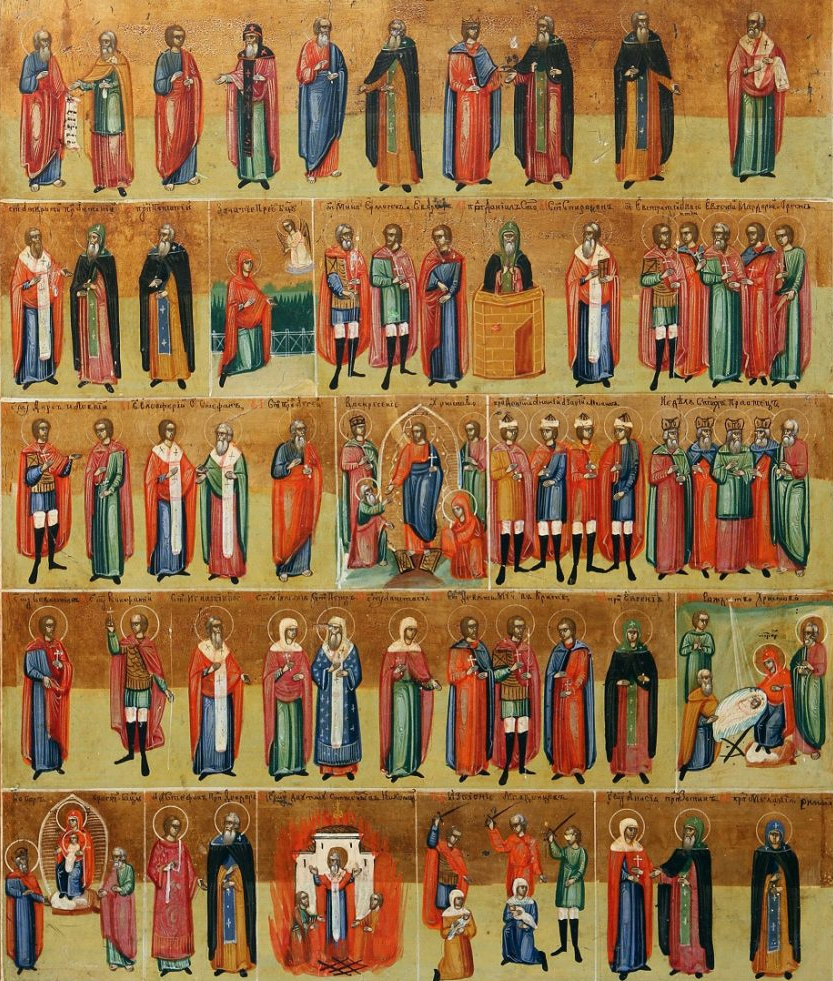
The seventy have been sent ahead of Jesus to prepare the way for Jesus; they have been sent to the towns and places – the ‘cities’ of the Gospels are for the most part small towns and villages – to which Jesus intended to travel. These disciples have been sent in a spirit of poverty, told by Jesus to trust in God, and so as a corollary in human hospitality. The disciples have borne the message that the kingdom of God is imminent. In humility as in poverty, they have been sent by Jesus as evangelists. In Bible verses, we witness the first missionaries, swelled with good news, return to Lord Jesus to share the joy of the initial, explosive success of their work of evangelizing [ … ]

The devotion to the Sacred Heart of Jesus has its origins in early Christian thought and gradually developed into a formal practice over many centuries. The devotion focuses on the heart of Jesus Christ as a symbol of Jesus’ love, particularly Jesus’ willingness to suffer and die for humanity. This devotion has evolved through biblical interpretation, theological reflection, mystical experiences, and papal endorsements [ … ]

The apostles have returned exhausted and energized to Jesus. They have succeeded in their mission and they are full of the glory of what they have accomplished. They long to tell Jesus all that they have done in Jesus’ name. This is a triumph for the disciples. They long to share [ … ]