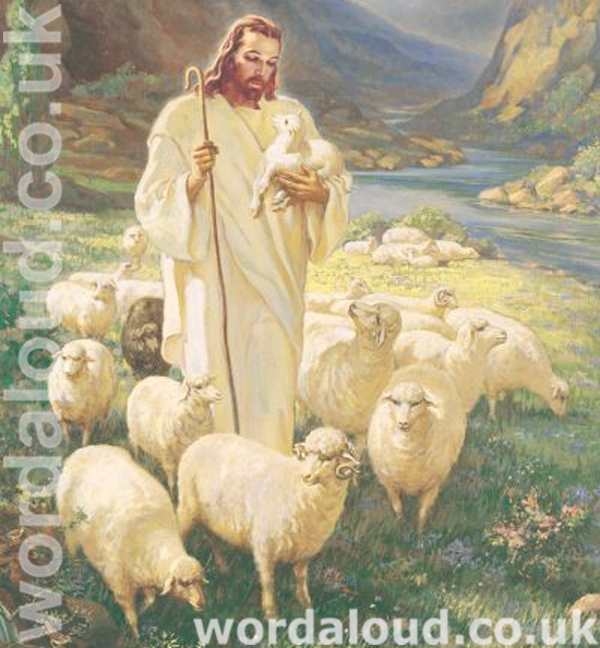
Christian Art | Jesus Is The True Shepherd | Love Revealed By Jesus Christ
Office Of Readings | Week 25, Thursday, Ordinary Time | From The Sermon Of Saint Augustine On The Shepherds | I Will Feed My Sheep In Good Pastures
‘In good pastures I shall feed my sheep.’
Saint Augustine reflects on the divine promise from Ezekiel: ‘I shall feed my sheep.’ He interprets the mountains of Israel as the sacred authors of Scripture, whose writings provide the true and safe nourishment of the flock. For Augustine, the faithful are to graze on these pastures by listening to the Word of God. Teachings that accord with Scripture are to be received; teachings that diverge from it must be rejected. This safeguards the flock from error and ensures that the food they consume is wholesome.
The image of pastures extends into the streams flowing from the mountains, which Augustine identifies with the preaching of the Gospel, spreading from its origin in Israel to every land. These waters make the whole world fertile for the flock, so that the nourishment of Scripture and the Gospel is available everywhere.
The promise of rest is central. The sheep will not only be fed, but they will find security and peace in God’s glory. Augustine insists, however, that while the mountains represent the good teachers of the Church, trust must ultimately rest not in human figures but in God himself, who declares: ‘I will feed my sheep.’ The mountains may help to raise the eyes of the faithful, but the source of strength and nourishment is always God.
Finally, Augustine dwells on the phrase: ‘I will feed them with judgment.’ Unlike human beings, who are prone to rash judgments and uncertainty about themselves and others, God alone knows each person fully and assigns what is fitting. Human expectations can be quickly overturned: someone thought hopeless may be converted, while someone admired may fall. For this reason, only God can feed with true discernment, giving to each sheep what is needed for its salvation.
From The Sermon Of Saint Augustine On The Shepherds | I Will Feed My Sheep In Good Pastures
I shall lead them forth from the Gentiles, and I shall gather them from foreign lands; I shall bring them into their own land, and I shall feed them on the mountains of Israel. It was God who brought forth the mountains of Israel, that is to say, the authors of the divine Scriptures. Feed there that you may feed in safety. Whatever you hear from that source, you should savor. Whatever is foreign to it, reject. Hear the voice of the shepherd, lest you wander about in the mist. Gather at the mountains of holy Scripture. There, are the things that will delight your hearts; there, you will find nothing poisonous, nothing hostile; there the pastures are most plentiful. There, you will be healthy sheep; you will feed safely on the mountain of Israel.
And I shall feed them in streams and in every inhabited place in the land. From the mountains which we have shown you, there have issued the streams of the gospel message because their voice has gone forth into the whole world, and every habitable place has become pleasant and fertile for the grazing sheep.
In good pastures and on the high mountains of Israel, I shall feed them. And their grazing ground shall be there, that is, the place where they will rest, where they will say: ‘I am happy’; where they will say: ‘It is true, it is clear, we are not deceived.’ They will find rest in the glory of God, when they find rest in those grazing grounds. And they will sleep, that is, find rest, and they will rest in good pleasures.
And they will be fed in rich pastures on the mountains of Israel. I have already spoken of the mountains of Israel, the good mountains to which we raise our eyes and from which may come our help. But our help is from the Lord, who made heaven and earth. Let us not then place our hope in the good mountains themselves, but let us rely on his word which says: I will feed my sheep on the mountains of Israel. Let us not merely remain on the mountains themselves, for he added immediately: I will feed my sheep. Raise your eyes, therefore, to the mountains, whence your help comes; but take note that he says: I will feed. For you help is from the Lord, who made heaven and earth.
He concludes by saying: And I will feed them with judgment. Observe that he alone so feeds the sheep, in feeding them with judgment. For what man can judge rightly concerning another? Our whole daily life is filled with rash judgments. He of whom we had despaired is converted suddenly and becomes very good. He from whom we had anticipated a great deal suddenly fails and becomes very bad. Neither our fear nor our hope is certain.
What any man is today, that man himself scarcely knows. Still in some way he does know what he is today. What he will be tomorrow, however, he does not know. Hence the Lord, who assigns to each what is owed to him, feeds his sheep with judgment, giving some things to one group, other things to another, and to each his due. For he knows what he is doing. With judgment he feeds those whom he, being judged himself, redeemed. Therefore, he himself feeds his sheep with judgment.
Christian Prayer With Jesus Christ
Shepherd of Israel,
you gather your people from every land
and feed them with the word of life.
Keep us safe in the pastures of your Scriptures,
refresh us with the streams of the Gospel,
and lead us always to rest in your presence.
You alone know our weakness and our need;
feed us with your judgment and sustain us in your mercy.
Through Christ our Lord. Amen.
Glossary Of Christian Terms
Mountains of Israel – In Augustine’s interpretation, the inspired authors of Scripture, from whom the faithful receive safe nourishment.
Streams of the Gospel – The preaching of the apostolic message flowing from Scripture to the whole world.
Pastures – A metaphor for the teachings of Scripture, where the faithful feed spiritually in safety.
‘I will feed my sheep’ – God’s promise to care directly for his people, reminding them that their trust rests not in human teachers but in God himself.
Feeding with judgment – God’s unique ability to give each believer what is just and necessary, in contrast to the uncertainty of human judgement.


Psalm 120, a cry for deliverance and peace, is the first of the fifteen Songs of Ascents (Psalms 120-134) in the Book of Psalms. Traditionally attributed to King David, these psalms were sung by pilgrims journeying to Jerusalem for the great feasts. Psalm 120 reflects a deep yearning for deliverance from deceit and falsehood [ … ]
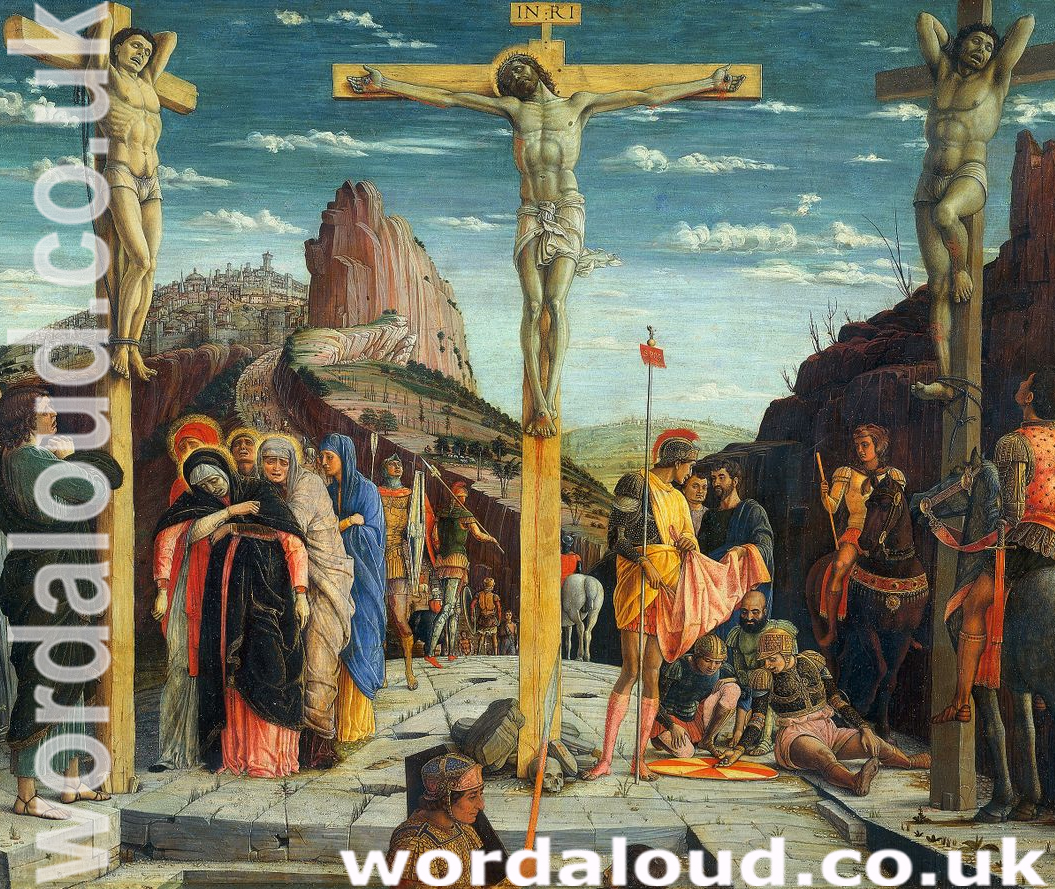
Christian Art | Our Lord Jesus On The Cross | God The Father | God The Son Office Of Readings | Advent December 23rd | A Reading From The Treatise Of Saint Hippolytus Against The Heresy Of Noetus | The Hidden Sacrament Is Revealed ‘The hidden sacrament is revealed.’ In this reading, Saint Hippolytus writes against the Noetic heresy, which denied the real distinction between the Father and the Son by treating them as the same person acting under different names. The purpose of Saint Hippolytus is to defend the Church’s confession of one God who is not solitary, but who exists with his Word and Spirit. Hippolytus begins by setting a principle: knowledge of God comes from the Holy Scriptures, not from speculation or private reasoning. Faith is not shaped by human preference but by what God has chosen to reveal. The Father determines how He is believed, the Son how He is glorified, and the Spirit how He is received. This establishes Scripture as the rule of faith and guards against theological invention. Hippolytus then affirms that God existed alone before creation, with nothing co-eternal alongside Him. At the same time, God was not without reason, wisdom, or power. Hippolytus insists that plurality within God does not compromise divine unity. God contains within himself Word, wisdom, and counsel. Creation begins when God wills and manifests His Word. The Word is not created from nothing but proceeds from God and acts as the agent of creation. The Word is first invisible to the created world, though known to God. When God chooses, He makes the Word visible, described as ‘Light of Light’. This language safeguards both distinction and unity: the Word comes from God and reveals God, without being separate from Him. The manifestation of the Word is ordered towards salvation, so that the world may see and be saved. Hippolytus identifies this Word clearly with the Son of God. Through him all things were made, and he alone comes forth from the Father. The Law and the prophets belong to the same saving plan. God speaks through them by the Holy Spirit, so that they proclaim not their own ideas but the Father’s will. Revelation is therefore coherent: creation, prophecy, and incarnation belong to one divine purpose. Hippolytus appeals to the Gospel of John to show continuity between prophecy and fulfilment. The Word spoken of by the prophets is the Word made flesh. Though the world was made through him, it failed to recognise him. This failure does not negate God’s plan but reveals the depth of the mystery now disclosed. A Reading From The Treatise Of Saint Hippolytus Against The Heresy Of Noetus | The Hidden Sacrament Is Revealed There is, brethren, one God, the knowledge of whom we gain from the Holy Scriptures and from no other source. Whatever things the Holy Scriptures declare, at these let us look; and whatever they teach, let us learn it; and as the Father wills our belief to be, let us believe; and as he wills the Son to be glorified, let us glorify him; and as he wills the Holy Spirit to be bestowed, let us receive him. Not according to our own will, nor according to our own mind, nor yet storming by force the things which are given by God, but even as he has chosen to teach them by the Holy Scriptures, so let us discern them. God, subsisting alone, and having nothing coeval with himself, chose to create the world. And conceiving the world in mind, and willing and uttering the Word, he made it; and at once it appeared, formed it in the way he desired. For us it is sufficient simply to know that nothing was coeval with God. Outside him there was nothing; but he, while existing alone, yet existed in plurality. For he did not lack reason, or wisdom, or power, or counsel. All things were in him, and he was the All. At a time and in a manner chosen by him he made his Word manifest, and through his Word he made all things. He bears this Word in himself, as yet invisible to the created world. He makes him visible, uttering the voice first, and begetting him as Light of Light. He presents him to the world as its Lord; and whereas the Word was visible formerly to God alone, and invisible to the world which is made, God makes the Word visible in order that the world might see him and be able to be saved. This is the mind which came forth into the world and was manifested as the Son of God. All things came into being through him, and he alone comes from the Father. He gave us the Law and the prophets; and in giving them, he made them speak by the Holy Ghost, in order that, receiving the inspiration of the Father’s power, they might declare the Father’s counsel and will. Thus, then, was the Word made manifest, even as the blessed John says. For he sums up the things that were said by the prophets, and shows that this is the Word, by whom all things were made. In the beginning was the Word, and the Word was with God, and the Word was God. All things were made by him, and without him nothing was made. And later, The world was made by him, and the world did not know him; he came to his own, and his own did not receive him. Christian Prayer With Jesus Lord God,You are one, and from You come the Word and the Spirit.You have chosen to make Yourself known, not by human effort,but by what You have revealed in the scriptures. You spoke Your Word, and all things were made.You made that Word visible, so that the world might see and be saved.Grant that we may receive what You give,believe what You teach,and worship You as You have shown Yourself to be. Keep us […]
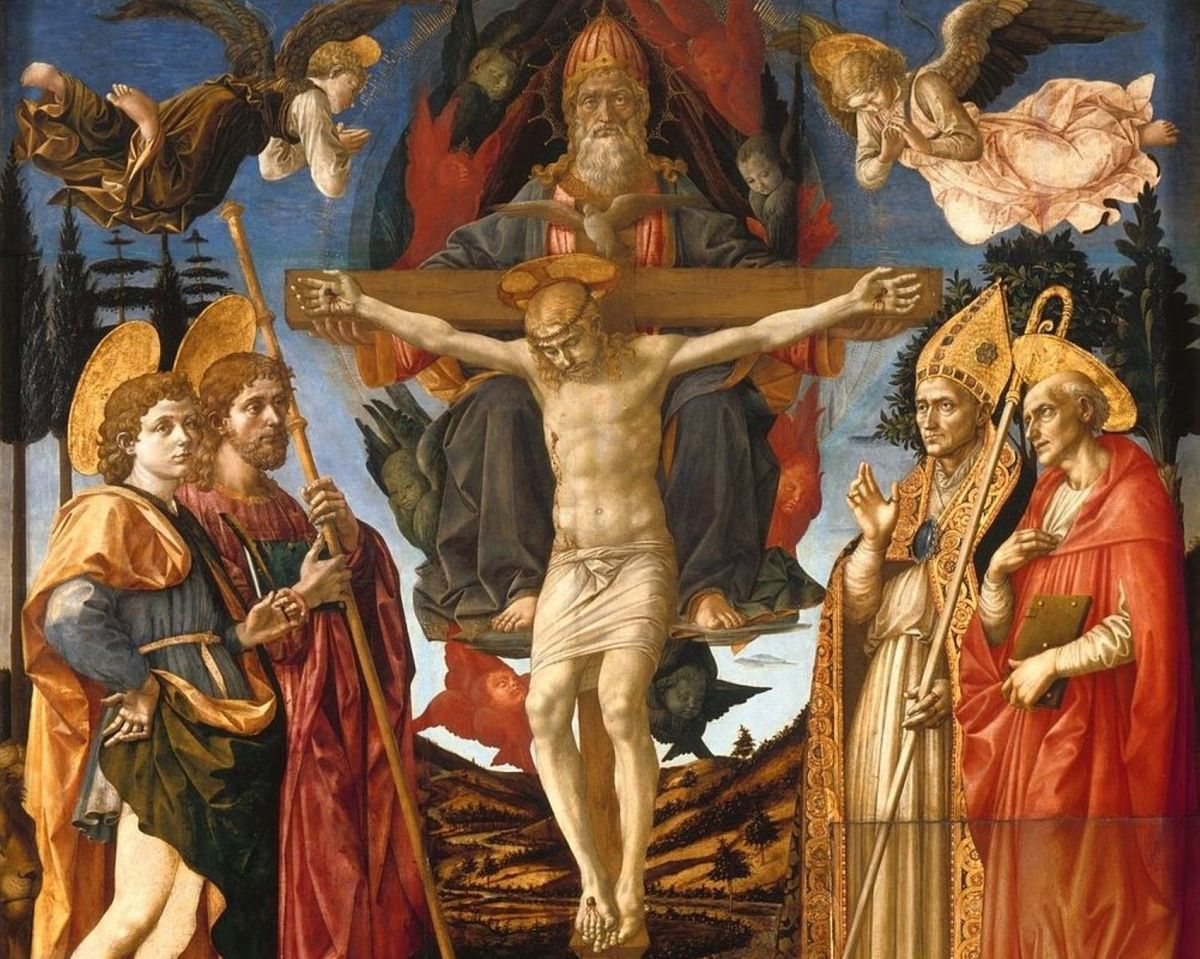
We are presented in these Bible verses with a peculiar sense of our understanding of time, our human time, in relation to God’s great plan for our salvation, and to the fact of God’s encompassing all time, from which perspective we are born and pass on within the blink of an eye. ‘A little while… and again, a little while…’ The Greek word, micron, is so translated [ … ]