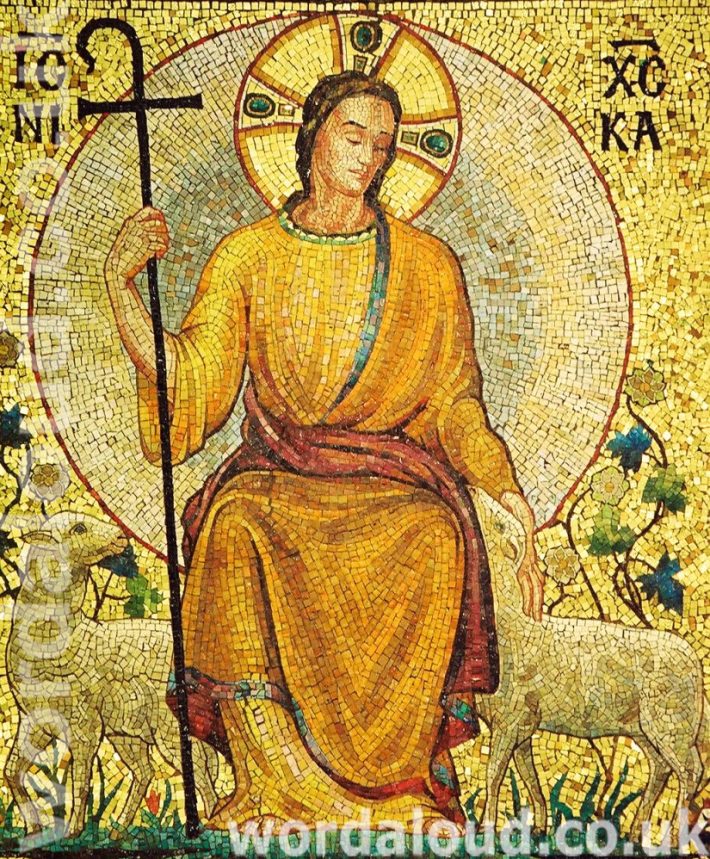
Christian Art | Jesus Christ Is The Good Shepherd
Office Of Readings | Week 3, Friday, Ordinary Time | A Reading From The Commentary Of Saint John Fisher On The Psalms | God’s Wonderful Deeds
‘The wonderful works of God.’
In his commentary on the Psalms, Saint John Fisher reflects on the pattern of God’s saving action in history and the human response to it. He moves from the story of Israel to the life of the Church, showing a continuity of divine generosity and a repeated failure of gratitude.
The reading begins with a summary of the great acts of God on behalf of Israel. Fisher recalls the liberation from Egypt, the crossing of the Red Sea, the gift of food and water in the wilderness, protection from enemies, and the settlement in the promised land. Each event is presented as an expression of God’s care and power. These are not isolated miracles but part of a sustained relationship in which God provides, guides, and protects his people.
Despite this care, Israel’s response was often marked by forgetfulness and infidelity. Fisher notes how quickly the people turned from worship of God to the worship of idols. The contrast between divine faithfulness and human ingratitude forms a central tension in the passage. God’s generosity remains steady, while human loyalty proves fragile.
Fisher then extends the story to include the Gentiles. Those who were once outside the covenant, drawn to lifeless idols, have now been brought into God’s people. Using the image of the olive tree from Saint Paul, he describes how the Gentiles have been grafted into the life of Israel and made sharers in its promises. This inclusion is not an afterthought but part of God’s plan to spread his grace more widely.
The supreme sign of God’s generosity is the gift of his Son. Fisher presents Christ as both sacrifice and offering, given for the redemption and purification of God’s people. Through Christ, God’s love reaches its fullest expression, going beyond all earlier acts of deliverance.
Yet Fisher does not soften his assessment of human response. He speaks plainly about continued ingratitude, even in the face of such mercy. The failure to live according to God’s law, despite knowing his goodness, is presented as a serious contradiction.
The reading ends with a call to memory. God’s works must be written down and passed on so that future generations will know his goodness and continue to praise him. For Fisher, remembrance is not merely historical record but an act of faith, keeping the Church rooted in gratitude for what God has done.

A Reading From The Commentary Of Saint John Fisher On The Psalms | God’s Wonderful Deeds
First God freed Israel from the bondage of Egypt by performing many signs and wonders. He permitted them to cross the Red Sea dry-shod. He fed them in the desert with food from heaven in the form of manna and quail. When they were suffering from thirst, he produced an overflowing spring of water from the hardest rock. He gave them victory over all the enemies who made war against them. He forced the river to flow backward for a time. He divided the promised land and distributed it among them according to the number of their tribes and families.
Yet even though he treated them so lovingly and generously, the Israelites were ungrateful and seemed forgetful of all this. They abandoned the worship of God and more than once they were guilty of the abominable sin of idolatry.
Then he also took pity on us, when we were pagans who went off to mute idols wherever we were led. He severed us from the wild olive tree of paganism and, breaking our natural branches, he grafted us onto the true olive tree of Judaism and made us share in the root of his grace and richness. Finally, he did not spare his own Son but gave him up for us all, as an offering and a sacrifice to God in a fragrant odor, so that he would redeem us from all our iniquity and cleanse for himself an acceptable people.
Now all these things are not merely certain arguments but also clear proof of his deep love and kindness for us. And yet we are the most ungrateful of men. Indeed, we have gone beyond the bounds of ingratitude: we give no thought to his love, nor do we recognize the extent of his kindnesses to us. Rather we reject the one who lavishes so many favours and even appear to despise him; and the remarkable mercy that he has continually shown to sinners does not move us to form our lives and conduct according to his most holy command.
Clearly these things are worthy to be written down in the second generation so as to preserve their memory for ever. Thus all who are still to be counted among Christians will know the great kindness of God toward us and never cease singing his divine praises.
Christian Prayer With Jesus Christ
God of mighty deeds and faithful love,
you have acted with power and mercy
throughout the history of your people.
We thank you for your works of deliverance,
for your care in times of need,
and for the gift of your Son,
given for our redemption.
Forgive us when we forget your goodness
or take your grace for granted.
Turn our hearts back to you,
that our lives may reflect
the gratitude we owe you.
Help us to remember and to hand on
the story of your saving love,
so that praise may never cease
among your people.
Through Christ our Lord.
Amen
Glossary Of Christian Terms
Exodus | The deliverance of Israel from slavery in Egypt
Red Sea | The sea crossed by Israel when fleeing from Egypt
Manna | Food given by God to Israel in the desert
Quails | Birds provided as food in the wilderness
Promised land | The land God gave to Israel
Idol-worship | The worship of false gods
Gentiles | People who were not part of Israel
Olive tree | A biblical image for God’s people
Grafted | Joined into a living community
Redemption | Being freed from sin and restored to God
Fragrant offering | A sacrifice pleasing to God
Ingratitude | Failure to recognise and respond to kindness
Holy law | God’s moral and religious teaching




This poem is a meditation on divine love and its transformative power. Herbert calls upon an ‘Immortal Heat’, a metaphor for God’s eternal love, to burn away human desires, preparing the soul for a purified relationship with the divine. Herbert asks that this heavenly fire ‘attract the lesser to it’, symbolizing the hope that earthly passions, with all their distractions and imperfections, will be drawn into the higher, refining flame of divine love. The fire that ‘shall consume the world’ is a vision of divine judgment or renewal that should first be felt within, turning Herbert’s own heart toward a sincere devotion [ … ]
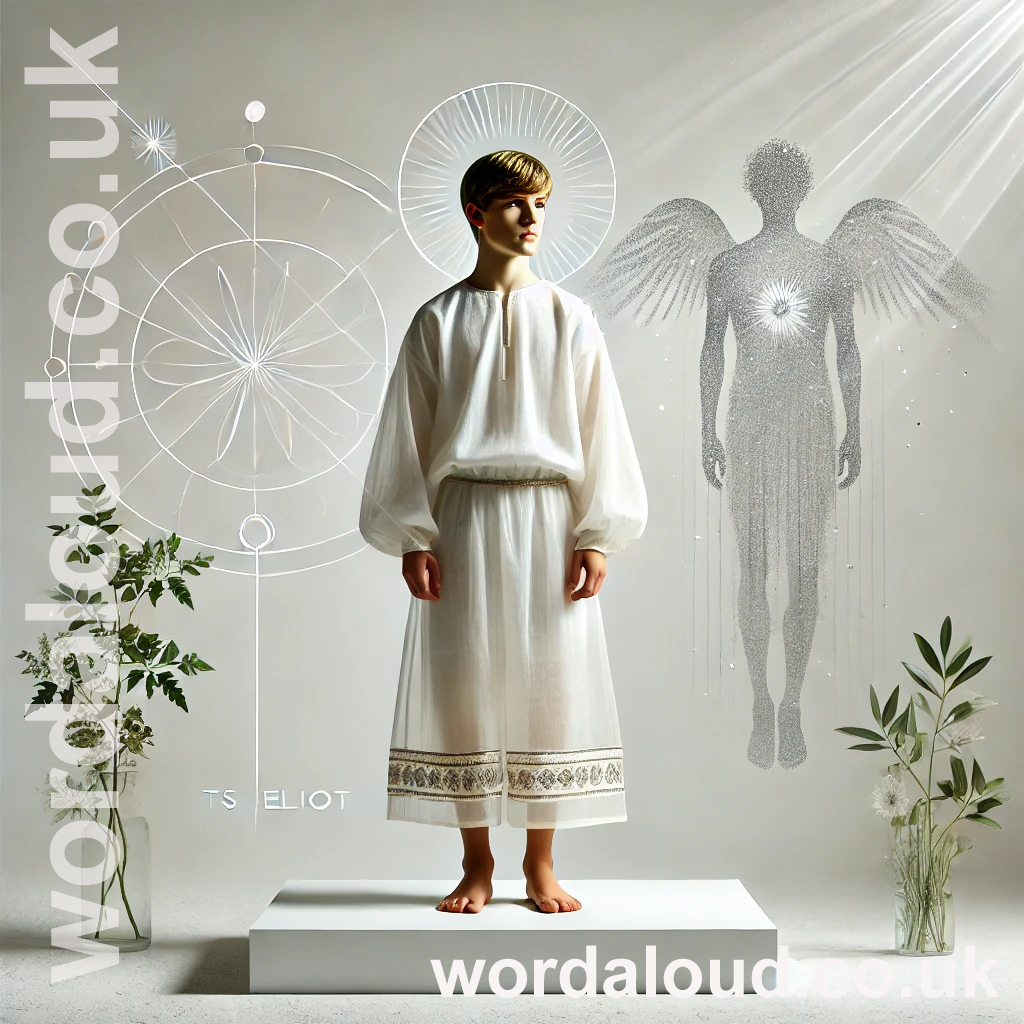
YouTube: Ash Wednesday | T.S. Eliot | Audio Christian Poetry | Word Aloud Ash Wednesday, one of T.S. Eliot’s most profound and enigmatic poems, marks a significant transition in his life and work. Written in 1930, it is the first long poem Eliot composed after his conversion to Anglicanism in 1927. The poem, often considered one of Eliot’s masterpieces, delves into themes of faith, redemption, and spiritual struggle. It reflects the poet’s personal journey towards spiritual enlightenment and serves as a testament to his newfound religious beliefs. A reading of Ash Wednesday is an exploration of the poem’s religious, literary, and personal contexts, as of the poem’s complex structure and themes. Religious Context And Symbolism Ash Wednesday is deeply embedded in Christian symbolism and tradition. The title refers to the first day of Lent in the Christian liturgical calendar, a day marked by penance, fasting, and prayer. Ash Wednesday is a time for reflection on mortality and repentance, themes that are intricately woven throughout the poem. Eliot’s conversion to Anglicanism profoundly influenced his writing; ‘Ash Wednesday’ is an expression of spiritual awakening and quest for redemption. The poem is replete with religious imagery and references, drawing on Christian doctrine and scripture. The use of liturgical language, biblical allusions, and references to saints and spiritual figures creates a tapestry of faith that invites readers to contemplate deep spiritual truths with which Eliot is grappling. The repetitive and prayer-like quality of the verses echoes meditative practices of the faithful, in part enabling the contemplative nature of the poem. Literary Influences And Techniques T.S. Eliot was a master of literary allusion and technique, and Ash Wednesday expresses Eliot’s ability to blend various influences into a cohesive whole. The poem reflects the influence of Dante, particularly The Divine Comedy, which Eliot admired for its exploration of spiritual ascent and redemption. Dante’s journey through Hell, Purgatory and Heaven parallels Eliot’s own spiritual journey, and the structure of Ash Wednesday can be seen as a reflection of this pilgrimage. Eliot’s use of fragmented narrative, a hallmark of his earlier work such as The Waste Land, is also present in Ash Wednesday. However, in this poem, the fragmentation serves a different purpose. Instead of depicting the disintegration of modern society, it mirrors the fragmented and often painful process of spiritual rebirth. The disjointed structure reflects the internal struggle of the speaker, who is torn between the pull of worldly desires and the aspiration for divine grace. The poem’s language is rich and varied, combining the lyrical and the obscure, the personal and the universal. Eliot employs a range of poetic forms and devices, including free verse, rhyme and meter, to convey the tumultuous journey of faith. The shifting tone and style reflect the complexities and contradictions inherent in the spiritual quest, capturing moments of doubt, despair, hope, and transcendence. Personal Significance Ash Wednesday is a deeply personal work. Eliot’s conversion to Anglicanism marked a profound shift in his life, providing a sense of purpose and direction that had been missing. The poem can be read as a reflection of Eliot’s own struggles with faith and his efforts to reconcile his intellectual skepticism with his desire for spiritual certainty. Eliot’s personal experiences, including his troubled marriage and professional pressures, also inform the poem. Themes of renunciation and acceptance, sin and redemption, are not merely abstract concepts but lived realities for the poet. This personal dimension adds a layer of intimacy and urgency to the poem, which thereby resonates with readers who have faced their own spiritual crises. Thematic Exploration At its core, Ash Wednesday is a meditation on the possibility of spiritual renewal in a world that often seems devoid of meaning. The poem grapples with the tension between faith and doubt, reflecting the existential struggles of modernity. The poem acknowledges the difficulties of maintaining belief in an age of skepticism but ultimately affirms the possibility of redemption and grace. The central theme of renunciation is explored through imagery of ascension and purification. The speaker’s journey is marked by a series of renunciations, symbolizing the shedding of earthly attachments in pursuit of spiritual truth. This process is neither straightforward nor easy; it involves moments of intense struggle and introspection. Yet, through this arduous journey, the speaker moves closer to a state of spiritual clarity and acceptance. Ash Wednesday | T. S. Eliot Because I do not hope to turn again Because I do not hope Because I do not hope to turn Desiring this man’s gift and that man’s scope I no longer strive to strive towards such things (Why should the agèd eagle stretch its wings?) Why should I mourn The vanished power of the usual reign? Because I do not hope to know The infirm glory of the positive hour Because I do not think Because I know I shall not know The one veritable transitory power Because I cannot drink There, where trees flower, and springs flow, for there is nothing again Because I know that time is always time And place is always and only place And what is actual is actual only for one time And only for one place I rejoice that things are as they are and I renounce the blessèd face And renounce the voice Because I cannot hope to turn again Consequently I rejoice, having to construct something Upon which to rejoice And pray to God to have mercy upon us And pray that I may forget These matters that with myself I too much discuss Too much explain Because I do not hope to turn again Let these words answer For what is done, not to be done again May the judgement not be too heavy upon us Because these wings are no longer wings to fly But merely vans to beat the air The air which is now thoroughly small and dry Smaller and dryer than the will Teach us to care and not to care Teach us to sit still. Pray for us sinners now […]
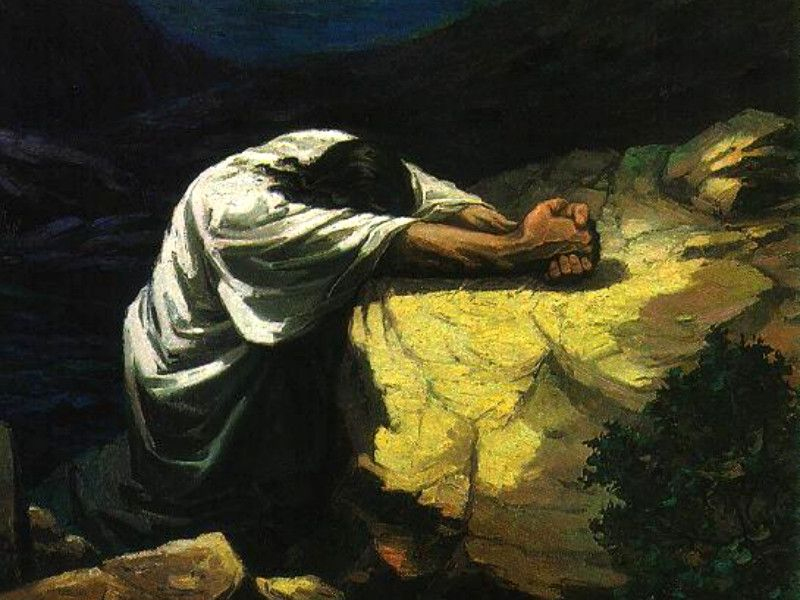
Prayer is a form of communication between a person and a higher power. It can take many forms, from a casual conversation to a formal ritual, and can involve petition, thanksgiving, and confession. Prayer can be silent or spoken, individual or communal, and may be directed to God, a saint, an angel, or any other object of worship. Through prayer, an individual expresses their innermost thoughts and feelings to the divine, seeking comfort, guidance, and strength. Prayer can be used to foster a connection to the spiritual realm, bring a sense of peace, and help one cultivate a sense of purpose and meaning in life [ … ]