
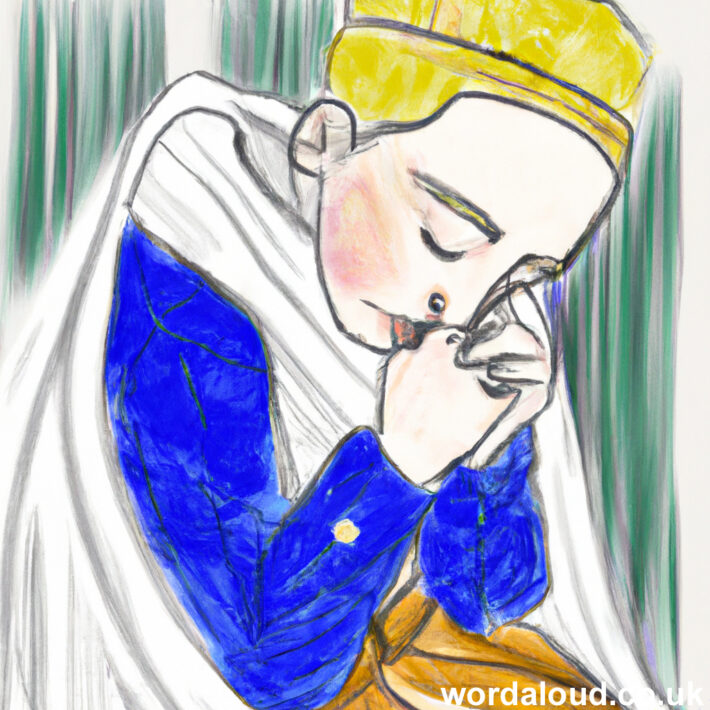
Christian Art | Prayer With Jesus | Psalms | Exhortation To Patience And Trust | King David As A Boy | Trust In The Lord | May God Be With You
Psalm 37 | King James Audio Bible
YouTube: Psalm 37 | King James Audio Bible | KJV | Word Aloud
Psalm 37 offers wisdom and solace to those navigating complexities of life. The psalm expresses virtues of trust in the Lord, patience, and the ultimate triumph of righteousness over wickedness.
Response to Life’s Challenges: Psalm 37 opens with a directive: “Fret not thyself because of evildoers, neither be thou envious against the workers of iniquity” (Psalm 37:1). This sets the tone for a discourse on responding to the challenges posed by wrongdoing and the apparent prosperity of the unrighteous.
Transient Nature of Wickedness: The psalm reminds readers that the success of the wicked is temporary. They are likened to grass that withers and green herbs that fade (Psalm 37:2). This underscores the fleeting nature of worldly gain and calls for patience.
Trust in the Lord: Trust in the Lord is a central theme of Psalm 37. This encourages believers to place their confidence in God’s justice and faithfulness (Psalm 37:3). Delighting in the Lord and committing one’s way to Him are pathways to receiving desires of the heart (Psalm 37:4-5).
Divine Righteousness and Judgment: The psalm highlights God’s righteousness, comparing it to great mountains, and to God’s judgments, described as a profound, unfathomable deep (Psalm 37:6). This underscores the unchanging and exalted nature of God’s character and God’s role as ultimate arbiter of justice.
Patient Waiting on the Lord: Patience and a serene waiting on the Lord are encouraged throughout the psalm. Believers are advised to rest in the Lord and not to fret over the success of the wicked (Psalm 37:7). Ceasing from anger and forsaking wrath are emphasized as alternatives to evildoing (Psalm 37:8).
Triumph of Righteousness: Psalm 37 assures that, in due time, evildoers shall be cut off, while those who trust in the Lord shall inherit the earth (Psalm 37:9). The psalm conveys the idea that the meek, who delight in God’s ways, will ultimately find abundance and peace (Psalm 37:11).
Reminder of Divine Providence: Throughout the psalm, we are reminded of God’s providence. The Lord knows the days of the upright (Psalm 37:18), and even in times of adversity or famine, we will be satisfied (Psalm 37:19).
Contrast of Fates: The psalm contrasts destinies of the wicked and the righteous. While the wicked shall perish, the righteous shall inherit the earth (Psalm 37:20). The message is one of hope and assurance – God’s justice prevails.


Psalm 35 | King James Audio Bible KJV | Love Revealed By Jesus Christ
Fret not thyself because of evildoers, neither be thou envious against the workers of iniquity.
For they shall soon be cut down like the grass, and wither as the green herb.
Trust in the Lord, and do good; so shalt thou dwell in the land, and verily thou shalt be fed.
Delight thyself also in the Lord: and he shall give thee the desires of thine heart.
Commit thy way unto the Lord; trust also in him, and he shall bring it to pass.
And he shall bring forth thy righteousness as the light, and thy judgment as the noonday.
Rest in the Lord, and wait patiently for him: fret not thyself because of him who prospereth in his way, because of the man who bringeth wicked devices to pass.
Cease from anger, and forsake wrath: fret not thyself in any wise to do evil.
For evildoers shall be cut off: but those that wait upon the Lord, they shall inherit the earth.
For yet a little while, and the wicked shall not be: yea, thou shalt diligently consider his place, and it shall not be.
But the meek shall inherit the earth; and shall delight themselves in the abundance of peace.
The wicked plotteth against the just, and gnasheth upon him with his teeth.
The Lord shall laugh at him: for he seeth that his day is coming.
The wicked have drawn out the sword, and have bent their bow, to cast down the poor and needy, and to slay such as be of upright conversation.
Their sword shall enter into their own heart, and their bows shall be broken.
A little that a righteous man hath is better than the riches of many wicked.
For the arms of the wicked shall be broken: but the Lord upholdeth the righteous.
The Lord knoweth the days of the upright: and their inheritance shall be for ever.
They shall not be ashamed in the evil time: and in the days of famine they shall be satisfied.
But the wicked shall perish, and the enemies of the Lord shall be as the fat of lambs: they shall consume; into smoke shall they consume away.
The wicked borroweth, and payeth not again: but the righteous sheweth mercy, and giveth.
For such as be blessed of him shall inherit the earth; and they that be cursed of him shall be cut off.
The steps of a good man are ordered by the Lord: and he delighteth in his way.
Though he fall, he shall not be utterly cast down: for the Lord upholdeth him with his hand.
I have been young, and now am old; yet have I not seen the righteous forsaken, nor his seed begging bread.
He is ever merciful, and lendeth; and his seed is blessed.
Depart from evil, and do good; and dwell for evermore.
For the Lord loveth judgment, and forsaketh not his saints; they are preserved for ever: but the seed of the wicked shall be cut off.
The righteous shall inherit the land, and dwell therein for ever.
The mouth of the righteous speaketh wisdom, and his tongue talketh of judgment.
The law of his God is in his heart; none of his steps shall slide.
The wicked watcheth the righteous, and seeketh to slay him.
The Lord will not leave him in his hand, nor condemn him when he is judged.
Wait on the Lord, and keep his way, and he shall exalt thee to inherit the land: when the wicked are cut off, thou shalt see it.
I have seen the wicked in great power, and spreading himself like a green bay tree.
Yet he passed away, and, lo, he was not: yea, I sought him, but he could not be found.
Mark the perfect man, and behold the upright: for the end of that man is peace.
But the transgressors shall be destroyed together: the end of the wicked shall be cut off.
But the salvation of the righteous is of the Lord: he is their strength in the time of trouble.
And the Lord shall help them, and deliver them: he shall deliver them from the wicked, and save them, because they trust in him.

Key Themes Of The Psalm For Reflection | Love Revealed By Jesus Christ
- Response to Evil: Addressing how to react to wrongdoing and the apparent success of the wicked.
- Temporal Nature of Wickedness: Highlighting the transient nature of worldly gains and prosperity.
- Trust in the Lord: Encouraging unwavering faith in God’s justice and faithfulness.
- Divine Righteousness and Judgment: Emphasizing God’s unchanging righteousness and role as the ultimate arbiter of justice.
- Patient Waiting: Encouraging patience and calmness while awaiting God’s justice.
- Triumph of Righteousness: Assuring that righteousness ultimately prevails over wickedness.
- Divine Providence: Reminding believers of God’s care and provision in all circumstances.
- Contrast of Destinies: Contrasting the fates of the wicked and the righteous, emphasizing the victory of the latter.


Psalm 73 is a reflective composition attributed to Asaph, a Levite and chief musician in the house of God. The psalm explores human experience of grappling with envy and doubt in the face of apparent prosperity among those who disregard God’s ways [ … ]
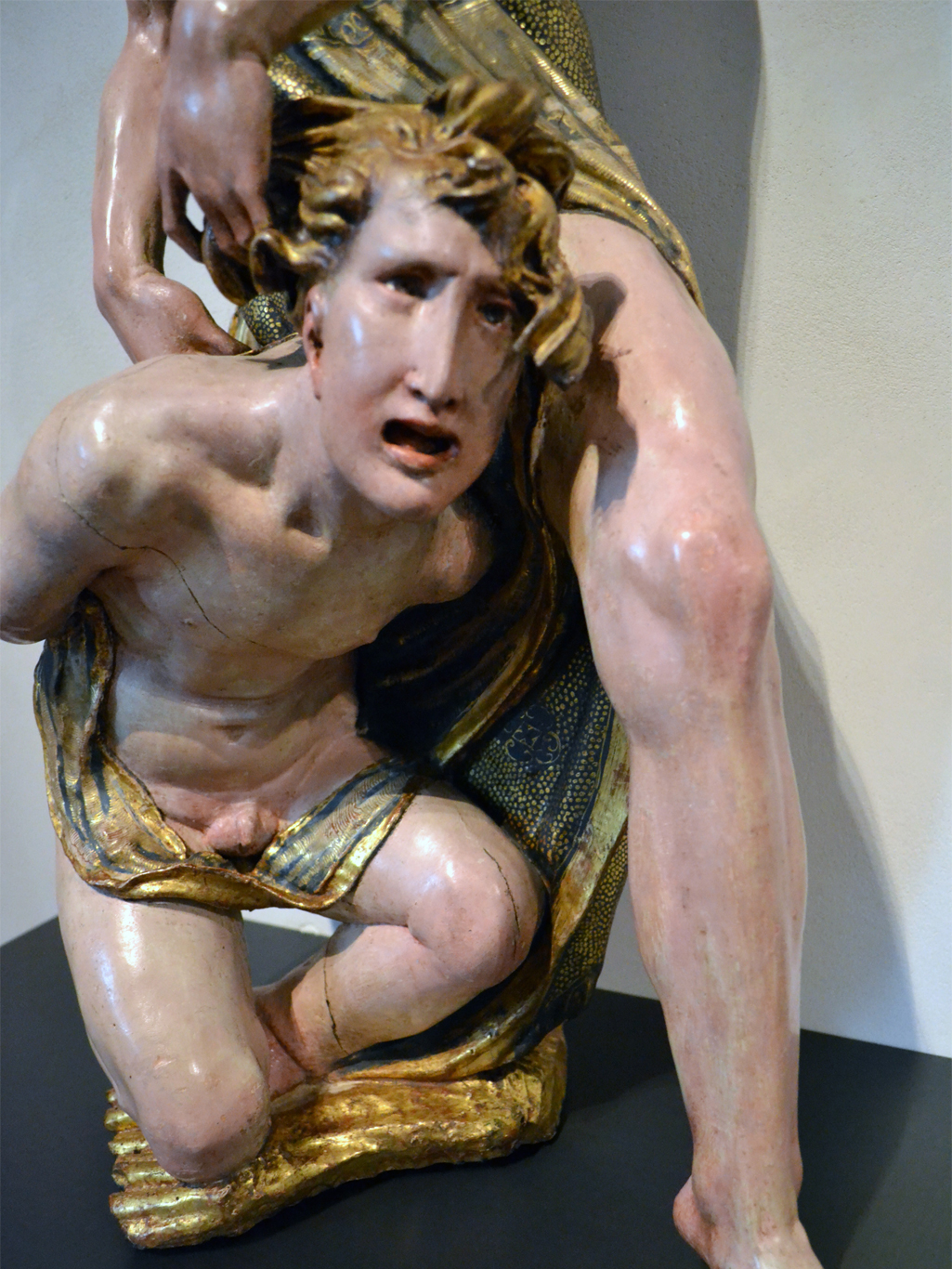
The Carrefour will be open, where I can buy nuts for the red squirrel, who lives in Campo Grande. The red squirrel is Valladolid’s best bit. Even as a child, I had never seen one before, apart from in picture books. It was last term’s discovery. The most beautiful encounter. I didn’t know it was there – in the park. A complete surprise. The tiny little thing bobbled and hopped, as it received in its little hands a nut from the man’s hands. Each surprising instant – it was childlike. I whispered: ‘Oh my wow.’ I walk toward the El Cortes Ingles. There is, for now, that settled feel of friends in bookshops. Though a null-affect, neutral day – it won’t glean, it is not to be scratched at. The queues are long in the Carrefour. Though, as it might be, on relatively modest incomes, many people live centrally. Their behaviours neither pinched nor stark. Yet the shop so busy while the street so empty… An error in the simulation, a glitch in the code. I potter about the aisles, which are pleasant enough, then at the tills I flinch at how expensive a little bag of up-sold nuts can be. Nonetheless, I queue for a packet of almonds. Two English men queue directly ahead of me. They are stocky, and have gay voices, their wheelie-bucket piled with soft drinks and party food, while they bitch to one another about the obviously terrible party they’re going to. The air heaves relief as I wander up the way to the broad plaza fringing Campo Grande. This is a place to see – a piece of Spain. There is a tourist information office, though unopened. At these fountains, three girls take selfies. Pompous-looking buildings, the military offices aside, line the park’s nearest vicinities. Hotel-bars have their patches. Liveried doormen idle time, for there are no paying customers, in and out the doorways’ shadows. A mixed group of kids play at the hoops on the pedestrian boulevard, and two boys practise on skateboards, working the thing out. I pass by them, touched by the thought, and happy that they are there. Wistful, I smile at the odds of the ball spilling over to me, and play in mind the agreeable scene of a fleeting connection. Then I am through the park gates. An air now – of humanity become self-selecting. Modestly understated. Understatedly modest. Campo Grande is nice but it isn’t grande… I walk slowly, and very soon hear for a second time English voices. Not them – it is an English family, just a little way ahead, a Dad and a Mum and a younger boy and an older girl, and theirs are Midlands accents. Dad seems to have been here and to know the place. He gestures panoramically. Mum wants her lunch. The girl at a difficult age. She carries a balloon-on-a-stick. Though she is sprouting – yet wears a loud dress. Then leggings, trainers. Her hair is nice… Maybe she is being okay about it. And not horrific. It’s okay once they get into it, but those months… Yet then, they mostly blossom, if they come from a good home, and become rounded personalities, entering into their womanhood. It was that… when yet they weren’t… I shudder to think of it. They walk toward the pond, and I trail, and would follow had I not been going that way. I wish I could say something so they might hear I am English too. (Fake a phone call?) How my voice might sound – there’d be all college hurling around in such matter I… a demented thing, ludicrous blurt – of Henry, Geoff, and all of them – not to mention the personal predicament. Maybe they’re a nice family. She is letting him explain what he needs to explain. And it would blow his fire, me being English. Mum and Dad. You’d probably see them all having their lunch in a little while. All sat round the table. With napkins and the menus out. Dad looks safe. I look into the pond. Terrapins live in there. But not today. I walk toward the join in the paths where the squirrel lives. There, I crumple the packet of almonds, making noise. I peer and I squat and crouch – chewing a mouthful. All the peacocks have perched right up in the trees’ branches. That never looks like something they should be doing. It’s disappointing that the squirrel isn’t here – but then the not-knowing-if is a part of it. Now, next, my visit to the National Sculpture Museum is an obligation. Canon Peter stood literally aghast when I hadn’t heard of it. Mortified, I made resolute promises. Though a few weeks have passed, it isn’t just any old something I could do on the hoof. A great commitment – it must command a known and prepared and anticipated not-just-any-old-time. But, rather, the sort you must wait for – and listen for. [ … ] Beyond Plaza Mayor, there would be a brief series of old-town alleyways. The National Sculpture Museum would be – just up there, this archway, this next…They are bleached and forgotten-looking walls, and the smoothed paving could be medieval. Not that it is making Tomàs anxious – I follow the map. A kind of place – uneasy credit-cards, and modern vaccinations, and a phone, might not help much. I fancy I feel the back-wall of a church, and that – fancifully – pressure-release drawn out of me. Only I am playing games in a nice way – making play-scared on the uncertainty – with only myself to see. The National Museum is there, modestly signed on stencilled plexiglass stuck to the stone wall. A uniformed lady sits just a little way inside the doorway. She reassures me there is no money required, and directs me over the courtyard into the planned route, showing me where I can pick up a free map. I get my […]
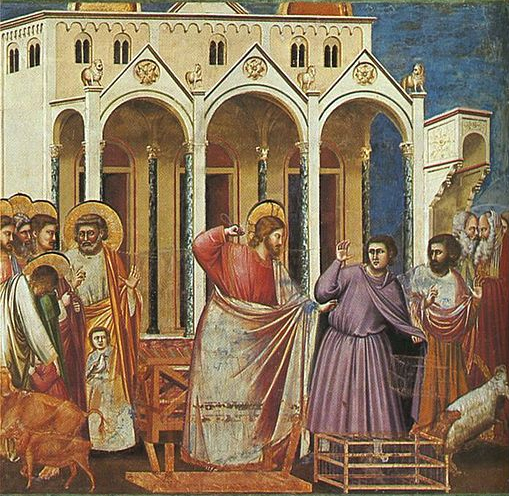
The Passover was the most important religious feast for the Jewish people. It was celebrated on the fourteenth day of the month of Nisan, a spring month whose date, according to our solar calendar, varies following the lunar cycle, just as Easter does. It was followed by the festival week of Azymes, an English word (derived from the Greek ἄζυμος) for unleavened bread in Biblical times [ … ]
