
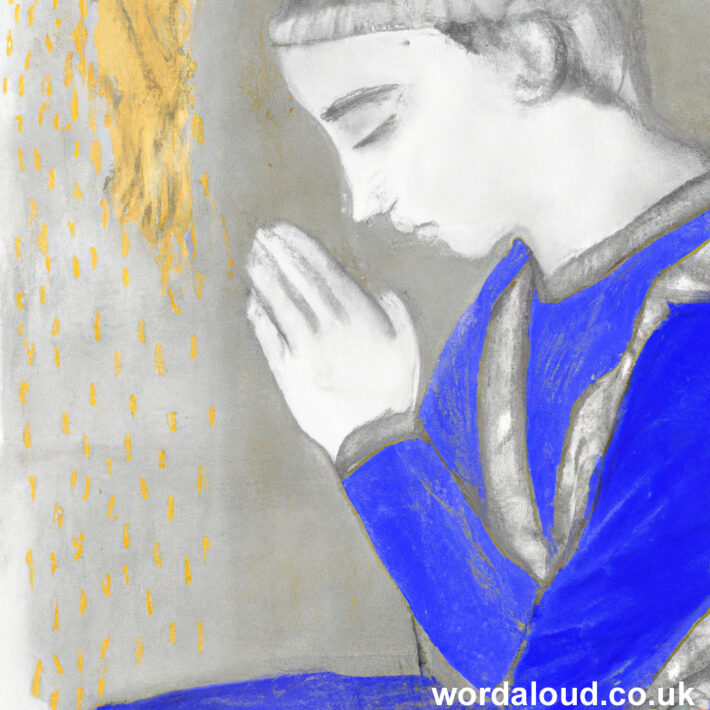
Christian Art | Prayer With Jesus | Psalms | Longing For God And His Help In Distress | King David As A Boy | Psalm 42 KJV | Audio Bible | Prayer
Psalm 42 | King James Audio Bible
YouTube: King James Version | Audio Bible | Word Aloud | KJV
Psalm 42 expresses deep spiritual longing. The psalm compares the psalmist’s thirst for God to a deer panting for water brooks, conveying intensity of desire to be in God’s presence.
Longing for Divine Presence: The psalm begins with a metaphor, likening the soul to a deer panting for water brooks, capturing longing for communion with God.
Spiritual Thirst: The imagery continues with the soul’s thirst for the living God, highlighting hunger and thirst satisfied only by a close relationship with the Divine.
Amidst Tears and Doubts: The psalmist acknowledges challenges he faces, including taunts from others who question God’s presence. Tears become his sustenance, reflecting sorrow and longing.
Remembering Joyful Worship: The psalmist reminisces about joyful moments in the past when he participated in communal worship at the house of God, contrasting with his current state.
Encouragement to Hope: Despite despair, the psalmist encourages his soul to hope in God. He expresses confidence in praising God for His help and presence.
A Prayer in the Wilderness: The psalmist mentions being in the land of Jordan, the Hermonites, and the hill Mizar, alluding to spiritual wilderness and isolation. Yet, even in desolation, he remembers God.
Deep Calling to Deep: The psalmist describes the experience of God’s presence, with deep calling unto deep and waves and billows symbolizing profound spiritual encounters.
Confidence in God’s Lovingkindness: Despite challenges, the psalmist expresses confidence in God’s lovingkindness. He anticipates God’s presence in the daytime and His song in the night.
A Cry for Deliverance: The psalmist questions why he feels forgotten and oppressed by the enemy, crying for deliverance from troubles.
An Ongoing Resolve to Praise: The psalmist concludes by reaffirming his determination to praise God, the source of strength, even amidst adversity.

Psalm 41 | King James Audio Bible KJV | Love Revealed By Jesus Christ
As the hart panteth after the water brooks, so panteth my soul after thee, O God.
My soul thirsteth for God, for the living God: when shall I come and appear before God?
My tears have been my meat day and night, while they continually say unto me, Where is thy God?
When I remember these things, I pour out my soul in me: for I had gone with the multitude, I went with them to the house of God, with the voice of joy and praise, with a multitude that kept holyday.
Why art thou cast down, O my soul? and why art thou disquieted in me? hope thou in God: for I shall yet praise him for the help of his countenance.
O my God, my soul is cast down within me: therefore will I remember thee from the land of Jordan, and of the Hermonites, from the hill Mizar.
Deep calleth unto deep at the noise of thy waterspouts: all thy waves and thy billows are gone over me.
Yet the Lord will command his lovingkindness in the daytime, and in the night his song shall be with me, and my prayer unto the God of my life.
I will say unto God my rock, Why hast thou forgotten me? why go I mourning because of the oppression of the enemy?
As with a sword in my bones, mine enemies reproach me; while they say daily unto me, Where is thy God?
Why art thou cast down, O my soul? and why art thou disquieted within me? hope thou in God: for I shall yet praise him, who is the health of my countenance, and my God.

Key Themes Of The Psalm For Reflection | Love Revealed By Jesus Christ
- Thirst for God’s Presence:
- The psalmist deeply longs for God’s presence, comparing it to a deer’s thirst for water, highlighting the intense desire for communion with the Divine.
- Spiritual Hunger:
- The soul hungers and thirsts for the living God, emphasizing the spiritual hunger and longing that only God can satisfy.
- Amidst Adversity:
- The psalmist faces challenges and doubts, with tears becoming his companions. He endures taunts from those who question God’s presence in his life.
- Recollection of Joyful Worship:
- Memories of joyful communal worship at God’s house contrast with the psalmist’s current state of longing and isolation.
- Encouragement to Hope:
- Despite despair, the psalmist encourages his soul to hope in God and expresses confidence in praising God for His help and presence.
- Prayer in the Wilderness:
- The psalmist mentions being in a spiritual wilderness, yet he remembers God even in desolation.
- Deep Spiritual Encounters:
- Poetic descriptions convey deep spiritual experiences, with deep calling unto deep and waves symbolizing profound encounters with God.
- Confidence in God’s Lovingkindness:
- The psalmist expresses confidence in God’s lovingkindness and anticipates God’s presence both day and night.
- A Cry for Deliverance:
- The psalmist cries out for deliverance from feelings of being forgotten and oppressed by enemies.
- Determination to Praise:
- The psalmist resolves to praise God, recognizing Him as the source of strength and hope, even in adversity.




Dear Jesus, Thank you for the blessing of family. Help me to appreciate and cherish my family members, both biological and spiritual. Guide me to be a source of love, support, and encouragement to them. Grant us the strength to overcome challenges together and to celebrate our joys with gratitude. May our family be a reflection of your love and grace. Help us to forgive one another, to be patient, and to build each other up. Let your peace reign in our home, and may we always seek to do your will. Amen [ … ]

When Jesus heals Simon Peter’s mother-in-law, the effect is instant. Not only does the fever leave her immediately, she is able immediately to get up out of bed and to serve Jesus and the other people present. This tells us something of the nature of our own healing, our freeing from sin, by Jesus. We are called and we are enabled to serve. This is our active participation in Christian community. We may recall that the sick were excluded from participation in religious services in Jewish society. Jesus calls the sick home, to be with God [ … ]

The devotion to the Sacred Heart of Jesus has its origins in early Christian thought and gradually developed into a formal practice over many centuries. The devotion focuses on the heart of Jesus Christ as a symbol of Jesus’ love, particularly Jesus’ willingness to suffer and die for humanity. This devotion has evolved through biblical interpretation, theological reflection, mystical experiences, and papal endorsements [ … ]
