

Christian Art | George Herbert | The Temple | The Church | Praise (1)
George Herbert | The Temple | The Church | Praise (1)
To write a verse or two, is all the praise,
That I can raise:
Mend my estate in any wayes,
Thou shalt have more.
I go to Church; help me to wings, and I
Will thither flie;
Or, if I mount unto the skie,
I will do more.
Man is all weaknesse; there is no such thing
As Prince or King:
His arm is short; yet with a sling
He may do more.
An herb destill’d, and drunk, may dwell next doore,
On the same floore,
To a brave soul: Exalt the poore,
They can do more.
O raise me then! poore bees, that work all day,
Sting my delay,
Who have a work, as well as they,
And much, much more.


George Herbert | The Temple | The Church | Praise
In this poem, Herbert reflects on the limits of human strength and importance of divine assistance. The poem begins with the modest admission that ‘to write a verse or two is all the praise, / That I can raise’, indicating that any expression of gratitude or devotion Herbert offers to God is inherently limited. This acknowledgment of inadequacy runs throughout the poem, shaping a tone of humility and dependence on divine strength.
The poem is structured around a sequence of conditional promises: if God improves Herbert’s situation or ‘mends’ his condition, Herbert pledges to offer more in return. In the second stanza, for instance, the poet states that he goes to church, but with divine help, he could ‘fly’ there, suggesting he desires not just to meet the minimum expectation but to exceed any such if enabled by God. The request for ‘wings’ evokes a desire for spiritual elevation, implying that mere attendance or passive devotion is insufficient; Herbert aspires to a more fervent, active spirituality, one he can achieve only through divine support.
The poem then transitions to a broader commentary on human frailty, emphasizing that ‘man is all weakness’ and dismissing a notion of human authority by stating that there is ‘no such thing as prince or king’. This statement positions human power as ineffectual, highlighting that even strongest individuals are limited without God’s strength. The reference to the ‘short arm’ of human beings suggests a physical and metaphorical limitation, underscoring humanity’s inherent helplessness in the face of divine power. Despite these limitations, the line ‘yet with a sling he may do more’ alludes to the biblical story of David and Goliath, where a seemingly insignificant weapon in a humble hand can be transformative. This story underscores the theme that God’s power, when granted, enables individuals to transcend limitations.
Herbert’s reflections deepen with the mention of ‘an herb distilled, and drunk’, which he says could reside ‘next door / On the same floor, / To a brave soul’. This suggests that even smallest elements of creation have inherent potency, potentially close to divine strength when magnified by God. Herbert emphasizes that if the humble and ‘exalted poor’ receive divine help, they too ‘can do more’. This theme of reversal—where weakness becomes strength through divine intervention—reinforces Herbert’s sense of reliance on God’s grace to achieve any meaningful or extraordinary accomplishments.
In the final stanza, Herbert likens himself to ‘poor bees’ who labour tirelessly. Here, bees serve as a metaphor for industriousness and purposeful work, qualities Herbert aspires to in his spiritual life. The reference to the bee also connects to the theme of collective humility, as each bee contributes to a larger purpose. Herbert acknowledges that he ‘has a work’ to do, paralleling the purposeful existence of the bees. His request for the bees to ‘sting my delay’ suggests that he recognizes a need to be jolted into action, spurred by a kind of spiritual urgency.
The poem explores a paradox that while human efforts are limited, such efforts are made meaningful through divine empowerment. The repetition of ‘more’ reflects Herbert’s desire to extend his own capacities, while continually acknowledging that such aspirations can only be fulfilled with God’s aid. The final line, ‘And much, much more,’ captures a yearning to transcend earthly limitations, a desire for divine enablement that would allow Herbert to fulfil his potential to its fullest extent. The poem presents a vision of spirituality grounded in humility, active purpose, and recognition of human dependence on God’s grace.


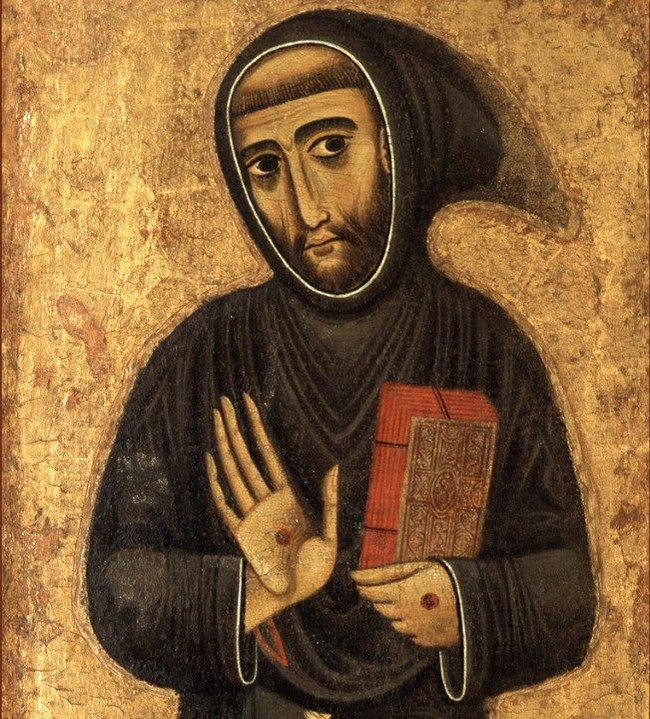
Saint Francis’ life took a dramatic turn when he was taken prisoner during the war and fell ill. After his release, Saint Francis had a vision in which he heard a voice telling him to return to Assisi and devote himself to God. Saint Francis obeyed the voice, but struggled to find his place in life after his conversion [ … ]

Psalm 140 is a prayer for deliverance from evil, invoking God’s protection against the schemes and violence of wicked adversaries. The psalmist appeals to God as shield and saviour, expressing trust in divine intervention to preserve from harm. Central to Psalm 140 is a contrast between the malice of the wicked and the steadfastness of divine justice. The psalm concludes with confidence in the Lord’s ability to uphold the cause of the afflicted and the assurance that righteousness will ultimately dwell in God’s presence [ … ]

The poem explores themes of human frailty, sin, repentance, and divine mercy. The poem reflects on the brevity and vulnerability of life, contrasting human weakness with the power of God’s compassion. The poet, Herbert, begins by confessing the greatness of his sin and acknowledging the fleeting nature of human existence. The image of life as a ‘quick flower’ or ‘momentary bloom’ emphasizes this transience. Life is presented as something that is constantly ‘undressing’ or stripping away, ultimately leading toward death, which is depicted as the inevitable destination [ … ]
