
Christian Art | Prayer With Jesus | Psalms | King David | Prayer For Victory
Psalm 20 | King James Audio Bible
YouTube: King James Audio Bible | Psalm 20 | KJV | Word Aloud
Psalm 20 is a prayer for divine intervention and protection. The psalm expresses hope and trust in the Lord’s assistance during times of trouble, particularly in the context of battles and conflicts.
The psalm begins with an invocation, a plea to the Lord on behalf of the one in need. The psalmist implores God to hear his supplication in times of trouble, invoking the name of the God of Jacob, a symbol of the covenant between God and the people of Israel. This sets the tone for the psalm, emphasizing reliance on God’s divine protection and guidance.
The psalmist then asks for God’s help and strength to be sent from the sanctuary in Zion, emphasizing the sacred nature of the source of this assistance. The mention of offerings and sacrifices underscores the desire for divine favour and acceptance.
The psalm continues with a wish for the fulfillment of the supplicant’s desires, reflecting intimacy of the relationship between the petitioner and God. It expresses a commitment to rejoicing in God’s salvation and lifting up banners in God’s name, indicating trust in the Lord’s ability to answer prayers and provide deliverance.
The psalmist also acknowledges the power of the Lord in saving His anointed ones and demonstrates confidence in God’s response to their cries for help. This trust in divine intervention is juxtaposed with the recognition that some rely on worldly means, such as chariots and horses, but the psalmist and the community place their faith firmly in the name of the Lord their God.
In the final verses, there is a declaration of victory over adversaries. The enemies, symbolized by those who trust in chariots and horses, are brought down and fallen, while the faithful have risen and stand upright.
Psalm 20 is a testament to faith and trust in God’s protection, a petition for divine intervention in times of trouble, and a declaration of victory over adversity through unwavering faith in the Lord. It encapsulates enduring belief in the power of prayer and the assurance that God hears and responds to the pleas of His people.

Psalm 20 | King James Audio Bible KJV
The Lord hear thee in the day of trouble; the name of the God of Jacob defend thee;
Send thee help from the sanctuary, and strengthen thee out of Zion;
Remember all thy offerings, and accept thy burnt sacrifice; Selah.
Grant thee according to thine own heart, and fulfil all thy counsel.
We will rejoice in thy salvation, and in the name of our God we will set up our banners: the Lord fulfil all thy petitions.
Now know I that the Lord saveth his anointed; he will hear him from his holy heaven with the saving strength of his right hand.
Some trust in chariots, and some in horses: but we will remember the name of the Lord our God.
They are brought down and fallen: but we are risen, and stand upright.
Save, Lord: let the king hear us when we call.

Key Themes Of The Psalm For Reflection | Love Revealed By Jesus Christ
- Divine Intervention: The psalm is a plea for God’s intervention and assistance during times of trouble and conflict.
- Trust and Faith: It emphasizes unwavering trust and faith in the Lord’s ability to answer prayers and provide protection.
- Reliance on God: The psalm underscores the idea that relying on God is more dependable than relying on worldly means or human strength.
- Victory over Adversity: There’s a declaration of victory over adversaries, symbolizing the triumph of faith and divine help in overcoming challenges.
- Prayers for the Anointed: The psalm includes prayers for the anointed ones, which could refer to leaders or individuals chosen by God for a specific purpose.
- Recognition of God’s Name: It acknowledges the significance of invoking the name of the God of Jacob, signifying a deep connection to the divine covenant.
- Offerings and Sacrifices: Mention of offerings and burnt sacrifices highlights the desire for divine favor and acceptance.
- Community and Unity: The psalm suggests a collective faith and trust in God, as it includes references to “we” and “our.”



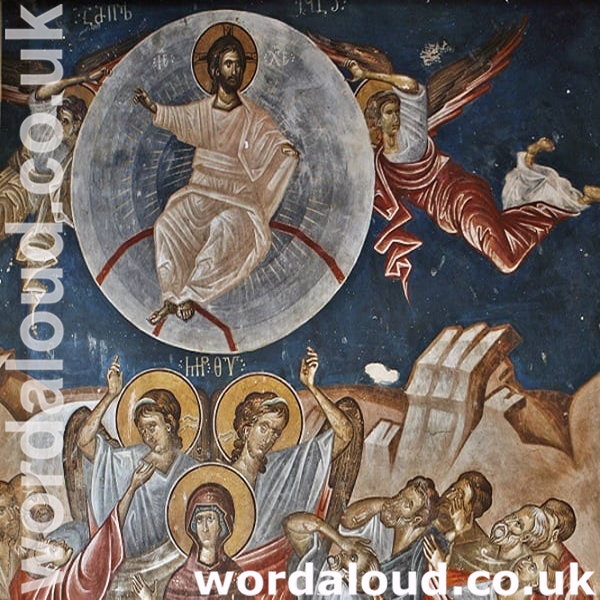
Saint Gregory of Nyssa draws together two biblical images of Christ—peace and light—and makes them measures of Christian authenticity. He begins with peace, taking his cue from Ephesians 2:14: ‘He is our peace, for he has made both one.’ Gregory treats peace not as an abstract quality but as the practical end of reconciliation. Christ has destroyed the ‘enmity’ between Jew and Gentile, and, more fundamentally, between humanity and God. That enmity, he says, must remain dead; resentment and grudges are signs of calling it back to life [ … ]

In these Bible verses, Matthew recounts the betrayal by Judas in a slightly different way from yesterday’s reading from the Gospel of John. Firstly, we see Judas go to the chief priests to see what they will give him to betray his Lord. This is calculating treachery, the love of money putting such evil into Judas’ heart as will outweigh all love and all obligation. Through Judas, we see the absolute evil to which greed and the love of money can drive a person [ … ]

The people are astonished by Jesus, in whom they see the mighty power of God. Straight away, though, Jesus turns to his disciples to tell them of the truth of his Messianic mission. In veiled terms, Jesus announces his passion and death: the Son of man shall be delivered into the hands of men. There is extreme contrast between the people’s, and the disciples’, understanding of how the Messiah shall be, and the reality of Christ’s true mission on Earth, to suffer, to be crucified, and so to ransom mankind, redeeming us from death and sin. There is secret, hidden truth, which only gradually becomes manifest through the course of the Gospels [ … ]