
Christian Art | George Herbert | The Temple | The Church | Ungratefulnesse
George Herbert | The Temple | The Church | Ungratefulnesse
Lord, with what bountie and rare clemencie
Hast thou redeem’d us from the grave!
If thou hadst let us runne,
Gladly had man ador’d the sunne,
And thought his god most brave;
Where now we shall be better gods then he.
Thou hast but two rare cabinets full of treasure,
The Trinitie, and Incarnation:
Thou hast unlockt them both,
And made them jewels to betroth
The work of thy creation
Unto thy self in everlasting pleasure.
The statelier cabinet is the Trinitie,
Whose sparkling light accesse denies:
Therefore thou dost not show
This fully to us, till death blow
The dust into our eyes:
For by that powder thou wilt make us see.
But all thy sweets are packt up in the other;
Thy mercies thither flock and flow:
That as the first affrights,
This may allure us with delights;
Because this box we know;
For we have all of us just such another.
But man is close, reserv’d, and dark to thee:
When thou demandest but a heart,
He cavils instantly.
In his poore cabinet of bone
Sinnes have their box apart,
Defrauding thee, who gavest two for one.


George Herbert | The Temple | The Church | Ungratefulnesse
The poem explores the relationship between divine generosity and human reluctance, presenting a meditation on God’s revelation and humanity’s limited response. Herbert uses the metaphor of two ‘cabinets’ filled with treasure to describe God’s ultimate gifts to humanity: the Trinity and the Incarnation. These cabinets symbolize the profound mysteries of divine nature and Christ’s embodiment, emphasizing both spiritual wealth and revelation.
The first stanza establishes the theme of divine generosity and a human tendency toward idolatry. Herbert acknowledges that, had God not redeemed humanity, people would have worshipped lesser lights, such as the sun, mistaking its created brilliance for the divine. The phrase ‘better gods than he’ implies that, through divine revelation, human beings are offered access to a higher understanding of God, surpassing the sun’s natural beauty and power.
The image of the ‘two rare cabinets’ introduces the core metaphors of the poem. The Trinity, described as the ‘statelier cabinet’, remains largely inaccessible to human understanding. Its ‘sparkling light’ blinds human perception, reinforcing its divine mystery. The poet suggests that the Trinity will be fully revealed only at death when ‘dust’ — mortality itself — clears human vision, emphasizing the contrast between the divine’s radiant clarity and human limitation.
The second cabinet, representing the Incarnation, is described as more familiar and accessible. This ‘box’ contains divine mercy and grace, qualities that ‘flock and flow’ toward humanity, drawing humanity with its sweetness. The Incarnation, through Christ’s presence, becomes a point of divine encounter that is more approachable than the abstract mystery of the Trinity. The poet suggests that the familiarity of the Incarnation makes divine love more relatable and transformative.
However, the poem also critiques human responses to divine generosity. Despite God’s openness, ‘man is close, reserved, and dark.’ The poet contrasts the openness of God’s revelation with the inwardness of human sin. The image of the ‘cabinet of bone’ — the human heart — suggests that people guard their inner lives, withholding their full selves from God. The ‘box apart’ where sins are kept reflects a divided interior life where sin is concealed and protected, preventing full communion with God.
The closing line, ‘Defrauding thee, who gavest two for one,’ highlights the imbalance between divine generosity and human withholding. God has given the profound gifts of the Trinity and Incarnation, yet humanity offers back only a fractured heart, unwilling to reciprocate with sincerity and openness.
Through the poem, metaphors of light and treasure serve to contrast divine abundance with human limitation. The idea of the Trinity as a cabinet too dazzling to fully open reinforces a concept of divine mystery, while the Incarnation’s accessible sweetness reminds readers of the immediacy of God’s grace. The poem’s structure moves from gratitude and awe to self-reflection and critique, suggesting that while God gives freely, human beings remain hesitant, holding back their hearts.
This tension between divine openness and human reservation underpins the poem’s theological exploration. It challenges the reader to consider the disparity between God’s self-revelation and human unwillingness to embrace it, emphasizing both beauty of divine truth and the need for a wholehearted response.



‘Henceforth I call you not servants; for the servant knoweth not what his lord doeth: but I have called you friends; for all things that I have heard of my Father I have made known unto you.’ In this verse, Jesus elevates the relationship with his followers from servants to friends. He shares his knowledge and heart with us, inviting us into a deep and intimate friendship. This passage encourages us to reflect on the significance of being called friends by Jesus and the responsibilities and blessings that come with such a relationship [ … ]

In this account, King Nebuchadnezzar ordered Shadrach, Meshach and Abednego, three faithful Hebrews, to be thrown into a fiery furnace as punishment for refusing to bow down to the golden idol he had erected. Miraculously, when the three were thrown into the furnace, the king witnessed a fourth person walking with them, whom he described as being like the Son of God. The men remained unharmed by the flames, and Nebuchadnezzar acknowledged the power of the God of Israel, recognizing that an angel had delivered the three Hebrews from the fiery ordeal [ … ]
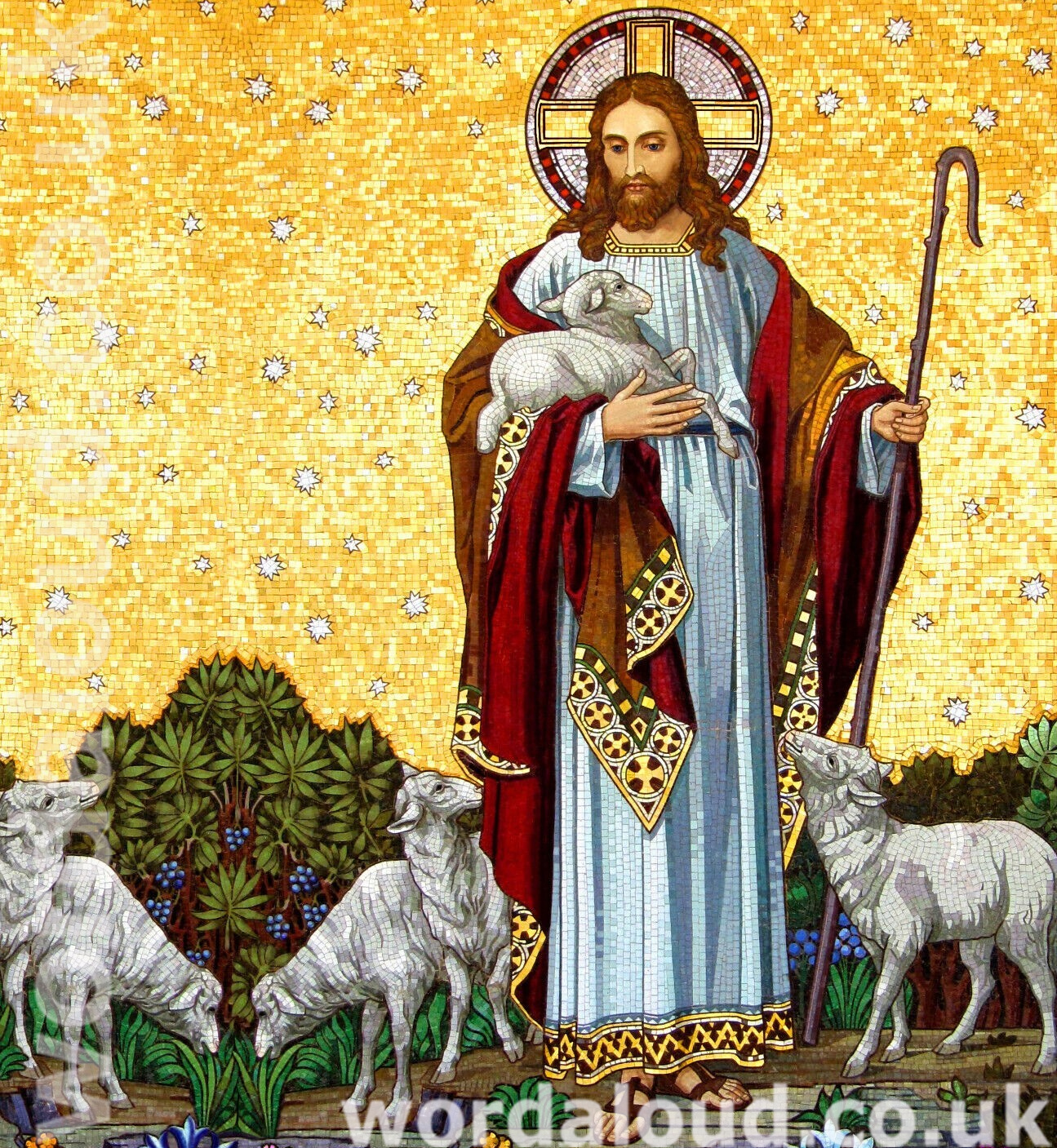
Saint Augustine speaks directly to humanity and frames the Incarnation as God’s action for our sake. His repeated call to ‘awake’ stresses that what God has done in Christ concerns human life now, not only at the end of time. God becomes man so that humanity may be restored to life [ .. ]
