
Christian Art | Jesus Saves | Divine Mercy | Do Not Be Afraid
Office Of Readings | Week 17, Monday, Ordinary Time | A Reading From The Sermons Of Saint Caesarius Of Arles | Divine And Human Mercy
‘Mercy, divine and human.’
In this homily on mercy, Saint Caesarius of Arles (c. 470–542) offers a message both spiritual and practical: those who hope to receive divine mercy must practise human mercy in the here and now, particularly by caring for the poor.
Historical And Social Context
Caesarius preached in early sixth-century Gaul, a time of political instability and economic hardship following the collapse of Roman imperial authority in the West. The Church increasingly took on roles of social support, particularly in cities where civil structures had broken down. As bishop of Arles, Caesarius was not only a preacher but also a reformer and organiser of practical charity. He established hospitals, supported communal care for the sick and destitute, and redirected Church revenues to the relief of the poor.
This context is crucial for understanding the sermon’s urgency. Caesarius was addressing a Christian community where extreme poverty was visible and immediate. His listeners may have encountered beggars at the church door and known families who relied on Church assistance. Thus, his call to give alms is not abstract or metaphorical but a pressing moral imperative tied to everyday experience.
Theological Framework | Earthly And Divine Mercy
Caesarius distinguishes between human (earthly) mercy—our response to the needs of others—and divine (heavenly) mercy—God’s forgiveness and gift of eternal life. He insists that the two are inseparably linked: ‘Whatever human mercy gives away on the journey, divine mercy pays back when we arrive at last in our native land.’
This theology reflects a broader patristic view that acts of charity are not merely ethical but sacramental. Almsgiving becomes a channel of grace, a concrete means by which Christians participate in God’s mercy. Caesarius draws heavily on Matthew 25, where Christ identifies himself with ‘the least of these’—the hungry, thirsty, naked, and imprisoned. Caesarius emphasises that Christ continues to suffer in the poor and that to serve them is to serve Christ directly.
Patristic Resonances
Caesarius is not alone in this teaching. His sermon aligns closely with wider patristic tradition:
- Saint John Chrysostom preached passionately about recognising Christ in the poor and argued that failing to give alms was tantamount to theft.
- Saint Ambrose of Milan warned that hoarding wealth was a violation of natural justice, as all goods were intended for the benefit of all.
- Saint Augustine, Caesarius’ principal theological influence, wrote of the moral necessity of almsgiving, especially as an expression of the virtue of mercy (misericordia), which was central to Christian life.
Caesarius develops these themes with his own pastoral directness. Unlike some of his predecessors, he is notably insistent that mercy is not merely a feeling or a disposition but a concrete action: giving food, clothing, or money to those in need. The preacher’s tone reflects not only doctrinal teaching but also episcopal responsibility.
Structure And Rhetoric
The sermon’s rhetorical power lies in its use of contrast and repetition. Caesarius juxtaposes the demands we make of God with the demands made of us by the poor: ‘The poor man asks of you, and you ask of God.’ This mirroring highlights the hypocrisy of seeking divine gifts while ignoring human need.
He also uses sharp rhetorical questions: ‘How can you have the effrontery to ask for what you refuse to give to others?’ His strategy is not to shame for its own sake, but to prompt repentance and reform. The Latin original uses strong, simple phrasing to make the message unmistakable.
Another key feature is the appeal to Scripture, not only quoting Christ’s words but presenting God as one who ‘feels cold and hunger in the person of the poor’. This is not theological speculation but practical mysticism: Caesarius wants his hearers to see Christ in the suffering neighbour.
Doctrinal Development And Later Influence
Caesarius’ understanding of mercy prefigures much later Catholic social teaching, particularly the concept of the ‘preferential option for the poor’. His teaching foreshadows the development of the seven corporal works of mercy, which became central to medieval catechesis.
In modern Catholic theology, especially in documents such as Deus Caritas Est (Benedict XVI) and Evangelii Gaudium (Pope Francis), the Church reiterates the message that true Christian faith must be embodied in action—especially toward the poor. Caesarius’ voice, though from the sixth century, resonates clearly in these teachings.
He also stands as a witness to the unity of doctrine and practice. For Caesarius, to believe in the mercy of God means to imitate it. The refusal to act mercifully becomes a contradiction of the Gospel itself.
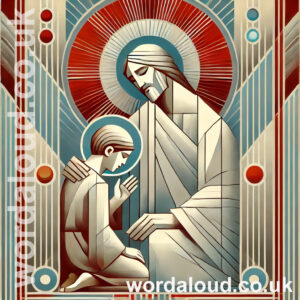
A Reading From The Sermons Of Saint Caesarius Of Arles | Divine And Human Mercy
Blessed are the merciful, for they shall receive mercy. ’Mercy’ is a beautiful word: more beautiful still is the thing itself. All men wish to receive it, but the worst thing is that not all of them behave in a way that deserves it. Although everyone wishes to be shown mercy only a few wish to show it.
O man, how can you have the effrontery to ask for what you refuse to give to others? You must show mercy in this world if you want to receive mercy in heaven. So, my dearest brethren, since we all desire mercy, let us make ourselves mercy’s slaves in this world so that she can give us our freedom in the world to come. For there is mercy in heaven and we come to it through earthly mercies. As Scripture says: Lord, your mercy is in heaven.
So there is earthly and heavenly mercy: that is, human and divine. What is human mercy? Exactly this: to have care for the sufferings of the poor. What is divine mercy? Without doubt, to grant forgiveness of sins. Whatever human mercy gives away on the journey, divine mercy pays back when we arrive at last in our native land. For it is God who feels cold and hunger, in the person of the poor. As he himself has said: As much as you have done for the least of these, you have done it for me. What God deigns to give on heaven, he yearns to receive on earth.
What sort of people are we if we want to receive, when God offers, but when God asks, we refuse to give? For when a poor man hungers, it is Christ who suffers want, as he himself has said: I was hungry and you gave me no food. Do not despise the misery of the poor if you want a sure hope of forgiveness for your sins. Christ is hungry now, brethren, in all the poor. He consents to suffer hunger and thirst – and whatever he receives on earth he will give back in heaven.
I ask you, brethren: when you come to church, what do you want? what are you looking for? Is it anything other than mercy? Then give earthly mercy and you will receive the heavenly kind. The poor man asks of you, and you ask of God: the poor man for food, you for eternal life. Give to the beggar what you want to deserve from Christ. Hear Christ saying Give and it will be given to you. I do not know how you can have the effrontery to want to receive what you do not want to give. And so, when you come to church, give, whatever you can afford as alms for the poor.
Christian Prayer With Jesus Christ | Prayer For The Grace Of Mercy
Lord Jesus Christ,
you came to us in poverty and humility,
choosing to be hungry with the hungry,
cold with the cold,
and overlooked with the poor.
Open our eyes to recognise your presence in those who suffer.
Open our hearts to give not only from our surplus,
but from our substance,
remembering that what we do for the least of your brethren,
we do for you.
Grant us, we pray, the courage to be merciful
as our Father is merciful—
not in word alone but in deed and truth.
Make us generous without fear,
hopeful in our giving,
and eager to serve,
so that, by showing mercy on earth,
we may receive your mercy in heaven.
Through you who live and reign
with the Father and the Holy Spirit,
one God, forever and ever.
Amen.
Glossary Of Christian Terms
Alms / Almsgiving – Charitable giving to the poor, especially as an act of religious duty. Traditionally includes money, food, or other assistance given directly.
Caesarius of Arles (c. 470–542) – Bishop of Arles in southern Gaul (modern-day France), noted for his pastoral preaching, care for the poor, and Church reforms.
Divine mercy – God’s compassion and forgiveness, particularly in the remission of sins and the promise of eternal life.
Effrontery – Shameless boldness; in this context, the inappropriate boldness of expecting mercy while refusing to show it.
Earthly mercy / human mercy – Compassion shown by people to others, especially through concrete acts like almsgiving or caring for those in need.
Matthew 25 – A chapter in the Gospel of Matthew where Jesus teaches that serving the needy is serving Christ himself (e.g. ‘I was hungry and you gave me food…’).
Patristic tradition – The teachings and writings of the early Church Fathers (e.g., Augustine, Chrysostom, Ambrose), which shape Christian doctrine and practice.
Preferential option for the poor – A principle in Catholic social teaching that prioritises the needs of the poor and vulnerable in all aspects of Church life.
Sacramental – Pertaining to the sacred; in this context, refers to actions (like almsgiving) that mediate or reflect God’s grace in visible form.
The corporal works of mercy – Seven traditional actions by which Christians care for the bodily needs of others: feeding the hungry, giving drink to the thirsty, clothing the naked, visiting the sick and imprisoned, sheltering the homeless, and burying the dead.



As we progress through Lent, we listen to Christ’s teaching of the limitations of the Old Law and the complete fulfilment, transcendence and renewal of the Law which Christ, through his life, death and resurrection, gave to us. As St Paul will teach: through the Law, there can be no salvation; salvation is for us through Christ alone [ … ]

The Epistle of Barnabas is an early Christian text that reflects on the meaning of Christ’s suffering, the interpretation of scripture, and the idea of spiritual renewal. This reading describes how the death of Christ leads to the forgiveness of sins and the formation of a new people shaped by that forgiveness [ … ]

Christian Art | Parousia | Second Coming | Lamb Of God, You Take Away The Sins Of The World Luke 17: 26-37 (Audio Bible KJV, Spoken Word) Early Christian thought about the Parousia – the second coming – was largely influenced by the teachings of Jesus and the writings of Saint Paul. In the early Christian community, expectation of Christ’s return was strong, and many Christians believed that it would happen in their lifetime. This belief is evident in the New Testament, where the authors express a sense of urgency in their writings and encourage their readers to be prepared for Christ’s imminent return. As Christianity spread throughout the Roman Empire, the idea of the Parousia became more complex and nuanced. Theological debates arose around the nature of Christ’s return and the events that would precede it. Some theologians, such as Origen and Augustine, saw the Parousia as a spiritual event that was already happening in the Church. Others, such as the Montanists and the millenarians, believed in a literal, physical return of Christ and the establishment of a new, earthly Kingdom. In the Middle Ages, the Parousia was often associated with apocalypticism and the idea of a final, cataclysmic battle between good and evil – the last battle. The idea of the Antichrist, who would precede Christ’s return, became a popular theme in Christian literature, and the book of Revelation (Apocalypse – meaning to reveal, to uncover) was interpreted as a prophetic guide to the end of the world. Biblical Basis For The Parousia | The Second Coming The concept of the Parousia, or the Second Coming of Jesus Christ, is central to Christian eschatology and is supported by numerous biblical passages in both the Old and New Testaments. In the Old Testament, there are numerous passages that refer to the coming of a Messiah who will restore Israel and bring about the final judgment. For example, in Daniel 7:13-14, it is written: ‘I saw in the night visions, and, behold, one like the Son of man came with the clouds of heaven, and came to the Ancient of days, and they brought him near before him. And there was given him dominion, and glory, and a kingdom, that all people, nations, and languages, should serve him: his dominion is an everlasting dominion, which shall not pass away, and his kingdom that which shall not be destroyed.’ This passage describes a divine figure who comes in the clouds and is given dominion over all nations. In the New Testament, the Parousia is described in greater detail, particularly in the teachings of Jesus and the writings of Saint Paul. Jesus speaks of his return in many passages, including Matthew 24:30-31, where Jesus says: ‘And then shall appear the sign of the Son of man in heaven: and then shall all the tribes of the earth mourn, and they shall see the Son of man coming in the clouds of heaven with power and great glory. And he shall send his angels with a great sound of a trumpet, and they shall gather together his elect from the four winds, from one end of heaven to the other.’ Here, Jesus describes his return in power and glory, accompanied by angels who gather Jesus’ elect from all over the world. In Saint Paul’s letters, the Parousia is also described in detail. In 1 Thessalonians 4:16-17, Saint Paul writes: ‘For the Lord himself shall descend from heaven with a shout, with the voice of the archangel, and with the trump of God: and the dead in Christ shall rise first: Then we which are alive and remain shall be caught up together with them in the clouds, to meet the Lord in the air: and so shall we ever be with the Lord.’ This passage describes a resurrection of the dead and the gathering of believers to meet the Lord Jesus in the air. The language and imagery used to describe the Parousia are often dramatic and apocalyptic in nature. The Parousia is often described as a time of judgment, when the righteous will be separated from the wicked, and God’s justice will be fully revealed. The imagery of clouds, trumpets, and angels is used to depict the power and glory of Christ’s return. Theological Interpretations Of The Parousia | Jesus’ Second Coming The concept of the Parousia has been interpreted in a variety of ways throughout Christian history. Dispensationalism Dispensationalism is a theological framework that emerged in the 19th Century and has since become popular among some evangelical and fundamentalist Christians. Dispensationalists believe that history is divided into distinct periods or ‘dispensations’, each of which is marked by a particular mode of divine revelation and a specific plan of salvation. According to dispensationalist theology, the Parousia will be preceded by a period of tribulation, during which the Antichrist will establish a one-world government and the Jews will be restored to their homeland. The Parousia itself will involve a physical, visible return of Christ, who will establish a thousand-year reign on earth before the final judgment. Preterism Preterism is a theological interpretation of the Parousia that holds that many of the prophecies in the New Testament, particularly those in the book of Revelation, were fulfilled in the first century AD. According to this view, the Parousia occurred in a spiritual sense when Christ ascended to heaven and sent the Holy Spirit to empower the Church. Preterists argue that the tribulation and other end-time events predicted in the New Testament were fulfilled in the destruction of the Temple in Jerusalem in AD 70. Postmillennialism Postmillennialism is a theological view that holds that the Parousia will occur after a period of history in which the Church will gradually bring about the kingdom of God on earth. According to this view, the Church will spread the gospel throughout the world, and social, political, and economic conditions will gradually improve. Eventually, Christ will return to a world that has been largely transformed by the Gospel. Amillennialism […]