
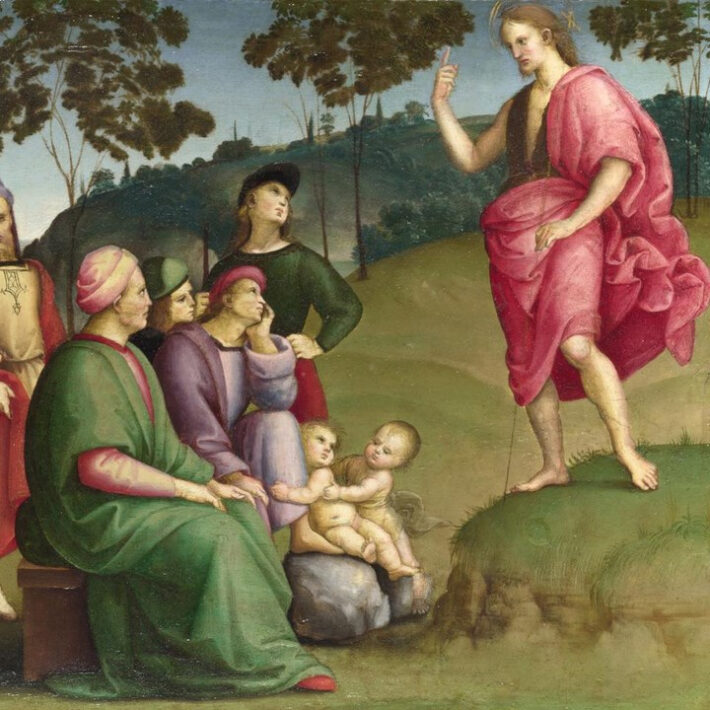
John 1: 6-8, 19-28
6 ¶ There was a man sent from God, whose name was John.
7 The same came for a witness, to bear witness of the Light, that all men through him might believe.
8 He was not that Light, but was sent to bear witness of that Light.
19 ¶ And this is the record of John, when the Jews sent priests and Levites from Jerusalem to ask him, Who art thou?
20 And he confessed, and denied not; but confessed, I am not the Christ.
21 And they asked him, What then? Art thou Elias? And he saith, I am not. Art thou that prophet? And he answered, No.
22 Then said they unto him, Who art thou? that we may give an answer to them that sent us. What sayest thou of thyself?
23 He said, I am the voice of one crying in the wilderness, Make straight the way of the Lord, as said the prophet Esaias.
24 And they which were sent were of the Pharisees.
25 And they asked him, and said unto him, Why baptizest thou then, if thou be not that Christ, nor Elias, neither that prophet?
26 John answered them, saying, I baptize with water: but there standeth one among you, whom ye know not;
27 He it is, who coming after me is preferred before me, whose shoe’s latchet I am not worthy to unloose.
28 These things were done in Bethabara beyond Jordan, where John was baptizing.
The message of this Sunday’s Gospel is so clear and so perfect. John has come to prepare the way of the Lord. He is not the Lord; he is come to prepare his way, the way of Christ.
The opening of John’s Gospel may be heard this week as a beautiful restatement from a new point of view of the message of the coming of the Lord and the beginning of Christ’s ministry. We hear again that John is not himself the Messiah. We hear that he has such a great and wonderful following of people awaiting the Messiah. We know that these, the Jewish people, must have been so very anxious in their expectation of the Messiah. We hear additionally of those entrenched and conservative forces who will seek to destroy Christ, and so paradoxically play their part in bringing about our salvation. And John like Mark may indeed seem to be recounting the events of Christ’s life as it were as if seeing Christ’s whole ministry through the lens of his crucifixion and resurrection.
The perspectives of Mark and John are, though, quite different, and beautifully complementary. Perhaps it is fair to say that, while Mark races toward the crucifixion in a linear narrative time frame, with John Christ’s essential transcendence is presented to the listener as it were from the first word.
We are truly privileged to think of how we as Christians look to the coming of our Lord Jesus Christ with great confidence: that we know our Lord is with us; we know that we have this great light, the light of Christ, to carry with us through our lives. The Word has been given to us. The Word is with us. (Let us watch!)
And so much of this Gospel reading, and also especially of the reading from Isaiah, must resonate with us today. We are in the wilderness. We walk at times in such darkness. It is with such eager expectation that we look to our Lord.
As Advent continues, we look to make ourselves fitting to receive Jesus. We wish to clothe ourselves, metaphorically speaking, in a way that is fitting to receive our Lord, to become an appropriate bride for the bridegroom. In a sense, we imagine ourselves to be in the position of those people who once sought reconciliation through the baptism of John. So we acknowledge our sins and seek reconciliation. It is a most perfect time now to confess our human frailties to God and seek forgiveness. It is a most perfect time also to recall our baptism and once more to renew our baptismal promises.
John’s Gospel is a tremendous text. It is steeped both in the Jewish world and also in the philosophy of the Gentiles, of those Jesus came to heal who prior to his incarnation lived beyond the faith in God. Often employing the terminology and the philosophical traditions of the Greek people, it is a great reaching out to all people. Isaiah’s prophecies have been fulfilled in ways which perhaps Isaiah could have hardly imagined.
John’s Gospel is often seen as being quite abstract, but we have such wonderful specific details here to help us to know that this Gospel is truly a witness of Christ. Read or listened to closely, we hear again John’s message, especially when he is challenged by the Pharisees and the scribes, by Jewish orthodoxy, by the authorities associated with the Jerusalem Temple, that he is merely a vehicle preparing us all for the coming of God the Son.
John did not claim to be other than what he was. Let us now keep John’s message with us as we celebrate Advent. Let us remember our baptism, pray that the Holy Spirit may be with us, confess our sins and seek reconciliation and accept Christ’s forgiveness. We are only what we are also. We cannot really be other than what we are, but what we are, when we are true to ourselves, is wonderful. We may be confident that Christ will, for all our limitations, live with us all.
‘It was not enough for God to give us his Son merely to point out the way. He made the Son himself the way, so that you might journey with him as your guide, as he walks in his own way.’ St Augustine



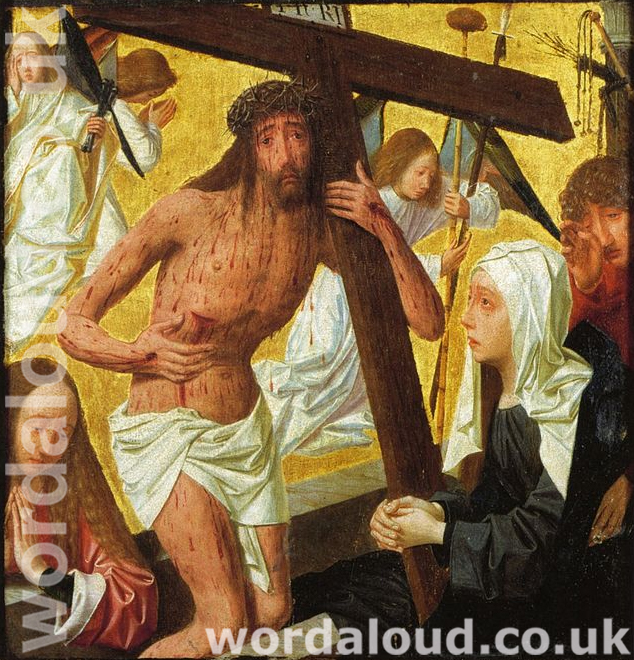
In this reading, John the Serene reflects on Christ as light and on the change that this light brings to human life. Taking his starting point from the psalm, ‘The Lord is my light and my salvation; whom shall I fear?’ he explores what it means to live in the illumination given by God [ … ]
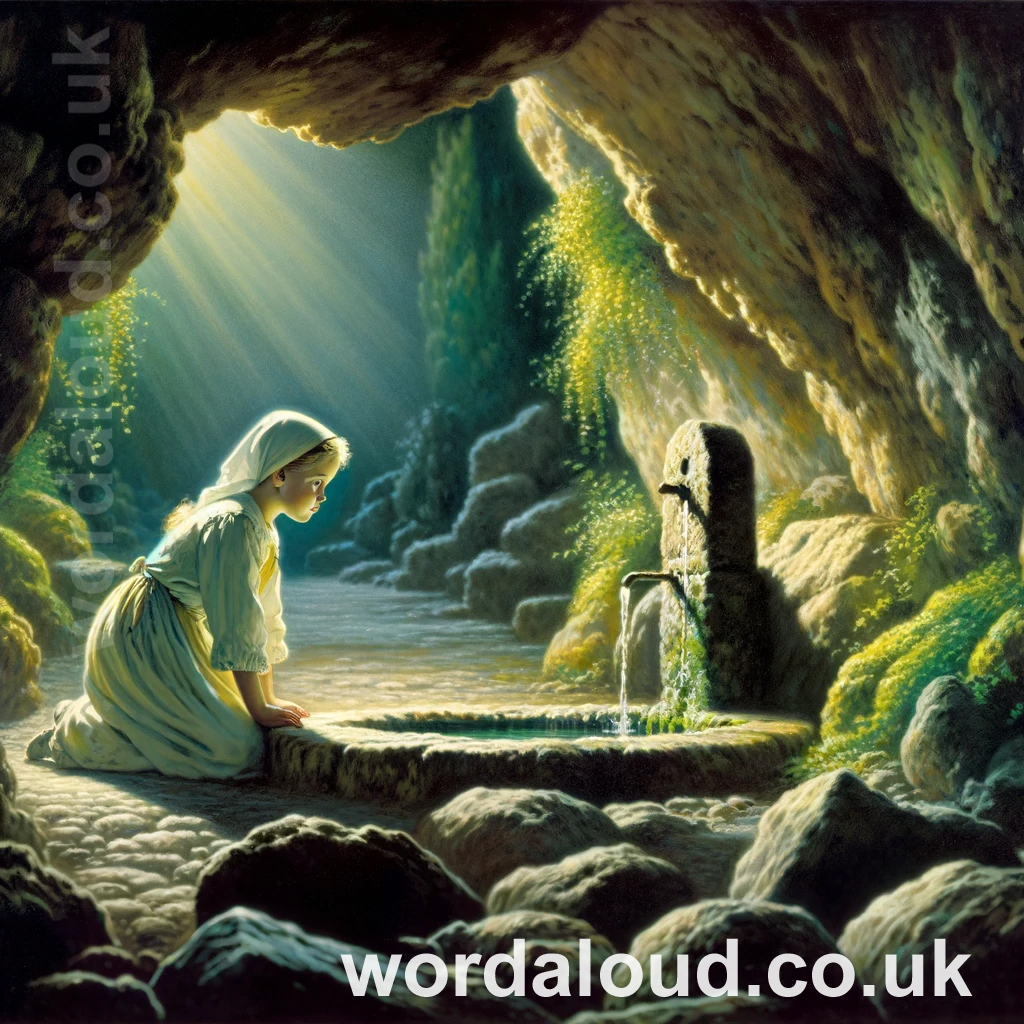
John 4:13-14 (KJV) ‘Jesus answered and said unto her, Whosoever drinketh of this water shall thirst again: But whosoever drinketh of the water that I shall give him shall never thirst; but the water that I shall give him shall be in him a well of water springing up into everlasting life.’ Introduction to the Life of Saint Bernadette Saint Bernadette Soubirous, a humble peasant girl from Lourdes, France, lived her life of faith, humility, and divine grace. Born on January 7, 1844, in the small town of Lourdes, Bernadette was the eldest of nine children in a poor and struggling family. Her father, François Soubirous, was a miller, and her mother, Louise, a laundress. The family lived in a former prison cell known as the Cachot, a damp and cramped space, according to their dire financial situation. Despite their poverty, the Soubirous family was deeply rooted in their Christian faith, a foundation that would profoundly shape Bernadette’s life and spiritual journey. Bernadette’s early years were marked by significant health challenges. She suffered from asthma and other respiratory ailments, which often left her weak and unable to attend school regularly. This lack of formal education meant that Bernadette struggled with reading and writing, and her understanding of Christian doctrine was limited. Nevertheless, she possessed a remarkable simplicity and purity of heart, qualities that would make her an ideal recipient of divine revelations. Bernadette’s life changed irrevocably on February 11, 1858, when she experienced the first of eighteen apparitions of the Blessed Virgin Mary at the grotto of Massabielle. On that cold winter day, Bernadette, her sister Toinette, and a friend were gathering firewood near the grotto when she heard a rustling sound and saw a beautiful lady dressed in white with a blue sash, holding a rosary. The lady, who later identified herself as the Immaculate Conception, appeared to Bernadette over the course of several months, delivering messages of penance, prayer, and the need for a chapel to be built at the site. Despite initial skepticism from her family and the local authorities, Bernadette remained steadfast in her account of the apparitions, enduring intense scrutiny and even ridicule. The apparitions drew enormous attention. Soon, people from all over France and beyond began to visit Lourdes, hoping to witness a miracle. One of the most significant messages conveyed by the Virgin Mary to Bernadette was the instruction to dig in the ground near the grotto, which led to the discovery of a spring. This spring, believed to have healing properties, became the focal point of the pilgrimage to Lourdes. Many miraculous healings have been attributed to the waters of Lourdes, reinforcing the belief in Bernadette’s visions and the sanctity of the site. As the apparitions concluded, Bernadette’s life took a different turn. In 1866, she joined the Sisters of Charity in Nevers, taking the name Sister Marie-Bernard. Her time in the convent was marked by continued poor health and humility, as she carried out menial tasks and lived a life of quiet service. Despite her physical suffering, Bernadette remained devout and accepted her hardships with grace, often repeating the phrase, “I am happier here in my little corner of the convent.” Her unwavering faith and dedication to her religious duties exemplified the depth of her spiritual commitment. Bernadette Soubirous passed away on April 16, 1879, at the age of 35, after a prolonged battle with tuberculosis. Her legacy, however, endured far beyond her earthly life. In 1933, she was canonized as a saint by Pope Pius XI, recognized for her humility, faith, and the miraculous events associated with her life. Today, millions of pilgrims flock to Lourdes each year, seeking spiritual renewal and physical healing at the site of her visions. Saint Bernadette’s life continues to inspire countless individuals around the world, reminding us of the power of faith, the virtue of humility, and the enduring presence of divine grace in our lives. To Visit Lourdes Visiting Lourdes, in the picturesque foothills of the Pyrenees in southwestern France, is an experience that transcends the physical journey, drawing pilgrims into a profound spiritual adventure. The small town, known for the Marian apparitions witnessed by Saint Bernadette Soubirous in 1858, has become one of the world’s most revered pilgrimage sites. As we approach the Sanctuary of Our Lady of Lourdes, the atmosphere is imbued with a palpable sense of reverence and anticipation. The grand basilicas, the tranquil Grotto of Massabielle and the gently flowing waters of the miraculous spring together create a sacred environment that invites reflection, prayer, and a deep connection with the divine. The focal point of any visit to Lourdes is the Grotto, where Bernadette experienced the apparitions of the Blessed Virgin Mary. Here, pilgrims can touch the rock face, light candles, and drink or bathe in the spring’s water, believed to possess healing properties. The profound silence and sense of sacredness at the Grotto allow visitors to contemplate their faith, seek solace and find spiritual renewal. The Rosary Basilica, with its mosaics, and the Basilica of the Immaculate Conception, perched above the Grotto, offer spaces for communal worship and personal meditation. The nightly candlelight processions, where pilgrims from around the globe unite in prayer and song, highlight the universal bond of faith and hope that Lourdes represents. Beyond its physical beauty and historical significance, visiting Lourdes offers a deeply personal and transformative experience. Pilgrims often arrive burdened with ailments, grief, or spiritual crises, seeking comfort and miracles. The stories of healing and faith that emerge from Lourdes are testimonies to the enduring power of belief and the intercession of the Blessed Virgin Mary. The communal aspect of the pilgrimage—sharing meals, prayers, and stories with fellow believers—fosters a sense of solidarity and mutual support. For many, the visit to Lourdes is a journey of healing, not only of the body but also of the soul, providing a renewed sense of purpose, peace, and spiritual clarity that lingers long after returning home. Prayer With Saint Bernadette Prayer for Intercession Dear […]
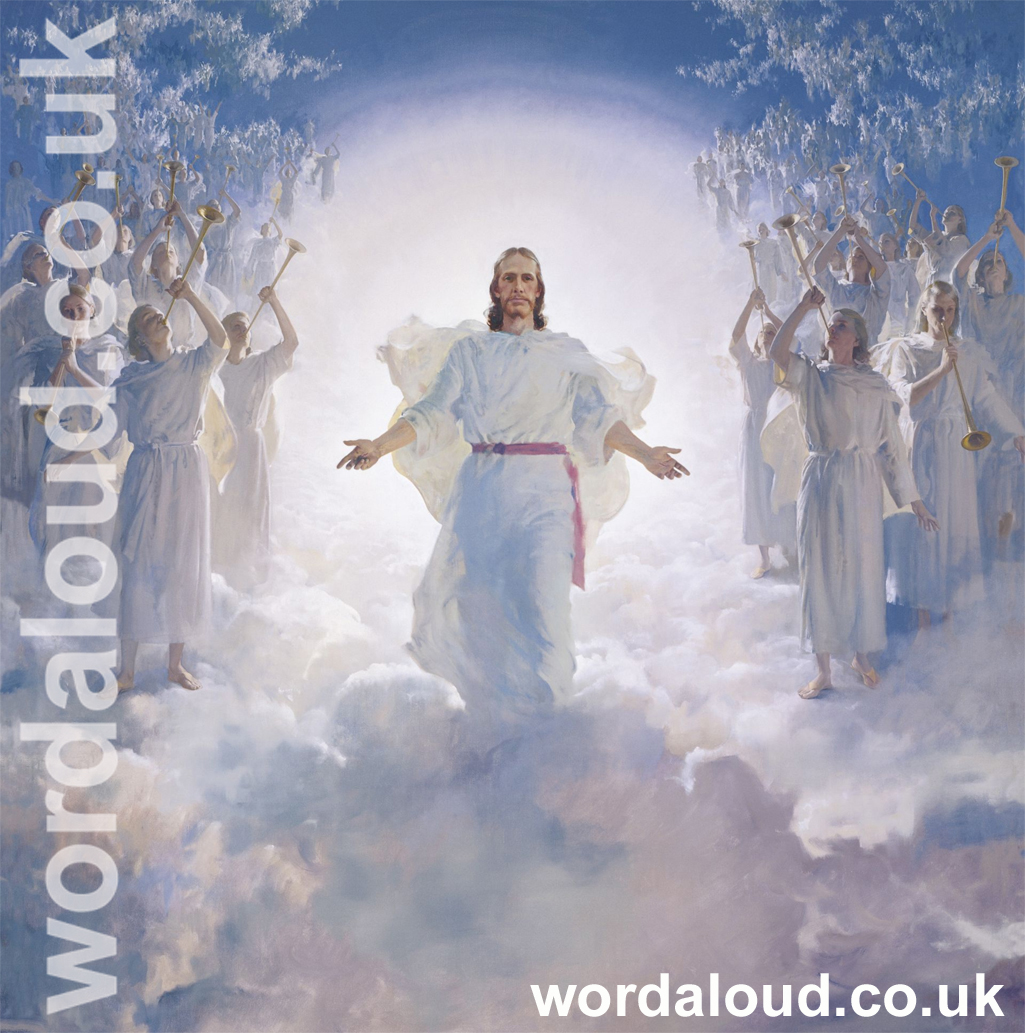
The Kingdom of God has come in the person of Jesus. This is Jesus’ message, and it is this that will lead to his being crucified. It is this toward which the language of apocalypse directs us: our old way of being fractures with the coming of Jesus; the new reality of which we are a part is as lightning flashing across the sky – across the whole sky, the whole of our world, from one side to the other. And still we are told there is to be no visible sign of the coming of the Kingdom. It is within us, in the midst of us, when we walk as disciples with Jesus [ … ]
