Loading...
Listen To The Bible! | Psalms | King James Audio Bible KJV | Love Of Jesus Christ Revealed

Listen To The Bible! | Psalm 115 | King James Audio Bible KJV | Impotence Of Idols And Greatness Of God | Prayer With Jesus And King David | True Faith In God | Pray The Psalms

Psalm 115 KJV | King James Audio Bible | Word Aloud | Oliver Peers

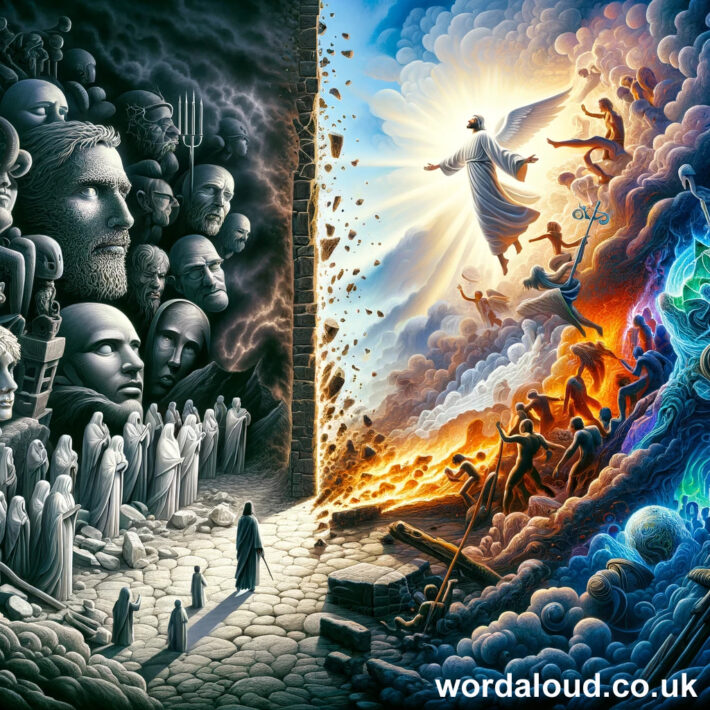
Christian Art | Prayer With Jesus | Psalms | Impotence Of Idols And Greatness Of God | King David As A Boy | Audio KJV | Love Revealed By Jesus Christ | King James Audio Bible

Psalm 115 | King James Audio Bible

YouTube | Psalm 115 KJV| King James Audio Bible

Psalm 115 in the King James Version (KJV) of the Bible presents a narrative that contrasts the living God of Israel with lifeless pagan idols. This psalm is part of the ‘Egyptian Hallel’ group, typically read during Passover, and reflects a time when the Israelites, despite facing mockery from neighboring peoples, reaffirm their faith in God.

The opening verse, ‘Not unto us, O LORD, not unto us, but unto thy name give glory,’ expresses a renunciation of personal glory in favor of glorifying God, emphasizing God’s mercy and truth. This theme of directing praise and glory to God sets the stage for the entire psalm​.

The psalm addresses the futility of idol worship, describing idols as lifeless creations of human hands, lacking senses or abilities. This portrayal serves to emphasize absurdity of idol worship and contrasts with belief in the living, active God. The critique extends to the idol worshippers, suggesting that they become like the idols they worship – lacking spiritual discernment and power​.

The middle verses call on different groups within the Israelite community – the nation, the house of Aaron, and all who fear the Lord – to trust in God as their help and shield. This refrain highlights the communal aspect of faith and trust in God. The psalm reassures that God will bless these groups, emphasizing inclusivity and the promise of protection and aid from God​.

In concluding verses, the psalm emphasizes God’s sovereignty over heaven and earth. The psalm also touches on the theme of mortality, suggesting that it is the duty of the living to praise God, as the dead cannot. This conclusion implies an ongoing commitment to worship and acknowledgment of God’s dominion​

See also these external sources:

Psalm 115 | King James Audio Bible

Not unto us, O LORD, not unto us, but unto thy name give glory, for thy mercy, and for thy truth’s sake.

Wherefore should the heathen say, Where is now their God?

But our God is in the heavens: he hath done whatsoever he hath pleased.

Their idols are silver and gold, the work of men’s hands.

They have mouths, but they speak not: eyes have they, but they see not:

They have ears, but they hear not: noses have they, but they smell not:

They have hands, but they handle not: feet have they, but they walk not: neither speak they through their throat.

They that make them are like unto them; so is every one that trusteth in them.

O Israel, trust thou in the LORD: he is their help and their shield.

O house of Aaron, trust in the LORD: he is their help and their shield.

Ye that fear the LORD, trust in the LORD: he is their help and their shield.

The LORD hath been mindful of us: he will bless us; he will bless the house of Israel; he will bless the house of Aaron.

He will bless them that fear the LORD, both small and great.

The LORD shall increase you more and more, you and your children.

Ye are blessed of the LORD which made heaven and earth.

The heaven, even the heavens, are the LORD’s: but the earth hath he given to the children of men.

The dead praise not the LORD, neither any that go down into silence.

But we will bless the LORD from this time forth and for evermore. Praise the LORD.
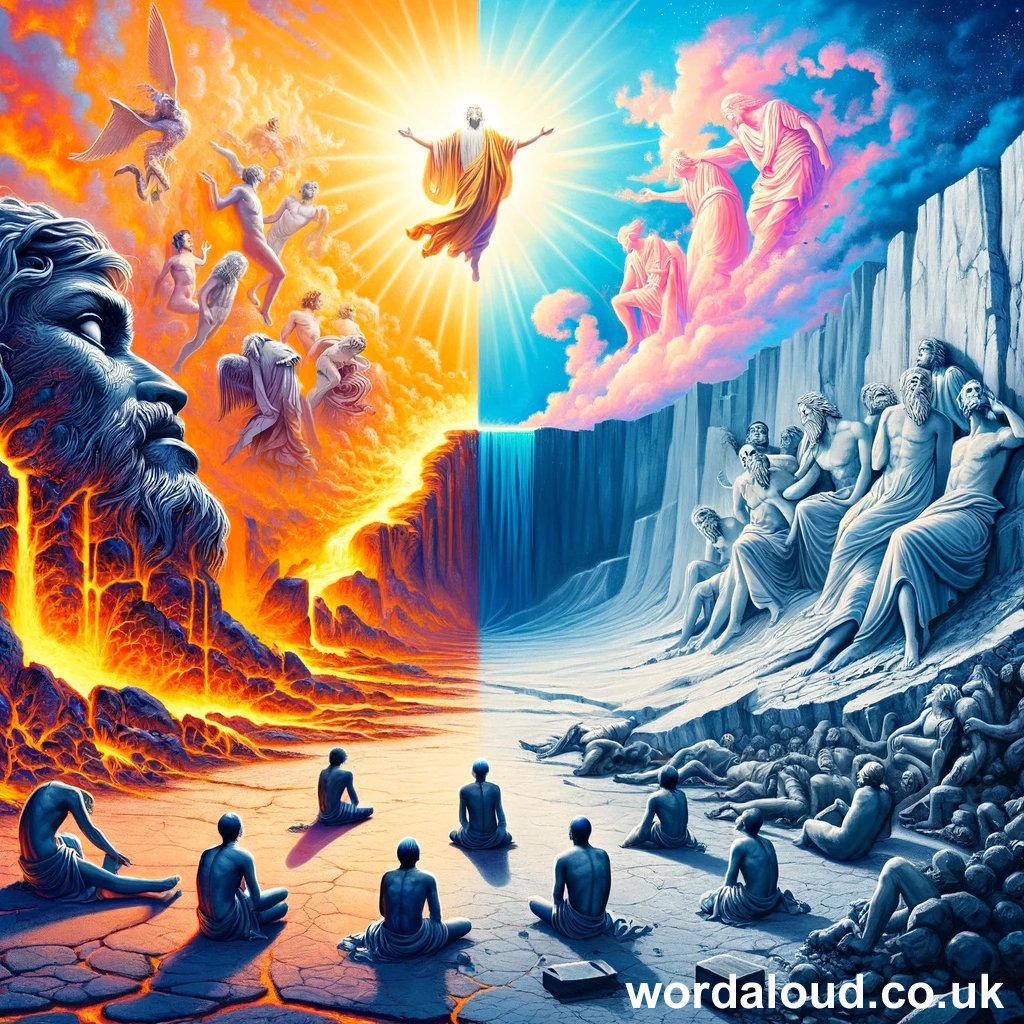
Psalm 115 KJV | King James Audio Bible | Word Aloud | Oliver Peers

Jesus Is Lord | Psalms | King James Audio Bible

Psalm 115 | King James Audio Bible

  • Divine Glory vs. Human Glory: The psalm emphasizes that glory should be given to God, not to humans, underscoring God’s mercy and truth.
  • Futility Of Idolatry: The psalm critiques idol worship, portraying idols as lifeless and contrasting them with the living God.
  • Trust In God: The psalm encourages various groups within the community to trust in God for help and protection.
  • Blessings From God: The psalm promises blessings to those who fear the Lord, emphasizing God’s role as a provider and protector.
  • God’s Sovereignty: The psalm concludes by affirming God’s sovereignty over heaven and earth.
  • Mortality And Worship: The psalm touches on the theme of mortality, suggesting that praising God is the duty of the living.

Jesus Is Lord | Psalms | King James Audio Bible

Psalm 115 KJV | King James Audio Bible | Word Aloud | Oliver Peers

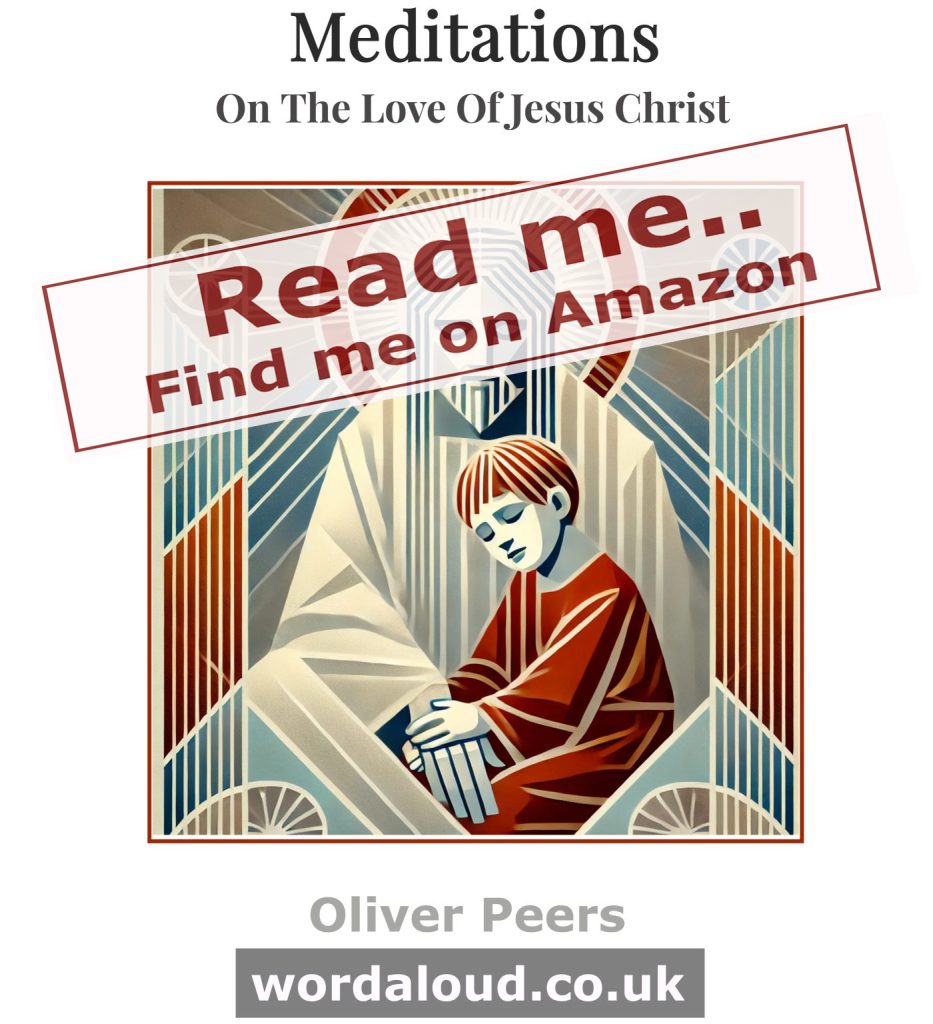
Meditations On The Love Of Jesus Christ | Word Aloud | Prayer And Reflection
  • Parousia | Second Coming Of Jesus Christ | Apocalypse / Revelation

    Christian Art | Parousia | Second Coming | Lamb Of God, You Take Away The Sins Of The World Luke 17: 26-37 (Audio Bible KJV, Spoken Word) Early Christian thought about the Parousia – the second coming – was largely influenced by the teachings of Jesus and the writings of Saint Paul. In the early Christian community, expectation of Christ’s return was strong, and many Christians believed that it would happen in their lifetime. This belief is evident in the New Testament, where the authors express a sense of urgency in their writings and encourage their readers to be prepared for Christ’s imminent return. As Christianity spread throughout the Roman Empire, the idea of the Parousia became more complex and nuanced. Theological debates arose around the nature of Christ’s return and the events that would precede it. Some theologians, such as Origen and Augustine, saw the Parousia as a spiritual event that was already happening in the Church. Others, such as the Montanists and the millenarians, believed in a literal, physical return of Christ and the establishment of a new, earthly Kingdom. In the Middle Ages, the Parousia was often associated with apocalypticism and the idea of a final, cataclysmic battle between good and evil – the last battle. The idea of the Antichrist, who would precede Christ’s return, became a popular theme in Christian literature, and the book of Revelation (Apocalypse – meaning to reveal, to uncover) was interpreted as a prophetic guide to the end of the world. Biblical Basis For The Parousia | The Second Coming The concept of the Parousia, or the Second Coming of Jesus Christ, is central to Christian eschatology and is supported by numerous biblical passages in both the Old and New Testaments. In the Old Testament, there are numerous passages that refer to the coming of a Messiah who will restore Israel and bring about the final judgment. For example, in Daniel 7:13-14, it is written: ‘I saw in the night visions, and, behold, one like the Son of man came with the clouds of heaven, and came to the Ancient of days, and they brought him near before him. And there was given him dominion, and glory, and a kingdom, that all people, nations, and languages, should serve him: his dominion is an everlasting dominion, which shall not pass away, and his kingdom that which shall not be destroyed.’ This passage describes a divine figure who comes in the clouds and is given dominion over all nations. In the New Testament, the Parousia is described in greater detail, particularly in the teachings of Jesus and the writings of Saint Paul. Jesus speaks of his return in many passages, including Matthew 24:30-31, where Jesus says: ‘And then shall appear the sign of the Son of man in heaven: and then shall all the tribes of the earth mourn, and they shall see the Son of man coming in the clouds of heaven with power and great glory. And he shall send his angels with a great sound of a trumpet, and they shall gather together his elect from the four winds, from one end of heaven to the other.’ Here, Jesus describes his return in power and glory, accompanied by angels who gather Jesus’ elect from all over the world. In Saint Paul’s letters, the Parousia is also described in detail. In 1 Thessalonians 4:16-17, Saint Paul writes: ‘For the Lord himself shall descend from heaven with a shout, with the voice of the archangel, and with the trump of God: and the dead in Christ shall rise first: Then we which are alive and remain shall be caught up together with them in the clouds, to meet the Lord in the air: and so shall we ever be with the Lord.’ This passage describes a resurrection of the dead and the gathering of believers to meet the Lord Jesus in the air. The language and imagery used to describe the Parousia are often dramatic and apocalyptic in nature. The Parousia is often described as a time of judgment, when the righteous will be separated from the wicked, and God’s justice will be fully revealed. The imagery of clouds, trumpets, and angels is used to depict the power and glory of Christ’s return. Theological Interpretations Of The Parousia | Jesus’ Second Coming The concept of the Parousia has been interpreted in a variety of ways throughout Christian history. Dispensationalism Dispensationalism is a theological framework that emerged in the 19th  Century and has since become popular among some evangelical and fundamentalist Christians. Dispensationalists believe that history is divided into distinct periods or ‘dispensations’, each of which is marked by a particular mode of divine revelation and a specific plan of salvation. According to dispensationalist theology, the Parousia will be preceded by a period of tribulation, during which the Antichrist will establish a one-world government and the Jews will be restored to their homeland. The Parousia itself will involve a physical, visible return of Christ, who will establish a thousand-year reign on earth before the final judgment. Preterism Preterism is a theological interpretation of the Parousia that holds that many of the prophecies in the New Testament, particularly those in the book of Revelation, were fulfilled in the first century AD. According to this view, the Parousia occurred in a spiritual sense when Christ ascended to heaven and sent the Holy Spirit to empower the Church. Preterists argue that the tribulation and other end-time events predicted in the New Testament were fulfilled in the destruction of the Temple in Jerusalem in AD 70. Postmillennialism Postmillennialism is a theological view that holds that the Parousia will occur after a period of history in which the Church will gradually bring about the kingdom of God on earth. According to this view, the Church will spread the gospel throughout the world, and social, political, and economic conditions will gradually improve. Eventually, Christ will return to a world that has been largely transformed by the Gospel. Amillennialism […]

  • Christian Prayer | Jesus | Baptism | Love Revealed By Jesus Christ | Gospels

    Christian Art | Love Revealed By Jesus Christ | Prayer And Meditation This relaxing prayer and meditation with Jesus reflects upon three Gospel passages – of Saint Matthew’s Gospel. These are: 1. Jesus’ healing of the multitude; 2. The parable of the labourers in the vineyard; 3. The rich young man and the camel through the eye of the needle. This meditation is presented on YouTube: Thank you for praying this reflection. May the love of Jesus Christ be with us all.

  • George Herbert | The Temple | The Church | Sepulchre | Christian Poems

    This poem addresses the burial and rejection of Christ’s body, using images of coldness, hardness, and stone to explore themes of human indifference, sin, and divine love. The poet begins by questioning where Christ’s body is placed, lamenting that it finds rest on ‘a cold hard stone’. Despite the existence of ‘so many hearts on earth’, none is receptive enough to ‘receive thee’, symbolizing the rejection and abandonment Christ endures even in death. The stone, a literal image of Christ’s tomb, also symbolizes the hardened state of human hearts unwilling to accept or contain him [ … ]

Search Google Here | A Holy Land Jerusalem Pilgrimage? | A Safari? | An Escape..