Loading...
Listen To The Bible! | Psalms | King James Audio Bible KJV | Love Of Jesus Christ Revealed

Listen To The Bible! | Psalm 29 | King James Audio Bible KJV | The Voice Of God In A Great Storm | Prayer With Jesus And King David | True Faith In God | Pray The Psalms | King David As A Boy

Psalm 29 | King James Audio Bible | KJV | King David Psalms | King James Version

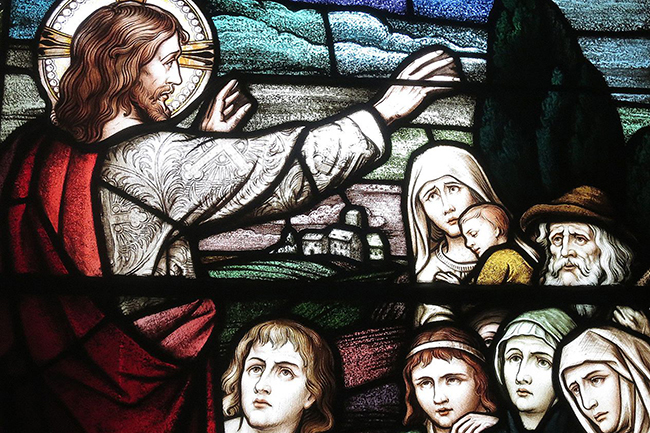
Christian Art | Prayer With Jesus | Psalms | The Voice Of God | King David As A Boy

Psalm 29 | King James Audio Bible

YouTube: Psalm 29 | KJV | King James Audio Bible | Word Aloud

Psalm 29 is a hymn that celebrates glory, power and sovereignty of the Lord. The psalm reflects on the divine might displayed through elements of nature, emphasizing the voice of the Lord as a significant force.

From the outset, the psalm calls upon the mighty to ascribe glory and strength to the Lord, highlighting worship and recognition of God’s greatness. This sets the tone for a contemplation of the Lord’s majestic attributes.

A central motif of this psalm is the voice of the Lord, portrayed as a powerful and awe-inducing force. This is likened to thunder over the waters and described as full of majesty. Such imagery intensifies as the voice of the Lord shatters cedars, makes mountains skip, and divides flames of fire. The psalm poetically describes the far-reaching effects of God’s voice on creation, from shaking the wilderness to causing hinds to calve.

Amidst this display of divine power, there is a vivid contrast between the strength and authority of the Lord and the fragility of creation. The psalm emphasizes God’s eternal reign and His role as ultimate source of strength and blessing.

In the closing verses, the psalm concludes with assurance, declaring that the Lord will provide strength to His people and bless them with peace. This underscores the psalm’s message of comfort and security found in acknowledging the Lord’s supremacy.

Psalm 26 | King James Audio Bible KJV

Give unto the Lord, O ye mighty, give unto the Lord glory and strength.

Give unto the Lord the glory due unto his name; worship the Lord in the beauty of holiness.

The voice of the Lord is upon the waters: the God of glory thundereth: the Lord is upon many waters.

The voice of the Lord is powerful; the voice of the Lord is full of majesty.

The voice of the Lord breaketh the cedars; yea, the Lord breaketh the cedars of Lebanon.

He maketh them also to skip like a calf; Lebanon and Sirion like a young unicorn.

The voice of the Lord divideth the flames of fire.

The voice of the Lord shaketh the wilderness; the Lord shaketh the wilderness of Kadesh.

The voice of the Lord maketh the hinds to calve, and discovereth the forests: and in his temple doth every one speak of his glory.

The Lord sitteth upon the flood; yea, the Lord sitteth King for ever.

The Lord will give strength unto his people; the Lord will bless his people with peace.

Psalm 29 | King James Audio Bible | KJV | King David Psalms | King James Version

Jesus Is Lord | Psalms | King James Audio Bible

Key Themes Of The Psalm For Reflection | Love Revealed By Jesus Christ

  • Divine Majesty and Power: The psalm celebrates the glory, majesty, and overwhelming power of the Lord.
  • Worship and Adoration: It calls upon the mighty to ascribe glory and strength to the Lord, emphasizing the act of worship and recognizing God’s greatness.
  • The Voice of the Lord: A central motif is the awe-inspiring voice of the Lord, depicted as a potent force affecting nature and creation.
  • Contrast of Strength: The psalm highlights the vast difference between the strength and authority of the Lord and the fragility of creation.
  • Eternal Reign: God’s eternal reign and sovereignty over all creation are affirmed, portraying Him as the ultimate source of strength and blessing.
  • Assurance and Peace: The psalm concludes with a comforting message, assuring that the Lord provides strength and blessings to His people, bringing peace and security.Jesus Is Lord | Psalms | King James Audio Bible
Meditations On The Love Of Jesus Christ | Word Aloud | Prayer And Reflection
  • Parousia | Second Coming Of Jesus Christ | Apocalypse / Revelation

    Christian Art | Parousia | Second Coming | Lamb Of God, You Take Away The Sins Of The World Luke 17: 26-37 (Audio Bible KJV, Spoken Word) Early Christian thought about the Parousia – the second coming – was largely influenced by the teachings of Jesus and the writings of Saint Paul. In the early Christian community, expectation of Christ’s return was strong, and many Christians believed that it would happen in their lifetime. This belief is evident in the New Testament, where the authors express a sense of urgency in their writings and encourage their readers to be prepared for Christ’s imminent return. As Christianity spread throughout the Roman Empire, the idea of the Parousia became more complex and nuanced. Theological debates arose around the nature of Christ’s return and the events that would precede it. Some theologians, such as Origen and Augustine, saw the Parousia as a spiritual event that was already happening in the Church. Others, such as the Montanists and the millenarians, believed in a literal, physical return of Christ and the establishment of a new, earthly Kingdom. In the Middle Ages, the Parousia was often associated with apocalypticism and the idea of a final, cataclysmic battle between good and evil – the last battle. The idea of the Antichrist, who would precede Christ’s return, became a popular theme in Christian literature, and the book of Revelation (Apocalypse – meaning to reveal, to uncover) was interpreted as a prophetic guide to the end of the world. Biblical Basis For The Parousia | The Second Coming The concept of the Parousia, or the Second Coming of Jesus Christ, is central to Christian eschatology and is supported by numerous biblical passages in both the Old and New Testaments. In the Old Testament, there are numerous passages that refer to the coming of a Messiah who will restore Israel and bring about the final judgment. For example, in Daniel 7:13-14, it is written: ‘I saw in the night visions, and, behold, one like the Son of man came with the clouds of heaven, and came to the Ancient of days, and they brought him near before him. And there was given him dominion, and glory, and a kingdom, that all people, nations, and languages, should serve him: his dominion is an everlasting dominion, which shall not pass away, and his kingdom that which shall not be destroyed.’ This passage describes a divine figure who comes in the clouds and is given dominion over all nations. In the New Testament, the Parousia is described in greater detail, particularly in the teachings of Jesus and the writings of Saint Paul. Jesus speaks of his return in many passages, including Matthew 24:30-31, where Jesus says: ‘And then shall appear the sign of the Son of man in heaven: and then shall all the tribes of the earth mourn, and they shall see the Son of man coming in the clouds of heaven with power and great glory. And he shall send his angels with a great sound of a trumpet, and they shall gather together his elect from the four winds, from one end of heaven to the other.’ Here, Jesus describes his return in power and glory, accompanied by angels who gather Jesus’ elect from all over the world. In Saint Paul’s letters, the Parousia is also described in detail. In 1 Thessalonians 4:16-17, Saint Paul writes: ‘For the Lord himself shall descend from heaven with a shout, with the voice of the archangel, and with the trump of God: and the dead in Christ shall rise first: Then we which are alive and remain shall be caught up together with them in the clouds, to meet the Lord in the air: and so shall we ever be with the Lord.’ This passage describes a resurrection of the dead and the gathering of believers to meet the Lord Jesus in the air. The language and imagery used to describe the Parousia are often dramatic and apocalyptic in nature. The Parousia is often described as a time of judgment, when the righteous will be separated from the wicked, and God’s justice will be fully revealed. The imagery of clouds, trumpets, and angels is used to depict the power and glory of Christ’s return. Theological Interpretations Of The Parousia | Jesus’ Second Coming The concept of the Parousia has been interpreted in a variety of ways throughout Christian history. Dispensationalism Dispensationalism is a theological framework that emerged in the 19th  Century and has since become popular among some evangelical and fundamentalist Christians. Dispensationalists believe that history is divided into distinct periods or ‘dispensations’, each of which is marked by a particular mode of divine revelation and a specific plan of salvation. According to dispensationalist theology, the Parousia will be preceded by a period of tribulation, during which the Antichrist will establish a one-world government and the Jews will be restored to their homeland. The Parousia itself will involve a physical, visible return of Christ, who will establish a thousand-year reign on earth before the final judgment. Preterism Preterism is a theological interpretation of the Parousia that holds that many of the prophecies in the New Testament, particularly those in the book of Revelation, were fulfilled in the first century AD. According to this view, the Parousia occurred in a spiritual sense when Christ ascended to heaven and sent the Holy Spirit to empower the Church. Preterists argue that the tribulation and other end-time events predicted in the New Testament were fulfilled in the destruction of the Temple in Jerusalem in AD 70. Postmillennialism Postmillennialism is a theological view that holds that the Parousia will occur after a period of history in which the Church will gradually bring about the kingdom of God on earth. According to this view, the Church will spread the gospel throughout the world, and social, political, and economic conditions will gradually improve. Eventually, Christ will return to a world that has been largely transformed by the Gospel. Amillennialism […]

  • Jesus The Good Shepherd

    Saint Augustine develops his teaching on pastoral responsibility by focusing on how shepherds should address the realities of suffering and temptation in the Christian life. He begins with the principle from Hebrews 12:6: “God chastises every son whom he acknowledges.” This verse provides both warning and reassurance: chastisement is not a sign of rejection but of belonging, since even Christ, though sinless, endured suffering in the flesh. By sharing in discipline, the faithful are confirmed as adopted children of God and coheirs with Christ [ … ]

  • Audio Bible Verses | Jesus | Church | Christian Community | God In Heaven | KJV

    Within the Discourse on the Church, the Discourse of the Community, Jesus speaks of the ways in which we may recall our brothers and sisters to the truth path when perhaps there has been a straying. This is to say, Jesus speaks of fraternal correction, of how Christian communities should work to sanctify others, in such a way that those who have sinned may be most readily and with dignity recalled [ … ]

Search Google Here | A Holy Land Jerusalem Pilgrimage? | A Safari? | An Escape..