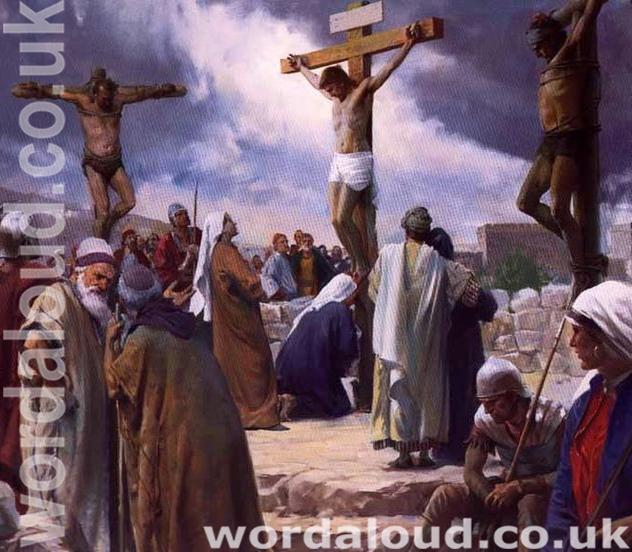
Christian Art | Jesus Is Crucified | Destroy This Temple And In Three Days I Shall Raise It Up
Office Of Readings | Week 22, Wednesday, Ordinary Time | A Reading From The Commentary Of Origen On Saint John’s Gospel | Christ Spoke Of The Temple Of His Body
‘Christ spoke of the temple of his body.’
Origen’s reflection on Jesus’ words in John’s Gospel, ‘Destroy this temple and in three days I will raise it up,’ (John 2:19) draws together several layers of meaning. At the literal level, Jesus refers to the temple in Jerusalem, a central symbol of Israel’s covenant with God. Yet Origen, following John’s own interpretation (John 2:21), sees that Jesus is ultimately speaking of his own body, which would be destroyed in death and raised in resurrection.
Origen goes further by linking both temple and body with the Church. Scripture describes the Church as both the body of Christ (1 Corinthians 12:27) and as a spiritual temple (1 Peter 2:5; Ephesians 2:19–22). This dual imagery highlights the unity of Christ with his people: what happens to the Lord’s body in history prefigures the experience of his body, the Church, through time.
The scattering of Jesus Christ’s ‘bones,’ drawn from Psalm 22(21), is interpreted as the divisions, persecutions, and apostasies that afflict the faithful. Yet Origen insists that this disintegration is not final. Just as the temple of Jesus Christ’s own body was raised on the third day, so too the whole body of the Church will be restored in the resurrection. The ‘third day’ becomes an image not only of Easter but also of the consummation of all things – the dawn of the new heaven and new earth (Revelation 21:1).
Paul’s theology undergirds Origen’s exposition. The apostle teaches that believers are crucified with Christ (Galatians 6:14), buried with him (Romans 6:4), and raised with him (Colossians 3:1). Thus, the mystery of Christ’s death and resurrection is not confined to him alone but is shared with all who belong to him. For Origen, this is both promise and exhortation: Christians are called to endure suffering with Christ, confident that participation in his cross leads to participation in his risen life.
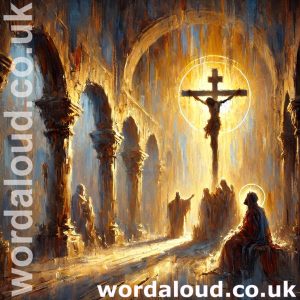
A Reading From The Commentary Of Origen On Saint John’s Gospel | Christ Spoke Of The Temple Of His Body
It seems to me that Jesus meant the Jews in this episode to stand for sensual men and those desirous of carnal and sensual things. These Jews were angry at his expulsion of the people who were turning his Father’s house into a market. So they asked for a sign to justify these actions, a sign that would show that the Word of God, whom they refused to accept, was acting rightly. The Saviour’s reply combines a statement about the temple with a prophecy about his own body, for in answer to their question: What sign can you give to justify your conduct? he says: Destroy this temple and in three days I will raise it up.
Indeed, I think that both the temple and the body of Jesus can be seen together as a type of the Church. For the Church is being built out of living stones; it is in process of becoming a spiritual dwelling for a holy priesthood, raised on the foundations of apostles and prophets, with Christ as its chief cornerstone. Hence it bears the name ‘temple.’ On the other hand, it is written: You are the body of Christ, and individually members of it. Thus even the harmonious alignment of the stones should seem to be destroyed and fragmented and, as described in the twenty-first psalm, all the bones which go to make up Christ’s body should seem to be scattered by insidious attacks in persecutions or times of trouble, or by those who in days of persecution undermine the unity of the temple, nevertheless the temple will be rebuilt and the body will rise again on the third day, after the day of evil which threatens it and the day of consummation which follows. For the third day will dawn upon a new heaven and a new earth when these bones that form the whole house of Israel are raised up on that great day of the Lord, when death has been defeated. So the resurrection of Christ, accomplished after his suffering on the cross, embraces the mystery of the resurrection of his whole body.
For just as that physical body of Christ was crucified and buried, and afterward raised up, so in the same way the whole body of Christ’s holy ones has been crucified and lives no longer with its own life. For each of them, like Paul, makes his boast of nothing else but the cross of our Lord Jesus Christ, by which he has himself been crucified to the world, and the world to him. But each Christian has not only been crucified with Christ and crucified to the world; he has been buried with Christ too, as Paul tells us: We have been buried with Christ. But as though already in possession of some pledge of the resurrection, Paul goes on to say: And we have risen with him.
Christian Prayer With Jesus Christ
Lord Jesus Christ, you are the true temple, destroyed and raised on the third day.
Make us living stones in your body, the Church, united in faith and love.
In times of trial, keep us steadfast,
that sharing in your cross we may also share in your resurrection.
You live and reign with the Father and the Holy Spirit, one God, forever and ever. Amen.
Glossary Of Christian Terms
Temple – The sanctuary in Jerusalem, the centre of Jewish worship; in Christian interpretation, a figure of Christ’s body and the Church.
Living stones – A phrase from 1 Peter 2:5 describing believers as the material of God’s spiritual dwelling.
Cornerstone – The foundational stone in a building, used here of Christ (Ephesians 2:20).
Psalm 22(21) – A psalm of lament traditionally linked to Christ’s passion (‘all my bones are out of joint’).
Third day – Refers to Christ’s resurrection (Luke 24:7); also symbolises the final renewal of creation.
Consummation – The completion of God’s plan at the end of time.
Buried with Christ – Pauline imagery (Romans 6:4) of baptism, by which believers participate in Christ’s death and resurrection.


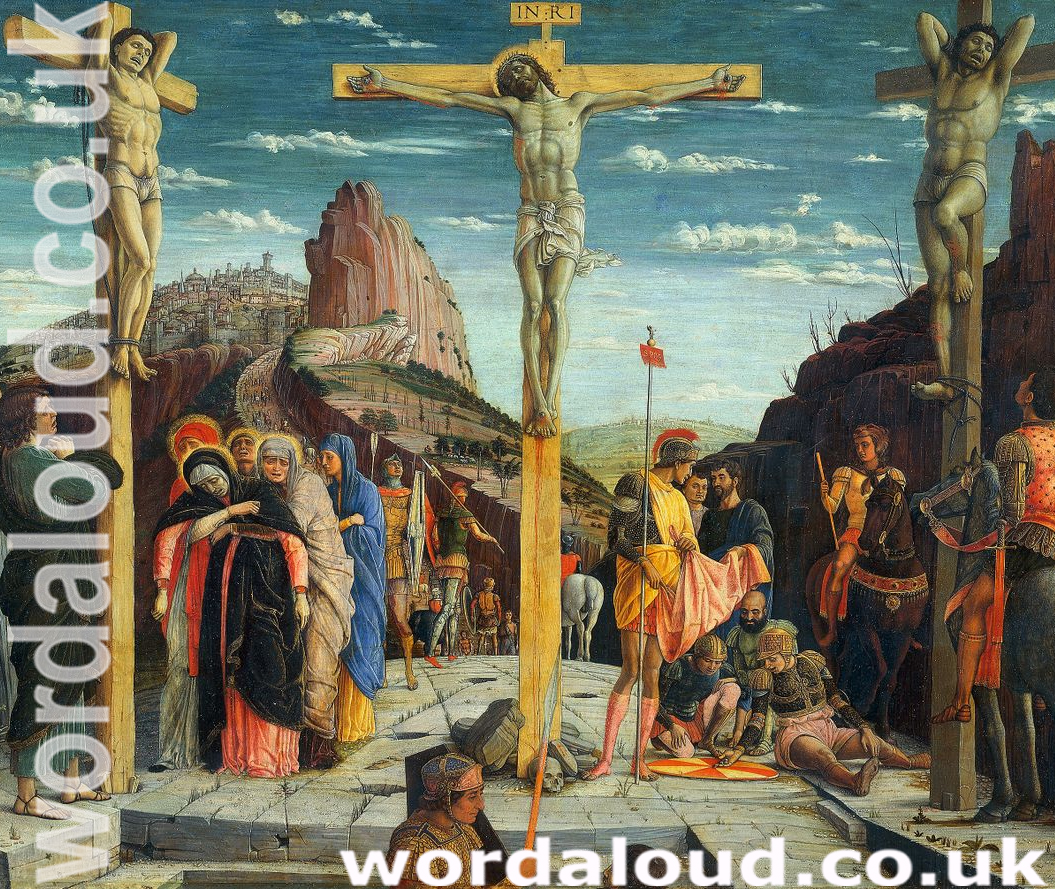
Christian Art | Our Lord Jesus On The Cross | God The Father | God The Son Office Of Readings | Advent December 23rd | A Reading From The Treatise Of Saint Hippolytus Against The Heresy Of Noetus | The Hidden Sacrament Is Revealed ‘The hidden sacrament is revealed.’ In this reading, Saint Hippolytus writes against the Noetic heresy, which denied the real distinction between the Father and the Son by treating them as the same person acting under different names. The purpose of Saint Hippolytus is to defend the Church’s confession of one God who is not solitary, but who exists with his Word and Spirit. Hippolytus begins by setting a principle: knowledge of God comes from the Holy Scriptures, not from speculation or private reasoning. Faith is not shaped by human preference but by what God has chosen to reveal. The Father determines how He is believed, the Son how He is glorified, and the Spirit how He is received. This establishes Scripture as the rule of faith and guards against theological invention. Hippolytus then affirms that God existed alone before creation, with nothing co-eternal alongside Him. At the same time, God was not without reason, wisdom, or power. Hippolytus insists that plurality within God does not compromise divine unity. God contains within himself Word, wisdom, and counsel. Creation begins when God wills and manifests His Word. The Word is not created from nothing but proceeds from God and acts as the agent of creation. The Word is first invisible to the created world, though known to God. When God chooses, He makes the Word visible, described as ‘Light of Light’. This language safeguards both distinction and unity: the Word comes from God and reveals God, without being separate from Him. The manifestation of the Word is ordered towards salvation, so that the world may see and be saved. Hippolytus identifies this Word clearly with the Son of God. Through him all things were made, and he alone comes forth from the Father. The Law and the prophets belong to the same saving plan. God speaks through them by the Holy Spirit, so that they proclaim not their own ideas but the Father’s will. Revelation is therefore coherent: creation, prophecy, and incarnation belong to one divine purpose. Hippolytus appeals to the Gospel of John to show continuity between prophecy and fulfilment. The Word spoken of by the prophets is the Word made flesh. Though the world was made through him, it failed to recognise him. This failure does not negate God’s plan but reveals the depth of the mystery now disclosed. A Reading From The Treatise Of Saint Hippolytus Against The Heresy Of Noetus | The Hidden Sacrament Is Revealed There is, brethren, one God, the knowledge of whom we gain from the Holy Scriptures and from no other source. Whatever things the Holy Scriptures declare, at these let us look; and whatever they teach, let us learn it; and as the Father wills our belief to be, let us believe; and as he wills the Son to be glorified, let us glorify him; and as he wills the Holy Spirit to be bestowed, let us receive him. Not according to our own will, nor according to our own mind, nor yet storming by force the things which are given by God, but even as he has chosen to teach them by the Holy Scriptures, so let us discern them. God, subsisting alone, and having nothing coeval with himself, chose to create the world. And conceiving the world in mind, and willing and uttering the Word, he made it; and at once it appeared, formed it in the way he desired. For us it is sufficient simply to know that nothing was coeval with God. Outside him there was nothing; but he, while existing alone, yet existed in plurality. For he did not lack reason, or wisdom, or power, or counsel. All things were in him, and he was the All. At a time and in a manner chosen by him he made his Word manifest, and through his Word he made all things. He bears this Word in himself, as yet invisible to the created world. He makes him visible, uttering the voice first, and begetting him as Light of Light. He presents him to the world as its Lord; and whereas the Word was visible formerly to God alone, and invisible to the world which is made, God makes the Word visible in order that the world might see him and be able to be saved. This is the mind which came forth into the world and was manifested as the Son of God. All things came into being through him, and he alone comes from the Father. He gave us the Law and the prophets; and in giving them, he made them speak by the Holy Ghost, in order that, receiving the inspiration of the Father’s power, they might declare the Father’s counsel and will. Thus, then, was the Word made manifest, even as the blessed John says. For he sums up the things that were said by the prophets, and shows that this is the Word, by whom all things were made. In the beginning was the Word, and the Word was with God, and the Word was God. All things were made by him, and without him nothing was made. And later, The world was made by him, and the world did not know him; he came to his own, and his own did not receive him. Christian Prayer With Jesus Lord God,You are one, and from You come the Word and the Spirit.You have chosen to make Yourself known, not by human effort,but by what You have revealed in the scriptures. You spoke Your Word, and all things were made.You made that Word visible, so that the world might see and be saved.Grant that we may receive what You give,believe what You teach,and worship You as You have shown Yourself to be. Keep us […]
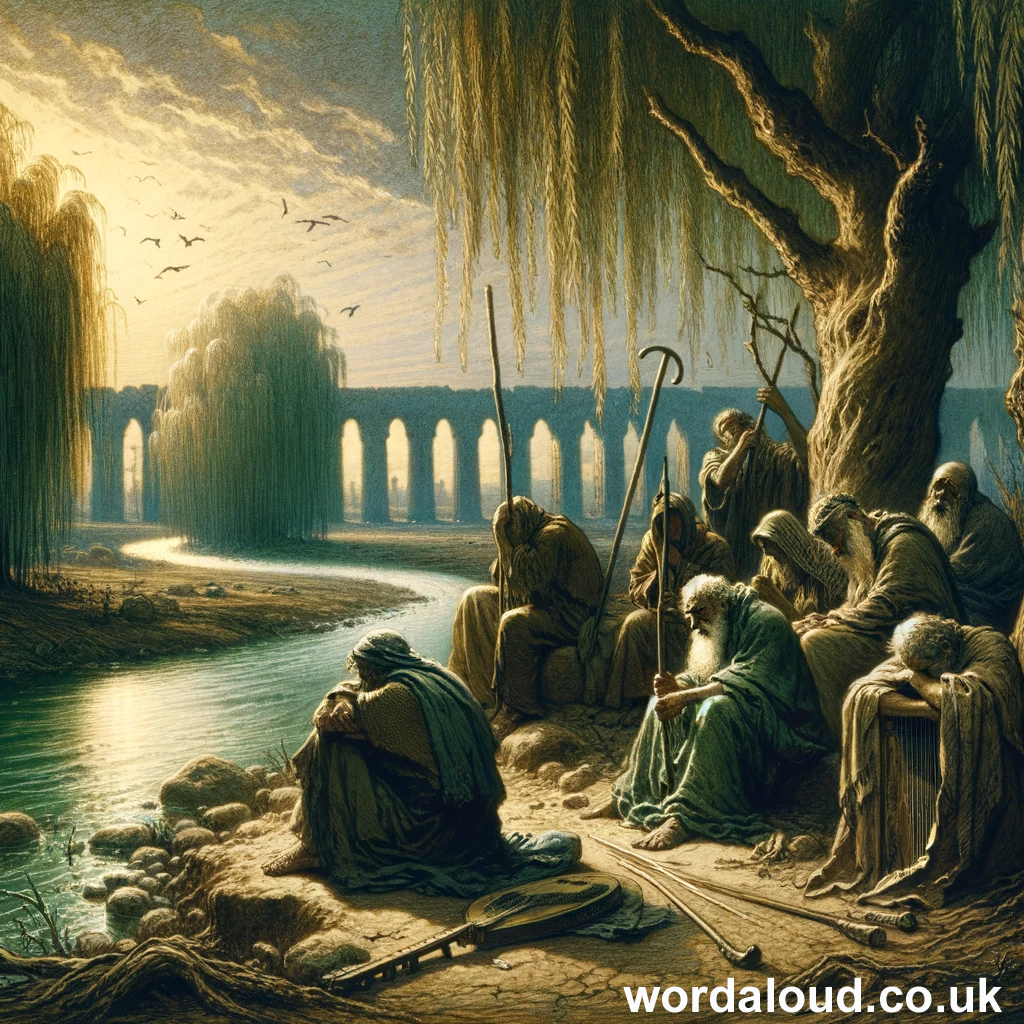
Psalm 137 expresses complexities of exile and displacement. The psalm’s candid expression of sorrow, defiance, and longing for justice offer insights into an enduring human struggle to maintain identity and to seek justice in the face of overwhelming odds [ … ]
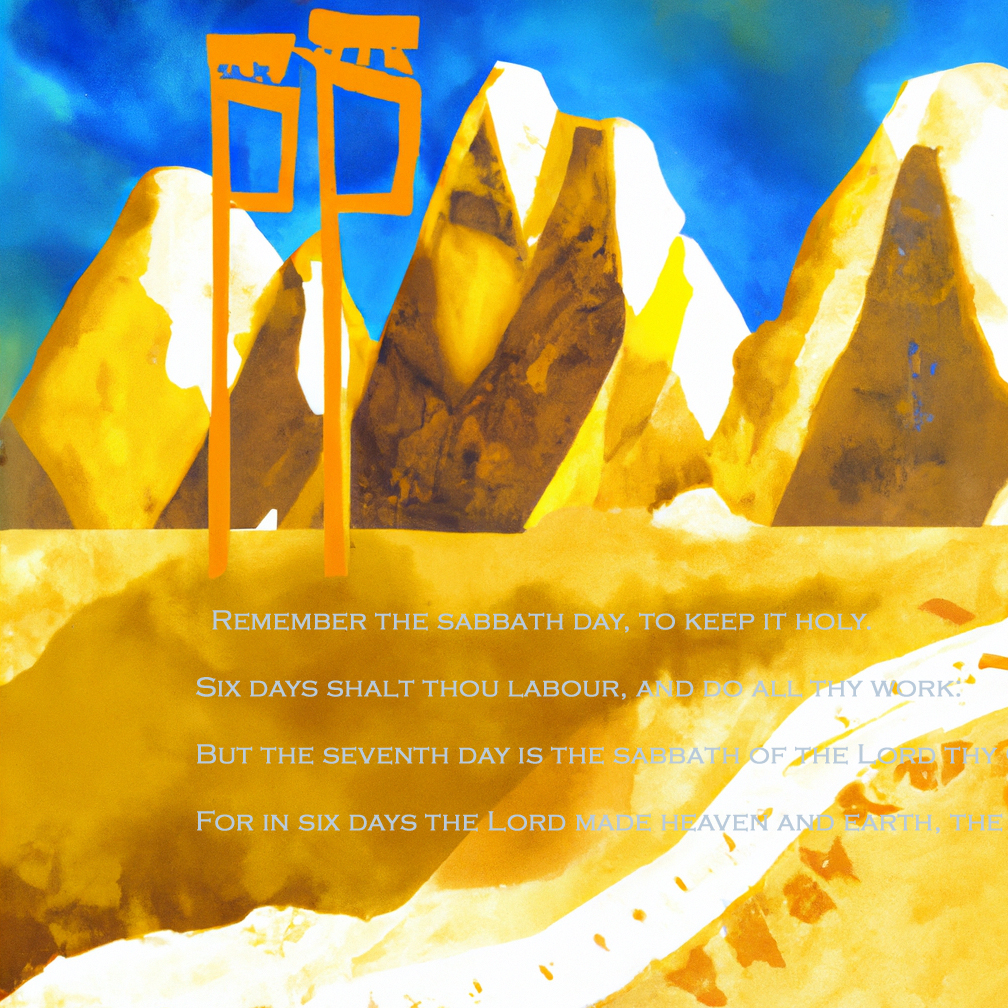
The third commandment of the Ten Commandments, ‘Keep holy the Lord’s day,’ is a call to set aside time on a regular basis to rest from one’s daily work and to focus on the worship and service of God. This commandment is often understood to refer to the Christian Sabbath, which is traditionally observed on Sunday, the day of the resurrection of Jesus Christ [ … ]