Listen To The Bible! | Psalm 24 | King James Audio Bible KJV | Entrance Into The Temple | Prayer With Jesus | Revolution In Christian Prayer | True Faith In God | Arise, Lord | Pray The Psalms | King David
Psalm 24 expresses awe and reverence for God the Creator of the universe. The psalm resonates with themes of divine ownership, holiness, and quest for spiritual purity and access to the presence of the Lord.
The psalm opens with a resounding declaration that ‘The earth is the Lord’s, and the fullness thereof; the world, and they that dwell therein’. This statement asserts the sovereignty of God over all of creation, from the vast cosmos to every living being on Earth. It sets the stage for a reflection on the divine holiness that should be upheld in the worship of the Lord.
The central question posed in the psalm is, ‘Who shall ascend into the hill of the Lord? or who shall stand in his holy place?’ This inquiry delves into the requirements for approaching the sacred presence of God. The response emphasizes the importance of purity of heart, integrity of character, and avoidance of vanity and deceit.
The psalm highlights the blessings that come to those who seek the Lord and strive for spiritual purity. It speaks of receiving righteousness from the God of salvation, underlining the transformative power of God’s presence in the lives of those who earnestly seek Him.
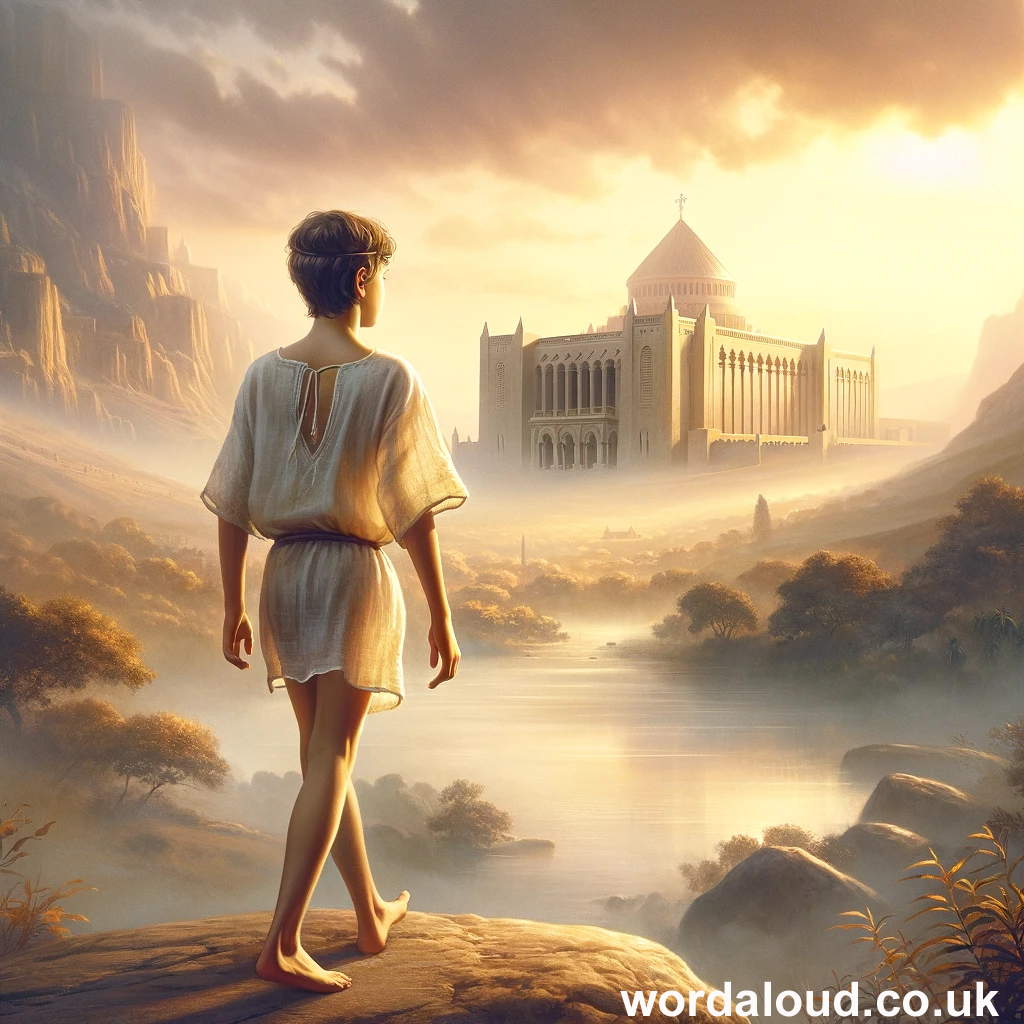
As the psalm progresses, the psalm shifts to a scene of majestic entrance, with a call to ‘Lift up your heads, O ye gates; and be ye lift up, ye everlasting doors; and the King of glory shall come in’. This scene conveys the anticipation of the arrival of the divine King and underscores the idea that the Lord is mighty and victorious.
The psalm repeats this call, ‘Lift up your heads, O ye gates,’ emphasizing the readiness for the King of glory to enter. The psalm culminates with proclamation that the Lord of hosts, the Almighty, is the King of glory.
Psalm 21 | King James Audio Bible KJV
The earth is the Lord’s, and the fulness thereof; the world, and they that dwell therein.
For he hath founded it upon the seas, and established it upon the floods.
Who shall ascend into the hill of the Lord? or who shall stand in his holy place?
He that hath clean hands, and a pure heart; who hath not lifted up his soul unto vanity, nor sworn deceitfully.
He shall receive the blessing from the Lord, and righteousness from the God of his salvation.
This is the generation of them that seek him, that seek thy face, O Jacob.
Lift up your heads, O ye gates; and be ye lift up, ye everlasting doors; and the King of glory shall come in.
Who is this King of glory? The Lord strong and mighty, the Lord mighty in battle.
Lift up your heads, O ye gates; even lift them up, ye everlasting doors; and the King of glory shall come in.
Who is this King of glory? The Lord of hosts, he is the King of glory.
Key Themes Of The Psalm For Reflection | Love Revealed By Jesus Christ
Divine Ownership: The psalm asserts the Lord’s ownership of the entire earth and everything within it.
Holiness and Purity: It explores the requirements for approaching the presence of the Lord, emphasizing the importance of clean hands, a pure heart, and a life free from vanity and deceit.
Blessings of Seeking God: The psalm speaks of the blessings and righteousness received by those who earnestly seek the Lord.
Anticipation of God’s Presence: It conveys a sense of anticipation and readiness to welcome the King of glory into the sacred space.
Majestic Entrance: The psalm describes the entrance of the King of glory, emphasizing the might and victory of the Lord.
Awe and Reverence: Psalm 24 inspires a profound sense of awe and reverence for the Creator and a desire to approach Him with sincerity and integrity.
When Jesus heals Simon Peter’s mother-in-law, the effect is instant. Not only does the fever leave her immediately, she is able immediately to get up out of bed and to serve Jesus and the other people present. This tells us something of the nature of our own healing, our freeing from sin, by Jesus. We are called and we are enabled to serve. This is our active participation in Christian community. We may recall that the sick were excluded from participation in religious services in Jewish society. Jesus calls the sick home, to be with God [ … ]
The disciples who encountered Jesus on their way to Emmaus have returned in haste to tell the disciples in Jerusalem what they have heard and seen. Jerusalem has long been a city special to God. It is the Holy City. The Church of Christ is described, in the New Testament, as the Jerusalem above, the heavenly Jerusalem, and the new Jerusalem. It is here that Christ suffered. It is from here that the Kingdom of God begins to spread [ … ]
We process. Glass exhibition cases, old reliquaries. A forearm here; here a nun’s fingertip. In chapel, at a glance, there are the usual faces. But they all stand to attention. Jonathan breaks from the procession to – fire the organ with oomph and dignity: Ride on! ride on in majesty! The angel-squadrons of the sky look down with sad and wondering eyes to see the approaching sacrifice. When we’ve done the readings, the Arch holds that tree in his hands to deliver the homily. He rocks quietly on his feet, some few seconds, as if balance defeated it. A way you might affect as the Spirit moves… Copying. Then he says: ‘Our palm fronds may seem to us today rather dry. I mean this not in a literal sense, but by the standards of those who originally lined the roadways in order to welcome Jesus into Jerusalem, as they proclaimed Jesus to be the Messiah, who would be clambering up and ripping their palm branches fresh from off the trees. I think perhaps also our faith is somewhat distant from that of the people there on that highroad into Jerusalem, and something of our sense of the meaning has shifted in vividness from what it was then. And of course the expectation of all those many people is markedly different, but in many important respects the same. There are the same essential qualities to all our faith in God, which springs complete from our humanity, and that is one and the same in value for all of us, and time is consistent on this point. So then, let us renew the fullness of Catholic faith, and let us ask the Lord’s blessing as we embark upon our Holy Week. ‘Our Lord enters into Jerusalem in order to refresh us. He is to die in order that we may have life. There is a living reality here, both spiritual and as entangled in the joy of our daily living. We have Ladies’ Day where I grew up. They still have it, and they close the roads off, and little children parade, dressed-up like spring brides. When I was a boy, there was a May Day festival, and there was a May pole on the field, with the people dancing, like Morris dancers might be one way of visualizing this if you’ve never seen it, with their ribbons tied onto the top of the May pole, and they would weave around each other, dressing the pole, which is what we called it. It was like a dance with red and white and blue ribbons all hung off of the top of the May pole, which stood there all year, only like a telegraph pole, but it was concreted in, and then there was a slide, and swings – one baby-swing and two you could have a go at – terrible health and safety but that’s what it was in those days. ‘There was a round-a-bout – we used to run it round and round to try to get it off its central axis. It were rusty as anything and creaked like mad – on concrete. And climb up where it was all greased up at the top. Ruth, who was big as the next four of us, used to sit there sucking on the lollipops we nicked for her from Raddies, and she’d direct matters. We were trying to destroy it, and get it to dislodge from its central axis, and fly away – roll off into that farmer’s field, which he only ever kept for silage, but we never succeeded. There was a car someone had left there so we spent forever smashing that up, until someone who lived in one of the houses there took exception to our doing that, so he put thick grease under the door handles and gave us a right talking to. ‘It would only be a few stands, hot-dogs and things like that. The man selling the hot dogs would have his records on full blast. There’d be a couple of set-up stalls. Air-rifles – that sort of thing. But we all had them, and we all went shooting, of course, if not with twelve bores then with smaller gauge. Or pay a pound – I have no idea how much it was in actual fact then – it might have only been a few pennies – and we’d get all that time smashing up the crockery the man would put up for us to smash on the dressers. That was my particular favourite thing to do at these festivals, by the way, in case you were wondering. You got a little bucket of so many cricket balls. ‘I dread to think what went into those hot dogs. Probably EE rules would forbid it now. But it was a fair mix in those days. A lot of young people then were C of E. We’ve done a lot to hang onto our young people, which is a tremendous encouragement when you consider how things are, while in recent decades the Church of England hasn’t been so successful. People still want it on feast days and what are essentially now civic celebrations. It’s strange to see, though, how all the little stands there people have are run by the police and people like that along those lines. There’s no May pole. That was a sort of faith that ran and ran beneath all the theoreticals of it in the 1960s and the 1970s and into the 1980s. The May pole isn’t there now in the particular place I’m thinking of. Considering May poles were officially suppressed hundreds of years ago – as a part of the protestant reformation. One or two of you are probably thinking I’m remembering things from that time! ‘I should have liked to say that those processionals were so hardwired into us, that even after the last thirty years, when I became a bishop, they are still with us. They were […]
Search Google Here | A Holy Land Jerusalem Pilgrimage? | A Safari? | An Escape..