

Christian Art | Jesus At Jacob’s Well With The Woman Of Samaria
Office Of Readings | Week 27, Wednesday, Ordinary Time | A Reading From The Letter Of Saint Ignatius Of Antioch To The Trallians | Renew Yourselves In Faith, The Flesh Of Christ, And Love, The Blood Of Christ
‘Renew yourselves in the faith that is the body of Christ and in the love that is his blood.’
Saint Ignatius of Antioch brings together key themes of his spiritual teaching: unity in faith, love in action, and steadfastness in truth. His words are deeply personal, written by a man already bound in chains, on his way to Rome to face death for Christ. Yet the tone is not one of resignation but of renewal. Ignatius’s message is one of spiritual rebirth, of being born again in the faith that is the very body of the Lord, and in the love that is his blood.
This striking image of faith as Christ’s body and love as his blood expresses a profoundly sacramental vision of Christian life. For Ignatius, faith and love are not mere ideas or emotions but participation in the living reality of Christ himself. To believe in him is to enter into communion with his Body; to love in his name is to be nourished by his Blood. The faith of the Church, then, is not only intellectual assent but incorporation into the life of the crucified and risen Lord—a participation made visible in the Eucharist, the mystery at the heart of Ignatius’s theology.
Ignatius warns his readers against the dangers of division and false teaching, urging them to avoid ‘poisonous growths that bear deadly fruit’. These ‘growths’ refer to early heresies, particularly Docetism, which denied the real humanity and physical suffering of Christ. Against such distortions, Ignatius asserts with deliberate repetition the full reality of the Incarnation: Christ was truly born of Mary, truly ate and drank, truly suffered, truly died, and truly rose again. This insistence is not merely doctrinal precision; it is pastoral protection. If Christ did not truly suffer, then our own suffering cannot be redeemed; if he did not truly die, then death itself remains unconquered.
Thus, Ignatius roots Christian unity and hope in the historical reality of Jesus Christ. The bishop and martyr speaks from experience: his own chains are a living echo of Christ’s passion. When he says that his life is being ‘sacrificed’ for his flock, he does not speak in metaphor. His suffering, freely embraced, becomes a continuation of Christ’s self-giving love—a visible witness to the Church’s unity in the Cross.
The letter ends with words of humility and affection. Ignatius asks for prayer ‘lest I be found unfit’, revealing his profound awareness of human weakness even in the face of heroic faith. He intercedes for the Church in Syria, calling himself ‘the least of them all’, and exhorts the Trallians to remain submissive to their bishop and clergy. His final plea, love one another with undivided affection, is the perfect summary of his theology. For Ignatius, unity in truth must always be sustained by love. The bond of the Church is not maintained by power or fear, but by the mutual affection of those who live in Christ.
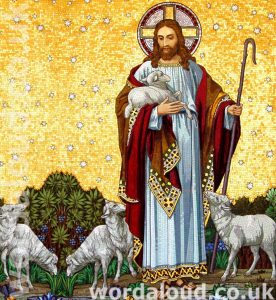
A Reading From The Letter Of Saint Ignatius Of Antioch To The Trallians | Renew Yourselves In Faith, The Flesh Of Christ, And Love, The Blood Of Christ
Make yourselves gentle, and be born again in the faith which is the body of the Lord and in the love which is the blood of Jesus Christ. No one must bear a grudge against his neighbor. Never give the pagans the slightest pretext, so that the great majority who serve God will not be mocked because of the folly of a few. Woe to him on account of whose folly my name is blasphemed.
So turn a deaf ear to the talk of anyone whose language has nothing to do with Jesus Christ. Descended from David, he was truly born of Mary, he really ate and drank. He was really persecuted under Pontius Pilate, and truly died by crucifixion, while heavenly and earthly beings and those under the earth looked on. He truly rose from the dead, being raised by his Father. Those who believe in him will be raised like him by the Father. We shall rise again in Christ without whom we do not have true life.
Avoid, then, those poisonous growths that bear deadly fruit; the mere taste of them is sudden death. Such growths are not of the Father’s planting; if they were they would be recognized as branches of the cross, their fruit would be imperishable. The cross of Christ’s passion is his invitation to you who are the members of his body.
The head cannot come to life without the members, since God, the very ground of unity, has foretold such a union.
I send you greetings from Smyrna and from all God’s churches which are here with me. They have been a comfort to me in every way, both physically and spiritually. The chains which I wear for the sake of Jesus Christ, praying all the time that I may come to God, are my plea. Continue to live together in that harmony of yours and persevere in prayer together. It is fitting that everyone, and especially the presbyters, should comfort the bishop and thereby honor the Father and Jesus Christ, and his apostles.
I beg you, if you love me, listen to me, so that this letter of mine may not witness against you. And pray for me, too, lest I be found unfit, for in God’s mercy I need your love to make me worthy of the destiny that is mine.
The communities of Smyrna and Ephesus send greeting. In all your prayers remember the church in Syria. I am unworthy to claim membership in it, being the least of them all. And now, farewell in Jesus Christ. Be submissive to your bishop, as you would to God’s command, and also to the clergy. As individuals, love one another with undivided affection. My life is being sacrificed for you, not only at this moment, but also when I shall come before God. Though I am still in danger, God the Father, through Jesus Christ, is my pledge that my prayer and yours will be heard. My desire is that, through him, you may be found without fault.
Christian Prayer With Jesus Christ
Lord Jesus Christ,
you are the true vine and the source of our life.
Renew us in faith, which is your body,
and in love, which is your precious blood.
Keep us steadfast in truth,
guard us from falsehood and division,
and unite us in one heart and one mind within your Church.
Grant that, following the example of Saint Ignatius,
we may bear witness to your passion in our lives
and share in the glory of your resurrection.
Through you, our Redeemer and our God,
who live and reign with the Father and the Holy Spirit,
one God, for ever and ever.
Amen.
Glossary Of Christian Terms
Saint Ignatius of Antioch (c. 35–107) – Early Christian bishop and martyr, one of the Apostolic Fathers. His letters, written while en route to execution in Rome, emphasise unity, obedience to ecclesial authority, and the reality of Christ’s Incarnation and Passion.
Faith as the Body, Love as the Blood – Ignatius’s mystical description of Christian life as participation in Christ’s incarnate reality. Faith joins believers to his Body; love unites them through his redeeming Blood.
Docetism – An early heresy claiming that Jesus only appeared to have a human body and to suffer physically. Ignatius firmly rejects this, affirming the real humanity and real suffering of Christ.
Eucharistic Theology – Ignatius’s view that the Eucharist is the true flesh and blood of Christ, the source and sign of unity for the whole Church.
Branches of the Cross – A metaphor for authentic discipleship. Those truly rooted in Christ bear the fruit of the Cross—sacrifice, endurance, and love.
Smyrna and Ephesus – Prominent Christian communities in Asia Minor (modern Turkey) which supported Ignatius on his journey to martyrdom.
The Church in Syria – Ignatius’s own Church in Antioch, for which he continually requests prayer.
Submissive to the bishop and clergy – A hallmark of Ignatius’s ecclesiology. Obedience to rightful authority within the Church is, for him, obedience to God’s own command.
Undivided affection – The love that sustains true unity among believers; not sentimental but grounded in charity, humility, and the shared life of Christ.




There is an extraordinary contrast between yesterday’s celebration of the birth of Jesus, and today’s of the first Christian martyr, Stephen, stoned to death because he had to the courage to believe in Jesus, and would not be cowed into silence by the repressive actions of the Jewish authorities [ … ]
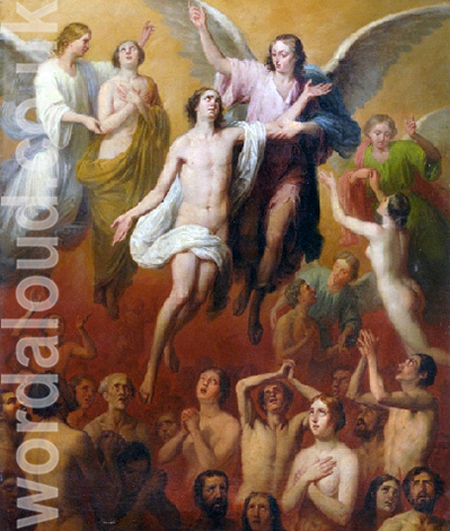
The second-century homily develops early Christian theology of repentance that is both moral and eschatological. It presents repentance not as a fleeting emotion but as a transformative act that reshapes the believer’s life before the final judgment. The homilist combines vivid imagery with ethical exhortation, expressing the conviction that human freedom and divine mercy must meet in time if salvation is to be realised [ … ]
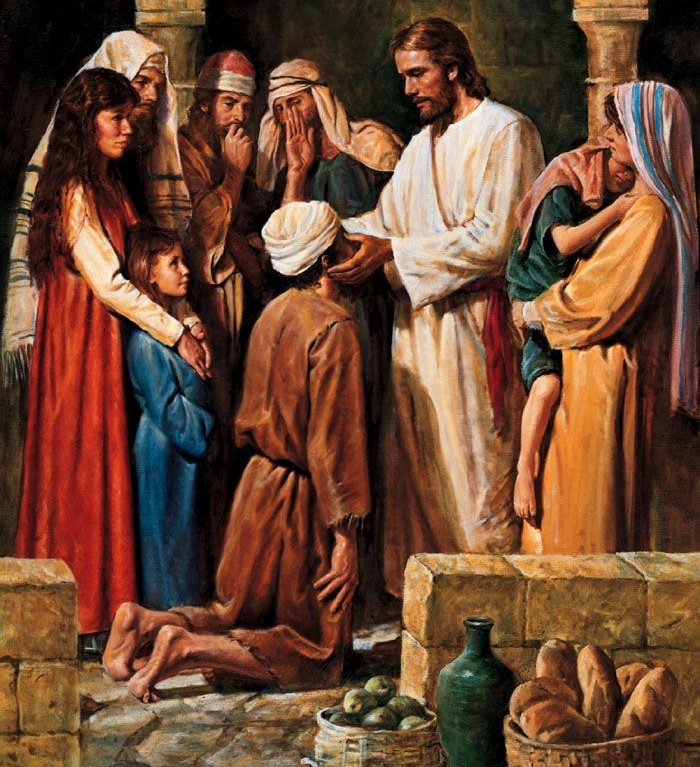
Blessed Isaac of Stella reflects on the close unity between Christ and the Church, especially in relation to the forgiveness of sins. He begins by affirming that two things belong to God alone: the right to receive confession and the power to forgive. Yet, he immediately links this divine prerogative with the mystery of Christ’s union with his bride, the Church [ … ]