
Christian Prayer | Walk With Jesus | Jesus, Walk With Me
Office Of Readings | Week 30, Sunday, Ordinary Time | A Reading From The Letter Of Pope Saint Clement I To The Corinthians | The Lord Of The Universe Has Enjoined Peace And Harmony For The Good Of All Alike
‘In his goodness to all, God gives order and harmony to the world.’
Saint Clement’s letter to the Corinthians, written in the late first century, is among the earliest post-apostolic Christian documents. Addressing a community divided by internal strife, he presents the created order as both mirror and lesson. In creation, Clement finds an image of obedience, regularity, and peace. What human discord disrupts, divine order maintains.
The reading unfolds as a meditation on cosmic governance. The universe is not self-directed but shaped by command. The stars follow set paths; the seas halt at their boundary; the winds keep their course. Clement’s description of creation is neither poetic invention nor scientific speculation but a moral vision. Each element performs its appointed role without rivalry or excess. The peace of creation becomes a rebuke to human restlessness and a summons to concord within the Church.
Clement’s cosmology assumes a moral structure. The world’s harmony is not neutral mechanism but the visible sign of divine justice and mercy. The heavens and the earth, in their ordered motion, bear witness to the peace of their Maker. For Clement, God’s creative act is continuous: providence sustains what creation began. The same word that fixed the courses of sun and sea maintains the community of believers, calling them to a life of order, mutual regard, and self-restraint.
The reading also expresses an early Christian sense of universality. Divine care extends to all things — from the stars of heaven to the smallest living creature. Nothing exists beyond the scope of providence. The moral implication is plain: if creation itself exists in peace, then discord among believers is a failure of correspondence with the created order. Harmony with God demands harmony within the body of the faithful.
Underlying Clement’s reflection is a theology of measure and limit. Each part of creation is bounded: the waves may come thus far, the winds blow in their season, the earth yields fruit in due time. This restraint is not deprivation but stability; it is the form by which peace is maintained. The Christian life, by analogy, is shaped not by endless striving but by obedience to form — to the command that governs all things in due proportion.
This reading concludes with a doxology that re-centres all reflection on Christ. The harmony of creation finds its source and fulfilment in the Word through whom all things were made. The peace observed in the world below is an image of the peace that reconciles heaven and earth in Christ. To live within that peace is to enter into the true rhythm of creation.
A Reading From The Letter Of Pope Saint Clement I To The Corinthians | The Lord Of The Universe Has Enjoined Peace And Harmony For The Good Of All Alike
Let us fix our gaze on the Father and Creator of the whole world, and let us hold on to his peace and blessings, his splendid and surpassing gifts. Let us contemplate him in our thoughts and with our mind’s eye reflect upon the peaceful and restrained unfolding of his plan; let us consider the care with which he provides for the whole of his creation.
By his direction the heavens are in motion, and they are subject to him in peace. Day and night fulfill the course he has established without interfering with each other. The sun, the moon and the choirs of stars revolve in harmony at his command in their appointed paths without deviation. By his will the earth blossoms in the proper seasons and produces abundant food for men and animals and all the living things on it without reluctance and without any violation of what he has arranged.
Yet unexplored regions of the abysses and inexpressible realms of the deep are subject to his laws. The mass of the boundless sea, joined together by his ordinance in a single expanse, does not overflow its prescribed limits but flows as he commanded it. For he said: Thus far shall you come, and your waves will be halted here. The ocean, impassable for men, and the worlds beyond it are governed by the same edicts of the Lord.
The seasons, spring, summer, autumn and winter, follow one another in harmony. The quarters from which the winds blow function in due season without the least deviation. And the ever-flowing springs, created for our health as well as our enjoyment, unfailingly offer their breasts to sustain human life. The tiniest of living creatures meet together in harmony and peace. The great Creator and Lord of the universe commanded all these things to be established in peace and harmony, in his goodness to all, and in overflowing measure to us who seek refuge in his mercies through our Lord Jesus Christ; to him be glory and majesty for ever and ever. Amen.
Christian Prayer With Jesus
O God,
who in the order of creation reveal your peace and goodness,
grant that we who behold the harmony of your works
may live in concord with one another
and find our rest in obedience to your will.
Through Jesus Christ our Lord,
who with you and the Holy Spirit
lives and reigns, one God,
for ever and ever. Amen.
Glossary Of Christian Terms
Saint Clement of Rome – Traditionally the fourth Bishop of Rome (c. 88 – 97 AD). His Letter to the Corinthians addresses issues of division within the Corinthian Church and is one of the earliest examples of papal intervention beyond Rome.
Providence – God’s continuing governance and care for creation. Distinct from the initial act of creation; it is the sustaining will that maintains order.
‘Thus far shall you come…’ – From Job 38:11, used to illustrate divine mastery over the chaotic forces symbolised by the sea.
Cosmos – The ordered universe; from the Greek kosmos, meaning ‘order’ or ‘arrangement’.
Harmony – In Clement’s usage, the right relation of all created things to the will of God, not mere balance or tranquillity.
Doxology – A short expression of praise to God, often concluding early Christian prayers or letters.



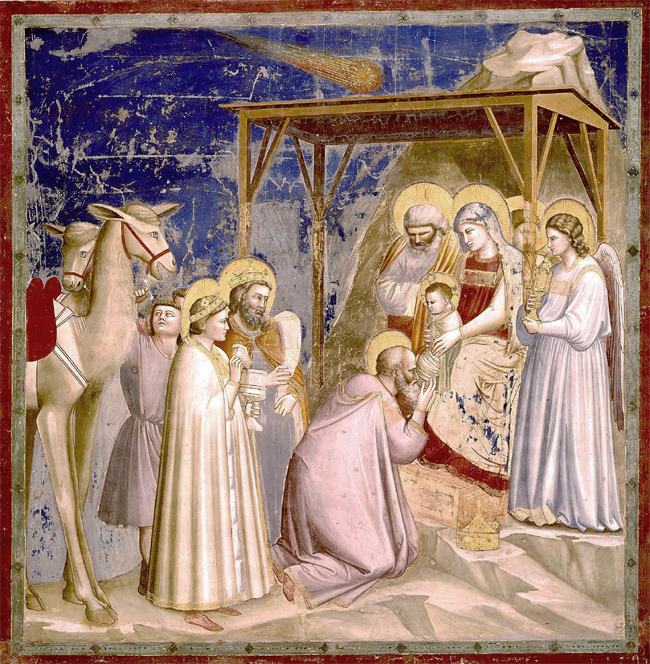
Christians believe that Jesus is the son of God and the savior of humanity, and that through his death and resurrection, he made it possible for people to be reconciled to God and to have eternal life. Christianity is centered on the belief in one God, who is the creator of the universe and the source of all life. Christians believe that God is loving and merciful, and that he desires a personal relationship with every person. We also believe that God has revealed himself through the Bible, which is the holy scripture of Christianity, and through his son, Jesus [ … ]
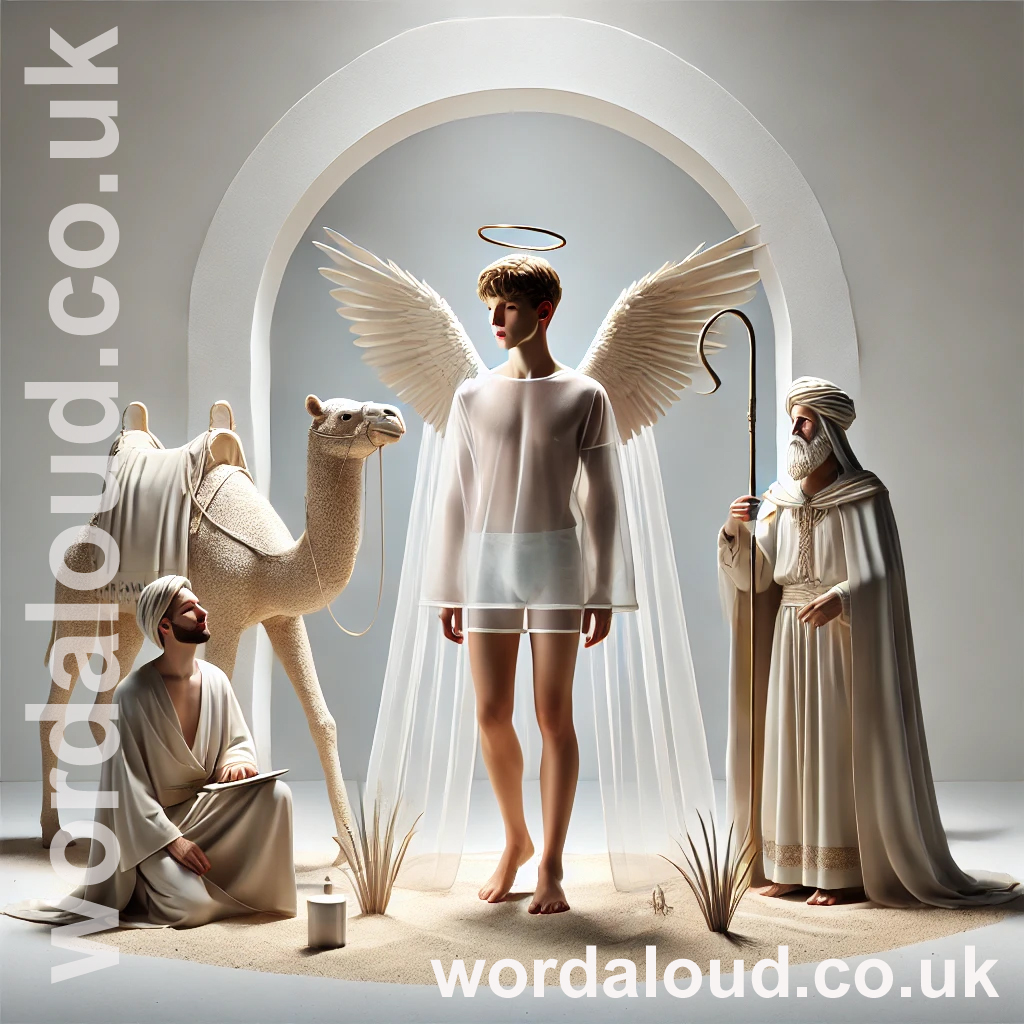
T.S. Eliot’s poem ‘Journey Of The Magi’, written in 1927, explores themes of transformation, faith, and the search for meaning. Inspired by Eliot’s conversion to Anglicanism, the poem tells the story of one of the Magi, the wise men who travelled to witness the birth of Christ [ … ]
Saint Fulgentius of Ruspe sets out a theology of the Eucharist grounded in the words of Saint Paul: ‘Do this in remembrance of me.’ He presents the Eucharist as the means by which the Church continues to proclaim the death of the Lord until his return. The sacrifice of Christ, offered once for all, is made present in the Church’s act of remembrance. The liturgy is not a repetition but a participation in that one sacrifice [ … ]
