
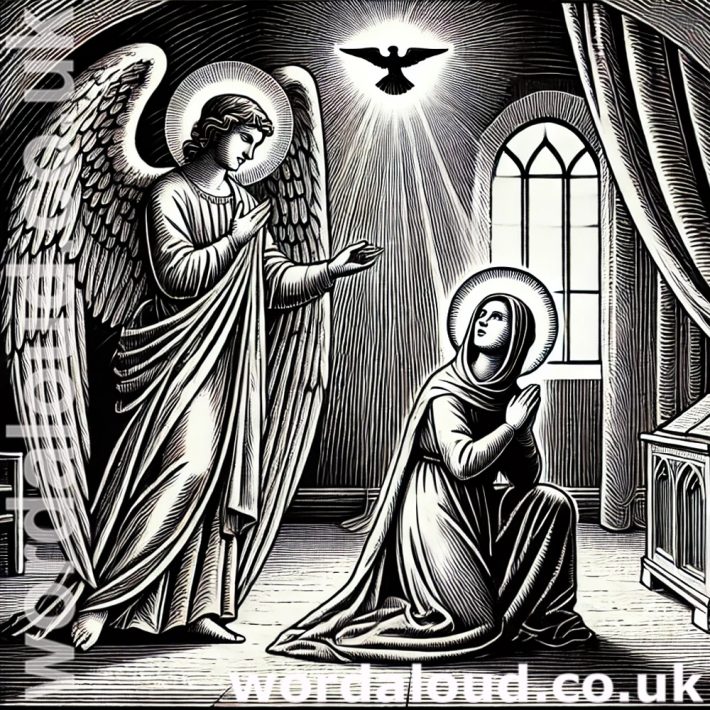
Christian Art | Nativity Of The Lord Jesus Christ | Gabriel Speaks To Mary | Do Not Be Afraid
Office Of Readings | Advent 17th December | A Reading From A Letter Of Pope Saint Leo The Great | The Mystery Of Our Reconciliation With God | True Humanity Of Jesus Christ
‘The mystery of our reconciliation with God.’
This reading explains why the true humanity of Jesus Christ is essential for salvation. Saint Leo insists that it is not enough to say that Jesus was human in a general sense. Jesus must be recognised as truly belonging to human history, descended from the line traced in the Gospels.
The genealogies in Matthew and Luke are central to this argument. Matthew shows Christ’s descent from Abraham and David, locating him within the history of Israel. Luke traces the line back to Adam, emphasising that Christ shares the same human nature as all people. By linking Christ to both the first Adam and the last Adam, the Gospel shows that salvation concerns the whole human race.
Saint Leo contrasts the incarnation with earlier appearances of God in human form. In the Old Testament, God sometimes appeared in visible ways, but these were temporary signs pointing forward. They were not the incarnation itself. Reconciliation with God required not an appearance, but a real human birth, brought about by the Holy Spirit through the Virgin Mary.
The reading stresses that salvation could only occur if Jesus fully shared our condition. If Christ had not taken human nature from within the human family, his victory over sin and death would not have applied to us. Redemption had to be achieved from inside the human condition, not from outside it.
Finally, Saint Leo connects Christ’s birth with the new birth of believers. Just as Christ was conceived by the Spirit, so Christians are reborn by the same Spirit. Reconciliation with God is therefore not only an event in Christ’s life, but something shared by those who are joined to Jesus.
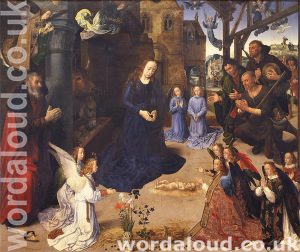
A Reading From A Letter Of Pope Saint Leo The Great | The Mystery Of Our Reconciliation With God
To speak of our Lord, the son of the Blessed Virgin Mary, as true and perfect man is of no value to us if we do not believe that he is descended from the line of ancestors set out in the Gospel.
Matthew’s gospel begins by setting out the genealogy of Jesus Christ, son of David, son of Abraham, and then traces his human descent by bringing his ancestral line down to his mother’s husband, Joseph. On the other hand, Luke traces his parentage backward step by step to the actual father of mankind, to show that both the first and the last Adam share the same nature.
No doubt the Son of God in his omnipotence could have taught and sanctified men by appearing to them in a semblance of human form as he did to the patriarchs and prophets, when for instance he engaged in a wrestling contest or entered into conversation with them, or when he accepted their hospitality and even ate the food they set before him. But these appearances were only types, signs that mysteriously foretold the coming of one who would take a true human nature from the stock of the patriarchs who had gone before him. No mere figure, then, fulfilled the mystery of our reconciliation with God, ordained from all eternity. The Holy Spirit had not yet come upon the Virgin nor had the power of the Most High overshadowed her, so that within her spotless womb Wisdom might build itself a house and the Word become flesh. The divine nature and the nature of a servant were to be united in one person so that the Creator of time might be born in time, and he through whom all things were made might be brought forth in their midst.
For unless the new man, by being made in the likeness of sinful flesh, had taken on himself the nature of our first parents, unless he had stooped to be one in substance with his mother while sharing the Father’s substance and, being alone free from sin, united our nature to his, the whole human race would still be held captive under the dominion of Satan. The Conqueror’s victory would have profited us nothing if the battle had been fought outside our human condition. But through this wonderful blending the mystery of new birth shone upon us, so that through the same Spirit by whom Christ was conceived and brought forth we too might be born again in a spiritual birth; and in consequence the evangelist declares the faithful to have been born not of blood, nor of the desire of the flesh, nor of the will of man, but of God.
Christian Prayer With Jesus Christ
Lord God,
you chose to save us
by sending your Son among us
as one who truly shared our nature.
Grant that we may live
as those born again by your Spirit,
and remain faithful
to the gift of reconciliation
you have given us in Christ.
Amen.
Glossary Of Christian Terms
Incarnation – The taking of human nature by the Son of God in Jesus Christ.
Genealogy – A record of family descent, used in the Gospels to show Christ’s place in human history.
Adam – The first man; Christ is called the ‘last Adam’ because he restores what was lost through sin.
Reconciliation – The restoration of the relationship between God and humanity through Christ.
Holy Spirit – The Spirit of God, through whom Christ was conceived and believers are reborn.
New birth – Spiritual rebirth given by God, not by human effort.



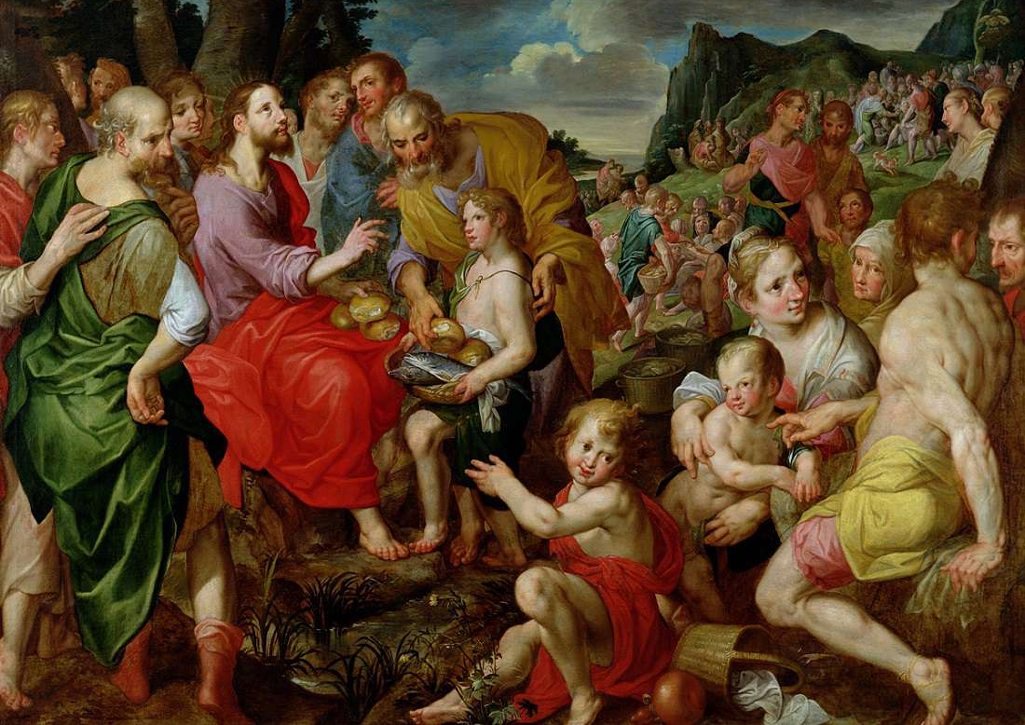
The people have gathered to be with Jesus, following Jesus on foot, out of the cities, to be near Jesus and to be healed, in a desert place. It may seem strange to us that the disciples wanted to send the people away! The disciples’ thought is that the people must go and buy themselves food to eat. Jesus knows differently. Jesus tells the disciples themselves to give the people the food they need to eat [ … ]
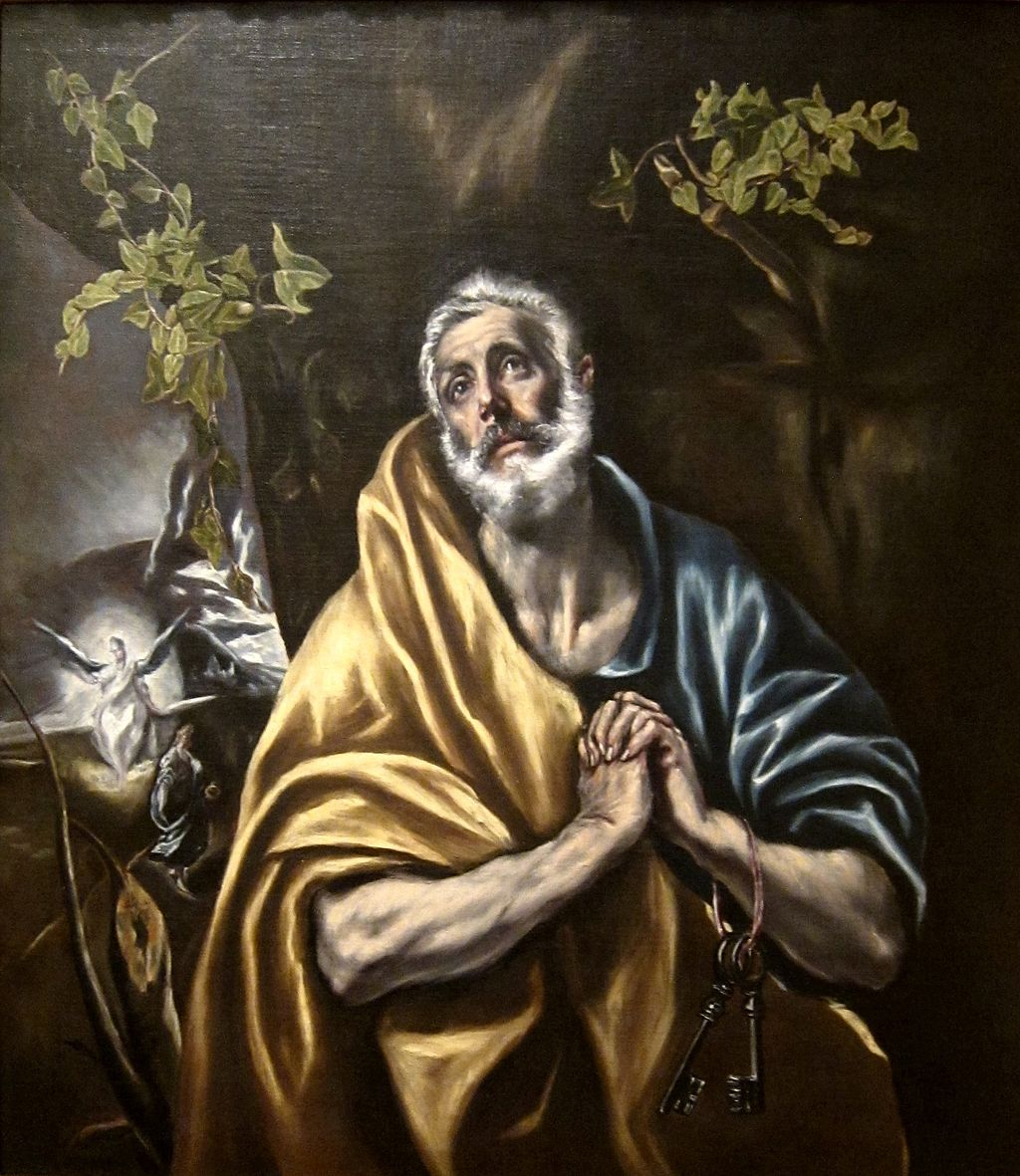
Today’s Gospel verses invite us once more to consider the true identity of Jesus. This scene is filled both with a sense of preconceptions and expectations, and with the over-riding knowledge of the new, which is the truth of Jesus. Additionally, we are asked by Jesus to declare the truth of our knowledge of who Jesus is. We are invited by Jesus to confess our Christian faith [ … ]

The poem explores themes of human frailty, sin, repentance, and divine mercy. The poem reflects on the brevity and vulnerability of life, contrasting human weakness with the power of God’s compassion. The poet, Herbert, begins by confessing the greatness of his sin and acknowledging the fleeting nature of human existence. The image of life as a ‘quick flower’ or ‘momentary bloom’ emphasizes this transience. Life is presented as something that is constantly ‘undressing’ or stripping away, ultimately leading toward death, which is depicted as the inevitable destination [ … ]
