
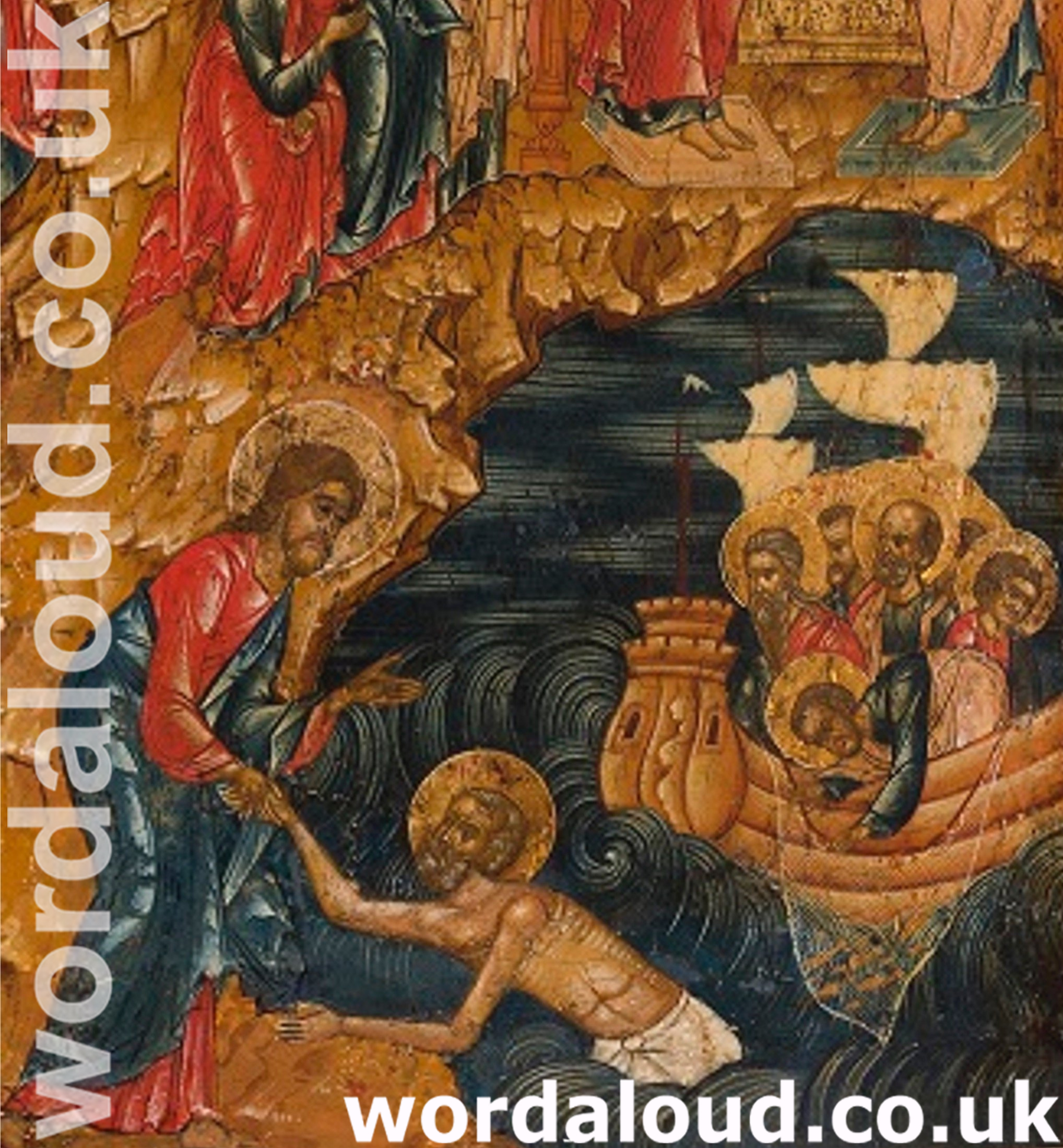
Christian Art | Baptism Of Jesus Christ | Theophany
Office Of Readings | The Baptism Of The Lord Jesus Christ | A Reading From The Orations Of Saint Gregory Nazianzen | The Baptism Of Jesus Christ
‘The baptism of Jesus Christ.’
Saint Gregory Nazianzen presents the baptism of Christ as an event that concerns not only Jesus Christ himself but the whole renewal of creation. From the opening lines, Saint Gregory draws the reader into participation: what happens to Jesus Christ is meant to happen to us all. Christ enters the water, and humanity is invited to enter with him; Christ rises, and humanity is raised with Jesus Christ.
Gregory is careful to stress that Christ does not come to the Jordan because he needs purification. Rather, Jesus comes to sanctify the waters themselves. By entering the Jordan, Christ prepares baptism for others. Water, already central to creation and life, now becomes the means through which the Spirit brings about new creation. Gregory echoes the language of Genesis: spirit and water together signal a beginning again.
The exchange between John the Baptist and Jesus highlights the difference between servant and Lord, but also their relationship within God’s saving plan. John recognises his unworthiness, yet Jesus insists. Gregory interprets this insistence as part of Christ’s humility and his full identification with sinful humanity. Christ submits to baptism in order to bury sin in the waters, even though he himself is without sin.
The opening of the heavens is a key moment. Gregory links it directly to Adam’s fall: what was closed through disobedience is reopened through Christ. The descent of the Holy Spirit and the voice of the Father reveal the Trinity acting together. The dove recalls Noah’s flood, but this time the water does not destroy life; it restores it.
Gregory moves from contemplation to exhortation. Because Jesus Christ has been baptised, believers are called to live as those who have been cleansed. Baptism is not only an event in the past but an ongoing conversion. Gregory insists that holiness is not static; believers are to ‘continue to be cleansed’.
There is an emphasis on light. Baptism brings participation in the light of Christ, and this light is meant to be visible in the world. Christians are called to reflect, though imperfectly, the life of the Trinity. Gregory holds together humility and hope: what is received now is only a beginning, a partial sharing in a glory that will one day be complete.

A Reading From The Orations Of Saint Gregory Nazianzen | The Baptism Of Jesus Christ
Christ is bathed in light; let us also be bathed in light. Christ is baptized; let us also go down with him, and rise with him.
John is baptizing when Jesus draws near. Perhaps he comes to sanctify his baptizer; certainly he comes to bury sinful humanity in the waters. He comes to sanctify the Jordan for our sake and in readiness for us; he who is spirit and flesh comes to begin a new creation through the Spirit and water.
The Baptist protests; Jesus insists. Then John says: I ought to be baptized by you. He is the lamp in the presence of the sun, the voice in the presence of the Word, the friend in the presence of the Bridegroom, the greatest of all born of woman in the presence of the firstborn of all creation, the one who leapt in his mother’s womb in the presence of him who was adored in the womb, the forerunner and future forerunner in the presence of him who has already come and is to come again. I ought to be baptized by you: we should also add, ‘and for you,’ for John is to be baptized in blood, washed clean like Peter, not only by the washing of his feet.
Jesus rises from the waters; the world rises with him. The heavens, like Paradise with its flaming sword, closed by Adam for himself and his descendants, are rent open. The Spirit comes to him as to an equal, bearing witness to his Godhead. A voice bears witness to him from heaven, his place of origin. The Spirit descends in bodily form like the dove that so long ago announced the ending of the flood and so gives honour to the body that is one with God.
Today let us do honour to Christ’s baptism and celebrate this feast in holiness. Be cleansed entirely and continue to be cleansed. Nothing gives such pleasure to God as the conversion and salvation of men, for whom his every word and every revelation exist. He wants you to become a living force for all mankind, lights shining in the world. You are to be radiant lights as you stand beside Christ, the great light, bathed in the glory of him who is the light of heaven. You are to enjoy more and more the pure and dazzling light of the Trinity, as now you have received – though not in its fullness – a ray of its splendour, proceeding from the one God, in Christ Jesus our Lord, to whom be glory and power for ever and ever. Amen.
Christian Prayer With Jesus Christ
Lord Jesus Christ,
You entered the waters not for your own sake but for ours.
Cleanse us through your baptism, raise us into new life, and open our hearts to the light of your Spirit.
May we live as children of the light and bear witness to your renewing work in the world.
Amen
Glossary Of Christian Terms
Baptism of Christ | The event at the Jordan in which Jesus is baptised by John, not for purification but to sanctify the waters and inaugurate Christian baptism.
Theophany | A manifestation of God; in Christ’s baptism, God is revealed through the Father’s voice, the Son in the water, and the Spirit descending like a dove.
New creation | The renewal of humanity and the world through Christ by water and the Spirit, echoing the creation imagery of Genesis.
John the Baptist | The prophet and forerunner who prepares the way for Christ, calls Israel to repentance, and baptises Jesus in the Jordan.
Sanctification | God’s action of making persons or things holy, especially through Christ’s presence and the work of the Holy Spirit.
The Jordan | The river in which Christ is baptised; a biblical boundary and place of transition, now transformed into a source of renewal.
The Trinity | The one God known as Father, Son, and Holy Spirit, revealed together at Christ’s baptism.
The Holy Spirit | The third person of the Trinity, who descends upon Christ at the Jordan and is given to believers through baptism.
The Dove | The visible sign of the Spirit at Christ’s baptism, recalling the dove of Noah and symbolising peace, renewal, and divine approval.
Voice from Heaven | The Father’s declaration identifying Jesus as his beloved Son, confirming Christ’s identity and mission.
Light | A biblical image for divine life, truth, and holiness, in which believers share through Christ.
Conversion | The turning of the heart towards God, begun in baptism and renewed throughout the Christian life.
Humility of Christ | Christ’s willingness to submit to baptism and fully identify with sinful humanity despite being without sin.
Adoption | The gift by which believers, united to Christ, become children of God through baptism.
Opening of the Heavens | A sign that access to God, closed through sin, is restored through Christ.
Flood imagery | The biblical pattern in which water signifies judgement and renewal, fulfilled positively in baptism.
Participation | The sharing by believers in Christ’s death, resurrection, and divine life through the sacraments.
Holiness | Life shaped by God’s presence and purpose, received as a gift and lived out through obedience and love.
Forerunner | One who comes before another to prepare the way; a title traditionally given to John the Baptist.
Grace | God’s free and undeserved gift of divine life, given through Christ and communicated by the Spirit.


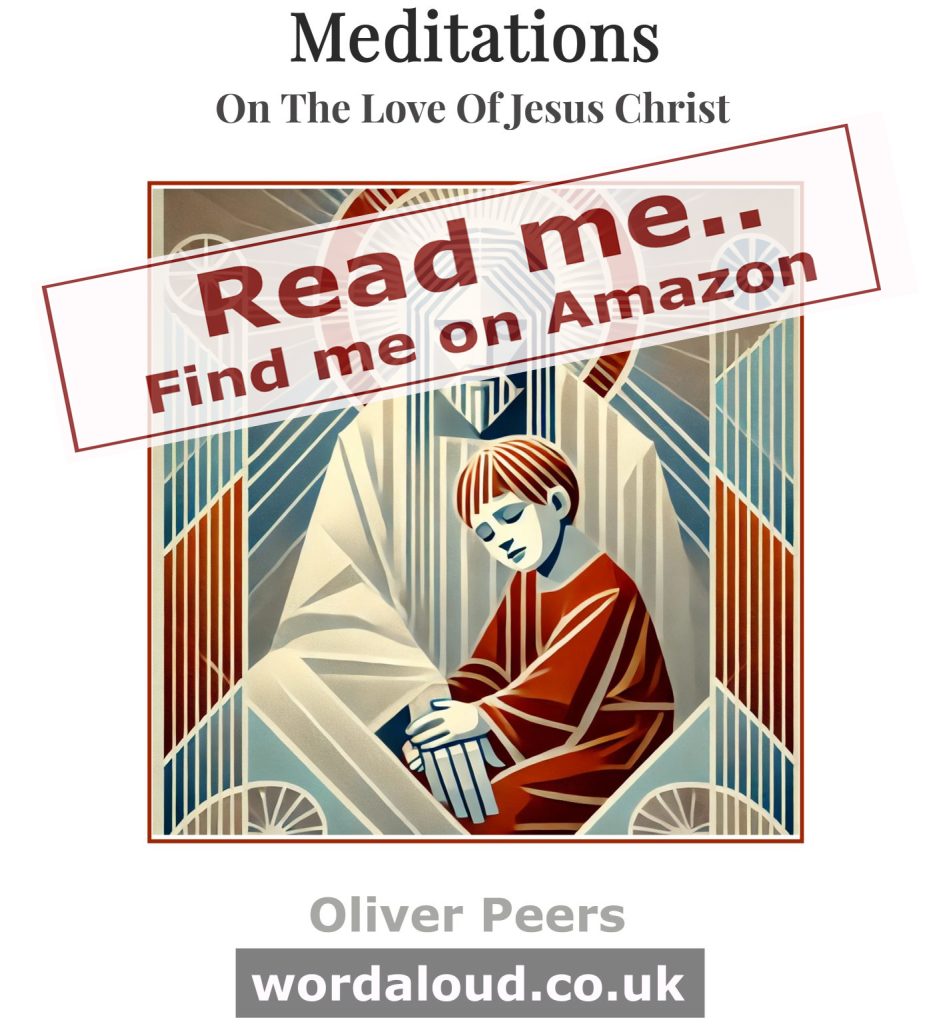
In his letter to Saint Polycarp, Bishop of Smyrna, Saint Ignatius of Antioch speaks not only as a spiritual father and friend but also as one who writes under the shadow of martyrdom. On the way to his execution in Rome around AD 107, Ignatius pens a letter that overflows with spiritual depth, pastoral wisdom, and a vision of Christian endurance grounded in Jesus Christ [ … ]
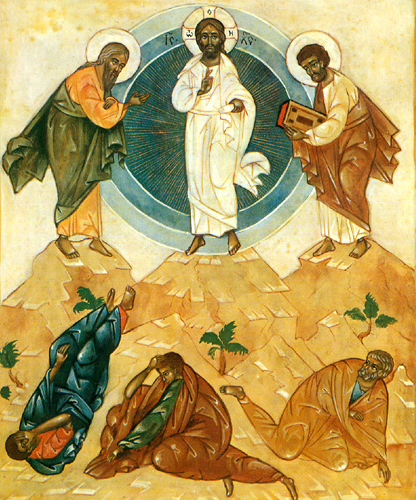
As they travel on the way to Jerusalem, Jesus throws his disciples into confusion by telling them about the suffering and death he must undergo. The disciples simply do not understand. For centuries, the Jews have awaited the coming of the Messiah, whom they envisaged as a glorious warrior king, not as one who would suffer and die the most ignominious of deaths, on a cross, of all things. A person condemned to die on a cross could not be the Messiah; rather, according to the Old Law, he had to be “cursed by God” (Deuteronomy 21: 22-23). The disciples cannot see the divine plan for our salvation, while the command for all who would be saved to ‘take up his cross and follow me’ must have seemed both strange and terrifying. To reassure his disciples, Jesus allows them to witness his glorious body through the transfiguration [ … ]
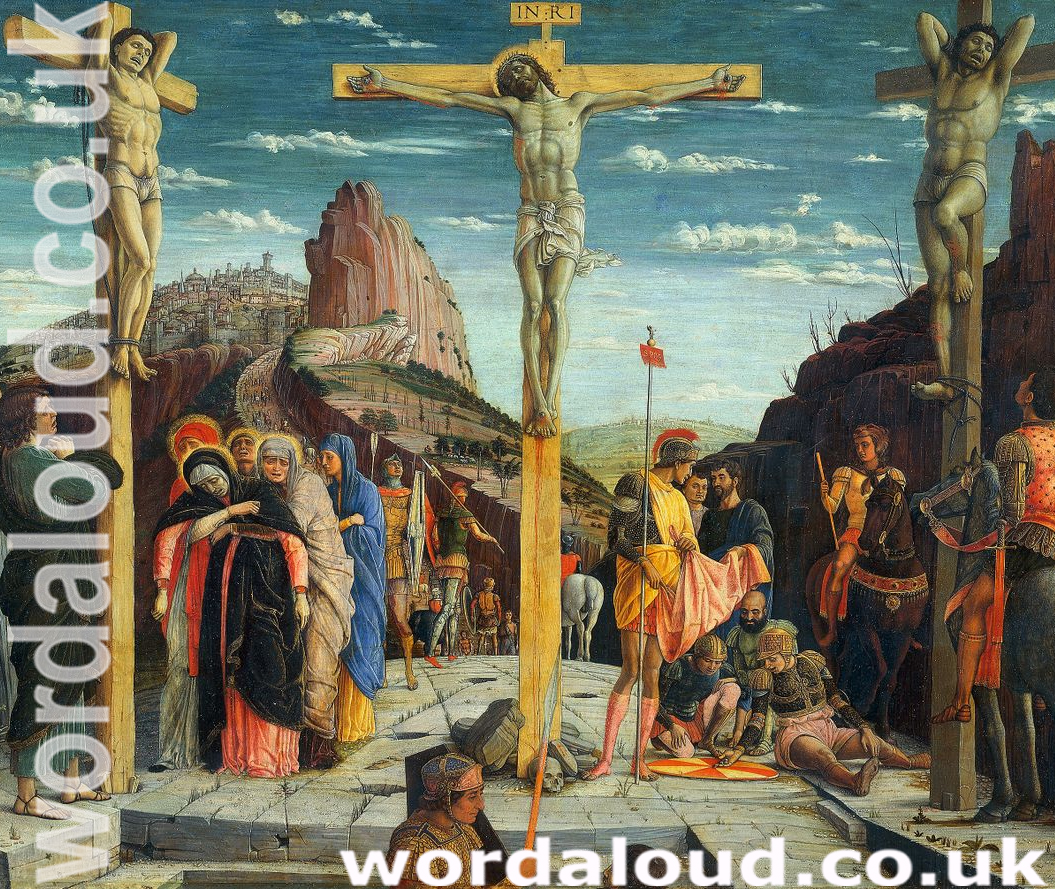
Christian Art | Our Lord Jesus On The Cross | God The Father | God The Son Office Of Readings | Advent December 23rd | A Reading From The Treatise Of Saint Hippolytus Against The Heresy Of Noetus | The Hidden Sacrament Is Revealed ‘The hidden sacrament is revealed.’ In this reading, Saint Hippolytus writes against the Noetic heresy, which denied the real distinction between the Father and the Son by treating them as the same person acting under different names. The purpose of Saint Hippolytus is to defend the Church’s confession of one God who is not solitary, but who exists with his Word and Spirit. Hippolytus begins by setting a principle: knowledge of God comes from the Holy Scriptures, not from speculation or private reasoning. Faith is not shaped by human preference but by what God has chosen to reveal. The Father determines how He is believed, the Son how He is glorified, and the Spirit how He is received. This establishes Scripture as the rule of faith and guards against theological invention. Hippolytus then affirms that God existed alone before creation, with nothing co-eternal alongside Him. At the same time, God was not without reason, wisdom, or power. Hippolytus insists that plurality within God does not compromise divine unity. God contains within himself Word, wisdom, and counsel. Creation begins when God wills and manifests His Word. The Word is not created from nothing but proceeds from God and acts as the agent of creation. The Word is first invisible to the created world, though known to God. When God chooses, He makes the Word visible, described as ‘Light of Light’. This language safeguards both distinction and unity: the Word comes from God and reveals God, without being separate from Him. The manifestation of the Word is ordered towards salvation, so that the world may see and be saved. Hippolytus identifies this Word clearly with the Son of God. Through him all things were made, and he alone comes forth from the Father. The Law and the prophets belong to the same saving plan. God speaks through them by the Holy Spirit, so that they proclaim not their own ideas but the Father’s will. Revelation is therefore coherent: creation, prophecy, and incarnation belong to one divine purpose. Hippolytus appeals to the Gospel of John to show continuity between prophecy and fulfilment. The Word spoken of by the prophets is the Word made flesh. Though the world was made through him, it failed to recognise him. This failure does not negate God’s plan but reveals the depth of the mystery now disclosed. A Reading From The Treatise Of Saint Hippolytus Against The Heresy Of Noetus | The Hidden Sacrament Is Revealed There is, brethren, one God, the knowledge of whom we gain from the Holy Scriptures and from no other source. Whatever things the Holy Scriptures declare, at these let us look; and whatever they teach, let us learn it; and as the Father wills our belief to be, let us believe; and as he wills the Son to be glorified, let us glorify him; and as he wills the Holy Spirit to be bestowed, let us receive him. Not according to our own will, nor according to our own mind, nor yet storming by force the things which are given by God, but even as he has chosen to teach them by the Holy Scriptures, so let us discern them. God, subsisting alone, and having nothing coeval with himself, chose to create the world. And conceiving the world in mind, and willing and uttering the Word, he made it; and at once it appeared, formed it in the way he desired. For us it is sufficient simply to know that nothing was coeval with God. Outside him there was nothing; but he, while existing alone, yet existed in plurality. For he did not lack reason, or wisdom, or power, or counsel. All things were in him, and he was the All. At a time and in a manner chosen by him he made his Word manifest, and through his Word he made all things. He bears this Word in himself, as yet invisible to the created world. He makes him visible, uttering the voice first, and begetting him as Light of Light. He presents him to the world as its Lord; and whereas the Word was visible formerly to God alone, and invisible to the world which is made, God makes the Word visible in order that the world might see him and be able to be saved. This is the mind which came forth into the world and was manifested as the Son of God. All things came into being through him, and he alone comes from the Father. He gave us the Law and the prophets; and in giving them, he made them speak by the Holy Ghost, in order that, receiving the inspiration of the Father’s power, they might declare the Father’s counsel and will. Thus, then, was the Word made manifest, even as the blessed John says. For he sums up the things that were said by the prophets, and shows that this is the Word, by whom all things were made. In the beginning was the Word, and the Word was with God, and the Word was God. All things were made by him, and without him nothing was made. And later, The world was made by him, and the world did not know him; he came to his own, and his own did not receive him. Christian Prayer With Jesus Lord God,You are one, and from You come the Word and the Spirit.You have chosen to make Yourself known, not by human effort,but by what You have revealed in the scriptures. You spoke Your Word, and all things were made.You made that Word visible, so that the world might see and be saved.Grant that we may receive what You give,believe what You teach,and worship You as You have shown Yourself to be. Keep us […]