

Christian Art | Baptism Of Jesus Christ | Theophany
Office Of Readings | The Baptism Of The Lord Jesus Christ | A Reading From The Orations Of Saint Gregory Nazianzen | The Baptism Of Jesus Christ
‘The baptism of Jesus Christ.’
Saint Gregory Nazianzen presents the baptism of Christ as an event that concerns not only Jesus Christ himself but the whole renewal of creation. From the opening lines, Saint Gregory draws the reader into participation: what happens to Jesus Christ is meant to happen to us all. Christ enters the water, and humanity is invited to enter with him; Christ rises, and humanity is raised with Jesus Christ.
Gregory is careful to stress that Christ does not come to the Jordan because he needs purification. Rather, Jesus comes to sanctify the waters themselves. By entering the Jordan, Christ prepares baptism for others. Water, already central to creation and life, now becomes the means through which the Spirit brings about new creation. Gregory echoes the language of Genesis: spirit and water together signal a beginning again.
The exchange between John the Baptist and Jesus highlights the difference between servant and Lord, but also their relationship within God’s saving plan. John recognises his unworthiness, yet Jesus insists. Gregory interprets this insistence as part of Christ’s humility and his full identification with sinful humanity. Christ submits to baptism in order to bury sin in the waters, even though he himself is without sin.
The opening of the heavens is a key moment. Gregory links it directly to Adam’s fall: what was closed through disobedience is reopened through Christ. The descent of the Holy Spirit and the voice of the Father reveal the Trinity acting together. The dove recalls Noah’s flood, but this time the water does not destroy life; it restores it.
Gregory moves from contemplation to exhortation. Because Jesus Christ has been baptised, believers are called to live as those who have been cleansed. Baptism is not only an event in the past but an ongoing conversion. Gregory insists that holiness is not static; believers are to ‘continue to be cleansed’.
There is an emphasis on light. Baptism brings participation in the light of Christ, and this light is meant to be visible in the world. Christians are called to reflect, though imperfectly, the life of the Trinity. Gregory holds together humility and hope: what is received now is only a beginning, a partial sharing in a glory that will one day be complete.

A Reading From The Orations Of Saint Gregory Nazianzen | The Baptism Of Jesus Christ
Christ is bathed in light; let us also be bathed in light. Christ is baptized; let us also go down with him, and rise with him.
John is baptizing when Jesus draws near. Perhaps he comes to sanctify his baptizer; certainly he comes to bury sinful humanity in the waters. He comes to sanctify the Jordan for our sake and in readiness for us; he who is spirit and flesh comes to begin a new creation through the Spirit and water.
The Baptist protests; Jesus insists. Then John says: I ought to be baptized by you. He is the lamp in the presence of the sun, the voice in the presence of the Word, the friend in the presence of the Bridegroom, the greatest of all born of woman in the presence of the firstborn of all creation, the one who leapt in his mother’s womb in the presence of him who was adored in the womb, the forerunner and future forerunner in the presence of him who has already come and is to come again. I ought to be baptized by you: we should also add, ‘and for you,’ for John is to be baptized in blood, washed clean like Peter, not only by the washing of his feet.
Jesus rises from the waters; the world rises with him. The heavens, like Paradise with its flaming sword, closed by Adam for himself and his descendants, are rent open. The Spirit comes to him as to an equal, bearing witness to his Godhead. A voice bears witness to him from heaven, his place of origin. The Spirit descends in bodily form like the dove that so long ago announced the ending of the flood and so gives honour to the body that is one with God.
Today let us do honour to Christ’s baptism and celebrate this feast in holiness. Be cleansed entirely and continue to be cleansed. Nothing gives such pleasure to God as the conversion and salvation of men, for whom his every word and every revelation exist. He wants you to become a living force for all mankind, lights shining in the world. You are to be radiant lights as you stand beside Christ, the great light, bathed in the glory of him who is the light of heaven. You are to enjoy more and more the pure and dazzling light of the Trinity, as now you have received – though not in its fullness – a ray of its splendour, proceeding from the one God, in Christ Jesus our Lord, to whom be glory and power for ever and ever. Amen.
Christian Prayer With Jesus Christ
Lord Jesus Christ,
You entered the waters not for your own sake but for ours.
Cleanse us through your baptism, raise us into new life, and open our hearts to the light of your Spirit.
May we live as children of the light and bear witness to your renewing work in the world.
Amen
Glossary Of Christian Terms
Baptism of Christ | The event at the Jordan in which Jesus is baptised by John, not for purification but to sanctify the waters and inaugurate Christian baptism.
Theophany | A manifestation of God; in Christ’s baptism, God is revealed through the Father’s voice, the Son in the water, and the Spirit descending like a dove.
New creation | The renewal of humanity and the world through Christ by water and the Spirit, echoing the creation imagery of Genesis.
John the Baptist | The prophet and forerunner who prepares the way for Christ, calls Israel to repentance, and baptises Jesus in the Jordan.
Sanctification | God’s action of making persons or things holy, especially through Christ’s presence and the work of the Holy Spirit.
The Jordan | The river in which Christ is baptised; a biblical boundary and place of transition, now transformed into a source of renewal.
The Trinity | The one God known as Father, Son, and Holy Spirit, revealed together at Christ’s baptism.
The Holy Spirit | The third person of the Trinity, who descends upon Christ at the Jordan and is given to believers through baptism.
The Dove | The visible sign of the Spirit at Christ’s baptism, recalling the dove of Noah and symbolising peace, renewal, and divine approval.
Voice from Heaven | The Father’s declaration identifying Jesus as his beloved Son, confirming Christ’s identity and mission.
Light | A biblical image for divine life, truth, and holiness, in which believers share through Christ.
Conversion | The turning of the heart towards God, begun in baptism and renewed throughout the Christian life.
Humility of Christ | Christ’s willingness to submit to baptism and fully identify with sinful humanity despite being without sin.
Adoption | The gift by which believers, united to Christ, become children of God through baptism.
Opening of the Heavens | A sign that access to God, closed through sin, is restored through Christ.
Flood imagery | The biblical pattern in which water signifies judgement and renewal, fulfilled positively in baptism.
Participation | The sharing by believers in Christ’s death, resurrection, and divine life through the sacraments.
Holiness | Life shaped by God’s presence and purpose, received as a gift and lived out through obedience and love.
Forerunner | One who comes before another to prepare the way; a title traditionally given to John the Baptist.
Grace | God’s free and undeserved gift of divine life, given through Christ and communicated by the Spirit.



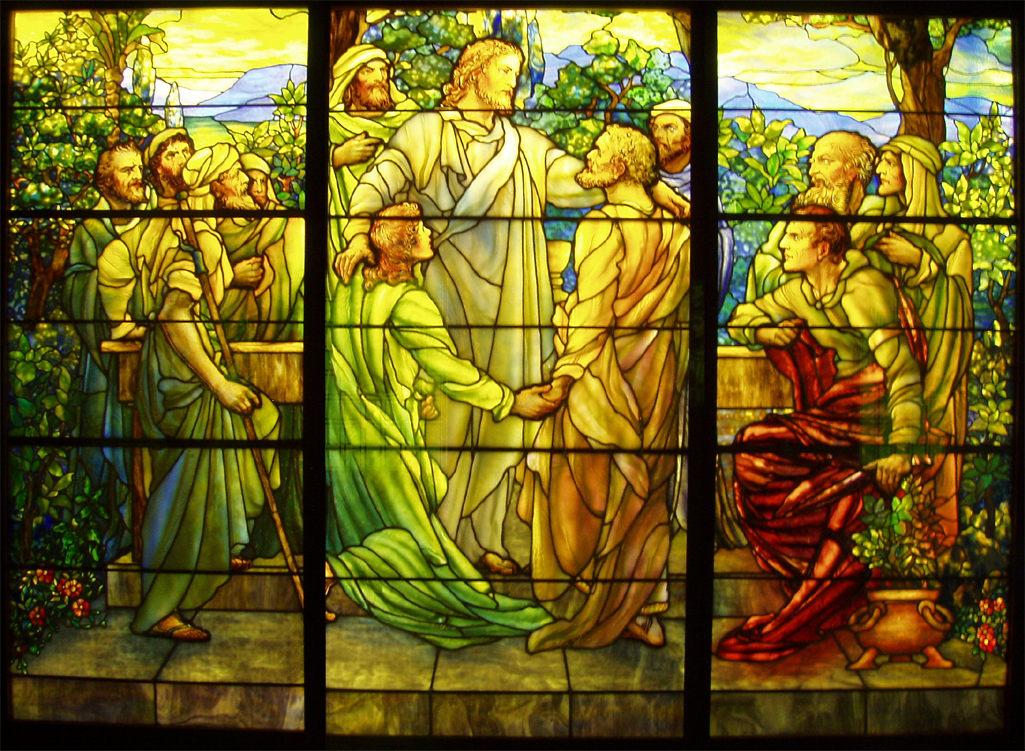
In today’s Gospel verses, Jesus teaches that the Pharisees have got it all wrong in relation to the Sabbath. While God gave the Sabbath to man as an opportunity to rest and to devote himself to divine worship, the Pharisees have choked the meaning of the Sabbath in a mass of legalese, turning it from being a time of joy into a time of anxiety and empty observance [ … ]
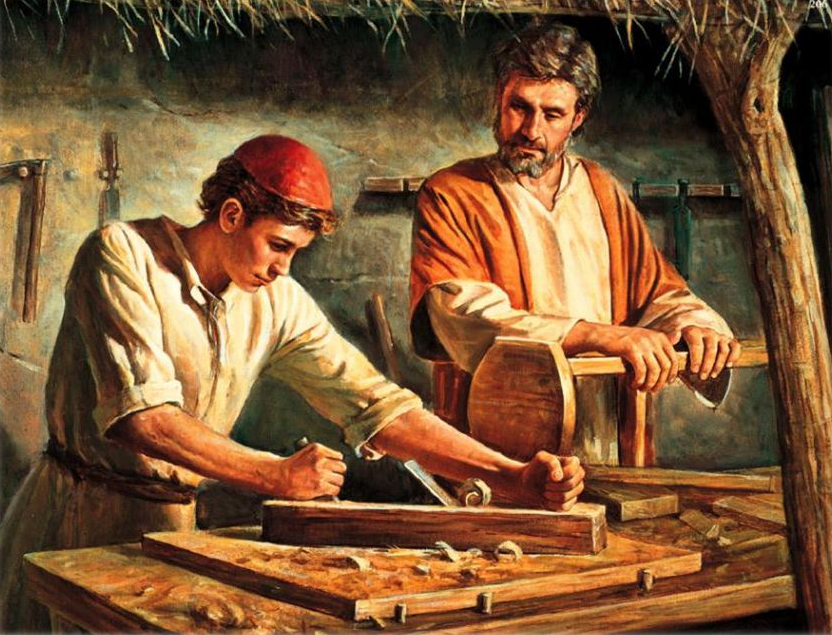
On Tuesday, His Grace turns to the theme of Jesus’ hidden years. His Grace asks the students to consider questions concerning what really happened: ‘Who, for instance, was Joseph? Was he indeed a carpenter, or has Joseph’s true role in the society in which he lived been misconstrued and forgotten to us? Though it be a beautiful, simplifying image to grasp, which offers to us much that is of value in Catholic faith… ‘A wise elder, which carpenter could mean, or a great engineer, an architekton, which in the Greek does not mean carpenter. But carpenter in the Hebrew could mean a wise man…’ His Grace turns the pages of his Bible back and forth, as if to itemize the paucity of information. Then he says: ‘What I think I can say to you with confidence is that it is of profound significance that we simply don’t know what Jesus was doing for most of his earthly life. There are some very different possibilities. One idea cherished by the Church is that Jesus worked with his father Joseph as a carpenter. Another possibility is that Jesus lived and prayed and studied closely with John the Baptist. They were cousins, and very close, almost the same, in age. Luke’s Gospel tells us clearly that Jesus and John knew each other from within the womb before they were born. So there may have been something quite important happening there. You see, we don’t know – it is an impossible mystery to us – just how much Jesus had to learn. This is because, if Jesus knew everything, humanly speaking, even as a tiny baby, then how can we say he is fully human? We simply can’t probe too far into this mystery, but we can draw extraordinary truth and healing from this thought, which becomes of immense relevance in our own lives. Jesus came to know and to understand himself not merely as a son of God, but as God the Son, and so as self-identical with his Father. It is not an adoptive relationship. Jesus is God. Now so much is hidden here. But this is a great gift. If you think about it, how do we come to know that we are loved by God, that we have our relationship with God? What are we born with in here’ – his chest – ‘and what do we have to learn? This is to say, what is gifted to us by other Christians at our baptism? ‘Jesus must have studied, and experienced profound revelation about who and what he truly was, and, so it seems to be, these studies cannot have been confined to the Semitic world. But this is the important point: there is a hiddenness about all of this. No matter which schools and which sects our Lord might have encountered all these years, this to us is as a desert space. What this means is that we can enter into the hidden life of Jesus, and there we can discover our own being with God, our own sonship. Our own particular being loved by God can come to us, if we can enter within this great unknown – into this desert space, where we are loved by Jesus. I firmly believe that there may be a great Lenten mystery in this period of our Lord’s life.’ A Bishop’s Lenten Homily | Extracted From The Gospel According To Tomàs | Faith And Hope And Love And Sexuality | Part 1 A Bishop’s Lenten Homily | Extracted From The Gospel According To Tomàs | Faith And Hope And Love And Sexuality | Part 2 A Bishop’s Lenten Homily | Extracted From The Gospel According To Tomàs | Faith And Hope And Love And Sexuality | Part 3 A Bishop’s Lenten Homily | Extracted From The Gospel According To Tomàs | Faith And Hope And Love And Sexuality | Part 4 | King James Audio Bible | KJV A Bishop’s Lenten Homily | Extracted From The Gospel According To Tomàs | Faith And Hope And Love And Sexuality | Part 5 A Bishop’s Lenten Homily | Holy Week | Extracted From The Gospel According To Tomàs | Faith And Hope And Love And Sexuality | Part 6
In his Letter to the Trallians, Saint Ignatius of Antioch offers both affection and warning to a Christian community he deeply admires. Writing on his journey to Rome, where he would face martyrdom around the year 107, Ignatius uses his correspondence to affirm unity, humility, and fidelity to the structure of the Church. His tone is that of a spiritual father who encourages steadfastness in faith while defending the young Church against division and false teaching [ … ]