

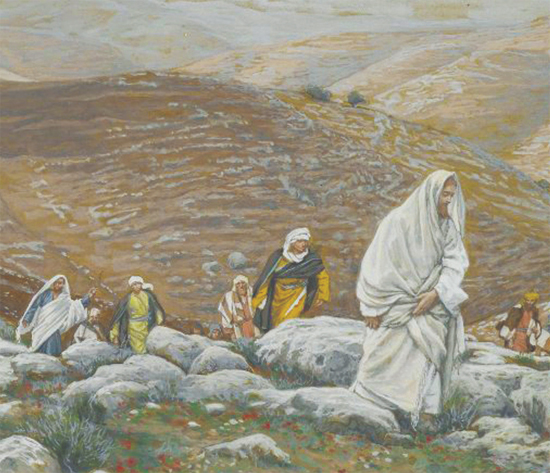
Christian Art | Jesus And The Apostles | Saint Peter | Foundation Of Our Church In Jesus Christ
Office Of Readings | Week 17, Friday, Ordinary Time | A Reading From The Letter Of Saint Ignatius Of Antioch To Polycarp | We Must Bear With Everything For God, So That He In Turn May Bear With Us
‘We must bear with everything for God, so that he in turn may bear with us.’
In his letter to Saint Polycarp, Bishop of Smyrna, Saint Ignatius of Antioch speaks not only as a spiritual father and friend but also as one who writes under the shadow of martyrdom. On the way to his execution in Rome around AD 107, Ignatius pens a letter that overflows with spiritual depth, pastoral wisdom, and a vision of Christian endurance grounded in Jesus Christ.
A Bond Between Martyrs And Bishops
Ignatius addresses Polycarp not merely as a colleague in the episcopate but as a man profoundly conformed to Jesus Christ. He praises Polycarp’s leadership and exhorts him to shepherd his flock with patience, prudence, and sacrificial love. The affection and urgency in Ignatius’s tone are striking. This is no abstract theological treatise—it is the soul-to-soul encouragement of one martyr to another.
Both men are towering figures of the early Church. Polycarp, believed to have been a disciple of the Apostle John, was bishop of Smyrna for many decades and was himself later martyred for the faith. Ignatius, as bishop of Antioch, wrote seven letters to Christian communities and leaders while being taken to Rome for execution. These writings form a precious window into the inner life and structure of the second-century Church.
The Burden And Beauty Of Leadership
Ignatius lays great stress on the personal responsibility of the bishop. Polycarp is urged to bear ‘the burdens of all men’ and to emulate Christ in doing so. The bishop is not merely a teacher of doctrine or a ceremonial figure, but a living icon of Christ’s pastoral care. Unity, says Ignatius, is ‘the greatest of all goods’. This reflects his well-known ecclesiology in which the bishop serves as a focal point of unity, safeguarding the faithful against error and fragmentation.
This unity, however, is not passive or imposed. It is maintained through the bishop’s example of love, prayer, self-discipline, and personal attention to each soul. ‘Speak to each man individually,’ Ignatius writes—words that remain startlingly relevant to every pastor, spiritual director, and Christian leader today. The shepherd must know his sheep.
Endurance As Christian Witness
Perhaps the most poignant thread in this letter is the theme of endurance. Ignatius employs vivid imagery drawn from the world of sport and warfare: the Christian is ‘an athlete of God’, the bishop must be like ‘the anvil under the hammer’. The faithful leader does not lash out in pain or discouragement but absorbs the blows with the strength of Christ, whose own suffering is the model and the source of all endurance.
Ignatius is not romanticising suffering; he knows it intimately. His point is rather that God bears with us, if we are willing to bear with others and with the burdens He allows. There is a profound theology of solidarity here: just as Christ bears our infirmities, so must we bear those of others, especially the weak and troublesome.
A Pastoral Psychology | Healing Wounds With Kindness
Ignatius’s advice also displays remarkable emotional intelligence. He tells Polycarp that ‘the same salve does not heal all wounds,’ urging him to tailor his approach to the needs of different individuals. This is not a rigid model of leadership but one grounded in discernment, charity, and the conviction that the goal is always salvation.
One particularly beautiful line reads: ‘Be prudent as the serpent in all things, and innocent as the dove always.’ This echoes Christ’s own instruction to the apostles in Matthew 10:16. The bishop must combine wisdom and gentleness—courage without aggression, and innocence without naivety.
A Warning Against Heresy
The letter is also a sober warning. Ignatius, ever the vigilant pastor, cautions Polycarp not to be ‘overwhelmed by those who seem trustworthy and yet teach heresy’. This is more than doctrinal concern; heresy, for Ignatius, breaks the unity of the Church, diminishes the gospel, and endangers souls. His metaphor—’Remain firm like the anvil under the hammer’—is thus a call to theological and moral resilience.
Ignatius would have encountered heresies such as Docetism, which denied the true humanity of Christ. His insistence on Christ as both invisible and visible, impassible yet suffering, is a defence of the incarnation, the very heart of Christian faith.
Servanthood And Social Justice
Finally, the letter touches on social issues, including the treatment of slaves. Ignatius insists that no one is to be despised, regardless of status, yet slaves must also live uprightly ‘to gain from [God] a better freedom’. This is not a call for immediate emancipation (which lay beyond the Church’s legal power at the time), but a radical reimagining of human dignity in Christ, which would later influence Christian abolition movements.

A Reading From The Letter Of Saint Ignatius Of Antioch To Polycarp | We Must Bear With Everything For God, So That He In Turn May Bear With Us
Ignatius, also called Theophorus, to Polycarp, who is bishop of the Church of Smyrna, or rather who has for his bishop God the Father and the Lord Jesus Christ, greetings and all good wishes.
Recognizing your devotion to God, firmly built as if upon a solid rock, I am full of thanksgiving to him for allowing me to see your blessed countenance – may I ever enjoy the sight of it in God! I beseech you by the grace with which you are endowed to press forward on your course and to exhort all men to salvation. Justify your episcopal dignity by your unceasing concern for the spiritual and temporal welfare of your flock; let unity, the greatest of all goods, be your preoccupation. Carry the burdens of all men as the Lord carries yours; have patience with all in charity, as indeed you do. Give yourself to prayer continually, ask for wisdom greater than you now have, keep alert with an unflagging spirit. Speak to each man individually, following God’s example; bear the infirmities of all, like a perfect athlete of God. The greater the toil, the richer the reward.
If you love only your good disciples, you gain no merit; rather you must win over the more troublesome of them by kindness. The same salve does not heal all wounds; convulsions should be allayed with poultices. Be prudent as the serpent in all things, and innocent as the dove always. You are both body and soul; treat gently the manifestations of human fault, even as you pray for the knowledge of things invisible, and then you will lack nothing but abound in every blessing. Do as the circumstances require, like the pilot looking to the wind and the storm-tossed sailor to the harbor, that you may win your way to God with your people. Exercise self-discipline, for you are God’s athlete; the prize is immortality and eternal life, as you know full well. In everything I am your devoted friend – I and my chains, which you have kissed.
Do not be overwhelmed by those who seem trustworthy and yet teach heresy. Remain firm, like the anvil under the hammer. The good athlete must take punishment in order to win. And above all we must bear with everything for God, so that he in turn may bear with us. Increase your zeal. Read the signs of the times. Look for him who is outside time, the eternal one, the unseen, who became visible for us; he cannot be touched and cannot suffer, yet he became subject to suffering and endured so much for our sake.
Do not neglect windows; after the Lord, it is you who must be their guardian. Nothing must be done without your approval, and you must do nothing without God’s approval, as indeed is the case; stand firm. Services should be held often; seek out everyone by name. Do not look down upon slaves, whether men or women; yet they too should not be arrogant, but should give better service for the glory of God so as to gain from him a better freedom. They should not be anxious for their freedom to be bought at the community’s expense, for they might then prove to be the slaves of their own desires.
Christian Prayer With Jesus
O God of steadfast love and eternal wisdom,
You called your servant Ignatius of Antioch to bear witness to your Son
through faith, unity, and the patient endurance of suffering.
Strengthen us, like him, to carry the burdens of others with humility and joy.
Give us the courage to stand firm in truth,
the tenderness to heal with kindness,
and the clarity to discern what is pleasing in your sight.
Grant to all bishops, pastors, and leaders the grace to shepherd your people
not in power but in service,
not in fear but in love,
that the unity of your Church may shine as a light to the nations.
Through Christ our Lord,
who became visible for us and endured suffering for our salvation,
now and forever.
Amen.
Glossary Of Christian Terms
Ignatius of Antioch – Early second-century bishop and martyr known for his seven letters written en route to his execution in Rome. A key figure in early Christian theology, especially on Church structure, unity, and martyrdom.
Polycarp – Bishop of Smyrna and disciple of the Apostle John. A revered martyr, he was a friend and correspondent of Ignatius and a key link between the apostolic age and later Church Fathers.
Martyrdom – The act of suffering death for one’s faith in Christ. In early Christianity, it was considered the highest form of witness (from the Greek martyria, meaning ‘witness’).
Episcopal dignity – The honour and responsibility associated with the office of bishop, which includes teaching, sanctifying, and governing the Church in communion with Christ.
Unity – A central theme in Ignatius’s theology, referring to the spiritual and organisational oneness of the Church under Christ and the bishop.
Docetism – An early heresy that denied the true humanity of Christ, claiming he only appeared to suffer. Ignatius opposed this vigorously, affirming Christ’s real incarnation and passion.
Prudence of the serpent, innocence of the dove – A biblical image (Matthew 10:16) meaning Christians should be wise and discerning, yet remain pure and without malice.
Athlete of God – A common metaphor used by early Christians, likening the spiritual life—especially suffering and perseverance—to athletic competition, with eternal life as the prize.
Ecclesiology – The theological study of the Church’s nature, structure, and function. Ignatius is one of the earliest Christian thinkers to articulate a strong episcopal model of Church governance.
Anvil under the hammer – A metaphor for steadfastness in the face of trials or persecution; the anvil bears repeated blows but does not break.




The people who have looked for and found Jesus now ask for a sign. Notwithstanding the miracle of the loaves and fishes, which they have witnessed, they now say they require a sign in order to believe in Jesus. It is in some ways akin to Christ’s temptation in the desert, when Satan tempted him to prove his divinity [ … ]

Psalm 28 is a heartfelt cry to the Lord God. The psalm is a plea for divine intervention, and a declaration of unwavering trust in God’s strength and protection. The psalm resonates with themes of supplication, of contrast between the righteous and the wicked, and acknowledgment of God as the ultimate source of strength and salvation [ … ]
When Jesus returns to Nazareth, to his own country, he attends synagogue on the Saturday and teaches there, not as a leader of the synagogue but as a participant in the faith community. Nonetheless, Jesus’ teaching is different from other people’s. Jesus, we have been told, teaches with authority, and not as the scribes (Matthew 7: 29). Jesus does not merely interpret Scripture, according to scholarly tradition; rather, Jesus reworks Scripture, providing for the people a new Torah, which centres upon himself and which we may understand as Jesus himself. In this way, Jesus’ authority matches and exceeds that of Moses. Jesus is a new Moses, and then infinitely more [ … ]